Chinese Stereotype Alive and Rotten in America

April 29, 2010

I read a political opinion Column on Gather written by Devin Barber and ran into an example of the American manufactered Chinese Stereotype–not from Barber but from one of the comments to his column.

Devin Barber

To find that example, I suggest you read Devin Barber’s column “Left of the Right”. The particular column I was reading was TEA Partiers Say “It’s Time To Take Our Country Back” What Does That Mean?

I was enjoying myself (laughing at some of the inane comments from the ignorant and/or stupid people who keep bashing Obama and the Democrats as if they are devils) until I reached this from Bruce, “and then if we manage to survive I think we will either end up with a totalitarian regime where the citizens are slaves like China…

My response to Bruce’s comment started , “Bruce, what do you know about China?  The image or opinion of China that most Americans have stuck in the gunk between their ears is the China of Mao. 

“Mao died in 1976, and the Cultural Revolution ended. China created a market economy that keeps growing, and the people of China are not slaves. Actually, most of those that live in the cities have almost as much freedom as Americans in the US.  That is about five hundred million people. (Eight hundred million live in the countryside and are not as fortunate at those in the cities, but they are still not slaves.)” 

If you are interested in reading the rest, please go to Devin’s column and read the comments. Devin’s column is not about China but that one comment demonstrates the dangers that come with being an uneducated voter like Bruce. It’s scary that anyone may vote in America regardless of how globally ignorant or stupid they are. There should be a knowledge test before one earns the right to vote.

Learn more about The American Assault on China’s Currency

______________

Lloyd Lofthouse is the award-winning author of the concubine saga, My Splendid Concubine & Our Hart. When you love a Chinese woman, you marry her family and culture too. 

If you want to subscribe to iLook China, there is a “Subscribe” button at the top of the screen in the menu bar.


Negotiating with the Chinese

April 28, 2010

From what I’ve read so far at “Chinese Negotiation”, the Blog offers sound advice for dealing with the Chinese in business or politics.

China’s historical and cultural foundations come from a different source than America and Europe.  People that come from Western democracies are also different and alien to the Chinese since Western roots grow deep into Judean Christian values, Roman and Greek philosophy and British Common Law, which also has its roots from the Romans and Greeks.

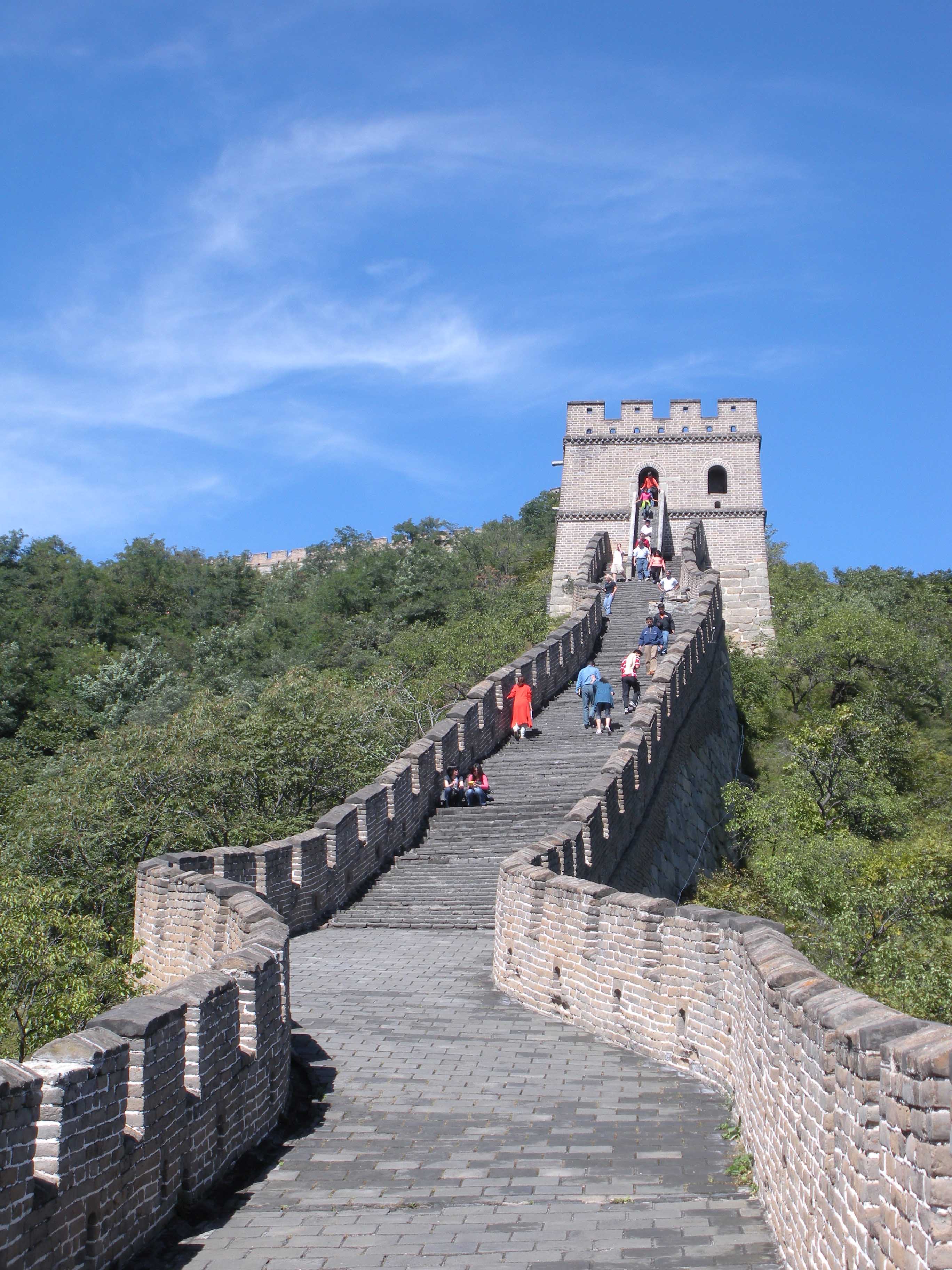
The Great Wall of China

Don’t forget, China’s roots grow deep in different soil and they stem from Confucius and Legalism. The Great Wall did more than attempt to keep out the barbarians. It also protected Chinese civilization from foreign devils and their strange ways.

“When Americans negotiate with Chinese counter-parties, they often run into the ‘Frenemies’ dilemma. US dealmakers in China are sometimes so concerned with building good relations that they don’t perform proper due diligence until it is far too late. They end up losing money, time, IP – and destroy the very friendships that they worked so hard to develop.” To discover more, visit the source at Chinese Negotiation.

Also see “Understanding How to do China Business” http://wp.me/pN4pY-tE

Lloyd Lofthouse is the author of the award winning My Splendid Concubine and writes The Soulful Veteran and Crazy Normal.

Sign up for an RSS Feed for iLook China


Dream of the Red Chamber

April 28, 2010

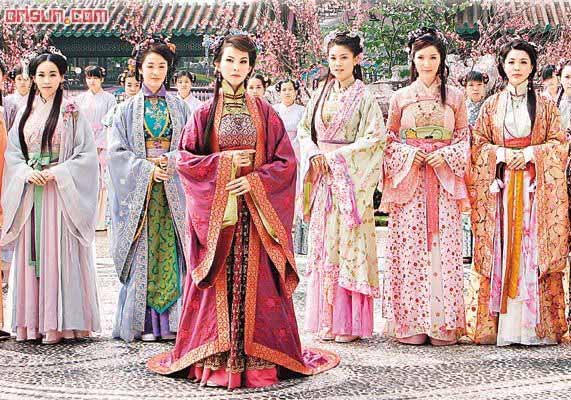
The Dream of Red Chamber (also known as The Story of Stone) is generally considered one of four of China’s greatest classical novels. The novel has had several versions and translations and was made into a TV series in China. See Preview of TV series

From TV Series “Dream of the Red Chamber”

The author, Tsao Hsueh-chin (1715-1763) came from a powerful and wealthy family and lived a privileged life as a child in Nanjing. Later, he became poor and struggled to survive. Going from wealth to poverty provided him with the necessary experiences to write this tragic story.

Although this novel has great literary merit on many levels, there is difficulty keeping the characters straight—there are more than four hundred characters and almost thirty are major.  The plot, like most Chinese novels, meanders and doesn’t always flow in the same direction.

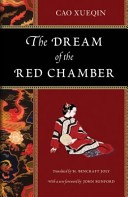
Book Cover

None-the-less, readers and students of Chinese history/culture should read this book to develop a better understanding of Imperial China during the Ch’ing Dynasty. The novel paints a vivid portrait of a corrupt feudal society on the verge of the capitalist, market economy we see flourishing in China today.

Another plot is the Romeo and Juliet love story between Chia Pao-yu and Lin Tai-yu, who—like Romeo and Juliet—wanted to be free to marry anyone they desired.

To learn more about China, see About Lin YuTang’s My Country and My People

_______________

Lloyd Lofthouse is the award-winning author of My Splendid Concubine [3rd edition]. When you love a Chinese woman, you marry her family and culture too. This is the love story Sir Robert Hart did not want the world to discover.

Subscribe to “iLook China”!
Sign up for an E-mail Subscription at the top of this page, or click on the “Following” tab in the WordPress toolbar at the top of the screen.

About iLook China


Understanding How to do China Business

April 27, 2010

There’s a reason my wife warned me to never do business in China; then she went and lost money doing business there herself—and she’s Chinese. However, being Chinese in China is the same as being American in America—there is no guarantee that anyone is going to be a success and fill buckets with money.

If you want to read the nightmare side of doing business the wrong way in China, see Showdown at Changsha by John Alley. “Western companies felt they had to be players in the China market, and dozens of the world’s largest corporations fell over themselves losing money in abortive China joint ventures.” Source: Asia Review of Books

Walmart in China

Google appears to have failed because they did not learn that doing business in other cultures means changing the way you think and present yourself. On the other hand, Bob Grant’s guest posts on iLook China are examples that there are success stories in China. Recent news shows that GM is making profits in China—more than in the US. McDonald’s announced recently they are opening hundreds more fast food outlets in China this year.

Anyone wanting to do business in China should consider going back to school. I checked one of America’s top universities, Stanford, and found a course taught by an expert. There’s even a Doing Business in China for Dummies book.

Learn more about Doing Business in China

______________

Lloyd Lofthouse is the award-winning author of the concubine saga, My Splendid Concubine & Our Hart. When you love a Chinese woman, you marry her family and culture too.

If you want to subscribe to iLook China, there is a “Subscribe” button at the top of the screen in the menu bar. 


I Miss the Smell of China

April 27, 2010
Bob Grant

Originally Published at Speak Without Interruption on April 16, 2010 by Bob Grant — publisher/editor for Speak Without Interruption. Posted on iLook China, April 27, 2010 at 12:00 PM

 For various reasons, my business in China declined a little over two years ago, and I have not had occasion to visit there during that time period. A lot has happened—both within the U.S. and China—since my business went south.

I do miss China – its people – its culture – its smell. This might seem like an irrational statement since China is suppose to be one of the most polluted countries in the world, but it is not the smell of pollution that sticks in my memory.

Our China office was located in Guangdong Province, which is in the southern part of China near Hong Kong. Traveling around that province, I always remember the fresh scents of flowers, rain, trees, grass, and meals being prepared for daily consumption.

I tended to visit factories that were in outlying areas—their conference rooms, factories, reception rooms, and gardens all had a smell that I grew to welcome during each of my visits. As I made trips and visits to other parts of China, I felt they each had their own unique smells and aromas that I have not found any other place in the world that I have traveled.

I have written other posts regarding my feelings about the Chinese people—those have not changed.  I am not certain that I will ever have occasion to visit China again but the smells and memories of that country and its people will remain with me forever.

Follow this link to see more by Bob Grant “Transporting Goods by Road in China” http://wp.me/pN4pY-jf