The Prince’s Garden

June 26, 2010

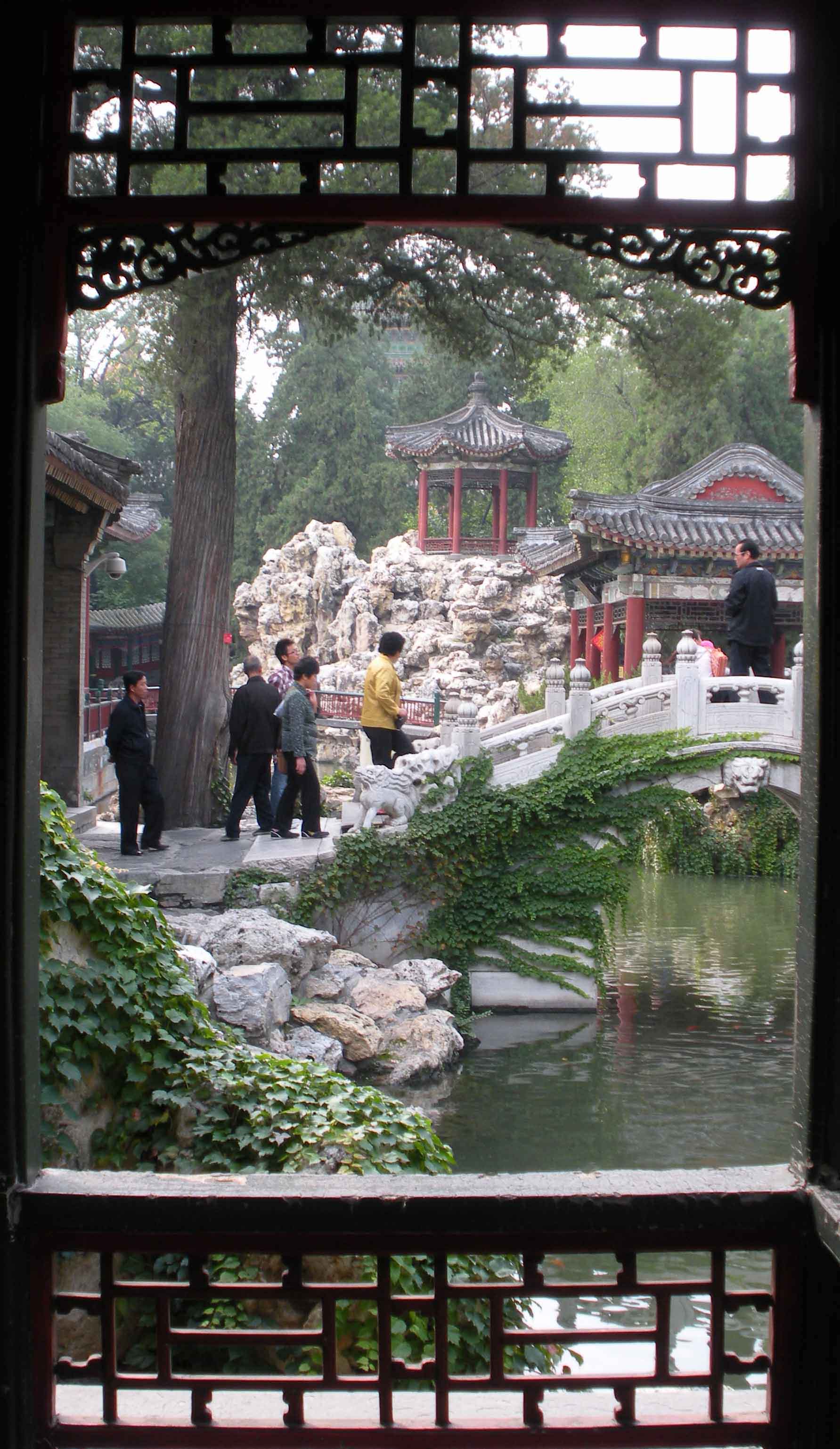
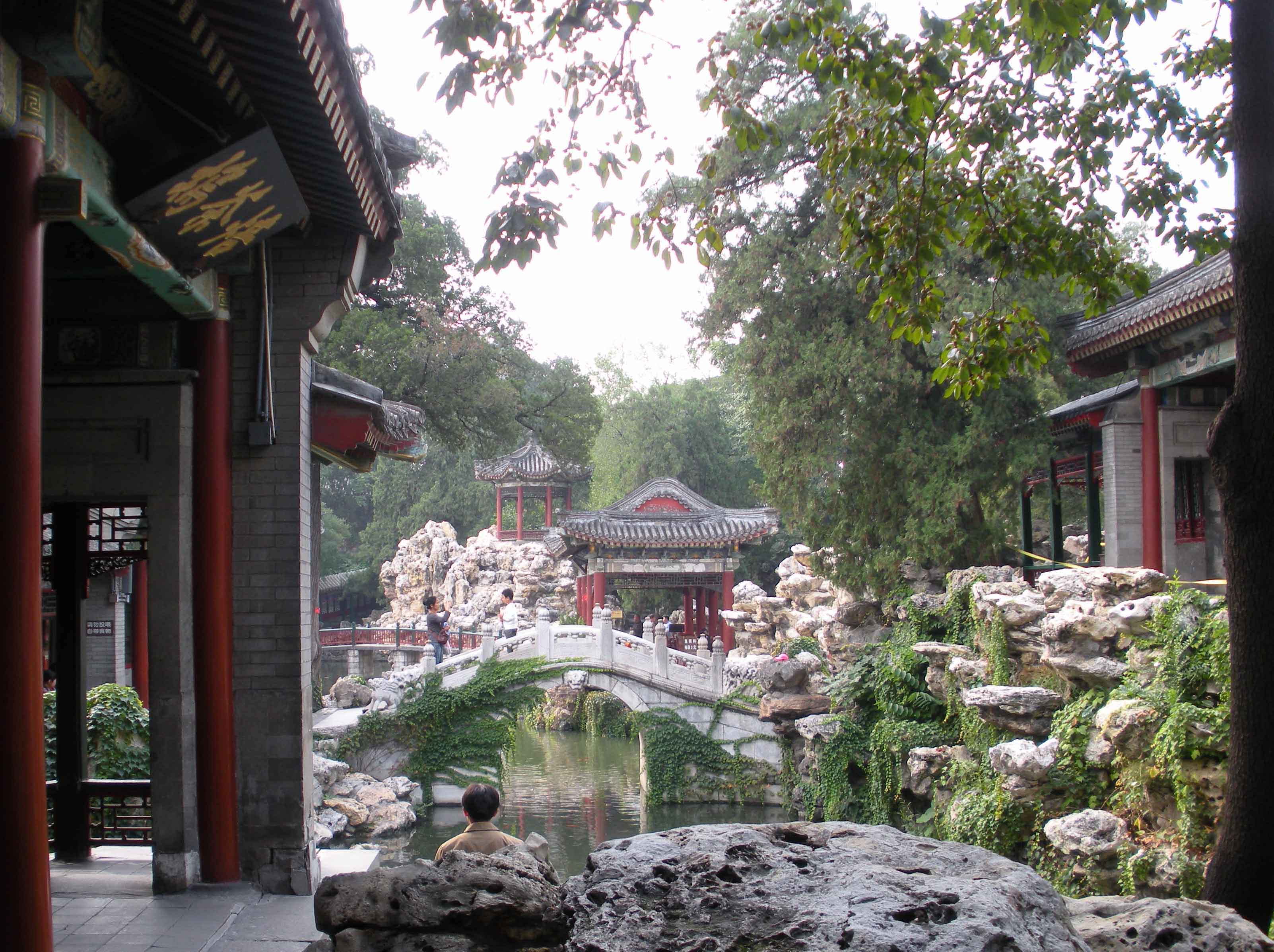
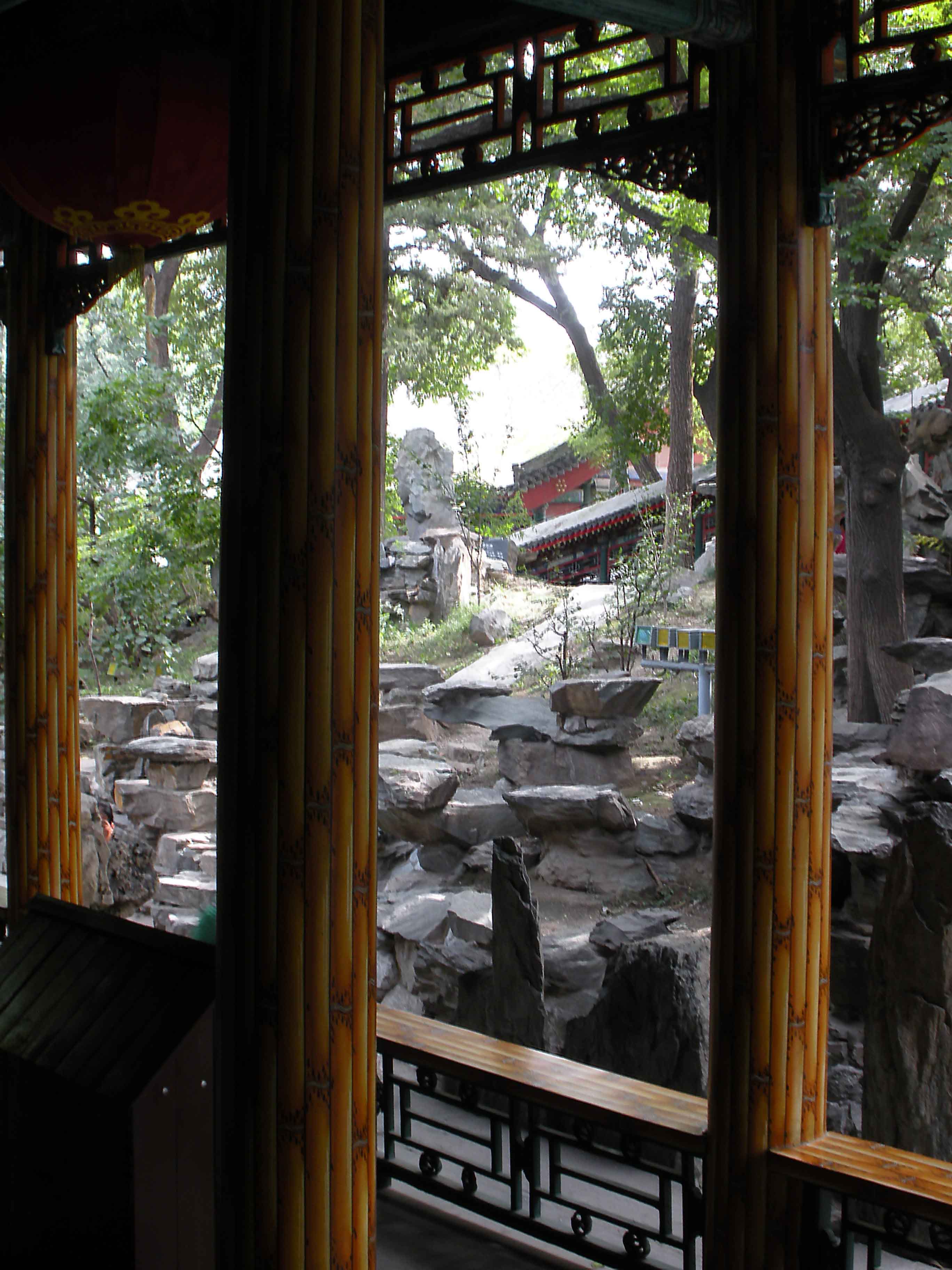
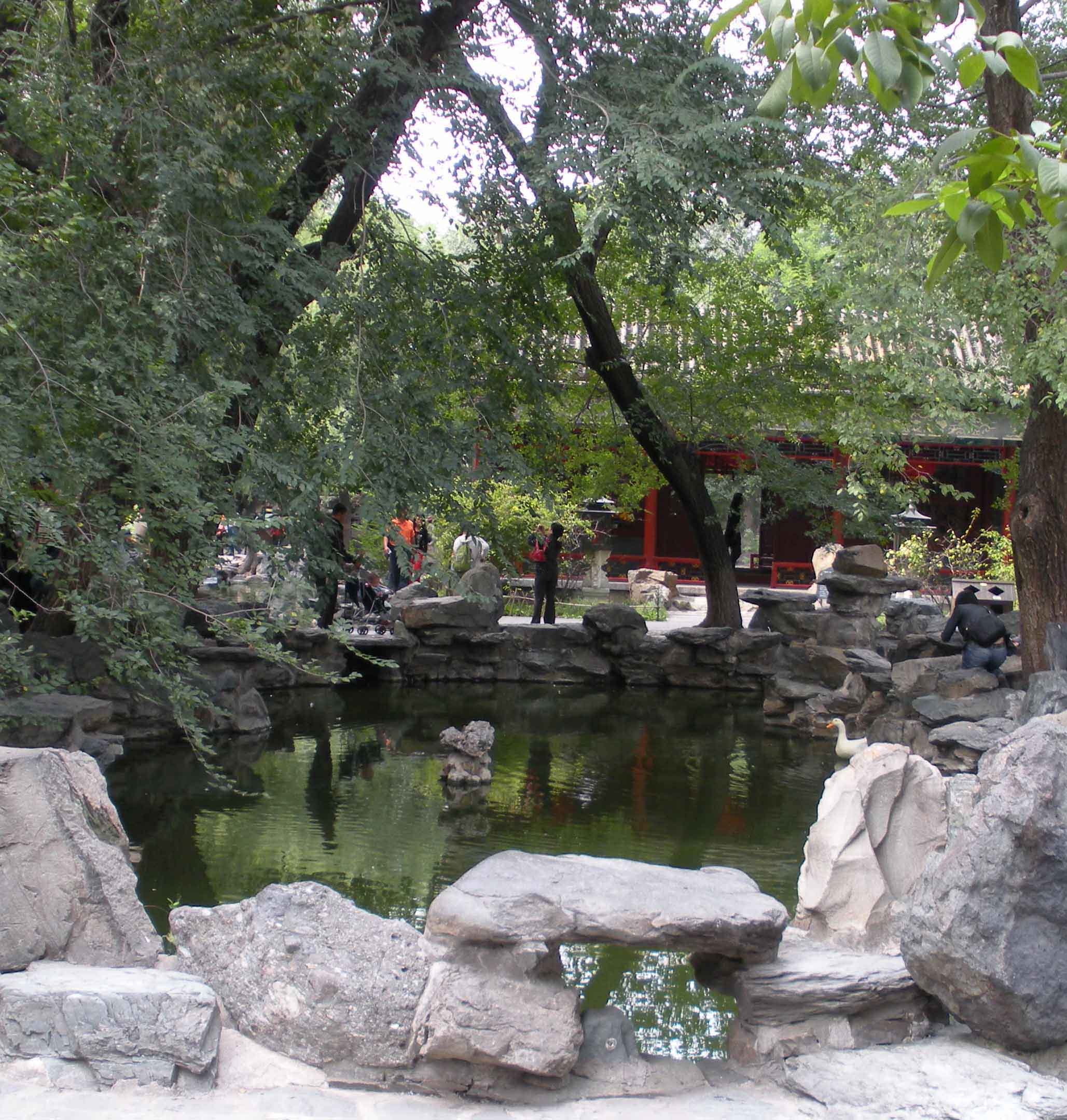
These photos were taken inside Prince Kung’s (1833-1898) palace and garden (once called Gongwangfu). This palace is in Beijing’s Beihai district. Prince Kung was Emperor Hsein Feng’s (1831-1861) younger brother.

As Inspector General for the Emperor of China, Robert Hart, known as the Godfather of China’s modernism, lived in the same hutong that Prince Kung lived in.  The Forbidden City was on the far side of Tiananmen Square.

Robert Hart, the main character in “My Splendid Concubine” and “Our Hart”, often met Prince Kung in this garden.

After 1950, for several decades, this palace and the garden became a communal home for many Chinese. In recent years, the garden, considered one of the best in China, was renovated and is now a tourist attraction, which attracts thousands of visitors daily.

To design a proper Chinese garden one must build a big place in a small space.  Prince Kung’s garden and estate is surrounded by a high wall and outside is Beijing.  Once inside, it is easy to forget that outside the walls is a crowded city. It was also easy for the Qing (Manchu) royals to forget about what was happening throughout China.

Discover The Summer Palace

________________________

Lloyd Lofthouse is the award-winning author of the concubine saga, My Splendid Concubine & Our Hart. When you love a Chinese woman, you marry her family and culture too.

To subscribe to “iLook China”, look for the “Subscribe” button at the top of the screen in the menu bar, click on it then follow directions.


Learning from Sherlock Holmes

June 26, 2010

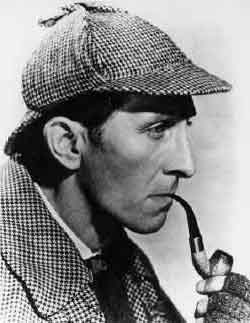
I was shopping at Costco and saw a piece in The (June 19) Economist about China’s secret media.  I bought a copy and read it when I got home. One of the major reasons that the Qing Dynasty collapsed in 1911 was because the Manchu leaders were out of touch with what was going on. The royal princes lived behind high walls in a fantasy world of opulent gardens. The young Emperor and the Empress Dowager lived inside the Forbidden City or The Summer Palace—surrounded by ministers who filtered the news.

Sherlock Holmes

In Chinese whispers, The Economist reveals the different layers of news in today’s China. One layer is the cleansed version for the people then there are other layers depending on how high one is in the government. Each layer appears to have less censorship. What this piece reveals is that China’s top leaders wants to know what’s going on before anyone else does.

One example would be the SARS outbreak in 2003. According to the Economist, by the time China’s leaders learned about SARS, there had already been 300 cases and 5 deaths. Two days after learning about SARS, China’s leaders told the World Health Organization. Since Xinhua’s reporters and editors do such a great job filtering the news for mass consumption, it seems that China’s top leaders have to become sleuths to discover the missing facts.

See The Collective Will

________________________

Lloyd Lofthouse is the author of the award winning concubine saga. When you love a Chinese woman, you also marry her family and culture.

Sign up for an RSS Feed for iLook China


Getting Rich is Glorious vs. China’s Health Care System

June 26, 2010

Until reading this post from “Danwei”, I didn’t know that medical vultures had landed in China to drain ignorant people’s bank accounts as in the US. When in China, my family, friends and I have always used the domestic health care system when needed and we have no complaints.

“Danwei’s” post, China’s private healthcare racket, offers a warning to stay away from the private clinics that have appeared over the past 15 years. “The desire to grind out as much profit as possible from patients means that China is now one of the most expensive places in the world to have private healthcare.…

“Most companies coming to China simply adopted United States-style pricing, given the company packages and generous medical insurance that were standard for their clients, wealthy expatriates.”

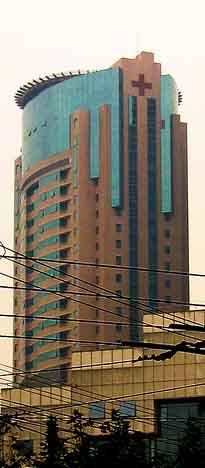
The red cross indicates this high rise in Shanghai is a hospital and looks similar to ones we've been to in China.

Here are a few comparative costs between China’s domestic health care (not private) and the US. A urine test in the US cost us $267—in China, that cost was 20 yuan or about $3.  To see a US doctor cost us $185—in China, the cost was 15 yuan or about $2.  In the US, we had to wait a week or longer for the lab results—that is if we were even called. In China, the results were back in less than half-an-hour.

If you are planning to travel to China, read Danwei’s post about private health care and use the domestic system. Learn the facts and save some money.

See China’s Health Care Today

________________________

Lloyd Lofthouse is the author of the award winning concubine saga. When you love a Chinese woman, you also marry her family and culture.

Sign up for an RSS Feed for iLook China


The Falun Gong Machine

June 25, 2010

When I attended the 6th Asian Heritage Street Celebration in San Francisco, I stopped at a booth for Shen Yun Performing Arts staffed with attractive, college age girls. My wife loves dance, and I thought she might be interested. I asked if this dance troop was part of a local college or university. The girl who handed me the brochure said yes. She lied to me.

6th Annual Asian Heritage Street Celebration

That evening, when I arrived home, I handed the brochure to my wife, who said, “That is Falun Gong.” I’ve written about The Falun Gong and Costco, about A Visit from the Falun Gong, and the more I learn about this group, the more sinister they become.

Turning to the Internet and using Google, I learned that New Tang Dynasty Television, Shen Yun Performing Arts and The Epoch Times all appear to be part of Falun Gong. I also discovered that Falun Gong must buy lots of Internet AD words so Google searches lead to one of the gears in the Falun Gong machine.  In fact, I had trouble finding anything but Falun Gong propaganda and had to keep altering my search terms to get beyond the Falun Gong firewall.

In time, I discovered a piece published in the Buffalo News saying, “the promoters and creators of “Shen Yun,” who have picked up a reputation for misrepresentation and deception over the years, have adopted the questionable propagandist tactics of the very government they criticize in their productions.”

Digging further, the New York Times reported, “China’s decision to ban Falun Gong was made after 10,000 adherents staged a silent protest outside the gates of Zhongnanhai, the Communist Party’s leadership compound in Beijing, to complain about reports in the state-run media that the group said were defamatory. Security forces apparently had no advance knowledge of the demonstration, which took place on April 25, 1999. The Chinese government began treating the group as a threat to national security.”

How about visiting Belching About China

______________

Lloyd Lofthouse is the award-winning author of the concubine saga, My Splendid Concubine & Our Hart. When you love a Chinese woman, you marry her family and culture too. 

If you want to subscribe to iLook China, there is a “Subscribe” button at the top of the screen in the menu bar.


Mao’s War Against Illegal Drugs

June 25, 2010

From The Opium Monopoly by Ellen N. La Motte, we learn how opium addiction became an epidemic in China. Although The Chinese knew about opium for more than a thousand years, it wasn’t until the Portuguese arrived in the 18th century that  the Chinese used it as a drug by smoking it. Merchants from Britain, France, Portugal, America and other nations became the drug cartels that plagued China into the 20th century.

In 1729, the emperor issued the first anti-opium edict, but the supply of opium flooding China went from 220 chests in 1729 to 70,000 in 1858.

It is estimated that before 1950, as many as 20 million Chinese were addicts. Then Mao had the Red Army execut the drug dealers and forced millions of addicts into compulsory treatment.

Opium growers, who did not want to comply, fled into the Golden Triangle Region of Southeast Asia where many of Chiang Kai-shek’s nationalist troops had gone to escape defeat. Those generals also did business with the CIA, and American soldiers in Vietnam became the new customers. It is estimated that at least 20% of the almost nine million American troops that served in Vietnam became addicted.

China remained free of drugs until Deng Xiaoping declared, “Getting Rich is Glorious” and opened China to world trade. In 2003, it was estimated that China had four million regular drug users even with China’s strict laws concerning illegal drug use.

Sources: Opium and Illegal Drugs in China and How Maoist Revolution Wiped Out Drugs in China

To learn more about Mao’s China, see China’s Great Leap Forward

______________

Lloyd Lofthouse is the award-winning author of the concubine saga, My Splendid Concubine & Our Hart. When you love a Chinese woman, you marry her family and culture too.

If you want to subscribe to iLook China, there is a “Subscribe” button at the top of the screen in the menu bar.