Imperial Power or Republic

June 25, 2010

Did you know that after World War II, the CIA recruited Nazi war criminals to help fight the Cold War? Source: Third World Traveler

The Associated Press reported recently in Lessons from failed Cold War spy mission in China that the CIA admitted a cloak-and-dagger plot to destabilize China in 1952.  When the plot failed, there was a cover up. Now, the mistakes the CIA made are being used as a teaching tool so the next time the CIA plots regime change, they have a better chance to succeed.

However, the CIA should have learned that lesson in 1953 when the agency replaced the elected prime minister of Iran, an ardent nationalist, with Mohammad Reza Shah Pahlavi, a dictatorial monarch, who—due to his brutality— was replaced in 1979 by American hating Islamic Fundamentalists. Source: New York Times

Then there was the CIA’s support for the Dalai Lama in the 1960s as reported by the New York Times followed in the 1980s by the The Iran-Contra Affair during Reagan’s Presidency. Later, President H. W. Bush issued six pardons to the Reagan loyalists—or should I say patriots—who went to jail for illegal activities while serving in President Reagan’s administration.

The CIA’s crowning achievement was when the agency become the “World’s Real Drug Lords” as reported in Serendipity, which chronicles the CIA involvement in the drug trade from 1947 to the 1990s.  If you ever wondered how marijuana, cocaine and heroin addicted so many in America and other Western countries, you need look no further. In fact, after the West lost China as the dumping ground for drugs like opium, new customers were needed to keep the gold flowing.

Do these actions by the CIA support the language of the following documents?

“We hold these truths to be self-evident, that all men are created equal, that they are endowed by their Creator with certain unalienable Rights, that among these are Life, Liberty and the pursuit of Happiness. — That to secure these rights, Governments are instituted among Men, deriving their just powers from the consent of the governed, — That whenever any Form of Government becomes destructive of these ends, it is the Right of the People to alter or to abolish it, and to institute new Government, laying its foundation on such principles and organizing its powers in such form, as to them shall seem most likely to effect their Safety and Happiness.” Source: Declaration of Independence

“We the people of the United States, in order to form a more perfect union, establish justice, insure domestic tranquility, provide for the common defense, promote the general welfare, and secure the blessings of liberty to ourselves and our posterity, do ordain and establish this Constitution for the United States of America.” Source: Constitution of the United States

See What is the Truth about Tiananmen Square?

________________________

Lloyd Lofthouse is the author of the award winning My Splendid Concubine and writes The Soulful Veteran and Crazy Normal.

Sign up for an RSS Feed for iLook China


China’s Great Leap Forward and the Cultural Revolution Ends in 1976 (Part 6)

June 24, 2010

In Part 6, the anarchy led by Mao spread. Schools and hospitals closed.  Offices and factories were in chaos. Qi Youyi, who was a factory worker in Beijing, describes how bad it was. Production stopped. No one knew when he or she might be denounced and arrested. Many workers committed suicide.

After two years, the army was called to restore order and reestablish the Communist Party. The Red Guards were sent to the countryside to learn from the peasants. However, the Cultural Revolution did not really end until 1976 when Mao died.

Deng Xiaoping's China where Getting Rich is Glorious

After his death, Mao’s closest supporters, the Gang of Four, were arrested and Mao’s revolutionary activities were abandoned. In an attempt to hold the country together, the Communist Party used propaganda and the Red Army to maintain control so the country would not fall apart.

Deng Xiaoping replaced ideological fervor with economic activity so the people would be motivated not by dreams of equality but by money. In the 1980s, the new message was “to get rich is glorious”.

Return to Part 5, China’s Great Leap Forward or start with Part 1

______________

Lloyd Lofthouse is the award-winning author of the concubine saga, My Splendid Concubine & Our Hart. When you love a Chinese woman, you marry her family and culture too.

If you want to subscribe to iLook China, there is a “Subscribe” button at the top of the screen in the menu bar.


Mao’s Motives

June 24, 2010

Why did Mao cause so much suffering with his failed Great Leap Forward and The Cultural Revolution? Yes, the power Mao held was a corrupting factor in the decisions he made, but  fear of repeating history was also a factor.

Mao's Little Red Book of Quotations

How many millions of Chinese were addicted to Western opium forced on China by Great Britain and France during two Opium Wars?

Historians say that 20 to 30 million were killed due to the Taiping Rebellion. If Christian missionaries had not been forced on China because of the Opium Wars, would that rebellion have taken place?

Another 115,000 Chinese were killed during the Boxer Rebellion, which was a popular peasant uprising against Christian missionaries, foreign meddling and exploitation.

After 1911 when the Qing Dynasty collapsed, chaos and anarchy ruled China, while foreigners—Americans included— lived in luxury in the treaty ports protected by modern foreign military forces. A Century of Madness chronicles this time.

Mao survived Chiang Kai-shek‘s crack down on the labor movement led by the Communist Party. During World War II, Mao’s army not only fought Chiang Kai-shek’s troops but also the Japanese, who killed between 10 to 20 million Chinese in their attempt to conquer China. The peasants trusted Mao’s troops but did not trust Chiang Kai-shek’s army. Why?

Mao believed that socialism would create a better life for the Chinese. His failures were attempts to make China strong enough to defend the country against foreign meddling and invasions. He failed, but Deng Xiaoping didn’t. What happened in Tiananmen Square in 1989—where a few hundred demonstrators were killed—was nothing compared to what China suffered starting with the First Opium War.

______________

Lloyd Lofthouse is the award-winning author of the concubine saga, My Splendid Concubine & Our Hart. When you love a Chinese woman, you marry her family and culture too.

To subscribe to “iLook China”, look for the “Subscribe” button at the top of the screen in the menu bar, click on it then follow directions.


China’s Great Leap Forward ends to be replaced with Mao’s Cultural Revolution (Part 5 of 6)

June 24, 2010

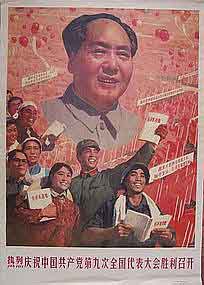
In 1966,  Mao’s Red Book of quotations was used as a textbook in the schools. Shao Ailing, a head teacher in Shanghai said, “The pupils began to realize that all the changes taking place in their families, in school, in Shanghai and China were brought about by Chairman Mao.”

Mao encouraged students to attack authority and the leadership of the Communist Party. This advice came from the “George Washington” of China, the man who had delivered on his promises to the peasants and brought them medicine and land reforms—something the emperors and Chiang Kai-shek had never done.

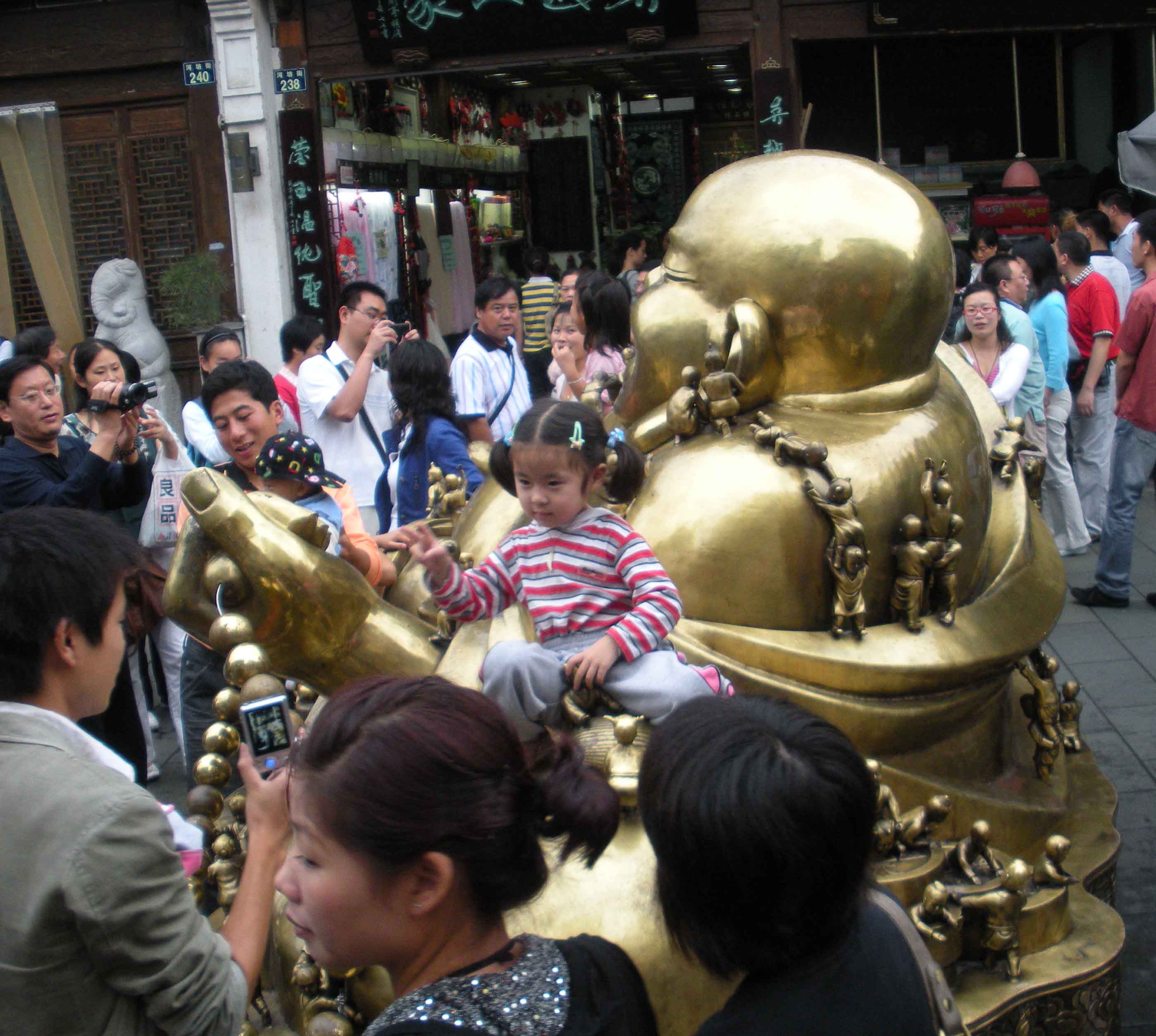
Tourist Attraction in Today's China

Zhang Baoqing, an early Red Guard member in Beijing, said, “Chairman Mao started the Cultural Revolution to keep up the momentum for change. We thought if we followed Mao, we could not go wrong.”

Mao motivated millions of students from speeches in Tiananmen Square. This time it wasn’t the rural peasants. It was China’s urban youth, who were too young to remember Mao’s mistakes from the Great Leap Forward.

Student anger focused on Mao’s rivals, President Liu Shaoqi and Deng Xiaoping. Even small children were taught to denounce Liu. Then anyone in power was denounced. The structure of the Communist Party collapsed. Schoolteachers were attacked and tortured by their students. Up to a million were killed or driven to suicide.

Return to Part 4, China’s Great Leap Forward or go to Part 6

______________

Lloyd Lofthouse is the award-winning author of the concubine saga, My Splendid Concubine & Our Hart. When you love a Chinese woman, you marry her family and culture too.

If you want to subscribe to iLook China, there is a “Subscribe” button at the top of the screen in the menu bar.


Reading Barry Ritholtz

June 23, 2010

In “China The Black Box“, Barry Ritholtz demonstrates a better understanding of China than most I’ve read—at least in this piece.  If you are willing to sit for a long read, I suggest clicking on the link. He does a good job explaining how China’s economy works and why it may survive for some time without an economic collapse like the 2008 US meltdown.

Barry Ritholtz

In summary, Ritholtz mentions how several prominent hedge fund managers in the West have said China is making mistakes economically. Then Ritholtz says there is no way these managers know what’s going on in the Middle Kingdom since China is half capitalist and half socialist and doesn’t fit any Western economic norms.

He says China is a unique civilization state, which gives it a tremendous advantage at this stage of its economic development, because China’s citizens have a singular desire to work hard and improve their material lot. It helps that the Chinese prefer to pay cash for things instead of using credit cards as in the US.

Chinese civilization has periods of order followed by periods of disorder and since China recently emerged from two centuries of disorder, the Communist government has a long way to go before it is their turn to leave the leadership stage.

Read how others get it wrong in Belching About China

________________________

Lloyd Lofthouse is the author of the award winning My Splendid Concubine and writes The Soulful Veteran and Crazy Normal.

Sign up for an RSS Feed for iLook China