Tom Carter, author of “CHINA: Portrait of a People”, catches up with Chris Thrall to discuss his new book “Eating Smoke“, a memoir about Thrall’s descent into drug psychosis in Hong Kong’s triad heartland.
“In the fall of 2009,” says Tom Carter, “whilst traveling in India to create my next photography book, I was contacted via email by a British writer who had read Down and out in Hong Kong, one of my online travel articles, which described this poor, dusty backpacker’s real-time impressions of Asia’s wealthiest city.”
Chris Thrall said he connected with my article’s conclusion that, in spite of my western heritage, and due to my personal circumstances, I ultimately had more in common with the destitute third-world inhabitants of the Chungking Mansions, the infamous immigrant ghetto of Kowloon, than I did with the rich white bankers et al who comprise the other half of Hong Kong’s multinational population.
Chris went on to explain that he was writing a book about his own experiences living in Hong Kong, which was dramatically different from mine or any other expatriate I ever knew, and that he once worked for the 14K, the world’s largest Chinese crime family.
Attached to his email was the first chapter of his memoir, a gripping opening salvo that finds the narrator hiding from pursuing henchmen on a roof top—alongside two corpses, a disemboweled mother and child.
As a voracious reader, I know a bestseller when I see it. I immediately forwarded Chris’s manuscript to my publisher in Hong Kong, Pete Spurrier, who runs the iconic Blacksmith Books, which specializes in Asian-themed literature.
Pete likewise was knocked off his feet by Chris’s incredible story; the next I heard, Chris was a fellow Blacksmith label mate with a book deal.
Chris Thrallwas born in the UK. At eighteen, he joined the Royal Marine Commandos. Following active service in the Northern Ireland Conflict and training in Arctic warfare and survival, he earned his parachutist’s ‘wings’ and went on to serve as part of a high-security detachment onboard an aircraft carrier. In 1995, Chris moved to Hong Kong to oversee the Asia-Pacific expansion of a successful network-marketing operation he’d built, part-time, while serving in the Forces. Less than a year later, he was homeless, hooked on crystal methamphetamine and working for the 14K, Hong Kong’s largest triad crime family, as a doorman in Wanchai’s infamous red-light district.
“Eating Smoke“, a humorous yet deeply moving first book, is his account of what happened.
On October 16, 2011, nearly two years since Chris Thrall originally contacted me, his long-awaited book, “Eating Smoke”, will be released in America and Amazon.com.
Advanced sales have already brought the title to the top of the Hong Kong bestseller list (patting my own back for my prediction) while Eating Smoke has achieved a massive cult following on Facebook. Hailed as a “Sin – Shantaram” in a review by the South China Morning Post, and being compared by fans to Alex Garland’s The Beach for its drug-adelic theme, we can now confidently predict that Eating Smoke will, too, be optioned for film rights and follow those popular books to Hollywood.
Despite his past connections with Chinese triads, and in spite of his newfound celebrity as a bestselling author, Thrall remains one of the nicest and humblest people I have ever had the pleasure of knowing…even though I have yet to actually meet the man in person. So it wasn’t too hard to twist his arm into putting my Q&A at the top of his to-do list of media interview requests (ah, the fame!).
TOM CARTER: My first and most pressing question, Chris, is if you are at all worried that the 14K will be hitting you up for a percentage of your book royalties once word of Eating Smoke’s success trickles up the Wan Chai gangland hierarchy?
CHRIS THRALL: Ha ha! The news from Hong Kong is that “serious players” are reading my book as we speak. But I’m not worried as it’s not a tell-all on Hong Kong organized crime. It’s more the story of a former Royal Marine Commando who thought he knew a bit about life, who then moves to Asia to run what was a successful business but spirals down into psychosis from drug addiction.
In that respect, Eating Smoke is unique. I’m not aware of any other book that gives the reader the opportunity to experience what it’s actually like to descend into mental illness through the eyes of someone as they do. I just happened to work for the 14K as a nightclub doorman – moreover, their “East-West go-between” – when it happened.
CARTER: Eating Smoke is about your decent into drug psychosis in Hong Kong’s triad heartland, but it’s also about the series of unfortunate, albeit hilarious, events that prevented you from ever finding your financial footing in Hong Kong, ironically Asia’s wealthiest city; a “testament to the stark reality and ephemeral nature of the relationship between people, drugs and profit,” as you wrote in the book.
Do you have anything to say to all those coked-out rich white bankers that Hong Kong is notorious for?
THRALL: No! I have nothing to say to anyone – coked-out rich white bankers included. If people truly enjoy what they do, they should carry on doing it.
Personally, I didn’t want to see my youth slipping away in a suit as I chased dollar signs at the expense of more fulfilling experiences. So having overcome addiction, I made an inventory of what I wanted to get out of life. Then I set out across six continents through seventy-five countries to get it. Writing a book was the last thing on my bucket list.
CARTER: China is adamantly anti-drugs, and the court system does not hesitate to execute drug traffickers, even foreigners.
In fact, China even blames foreigners for being responsible for a majority of its drug trade, a grudge no doubt held over from the Opium Wars. Even though there are arguments to be made against the death penalty, the fact remains that, due to their zero-tolerance policy, China has one of the world’s lowest crime rates, a statistic that, all things considered, I’m sure America and the UK envy.
As a former drug user, what’s your take on criminalization of drugs, and do you think the west should follow China’s example?
THRALL: I don’t have a take on it. I’m not a spokesperson on substance use or the law surrounding it. I just told my own story.
However, research would likely show that mankind has always taken drugs in various forms and continues to do so (alcohol and cigarettes often cited as the most damaging), which might suggest that education on their usage and dangers is the way forward, in addition to harm-prevention strategies.
As for crime, a sociologist once said that a zero crime rate would make society a frightening place to be. I think Orwell’s 1984 was meant to imply this. I take no stance on drugs per se or cast judgment on people who choose to buy, sell, or use them.
It was addiction that I battled and that’s a separate issue. It’s a psychological condition that could relate to gambling, sex or food. It makes you wonder how prohibition could ever fix this.
CARTER: One of the main characters in “Eating Smoke” is a Filipina prostitute named Apple who, after being your friend, sells you out to the triads. Filipinos are the second largest ethnic group in Hong Kong, however their career paths seem to be limited as nannies for wealthy families, cover bands, or bar girls.
Why is that, and do you think their situation will ever improve?
THRALL: I think it’s because the Philippines’ economy is relatively poor when compared to Hong Kong’s. Even with the pittance they receive in wages, these women are able to send a lot of hard-earned dollars home to their families, while getting a travel experience they likely otherwise ill afford.
As to whether their situation will improve, Filipinos are generally humble, in my experience. They don’t complain and seem to appreciate the chance to earn money abroad.
Of course, wherever there is inequality, they’ll be incidents of exploitation, which isn’t nice. But if their union – if there is such a thing – pushed for higher pay then perhaps the demand for their services would drop off as there are Hong Kong locals who could fill these jobs.
CARTER: Another reoccurring character in Eating Smoke is an expatriate named Cameron who insists on trying crystal meth despite your warnings of its highly addictive nature. Cameron shows up later in the book exclaiming how much he loves the drug even though it’s obvious that he, too, is now addicted. To quote a passage in your book, “Unable to stop and not wanting to anyway.”
What about methamphetamine makes it so popular even though everyone knows that it can, nay, will destroy you?
THRALL: I can only speak from my own experience. Some people try meth and say, “Ah. It’s OK. But nothing special.” Then get on with their life. For others it seems to be the key in lock, the answer to all of life’s insecurities and problems. Perhaps people in the former category have had more stable upbringings and hence less insecurity and the resultant need to feel “right” for a change.
A drug that makes you feel cool, calm and supremely confident, in addition to giving you a massive surge of creative energy – allowing you to discover abilities you were told you were a failure at in school – is always going to be in demand.
The problem is, like Superman with his Kryptonite, you begin to crave that feeling more and more to the point where you no longer feel normal without it. That’s called addiction. Either you beat it or it destroys you.
CARTER: A really interesting observation I felt you made in Eating Smoke was of those expatriates who come to places like China looking to assert their dominance over the culture, and those expats who “go native” and completely immerse themselves in the language and customs, sometimes to the point of arrogance towards other foreigners.
Why do westerners behave like this in other countries, and why, in your opinion, do Asian immigrants in America or the UK have seemingly the exact opposite attitude?
THRALL: That’s a good question but probably a long-winded answer. It’s important to remember that not all westerners misbehave when abroad and not all Asian immigrants immerse themselves in or accept western culture and etiquette.
When you consider the West’s history and of colonialism and capitalism – arguably practices that require the population of one country to believe they are racially superior to another’s – it’s not hard to appreciate why some westerners behave this way.
Add to that a “functionalist” education system, a class system, a one-sided record of history…I could go on, couldn’t I?
CARTER: Comparisons are being made between “Eating Smoke”and Gregory David Roberts’ “Shantaram” (about a drug-addicted escaped convict who joins a crime family in Mumbai, India) and Alex Garland’s “The Beach” (young backpackers living on an isolated island in Thailand who goes mad from solitude and drugs).
Have you read either of these, and how does Eating Smoke stand apart in this genre?
THRALL: “Eating Smoke” is 100% true life – whereas “Shantaram” and “The Beach” are fiction, though loosely based on their authors’ travel experiences, no doubt.
Although it’s on my shelf, I haven’t read “Shantaram”, but “The Beach” is one of my all-time favorites.
The reason “Eating Smoke” stands apart in this genre is that it works – or so the reviewers say – on so many levels and therefore appeals to readers of all ages, sex and genre.
I’m told my story is unique and an eye-opener and that my writing style – honesty, humor, originality, and pacing – makes the book impossible to put down. Even though it is over 500 pages as a traditional paperback, I often receive Facebook messages and emails from people who have read it in two days.
CARTER: I’d like to go on record as saying that I think “Eating Smoke” has “Hollywood” written all over it, and I expect your story to be optioned for film rights. Johnny Depp is slated to play the lead role in “Shantaram”, and Leo DiCaprio starred in “The Beach”.
Do you have any preference for actors to play yourself in “Eating Smoke”:The Motion Picture, like Shia LaBeouf or Justin Bieber (just joking!)? Who would you want to direct?
THRALL: *laughing* So long as the guy was English, a good actor, and resembled my character at the time, I wouldn’t mind. I don’t have a preference – I’m not that clued up on 25-year old English actors, to be honest!
As for a director, Danny Boyle would be my choice. I loved “The Beach”, “Trainspotting”, “Slumdog Millionaire” and “127 Hours”. It would require someone with his perception to be able replicate the psychosis that I experienced, accurately.
CARTER: Let’s talk about the publishing of Eating Smoke, because I’m sure there are dozens of expats across Asia reading this who feel that they, too, have exciting stories which deserve a place on bookshelves, yet are unsure of how to go about getting published.
So once Blacksmith Books expressed an interest in your proposal what kind of writing process did you embark on to complete the book?
THRALL: After six months of writing, when Blacksmith Books contacted me, I had pretty much the first draft written – 230,000 words at the time. The problem was I’d never studied English above high school level, so I spent a year referring to books, websites and online forums, teaching myself proper punctuation (not what we were taught at school!), grammar, and the art of self-editing.
CARTER: What kind of final editing was done to Eating Smoke? Were there any major changes to it and, overall, was it a hostile or pleasant experience? I ask because editors and authors don’t usually see eye-to-eye.
THRALL: According to Blacksmith’s editor, the manuscript was structurally sound. I’d pretty much worked out for myself what did and did not need to be in there.
Any anecdote not taking the story forward or adding to the understanding of a character or situation, I took out.
As far as the end result is concerned, it was great to see the manuscript polished, with some incorrectly used words amended, some over-ripe humor taken out, and some excess sentences deleted. That’s not to say it wasn’t a stressful experience at the time.
Editors are good at spotting mistakes and cutting out excess lines. But that can leave un-poetic passages that don’t flow well on the page. My editor and publisher were completely accommodating, allowing me to rewrite any amendments myself in my own writing style – or understanding when I insisted that certain lines were left in the book, for continuity, or sentimental reasons because the story is true-life.
Chris Thrall
CARTER: The literary landscape is changing, some say deteriorating.
Where once New York publishers actually sought out quality literature that would last through the ages (John Steinbeck, Pearl Buck), today they only seem interested in boardroom-created-blockbusters like “Twilight” or throwaway celebrity memoires.
To add insult to injury, newspapers like the “New York Times” are notoriously anti-POD (Print on Demand) and will only review Big 6-published books despite the recent sales surge of self-published titles.
What’s your advice, then, for aspiring authors who lack literary connections but feel that their book is too good for CreateSpace?
THRALL: If you truly believe you have a story that will be of interest to many people, think carefully about sending your manuscript to a busy executive in a publishing house that probably has fifty other manuscripts land on their desk everyday and no time to read them.
Instead, consider hiring (or find) an agent that has some influence with the big players or simply send your first chapter to an author in a similar genre. Authors tend to be very kind and approachable people – as I found out, Tom! – and having been through the process themselves, they know what a publisher is looking for. If they like what they read then there’s a good chance they’ll recommend you.
Writers want other writers to have success. In addition, you’ll get pointers if your writing is lacking in any area. I’m currently writing a free e-book that will be available to download soon from http://www.christhrall.com to guide people through the process of writing a memoir and getting it published.
CARTER: What’s next for Chris Thrall? Tales from your time with the Corps of Her Majesty’s Royal Marines? Or perhaps some fiction?
THRALL: Not sure. You’ll have to ask the readers of Eating Smoke that question!
I have an “old” friend who often takes conservative theories, opinions and conjecture fueled by emotions, and believes in them as if God wrote them with His own hand.
In addition, many people believe any claim if it supports their own biased opinions and will attack anyone that disagrees with them no matter how valid the evidence presented. However, when it comes to China, that reaction is understandable due to Western democracies partnership with capitalism, which is the polar opposite of communism/socialism.
It makes sense that many in the West will bend over backwards (even fabricate evidence) to demonize anything from a rival seen as evil that was already demonized for decades during the West’s Cold War with global communism. In addition, the West fought three wars with communism in Korea, Cuba and Vietnam. The first ended in a stalemate and the other two were lost.
In other words, prejudice in the West of any country linked to socialism/communism is hardwired to be biased.
In this case, Mao has been tried and convicted in the court of public opinion of the crime of mass murder based on exaggerated theories and opinions supported by inflated evidence.
I wrote on this topic before in China’s Great Famine (1959-1961) Fact of Fiction. That doesn’t mean I was finished with it. If you shake a few trees, something falls out and you learn something new and compelling on a controversial topic, it’s time to return to the subject.
This time, I went looking for recent books about China and ran into several titles that perpetuated the myth that thirty to forty-five million (or more) people died during the Great Leap Forward (GLF) when in fact there may have been no massive loss of life due to the GLF — at least not in the numbers the mostly biased Western theorists and sources keep inflating higher in book after book, which is an example of the old saying that if you tell a lie enough it grows like cancer into a malignant ruth.
droughts cause famines, people starve and die
In Hungry Ghosts: Mao’s Secret Famine (April 1998), Jasper Becker claimed, “Population statistics made public since 1979 reveal that at least 30 million people starved to death in the wake of Mao’s Great Leap Forward.”
However, in one sentence the US National Library of Medicine National Institutes of Health reveals that Becker’s claim is a fraud. “Though population, disease and mortality statistics of modern China are spotty and sometimes questionable, common consensus among the researchers is that since 1949 the public health situation in China has improved tremendously.”
Then in Catastrophe and Contention in Rural China (May 2005), Ralph A. Thaxton Jr. says, “This book documents how China’s rural people remember the great famine of Maoist rule, which proved to be the worst famine in modern world history.”
If we examine “modern world history”, Thaxton’s claim is easily dismissed.
To claim this famine on Mao’s watch was the worst in “modern world history” is false once we learn more of global famines and what “modern history” means.
In the West, “modern history” may describe the beginning of a new era, such as the European Renaissance (about 1420-1630).
The term “modern history” may also be marked by the beginning of the Industrial Revolution. If so, then “modern history” started between 1760 and 1830.
If we use 1760 as the beginning of “modern history”, then there are other famines that may claim the title of worst famine in “modern world history.” [Note: only famines with one million or more verified deaths will be listed here — there were many more than what’s on this page.]
In 1769 to 1773, there was the Bengal famine with 10 million deaths while India was part of the British Empire. To understand the British corruption that led to these deaths, I suggest reading Three Episodes in the Criminal History of the British Empire
In 1883-84, the Chalisa famine in India killed 11 million while India was still part of the British Empire.
Between 1810 and 1849, there were a series of four famines in China that took an estimated 45 million lives.
In 1845 – 1849, the Great Irish Famine killed more than one million people while Ireland was part of the British Empire.
Then in 1850 to 1873, because of the Taiping Rebellion in China, drought and famine caused the population of China to drop by over 60 million people. (Note: the Taipings were converted Christians influenced by Western religious beliefs and one goal of the rebellion was to convert China into a Christian nation.)
The Great Irish Famine manufactured by the economy of the British Empire
In 1866, the Orissa famine in India led to one million deaths from starvation, while India was still part of the British Empire.
Three years later in 1869, the Rajputana famine in India took another 1.5 million lives when India was part of the British Empire.
In Persia in 1870-71, famine took two million lives.
Between 1878 – 1880, there were famines in India, China, Brazil, Northern Africa and other countries. Thirteen million died in Northern China and more than five million in India, which was still part of the British Empire.
In 1921, famine in Russia took 5 million, while in 1937 another famine in China took the lives of another five million and then the Soviet famine of 1947 added one million more to the death toll.
The last major famine during British rule in India was the Bengal famine of 1943. It has been estimated that some three to five million people died. [Note: at this point, almost 60 million died of famines in the British Empire—You may want to read How the British Empire Starved Millions… to learn more.]
Then, when we look at the number of major famines that have hit China since 108 BC, there were 1,828 or one nearly every year in one province or another and the famines varied in severity (except for the last fifty years while China’s Communist Party has governed the nation).
Moreover, in 1958-61, not all of China suffered from the so-called great famine. The provinces that suffered were Shandong, Henan, Shanxi, Anhui, Jaingsu and Sichuan — six of the twenty-three provinces in China.
To blame the famine and all loss of life due to starvation on Mao and the Maoists during the Great Leap Forward (1958 -61) and claim it was murder is a false accusation and an injustice. Mao was not a saint, but he was not guilty of this.
Before I reveal new evidence to cast doubt on the claims of Mao’s Western critics, two more books blame Mao for the loss of life due to the famine.
In Mao’s Great Famine (September 2010), Frank Dikotter claimed, “that as many as 45 million Chinese died from starvation, execution, and maltreatment under forced labor.”
Then, in Eating Bitterness (February 2011), two editors that compiled this book claimed that some “30 million peasants died of starvation and exhaustion during the GLF”.
I find it interesting how two editors claim the loss life was from starvation and exhaustion while another author claimed it was from starvation, execution, maltreatment and forced labor with a difference of 15 million deaths, which is a huge disparity.
In addition, In Henry Kissinger’sOn China (pg 184), he says, “The Great Leap Forward’s production goals were exorbitant, and the prospect of dissent or failure so terrifying that local cadres took to falsifying their output figures and reporting inflated totals to Beijing.”
Kissinger says this led to the deaths of over twenty million people from starvation—twenty-five (25) million less than Dikotter’s inflated claim. Other’s have estimated the loss of life closer to 15 million and even as low as 3 million or less.
Famines throughout the Ages: 19th to 21st Century
It appears that as the false accusations and the fraud grows, so does the emotional language.
There is a name for books of this sort, and it is “Yellow Journalism” where writers take advantage of popular opinions and without valid evidence spread lies and exaggerations as if they were the truth. I’m sure those authors also laugh all the way to the bank.
Before I continue, I want to mention that in 1949, the average life expectancy in China was 36 and in 1960, it was 36.3 years of age, as you shall eventually see from a reliable source. It has been estimated that it took at least a decade for the Chinese Communist Party to establish a political/governmental infrastructure in all or most of China, which means goals to develop the country and improve health were not in full swing until about 1959. However, impelling evidence shows they were improving from the beginning.
As for how many starved, opinions abound and cover a wide spectrum and all the deaths above 20 million are easily challenged as two Amazon reviewers of Dikotter’s flawed and biased book demonstrate with impressive facts.
From these two Amazon reviewers, I learned something new.
Amazon reviewer W Y Lu of Hong Kong said, there is absolutely no evidence the atrocities Dikotter mentions were ordered from the top. In fact, quite the opposite – they were often uncovered, even by Dikotter’s own admission, by investigatory teams sent out by the central authorities (Note — and later by members of Mao’s personal bodyguard sent to verify the claims of starvation Mao was hearing from Party members, which he doubted at first, since “local cadres took to falsifying their output figures and reporting inflated totals to Beijing”.)
Lu says, the fact is, even using Dikotter’s figures (grossly inflated as they are), China’s mortality during the Great Leap Forward (GLF) was in fact slightly lower than that of India’s at the end of British rule – just 9 years earlier.
“The calculation is very simple,” Lu says. ‘Excess’ deaths are calculated by counting all the deaths that happen in one year, and subtracting them from a mortality the researcher assumes would have been the case had the GLF not happened. ”
Dikotter adopts a ‘normal’ crude mortality in China of 10 per 1000 people annually. He then counts deaths above this number as the excess deaths caused by Mao’s GLF.
facts about extreme poverty and hunger
Lu then points out that Dikotter also increased (inflated) the mortality numbers by 50% to allow for under-reporting (assuming there was any) and came up with an average annual mortality of around 27.3 per 1000 during the GLF.
However, Lu then says, “A crude mortality of 27.3 per 1000 in the late 50s & early 60s was in fact quite typical for developing countries. ”
Lu then points out that India and Indonesia’s mortality rates were 23 and 24 per 1000 respectively, and China’s mortality in 1949, just 8 years before the Great Leap Forward was 38 per 1000 (Source: China’s Changing Population by Judith Banister published by Stanford University Press).
In her well researched work, Banister mentions evidence that a famine did take place in China at this time due to reduced fertility rates but says the fertility rate rebounded at least one year earlier than would be expected on the basis of grain production statistics, which can only be explained if supply and distribution of food improved considerably during 1961 as the government imported grain (from Canada and Australia—both allies of the US that broke ranks with the complete American embargo of China) and tried to ensure minimum supplies in famine areas.
In addition, Banister’s data makes it clear that the death rates for China in the years 1958, 1959, and 1961 were certainly far below anything known in China previously and loss of life from famine took place only in 1960 and was dealt with in 1961 once Mao and Beijing recognized the truth.
To wrap up his rebuttal, Amazon reviewer W Y Lu of Hong Kong says, Dikotter gets his 45 million by (a) inflating mortality rates gleaned from the archives by 50%, and (b) assuming a ridiculously low ‘normal’ death rate (the same as developed countries in the West) – even though China throughout the 1950s was one of the most wretchedly poor countries on earth.
A second review by M Chen uses similar evidence to refute Dikotter’s bogus claims of what happened in China during the GLF as mass murder.
Chen says 10 per 1000 deaths annually was the mortality rate in the advanced industrialized West in 1960, while mortality rates for the other big Asian countries in 1960 for India was 24 per 1000, Indonesia 23 per 1000, and Pakistan 23 per 1000
Chen says, “Dikotter claimed the GLF started early 1958 and ended in late 1962.” However, Judith Banister proved that theory false showing that the famine ended as early as 1961, while other valid evidence proves the droughts and floods that caused the famine and loss of life didn’t hit until 1959.
If China lowered the mortality rate between 1949 and 1958 from 38 per 1000 to 10 per 1000, a miracle must have taken place because the mortality rate Dikotter claims as normal for China was lower than the UK (11.5 per 1000) and France (11.4 per 1000) in 1960.
In addition, World Life Expectancy.com shows that in 1960, life expectancy in China was 36.3 years while India was 42.3 and Indonesia 41.5, which supports the higher mortality rate in China that Lu and Chen defend.
World Life Expectancy.com (WLE) shows that in one decade between 1960 and 70 (Mao did not die until 1976), life expectancy in Indonesia was 47.9, India 49.3 and China 61.7.
Did you do the math and see the results of Mao’s policies regardless of the suffering during the GLF and the Cultural Revolution? From 1960 to 1970, China added 25.4 years to life expectancy while Indonesia only added 6.4 years (six “point” four in case you missed the dot) and India seven years.
Then by 1980, Indonesia was 54.8, India 55.7 and China 65.5.
In 1990, Indonesia was 61.7, India 59.7 and China 68.3.
In 2000, Indonesia was 67.5, India 62.5, and China 71.4
In 2010, Indonesia was 71.1, India 66.5 and China 74.5
NCBI.gov (the US National Institute of Health) says, “Since the establishment of a new social order in 1949, China’s attempts to feed and nurture its large population has been a topic of serious study in many disciplines… In 1949, the life expectancy in China was only 36 years. By the early 1980s, it increased to 68 years.”
Since the NCBI says life expectancy in 1949 was 36 years and in 1960, it was 36.3 years (according to WLE), it is safe to say that the mortality rate in China in 1960 was still closer to 38 per 1000 and not 10 per 1000 as Frank Dikotter, the author of “Mao’s Great Famine” claims.
This increase in life expectancy is attributed mostly to improved nutrition and lowering of mortality rates due to decreases in infectious diseases. In fact, during the most dramatic gains in life expectancy, Mao ruled China (1949 – 1976).
Overwhelming facts from reliable sources show that Mao’s policies increased life expectancy and decreased mortality rates during the era he ruled, which included the Great Leap Forward and the Cultural Revolution.
That does not mean suffering did not take place but it does prove that even during hard times, life expectancy in China (on average) improved dramatically while mortality rates dropped.
mentions the British caused famines in India/Ireland and who really managed the Great Leap Forward in China
In addition, this video makes a case that only three million may have died from the famine.
After reading Lu and Chen’s figures, which were supported by Judith Banister’s scholarly and well researched work, China’s Changing Population (Stanford University Press – 1987), along with facts from the WLE and NCBI.gov, I sat down with my wife, who as a child grew up in Shanghai during the GLF and experienced the Cultural Revolution first hand. She lived with hunger but only remembers hearing of a few people that died of starvation in rural China and never saw anyone starving to death in Shanghai.
When I asked my wife her opinion, she doubted if the number of people that died of starvation in China during the GLF were anywhere near the massive numbers Western authors such as Frank Dikotter claims.
My wife then mentioned a few memoirs (published in Mandarin) she had read of troops from Division A-341 of the People’s Liberation Army (PLA), which guarded Mao, the Forbidden City (where Mao lived) and Beijing during the GLF.
The memoirs of a number of Mao’s personal PLA bodyguards from Division A-341 revealed that when Party members told Mao that rural Chinese in a few provinces were starving due to droughts and low crop yields, Mao did not believe what he was told.
However, to verify these claims, Mao sent people he trusted [troops from PLA Division A-341 that came from rural China] to their villages to investigate the claims of famine.
one in eight children in the United States go to bed hungry daily
When Mao’s trusted bodyguards returned in late 1960 or early 1961 and reported that the claims were true, Mao acted swiftly, cancelled the GLF several years early sending the peasants back to their villages from the larger collectives, and directed the Party to seek help from other countries to feed the people.
As my wife said, (due to Piety—considered the First of all Virtues, which I wrote of here) the Party would never have ordered an end to the GLF without Mao’s permission. The orders had to come from Mao and according to the memoirs of his personal bodyguards, he was the one that made the decision to end the GLF, five-year plan early and have China ask for outside help, which started to arrive from Canada and Australia in 1961.
In fact, Roderick MacForquhar wrote in his book, The Origins of the Cultural Revolution, that in May 1961, China entered into long-term arrangements with Canada and Australia to insure grain supplies until production in China recovered in addition to imports of American grain laundered through France to avoid the complete American embargo.
MacFarquhar makes it clear that drought, typhoons, plant disease and other forms of natural disaster were the principal cause of the famine of 1960.
More than one book has examined this topic from a scholarly perspective (instead of inflammatory unsubstantiated claims), but Mao’s Western critics have mostly ignored this work.
In China: Land of Famine (published in 1926 by the American Geographical Society) by Walter H. Mallory , we have a book that casts doubt on the inflammatory claims, which have been popularized in the West about the post-1949 Mao era. Mallory offers another perspective for understanding what really may have happened during Mao’s GLF.
Then from Stanford University Press, in the Economic Cold War by Shu Guang Zhang (August 2002), “the author argues that while the immediate effects (of the complete American embargo of China) may be meager or nil, the indirect and long-term effects may be considerable; in the case he reexamines, the disastrous Great Leap Forward and Anti Rightist campaign (The Cultural Revolution) were in part prompted by the sanctions imposed by the United States and its allies.”
In other words, if the West had been supportive of China by ending its complete embargo after the Korean Conflict (1950-1953), these events may never have taken place.
Once all the facts are taken into consideration and weighed without bias and emotional baggage, there is only one conclusion to reach regarding the editors of “Eating Bitterness” and the authors of “Hungry Ghosts: Mao’s Secret Famine“, “Catastrophe and Contention in Rural China” and “Mao’s Great Famine“.
These books are frauds supporting a hoax.
It is also a fact that there are millions of people with closed minds that will refuse to accept this verdict that if Mao was guilty of anything, he was guilty of distrust and/or incompetence and not murder — at least not the deaths from the famine that took place during the GLF in the land of famines.
If you have watched the nine videos embedded with this series, ask yourself, who is guilty of murder by starvation today? That “old” friend of mine I mentioned earlier is against abortions and believes we should trust in God in all things, which is based on this “old” friend’s interpretation of the Bible.
World Hunger.org reports, “Poor nutrition plays a role in at least half of the 10.9 million child deaths each year, which is more than five million deaths.” This means every four years, the number of children that die from hunger in the world equals the number of people that died of famine and starvation in China during the GLF.
In fact, between 13 and 18 million men, women and children die of starvation each year, which is one person every three and a half seconds.
Nevertheless, World Hunger.org says, “The world produces enough food to feed everyone. World agriculture produces 17 percent more calories per person today than it did 30 years ago, despite a 70 percent population increase.”
Ask yourself, will God feed the thousands that starve in the world daily, while 75% of Americans are overweight and 25% are obese?
Meanwhile, a few well-fed authors are writing books that perpetuate a hoax about Mao, who has been dead for 35 years, so who will they blame next? Maybe they should look in a mirror.
From Griffith University, Australia, Poverty, by David C. Schak, Associate Professor
______________
Lloyd Lofthouse is the award-winning author of The Concubine Saga. When you love a Chinese woman, you marry her family and culture too. This is the love story Sir Robert Hart did not want the world to discover.
Subscribe to “iLook China” Sign up for an E-mail Subscription at the top of this page.
Before I introduce the topic of China’s war on pornography, I felt it necessary to first mention the scope of this crime in America. If I didn’t, I think China’s critics/enemies would go out of the way to accuse the Chinese of being perverts and criminals—or something worse for China’s Communist Party, the CCP.
In 1982, the U.S. Supreme Court added child pornography as another category of speech excluded from First Amendment protection. The other categories excluded were obscenity, defamation, incitement, and fighting words.
However, for the last 15 years, the distribution of on-line child pornography has been the fastest growing crime in America (it has grown 100% annually). –kens5.com
The U.S. Justice Department says, “Congress recently significantly increased the maximum prison sentences for child pornography crimes and in some instances created new mandatory minimum sentences. These prison terms can be substantial, and where there have been prior convictions for child sexual exploitation, can result in a life sentence.”
Fifty-five percent of global child pornography comes from the US.
Family Safe Media.com says, every second, more than $3 million is spent on pornography; every second, more than 28,000 Internet users are viewing pornography and every 39 minutes a new pornographic video is being created in the United States.
US porn revenue exceeds the combined revenues of ABC, CBS, and NBC. In fact, the world’s top video porn producers are in the United States.
In 2006, Family Safe Media.com reported that revenue from worldwide pornography reached almost $100 billion—$27 billion in China and more than $13 billion in the United States.”
Before you conclude that China is more perverted than the United States, because $27 billion is more than twice #13 billion, stop and consider that China has more than four times the population. To match the US average per person, China’s share for buying porn would have to total more than $54 billion.
I’ve also read complaints about China’s control and attempt at censorship over the Internet and media. The Western media and China’s critics/enemies love to hate the CCP’s attempt to control content on the Internet. Imagine, not being able to practice Yellow Journalism with a potential audience of 1.3 billion people. Think of all the newspapers and magazines that could be sold to such a vast audience if the CCP would relax its controls over the media in China.
In early 2010, in the war against pornography, China recruited moms. Who better to protect children? Even most Westerners should agree that child pornography is not a good thing. Polluting the minds of and abusing children to make money off them should be ranked alongside heroin or crack with a death sentence or at last a life sentence after surgery to become a eunuch.
Child Porn on Facebook
Since I’m married to a Chinese mother, and I know how dedicated Chinese moms are to their children, I’d rather have a U.S. Marine parked on my butt, and I thought: “Beware pornographers. You may have met your match.”
However, while doing research on this topic, I learned that even China’s famous tiger mothers may not be enough to stem the tide of pornography.
China’s war on pornography was launched in 2004, and in July of that year, Danwei reported, “Xinhua quotes an unnamed official who says China is going to wage a ‘people’s war against porn’: Pornographic activities have been rampant online in recent years, and have severely damaged social style, polluted the social environment, and harmed the physical and psychological health of the young people, said the official, who is also a state councilor and minister of public security.”
In 2005, Arts Technica.com reported, “The Chinese government regularly censors Internet content in an effort to diminish the distribution of politically subversive material, but now the communist state is expanding its control and targeting Internet pornography web sites as well. According to a Chinese government official, 221 people have been arrested, and almost 600 web sites have been shut down since March in a crackdown on ‘obscene’ Internet content.”
In 2006, Why We Worry.com reported, “Chen Hui was sentenced to a life in jail on Wednesday for having created the largest porn site in China … Xinhua News Agency said judges at the Taiyuan Intermediate People’s Court in Shanxi province gave the life sentence to Chen Hui and handed down terms of 13 months to 10 years to eight others after they were convicted of profiting from pornographic dissemination.
“Chen, 28, and his accomplices started the Qingseliuyuetian (Pornographic Summer) Web site in 2004, and opened a further three porn Web sites, attracting more than 600,000 users.”
In 2007, Spam Fighter.com reported, “Virtually, 5,000 websites were shut down, 270 culprits detained, and more than 160,000 of harmful materials was seized in the one month long assault that China made on online pornography, as reported by state media.
“Despite a drastic drop, cyber porn is still a concern,” Public-Security Vice Minister Zhang Xinfeng said this while calling for extra efforts for bringing the domestic cyber porn under control, and blocking its overseas sources.
In 2008, the Financial Times reported, “China has vowed to drive on with its multi-ministry crackdown on online pornography until after the Beijing Olympics, extending a campaign that last year led to the detention of 868 people and the deletion of 440,000 prurient postings.
“Publicly prudish Communist party leaders bill the action as a vital part of a wider drive to ‘purify’ the internet by eliminating immoral or politically dangerous content.”
In 2009, English People.com reported, “China shut down or blocked more than 140,000 mobile WAP sites offering pornography for mobile phone users in a five-month crackdown, an official said Monday.”
In 2010, Natural Order Guild.com reported, “China’s anti-pornography campaign shut down more than 60,000 pornographic websites this year, with police investigating almost 2,200 criminal cases, the state-run Xinhua news agency reported Thursday. Wang Chen, director of the Information Office of the State Council, said at a news conference that some 350 million pieces of pornographic and indecent internet content were eliminated, according to the Xinhua report.
“Overall, the campaign included 2,197 criminal cases involving 4,965 people who violated Chinese law by disseminating pornography via the internet or mobile phones, the news agency said. Of those, 58 people received prison sentences exceeding five years, the report said.”
Then in August 2011, The Wall Street Journal reported, “Beijing’s war against pornography is infamous for producing an inordinate amount of collateral damage … Despite the sledge-hammer strategy, sex scholar Katrine Jacobs says in an interview published Tuesday by the Web magazine Danwei, China’s guardians of public morality are losing, badly.”
Is anyone surprised?
As a comparison — since 1990 (a period of more than twenty years compared to the eight for China’s war on porn), China arrested 30 high profile democracy advocates with others on watch lists similar to America’s list of state enemies, which has about 21,000 names of known or suspected terrorists on it. “Both U.S. intelligence and law enforcement communities and foreign services continue to identify people who want to cause us harm.” – CBS News.com
China’s list has nineteen names of people to be arrested on entry to China; fourteen that are to be refused re-entry and nineteen to be dealt with “according to the circumstances of the situation”.
Compare those numbers with the numbers of China’s losing war being waged on pornography, and what does that tell us? From the numbers, it appears that the Chinese people have spoken with their actions that say pornography is desired more than democracy.
And let’s not forget that in 1982, the U.S. Supreme Court added child pornography as another category of speech excluded from First Amendment protection. In addition, the US Congress made this a crime that might lead to a life sentence in jail.
________________________________
Lloyd Lofthouse is the award-winning author of My Splendid Concubine [3rd edition]. When you love a Chinese woman, you marry her family and culture too. This is the lusty love story Sir Robert Hart did not want the world to discover.
Finalist in Fiction & Literature – Historical Fiction
The National “Best Books 2010” Awards
Honorable Mentions in General Fiction
2012 San Francisco Book Festival
2012 New York Book Festival
2012 London Book Festival
2009 Los Angeles Book Festival
2009 Hollywood Book Festival
Subscribe to “iLook China”!
Sign up for an E-mail Subscription at the top of this page, or click on the “Following” tab in the WordPress toolbar at the top of the screen.
One way to learn about the depths of an individual’s character is to listen to what others have to say about him. Then we discover more by paying attention to the individual himself. (Note: This post was updated on February 29, 2012)
In PART ONE of this post, I have published all of Mr. Parfitt’s deleted comments in his own words.
You may find pull quotes from more than a dozen reviews of his second book in PART TWO that may reveal more about the individual we discovered in PART ONE.
PART THREE offers excerpts from an E-mail Mr. Parfitt sent me about half way through the debate. This is the E-mail Mr. Parfitt did not want anyone else to see. During the debate when I leaked some of his E-mail, he asked me to stop, but I refused to agree to his request.
PART FOUR comes from Mr. Parfitt’s Amazon reader reviews, which may reinforce the character of the individual that is emerging.
My own opinion should be well known by now, so I will stay out of this character study and allow readers to come to their own conclusions of Troy Parfitt the person from his own words and the opinions of others. If you wish to read my opinion, you may do so at Discovering Intellectual Dishonesty – Part 10
_____________________________________
PART ONE: the deleted comments of Mr. Troy Parfitt:
There is no such thing as weasal words. Again, that’s teenagese. You could never use the term weasal words in academic discourse, just like you could never use dude, LMAO, bittersweet, etc. There are proper – adult – terms for such things. That you used the phrase weasal words underscores a dearth of knowledge, juvenility, or both.
You can quote or copy-and-paste all the fallacy definitions you wish, but you’ll never be able to employ them in argument or rebuttal. You lack the wherewithal.
Ai li shan duo. Zhi dao ma? Ni shi Gong Chan Dang de gou tui er yi. Bai mu ni.
That’s not a long enough post Lloyd. We expect longer.
You can bar me from commenting. All hopeless CCP apologists are censors. It’s inevitable that you would try something like that. You lack the intelligence to argue, so you ban. What do all those books you’ve discovered say about that?
I don’t give a shit what those dictionaries say. It’s not called weasal words. It’s called begging the question language, or begging the question reasoning.
Ex. Mr. Parfitt and his ignorant ideas….
But are Mr. Parfitt’s ideas ignorant? This must be proven. The word ignorant represents begging the question language. It is not a weasal word, at least if you’re older than 14. The person who engages in this fallacy may not be acting like a weasal; they just using language that begs the question.
You might want to learn what those newfound logical fallacies mean before you copy and paste Lloyd.
So why is Sun called the father of Chinese democracy? Why did the government on Taiwan finally succumb to the demands of the Chinese people for democracy – by allowing democracy? Why was one of Sun’s three principle’s democracy?
I argued that it wasn’t by providing a couple of links.
You said ‘which is why Chinese people boil their water.’
I said, ‘That’s not true,’ and explained why Chinese people drink boiled water.
You then said your family members didn’t drink boiled water, adding that I’d insulted your family.
There is no red herring argument here. A red herring occurs when you divert from the main issue to a side issue. But if a side issue has been introduced (i.e. the boiling of water), you introduced it.
You can repeatedly delete my comments, but I will continue to post them. You’ve deleted more than four, and it’s not because they consist of questions. You just don’t know how to debate, so you cheat by deleting your opponents’ remarks.
There was no string of questions remark. Now, you’re lying to your readers.
You can repeatedly delete my comments, but I will continue to post them. You’ve deleted more than four, and it’s not because they consist of questions. You just don’t know how to debate, so you cheat by deleting your opponents’ remarks.
There was no string of questions remark. Now, you’re lying to your readers.
You can repeatedly delete my comments, but I will continue to post them. You’ve deleted more than four, and it’s not because they consist of questions. You just don’t know how to debate, so you cheat by deleting your opponents’ remarks.
There was no string of questions remark. Now, you’re lying to your readers.
“Mr. Parfitt’s comment that you responded to may have been deleted. I’ve deleted four so far. The last one I deleted was a string of questions. I will not accept any more questions from Mr. Parfitt or anything that comes with the logical fallacies he uses so often.”
And then,
“Since I notified Mr. Parfitt that I would be deleting his comments that used logical fallacies [Intellectually-dishonest debate tactics] to further his opinions and make it appear as if he is the winner in the argument, I have deleted ten but I have saved them in another file and will be using them as evidence in the post/s about Logical Fallacies I’m working on.”
“Mr. Parfitt’s comment that you responded to may have been deleted. I’ve deleted four so far. The last one I deleted was a string of questions. I will not accept any more questions from Mr. Parfitt or anything that comes with the logical fallacies he uses so often.”
And then,
“Since I notified Mr. Parfitt that I would be deleting his comments that used logical fallacies [Intellectually-dishonest debate tactics] to further his opinions and make it appear as if he is the winner in the argument, I have deleted ten but I have saved them in another file and will be using them as evidence in the post/s about Logical Fallacies I’m working on.”
“Mr. Parfitt’s comment that you responded to may have been deleted. I’ve deleted four so far. The last one I deleted was a string of questions. I will not accept any more questions from Mr. Parfitt or anything that comes with the logical fallacies he uses so often.”
And then,
“Since I notified Mr. Parfitt that I would be deleting his comments that used logical fallacies [Intellectually-dishonest debate tactics] to further his opinions and make it appear as if he is the winner in the argument, I have deleted ten but I have saved them in another file and will be using them as evidence in the post/s about Logical Fallacies I’m working on.”
“Mr. Parfitt’s comment that you responded to may have been deleted. I’ve deleted four so far. The last one I deleted was a string of questions. I will not accept any more questions from Mr. Parfitt or anything that comes with the logical fallacies he uses so often.”
And then,
“Since I notified Mr. Parfitt that I would be deleting his comments that used logical fallacies [Intellectually-dishonest debate tactics] to further his opinions and make it appear as if he is the winner in the argument, I have deleted ten but I have saved them in another file and will be using them as evidence in the post/s about Logical Fallacies I’m working on.”
It doesn’t make sense to say “As for checks and balances, the parliamentary system offers few effective checks and balances.” Actually, in a sense, parliamentary systems offer no checks and balances – that’s an American term and has nothing to do with a parliamentary system. In a parliamentary system, it’s called separation of powers. Those parliamentary systems you list do have separation of powers. Does that need explaining? Or should we crack open the textbook for Poly Sci. 101?
And who criticises parliamentary systems because leaders aren’t elected directly? I never hear anyone in Canada complaining about this. The voter choose the party, understanding who the party leader is. If the leader should die, etc., the party elects an interim leader and then another official leader. What’s the problem? It’s not the American way?
So, we’ve got, on the one hand, Yankee ignorance and sociocentrism, and on the other: another tacit endorsement of a brutal authoritarian regime.
Q. Who in their right mind would call a communist country a republic?
A. No one.
If China’s a republic, get to it. Explain how it’s a republic. You don’t make arguments through questions, you make them through statements. I’ll get you started. “China is a republic because….”
That’s rich Lloyd. You likely didn’t know what a logical fallacy was until our “debate.” Now, armed with a few labels you located on the interwebs, ones you don’t understand, you censor claiming my arguments are illogical.
What do these argumentative logic pages you’ve glanced at dimly say about engaging in rebuttal by deleting or censoring one’s propositions?
By deleting my statements, you reveal yourself for what you are: a mythomaniac and a censor. Certainly you see the grand irony. Or does that need explaining, too? Perchance in baby English along with, say, an explanation as to why checks and and balances do not pertain to non-American models of government.
Here’s the original post. People can see whether it’s “illogical” or not.
More propaganda.
It doesn’t make sense to say “As for checks and balances, the parliamentary system offers few effective checks and balances.” Actually, in a sense, parliamentary systems offer no checks and balances – that’s an American term and has nothing to do with a parliamentary system. In a parliamentary system, it’s called separation of powers. Those parliamentary systems you list do have separation of powers. Does that need explaining? Or should we crack open the textbook for Poly Sci. 101?
And who criticises parliamentary systems because leaders aren’t elected directly? I never hear anyone in Canada complaining about this. The voter choose the party, understanding who the party leader is. If the leader should die, etc., the party elects an interim leader and then another official leader. What’s the problem? It’s not the American way?
So, we’ve got, on the one hand, Yankee ignorance and sociocentrism, and on the other: another tacit endorsement of a brutal authoritarian regime.
Q. Who in their right mind would call a communist country a republic?
A. No one.
If China’s a republic, get to it. Explain how it’s a republic. You don’t make arguments through questions, you make them through statements. I’ll get you started. “China is a republic because….”
An alleged con artist? Who’s alleging I’m a con-artist?
I think the cheese has finally, and completely, slid off your cracker.
You echo some website’s sentiment that tact is just as important as logic. Is it tactful to call someone with opposing points of view a con-artist? Absolutely not. Is there evidence that I – Troy Parfitt, my isn’t Sid, mate – am attempting to con someone. What’s the con? Who’s the victim of the con? Where’s the proof?
And we ought to use reason with caution? What does that mean? Reason is all we have. A dim statement should invalidate that website you quote, and why not quote a book?
If you didn’t know about rhetoric or arguentative logic before you entered a so-called debate, it’s just not on to say your opponent took advantage of you. If you’re going to debate, or set down arguements, which is what a blog is, an understanding of how to formulate an effective argument – and how to refute a poor one – is imperative. It baffles me how someone could be your age and have been an educator for so many years (not to mention a journalist) and not be familiar with the basics of logic.
And, of course, like much of what you say, you’re accusation that I took advantage of you smacks of irony because it represents – wait for it – bad logic. It is an abusive ad hominem. Because you lack the knowledge and common sense to refute my arguments, you claim I’m a con-artist who took advantage of you.
And of course, when your circuits get overloaded, which doesn’t take much, you delete and censor. You censor, you recriminate, and then you invent: China’s a republic, China’s constitution is real hum-dinger of a document, Mao – he was just misunderstood. Not a bad guy really. All those academic have it wrong, don’t they Lloyd. There’s nothing their books say that you can’t refute with dubious websites and ironic statements about logic.
You’re a crank and so are your readers. And yes, I’m aware of the irony in saying that.
Looking at a bit of elementary logic on the internet won’t help, nor will it prevent you from lying. Above all, it cannot belie your not playing with a full deck.
It is unreasonable, and indeed strange, to claim that comments will be deleted because they, for example, fail to meet the rebuttal criterion or engage in equivocation.
The reader would assume, Lloyd, that you would illustrate why the comments were invalid hence illustrating your intellectual superiority, but no, you first warn that comments will be deleted if they contain questions or fallacies (you forgot to mention the questions bit in the above explanation), then you delete information that doesn’t contain faulty logic – it just annoys you, next you admit to not knowing much about logic, and finally you claim again that statements were deleted because they didn’t stand up to your logic standards; standards that, by your own admission, you don’t have.
You are left looking, quite frankly, loopy. You take figurative rope and hang yourself repeatedly. You make things up, try to justify things you’ve made up, and then you go on embellishing. The irony is rich, because as I’ve pointed out (not an argument, just a statement), you’re a champion, not of China or the Chinese people, but of the Chinese Communist Party. Its beliefs are your beliefs.
It does the same kind of thing. It was in the news today that the CCP has been lying about pollution and not disclosing related statistics for five years. What kind of country lies to its own people about weather and air quality?
You’re an aplogist to the regime and all its oppression. You’re a vulgar propagandist and a crackpot.
BTW, it’s not a logical fallacy to call somebody a name. Look it up.
Your talking about logic is a bit like a child disseminating wisdom on nuclear physics or quantum mechanics. You are so incredibly stupid it defies imagination. On the one hand you admit you have no background in formal logic, on the other you you pontificate on it. You are foolish, a grown man with the intelligence of a teenager.
“I don’t recall anyone appointing you as the Gestapo agent that polices how words are used and what they mean in a sentence.”
No, that’s called a dictionary.
… ravaged 1.3 billion Chinese people – ha ha ha.
Again, when not being a absolute amadan, to employ the Gaelic, high comedic value, and just the sort of dreck with which the internet brims.
When the US turns the Moon into a state, Lloyd, are you going to move there? Maybe words won’t have any meaning in space, or you can be elected chief censor or overseer of (internet) logic – you know – monitor the astronaut population for improper uses of a cliche, etc. You could wear a Mao suit while doing it. You should sign up. I think you’d feel right at home.
“I don’t recall anyone appointing you as the Gestapo agent that polices how words are used and what they mean in a sentence.”
No, that’s called a dictionary.
… ravaged 1.3 billion Chinese people – ha ha ha.
Again, when not being a absolute amadan, to employ the Gaelic, high comedic value, and just the sort of dreck with which the internet brims.
When the US turns the Moon into a state, Lloyd, are you going to move there? Maybe words won’t have any meaning in space, or you can be elected chief censor or overseer of (internet) logic – you know – monitor the astronaut population for improper uses of a cliche, etc. You could wear a Mao suit while doing it. You should sign up. I think you’d feel right at home.
But Ad hominem attacks are not the only thing you delete. Whenever you lose an exchange, like your defence of using the word ravage incorrectly – nay, absurdly – you delete that, too.
You’ll probably delete this as well, or snip bits to present it in a selective manner. That’s real cherry picking.
You’re a censor, highly ironic given your unfailing endorsement of China’s government. Like all censors, they think they’re positioning themselves ahead by staying in control, but in reality they are just making themselves look foolish.
That statement underscores just how little you know about logic.
Your two week internet crash course isn’t enough. And what do your lessons say about censoring and deleting an opponent’s arguments?
And you don’t endorse the CCP? Is that right? You don’t expect anyone who reads this daily drivel to believe that, do you?
‘The CCP works for the people…. They lift the populace out of poverty…. Mao? Did lots of good things. What? Endorse the CCP? Never! BTW, have you seen their constitution? Smashing!’
Go ahead. Edit, censor, delete, cut, do your worst. It only illustrates how pathetic you are. You cannot take me on in a proper debate, so you fiddle and manipulate, cutting out key arguments and points and (mis)labeling them as logical fallacies without explaining why or analysing them like a novice.
But not knowing much about your subject shouldn’t stop you from writing heaps on it. You can cite Jimmy Nobody, Motivational Speaker, author of You’re Great, I’m Great, post some dubious video clips, and other rubbish you find online, and presto – to your way of thinking, you’ve presented a proper case. It’s the same flimsy approach you apply to China, so why limit it to one subject, eh?
It’s not a red herring to point out your question is flawed and illustrates a lack of knowledge on the subject. You kick of the debate with the word mainland, but vis a vis Taiwan, there is no mainland. That’s China studies 101. I did answer the question re piety, saying it was more or less the same everywhere in the Chinese world, and if the 90 percent quote is not accurate,
1. What do your little internet crash courses tell you re the name of using statistics that cannot be substantiated? What’s that fallacy called, Aristotle? I’ll start you off: the fallacy of fake…. But such a claim can be substantiated. If it can’t, why not offer an alternative stat and a source? Or, alternatively, you could just ban this entire comment to give you a much needed advantage. It’s so much easier to argue when the audience cannot see your opponent’s points of view, eh Lloyd?
So you’re censoring everybody who has an opinion are you Floyd? You’re sorry, pathetic little censor, you know that? You’re a fucking worm.
[Note from Blog host: I suggest readers click on the link and go see what Mr. Parfitt is talking about. I left a note explaining what I was doing and when the series of posts mentioned appears, the censorship accusation will be proved wrong once again.]
I think if you spend another year or two studying logic, Lloyd, you might be, oh, 20 percent on your way to realizing what you should have said during our debate. Maybe in another four or five years, you’ll win the debate.
So, if people use logical falacies in their remarks, they will be deleted? Did you ever stop to think that people make logical fallacies all the time? Or that a comments section is for feedback and opinion, not proper rhetoric?
You’re saying people must construct logically sound comments seems a.) unncessary b.) unusual.
People will think you’re an ersatz pedant, a censor, or both.
It’s common knowledge that Chinese people – and people throughout East Asia – take midday naps. How is it that you didn’t know that? Oh, right you’ve never lived in Asia. Apparently, if one your family members doesn’t supply you with information or if you don’t find it on some questionable website, then you don’t have that information. What’s the next blog on? Chopsticks? Gunpowder?
Most of the smaller commercial trucks are blue—I have no idea why? I asked a couple of times but really did not receive an answer. Maybe there was a sale on blue paint? I am certain there is a reason, but since I don’t know it, I can’t share it with you—rather just make reference to it.”
Penetrating, absorbing, magnetic – really.
Hey everyone. Trucks in China are blue. Stay tuned for the next blog when we find out rice is white and trees are green.
“the visitors to this site may read those thirty-eight comments you made, which I finally posted in one place in an attempt to get you to stop harassing me,”
Liar.
I have so many IP addresses because K-Mart was having a blue light sale on them and I thought I’d stock up
Correction from Blog host: I’ve lived more than a year in Asia and have spent more time in China than Mr. Parfitt has. In addition, my wife and I have a three bedroom flat in Shanghai.
____________________________________________
PART TWO — These are the pull quotes from reviews of Mr. Parfitt’s second book, “Why China Will Never Rule the World”, which offer opinions of more than a dozen people that read his book that may reinforce aspects of Mr. Parfitt’s character .that were revealed in PART ONE. The links will take you to the reviews.
From the Vancouver Sun. “But all too often the book comes across as a 400-page rant. Although the rant is by and large well-founded, there were times when it took dedication to duty to keep on reading.”
The “South China Morning Post” reviewed Parfitt’s book on September 12, 2011, and said, “The literary magazine Foreword apparently judged Parfitt’s travelogue too ‘arrogant’ and ‘smug’ to review.” (could not find a direct link to the review. However, Troy Parfitt has posted the entire review on his Website.)
From My Take, we discover, “Far from being a Foreign Babe in Beijing, Troy Parfitt was like a Foreign Bear. Roaming around China from Harbin to Llasa, growling, grumbling and berating at mainlanders left and right… Now, the book is chock full of interesting encounters and sharp observations on places and Chinese behaviors and attitudes. But, and yes this is a big “but”, what prevents the book from being a stellar one is Parfitt’s reaction to China. Anybody who’s been to China can readily tell that it’s still a developing nation with a lot of poor people, and that the behavior of some people aren’t exactly very civilized. Parfitt notices this all right, and combined with some negative experiences, he basically vents right from the beginning of his trip, even before he actually enters mainland China as Macau is the first Chinese city to feel his rage and scorn.
“Again, while some of it has some truth, he overreaches and his critiques become broader and broader. Any negative experience sets him off, leading him to expound on the fallacies of Chinese civilization. This is supposed to be a travel book, but it’s kind of hard to really enjoy if the writer is heavily biased, especially virtually right from the start of the trip.”
Wordbasket says, “Unfortunately, he also sees them as real humans who primarily fail to uphold his Western standards. He wants
swift service, smiles all around, and cab drivers who can negotiate Hong Kong streets in English. He wants standards of professionalism that didn’t even exist in the Western world a century ago. And he looks down on Chinese who don’t snap to. Though I can’t call Parfitt racist (he denigrates everyone equally), he certainly sees the world through his own particular lenses.”
Peking Duck says, “I was appalled at Parfitt’s attitude toward both China and Taiwan. In spite of his finding some things to praise about each, it is more than clear from the very start that he harbors a good deal of contempt toward both countries.”
Zhang-Schmidt.com says, “As such an analysis “sine ira et studio” – without fear or favor – the book fails. Where Martin Jacques’ “When China Rules the World” (which I’m making my way through in follow-up) lays out arguments and describes historical developments, Troy Parfitt does bring in some historical background and references, but in highly opinionated ways which alone belie his supposed position as disinterested observer.
“Rather, he comes across like a China expat on what they somewhat affectionately call a “bad China day,” or as an angry traveler who cannot quite handle the many disappointments and oddities that China throws at the foreigner.”
Pacific Rimshots.com says, “I see more of negative attitude and communication problems than a profound understanding of the supposed problems of Chinese culture. This isn’t so much a book about China’s future standing in the world as the disgruntled traveller’s diary.”
The Opionator.com says, “This feels more like a book written by a man who’s falling out of love with a culture. He’s convincing himself of the rightness of his decision to leave and go back to his roots. Hence, he paints the picture with a broadly negative brush.”
Kathryn Pauli.com says, “The book disappointed in several ways. First is that Mr. Parfitt seemed to lack patience and was often just plain bad-tempered in his travels, quick to ascribe the worst motives to people (many of whom he, a stranger, must have caught off guard with his questions about Taiwan, democracy, and what China offers the world), and also unduly surprised when people were friendly and wanted nothing from him.
“A larger concern, however, is that the author reaches conclusions to very big questions in reliance on superficial encounters with people, not upon lasting relationships or ongoing conversations with people who have reason to be particularly thoughtful. (I shudder to imagine what one would learn about Canada or the United States simply by driving around from small town to big city and talking to random people in restaurants, at tourist sites, etc., about important issues of the day.) And when the author reaches a conclusion, he rants and exaggerate; one of many examples is: ‘Traditional Chinese culture is a shackle, and Chinese history is a dungeon from which it is impossible to escape.'”
Elliot’s Blog says, “Although he seems to hate everyone he meets, he still wants people to like him… Parfitt’s theme behind his title-statement, the theme which underlies the entire book, is that the Chinese people are too uneducated and ignorant to handle the responsibility of sustaining their nation as a world power, let alone as the world power. He focuses the majority of his research … on interminglings with the rank-and-file Chinese one might meet on a bus, at a cafe, or on very touristy tours… He also quite obviously hates that average, rank-and-file Chinese person, a quality heavily uncouth in a travel-writer. He despises their stares, considering it to be their own form of hatred to the “outsiders… the baggage he took along on his little research trip (baggage like the preconception that the mainland Chinese are a bunch of ignorant thieves too illiterate to ever lead, for example) prevented him from writing a solid piece of travel literature that could actually serve as a useful tool for an outsider seeking to learn more about China. Sadly, this just was not his goal.”
The China Law Blog says, “As I was reading this book, I found myself doing something I pretty much never do; I kept wondering about the motivations of the author and what what in his own life had caused him to see things the way he did. I kept wondering what it was that had caused the Parfitt to see China so unremittingly negatively and what motivated his need to besmirch it so. How much of Parfitt’s views are based on his mind-set going in and how much are based on an objective analysis? I go places expecting and wanting to like them and so I usually do. Parfitt seemed to go to China to prove how horrible it is and his own preconceptions gave him exactly what he sought.”
In a review by Richard R. Blake, he says, “It should come as no surprise to the reader that Troy’s own bias, personal philosophy and sometimes cynical outlook come through loud and clear in his writing.”
Taiwan East Coaster says, “At its worst, Parfitt has written a nit-picky tract that seems to hold no real purpose beyond vilifying two nations of people. I felt like he could have written a similar book about Canadians or Finnish people or the Masai tribe. It’s easy (if not cathartic) to be critical. If he had stuck to his larger, more sweeping conclusions and left his day-to-day irritants out it would have struck a grander chord. The ninth time he complains about being solicited for a massage in the middle of the night I just wanted to grab him and tell him to unplug his damned phone and quit complaining about non-issues.”
The Lost Laowai says, “You can’t exactly call it purple prose because that would be doing a disservice to 19th century writers of gothic novels. This is purpler than purple. One adjective will never suffice where 27 will do. I’m a wordy person who tends to repeat herself but this goes beyond even the worst excesses of my own somewhat excessive tendency to not realize I should have shut up with the irrelevant details and gotten on with the story 20 minutes ago… No matter where I randomly open the book to I don’t just find China bashing with an educated veneer, I also find the most godawful overuse of adjectives, similes, and purple prose that you can find outside of something written in a high school creative writing class. Were a decent editor to remove two out of every three adjectives and replace every word that requires a person of average intelligence to use the dictionary with a more common one, this book would not only be a lot shorter, it would also be a lot more readable… Hopefully, his third book will get that editor because unless it does, I don’t see myself wasting time, money, or energy on another book of his.”
Does Troy Parfitt’s cultivated media image in this video match his own comments (from the deleted file), E-mail and the opinions of others?
___________________________________________
PART THREE—excerpts from the E-mail Mr. Parfitt did not want me to share with anyone else
— December 1, 2011 excerpts from an E-mail that Mr. Parfitt sent me about half way through the debate.
Mr. Parfitt wrote, “Yeah, Koratsky’s full of shit. Alessandro is bitter, Aussie in China strikes me as being a cultural convert, but a nice guy (like yourself), Terry just doesn’t want to know (he feels, he doesn’t think; in Chinese wo juede… not wo xiang…. I feel vs. I think; whatever his grandparents told him is good enough for him.)…
“As a teacher, I spent a lot of time familiarizing myself with how Chinese people think, which is often quite different from how Western people think. Often, though not always…
[Note from Blog host—this is interesting. Mind reading is a great skill. I taught thousands of students for thirty years and never knew how my students thought as individuals. I find it fascinating how Mr. Parfitt reads minds and judges people. In fact, he judges an entire race of people ravaging more than 1.3 billion Chinese with his opinions.]
“if you don’t scare them, they won’t listen; that’s the Chinese way: fear commands attention…
“cheating is an art form in Chinese society; many Chinese students brag about what good cheaters they are – anything to get that higher mark…”
“They think apologizing means they’re on the shit list forever. So, when Michael in grade 10 writes ‘gan’ on the desk (fuck), and you ask him why he did that (you watched him do that), Michael just says, ‘No I didn’t. Teacher, no. No, you don’t understand.’ Some will deny it all day. Some will get their parents involved….
“It’s nutty. You’re got to train them to apologize and, in effect, start acting like an adult. This is confusing because in high school, marks are what’s important, not maturity…
“What ends up happening is that kids exhibit one type of behaviour with their foreign teachers and another kind with the Chinese ones.”
_________________________________________________
PART FOUR — The following link will take you to Troy Parfitt’s member review page on Amazon. Below the link are pull quotes from a few of his own reviews of other books, which may reinforce the character of the individual that is emerging.
For “Video Night in Kathmandu: And Other Reports from the Not-So-Far East” by Virginia Beahan
“I bought Mr. Iyer’s The Global Soul, read half of it, and dropped it off at a second-hand bookstore thinking, `Life’s too short.’ I was also happy in a way. Iyer wasn’t that good. I found The Global Soul boring (brush fires in California) and fawning (the city of Toronto). `I can write better,’ I thought…
“My go-to travel writer is Paul Theroux: opinionated, direct, fond of calling people fatsos; a cerebral and super-knowledgeable adventurer extraordinaire; a fascinating figure and fine writer who’s written about nearly every country on Earth, but an egotistical grump sure to have the last word.”
For “When China Rules the World: The End of the Western World and the Birth of a New Global Order” by Martin Jacques
“In this book, you’ll find academic prose, a massive select bibliography, 70 pages of notes, lovely maps and graphs, omissions of key evidence, wild speculation, unforgiveable leaps in logic, stupefying factual errors (Sun Yat-sen’s philosophy was not influenced by Mencius; it was influenced by Abraham Lincoln), and a thesis that, if you will, repeatedly repeats itself repeatedly, but offers little in the way of support…
“In addition to being a Marxist, Martin Jacques is a dyed-in-the-wool Sinophile, and in the end, Sinophiles are all the same: they are knowledgeable, articulate, dedicated embellishers…
“Martin Jacque’s When China Rules the World represents a wish, an exercise in pro-China propaganda, or both. The Englishman’s argument is unsubstantiated, graph-and-chart infused, pseudo-academic tosh.”
For “The Man Who Loved China: The Fantastic Story of the Eccentric Scientist Who Unlocked the Mysteries of the Middle Kingdom” by Simon Winchester
“Certainly, it’s impossible that an entire civilization could simply erase from memory and cease producing hundreds of its own innovations. What is more likely is that Chinese inventions remained very local, or at least were never mass produced or widely disseminated. It’s also likely that sketches of inventions Needham found were just those – sketches. I used to sketch some wicked spaceships when I was a kid. They had lasers, and even eyeballs and tentacles. Not sure if anyone who found them in 2525 would attribute them to historical Maritime Canadian ingenuity, though…
“I cannot recall being so enthralled by a book while being so put off by its subject. It’s true China invented many things never properly documented or given their due in the West, but Needham has fallen into history as most Sinophiles do: as a determined embellisher. Needham may have been a scientific genius, but he was also a fool. He was used by the Communist Party in a ruse to have the world believe the Americans had used germ warfare against China (and North Korea) during the Korean War, a bogus charge China maintains.”
For “Red Capitalism: The Fragile Financial Foundation of China’s Extraordinary Rise” by Carl E. Walter and Fraser J. T. Howie
“The book also repeats itself – often. It requires summaries, but not repetition. Using a one-chapter-per-topic approach, the structure of a chapter should have been: introduction, main body, conclusion – like a textbook. If one must repeat, one should at least reword statements and consult a thesaurus…
“Finally (and I hate to say it, but someone’s got to) there are too many interrogatives; sometimes they come in bunches, and it’s not always easy, or at least for a layperson like me, to know if they’re rhetorical or not.”
For “Riding the Iron Rooster: By Train Through China” by Paul Theroux
“There is no doubt that Theroux can be caustic, but his cold appraisals should ring true for anyone who has traveled in China, at least to some degree. The problem with many China books is that they are often penned by people who are besotted by the Middle Kingdom and don’t wish to offend. But Paul Theroux doesn’t care who he offends. In any of his books. Period. He’s just trying to be honest, a quality that, for some odd reason, irks people. Perhaps such individuals would be better off with fiction…
“Despite a penchant for intellectual snobbery and a misanthropic streak (and what writer worth their salt doesn’t exhibit these qualities?), one thing Theroux is exceptionally good at is getting in on the ground level and talking to the people. This makes for many of the volume’s brighter and more revealing moments, like when he asks to see a commune and a group of Cantonese laugh so hard they almost fall over.”
For “The Road to Wigan Pier” by George Orwell
“They say a good book tells you what you already know (or suspect), and it’s probably for that reason I enjoyed this one so much. I live in one of Canada’s poorest cities, thoroughly blue collar. It’s hard not to look at the poor and start conjuring up ideas about social engineering. Give them an education, you think. Give them purpose. Break the cycle of generational poverty. I recently reread Marx and even voted for and joined Canada’s democratic socialist party, though I quickly wished I hadn’t. The rally I attended was dominated by “vegetarians with wilting beards” (or at least many of the local university’s bearded faculty), sixties’ activists, and “earnest ladies in sandals.” I was, quite frankly, put off by this, and by discussions in the crowd about the bright spots of the Soviet Union and a few of communism’s “great” men, the handing out of hammer-and-sickle adorned propaganda rags, etc. As Orwell writes, “the thinking person, by intellect usually left-wing but by temperament often right-wing, hovers at the gate of the Socialist fold. He is no doubt aware that he ought to be a Socialist. But he observes first the dullness of individual Socialists, then the apparent flabbiness of Socialist ideals, and veers away…
“The observant reader sees Gollancz’s foreword for what it is: a wretched attempt at censorship and damage control, and the very sort of empty rhetoric, hare-brained we-know-best thinking, and militant jingoism Orwell so skilfully obliterates.”
For “Hegemon: China’s Plan to Dominate Asia and the World” by Steven W. Mosher
“This is a very good book and could have been excellent with a bit of tweaking. To begin with, Mosher understands the Chinese mindset. The Chinese don’t possess, for example, a linear view of history and they still consider themselves culturally superior to everyone everywhere. They were once a mighty empire and so will they be again. Or so they believe. The twentieth century was just a temporary setback, etc. China deeply resents the West, and the US in particular, and Mosher explains in detail why…
“When casual observers and leaders in the West begin commenting on China, they seldom have any idea what they are talking about. Westerners tend to view China through a filter, applying their own system of thought to a culture and psyche they have little grasp of.”
For “The China Fantasy: How Our Leaders Explain Away Chinese Repression” by Jim Mann
“China is still run by a ruthless Leninist clique and there is NO evidence to suggest this will change in the foreseeable future.”
For “Red China Blues: My Long March From Mao to Now” by Jan Wong
“If you want to understand China, you will need to read a considerable range of titles in order to see the country, its history, people, culture and so on from numerous and unique angles.”
For “The Good Women of China: Hidden Voices” by Xinran
“until they start treating each other (both men and women) humanely, they will never be anything but pathetic.”
For Tibet, Tibet: A Personal History of a Lost Land” by Patrick French
I have been boning up on Chinese history and culture for nearly a decade now, and am to the point where I consider myself to be relatively well versed…
“Think Tibetans are a non-violent people? Read their history. Believe Buddhists to be a sagacious lot of semi-divine beings? Think again. Western leaders are going to stand up to China any day now, aren’t they? The author provides us with an overview of their sorry efforts to date. Not even the Dalai Lama, who French interviews (and deeply respects) is exempt from the writer’s newly found (compassionate) scrutiny.”
For “Lonely Planet China (Country Guide) by Robert Storey
“I spent two and a half months traveling around China and this is the book that I took with me.
Taiwan (Lonely Planet Taiwan: Travel Survival Kit) by Andrew Bender
“A couple of summers ago, I took nearly three weeks and travelled all around Taiwan, an excursion which included three additional (or outlying) islands: Kinmen, Orchid Island, and Green Island.”
For “Mr. China: A Memoir” by Tim Clissold
“Although he certainly never intended it as such (MR.CHINA is subtitled “A Memoir” and has a target audience of gung ho, wanna-get-rich-investing-in-China business types) this is probably the most accurate and the most devastating portrayal of authentic Chinese culture since Bo Yang’s THE UGLY CHINAMAN. For those looking at becoming better aquainted with Chinese business culure, or more precisely: Chinese business ethics, here’s a free starter lesson:
“There aren’t any.
“Foreigners shouldn’t take this personally. The Chinese have been cheating each other as a matter of course for centuries. What’s more, they have been so poor and so oppressed for so long that they will go to nearly any extent in order to make their bundle and head for the hills…
“Scheming, swindling, duplicity, and general dishonesty are deeply, deeply ingrained aspects of the national psyche in China.”
___________________________________________
Note from Blog Host: I suggest you take this advice from Professor Kevin deLaplante if and when you run into a Parfitt.
“When someone is willing to knowingly misrepresent an argument,” Professor deLaplante says, “they are no longer playing by the rules. They are more concerned with the appearance of winning than with argumentation itself. When you see this going on, you should correct the misrepresentation and get the discussion back on track. If it is an honest mistake and the arguer is willing to correct their misunderstanding, that is great. But if you catch them doing this again and again, then there is probably no point in engaging argumentatively with this person, because they have shown you that they are unwilling to play by the rules.”
In fact, Mr. Parfitt is no longer welcome on this site. If his comments appear, they will only appear on this post.
Lloyd Lofthouse is the award-winning author of The Concubine Saga. When you love a Chinese woman, you marry her family and culture too. This is the love story Sir Robert Hart did not want the world to discover.
Subscribe to “iLook China” Sign up for an E-mail Subscription at the top of this page.
The loss of life during China’s last Great Famine—in the West and especially the United States—has been blamed on Mao and the Chinese Communist Party, but finding blame on a famine in China isn’t that easy when you know the history of droughts and famines in that country.
It’s no secret that many in the United States think that Mao was a monster worse that Adolf Hitler or Stalin, and that Mao was responsible for killing 30 to 60 million people during what is known as China’s Great Famine.
Until recently, I also believed this because that’s all I have ever heard through the U.S. media—the details that may have caused this famine are not common knowledge, and it appears that no attempt by the Western media has ever been made to reveal them.
However, after discovering what happened in China and the world during Mao’s Great Leap Forward, what was once a certainty—at least to me—is now a mystery and possibly another hoax equal to the hoax that Tibet was never part of China before 1950 and there was a massacre in Tiananmen Square in 1989, which Wiki Leaks recently proved wrong.
There’s no mention of drought, floods and severe weather that cut crop yields, and the number of deaths quoted in the video cannot be supported with evidence. In fact, evidence that does exist supports far fewer deaths. Everything else is based on guessing.
I think discovering why Mao might be a victim of this hoax is worth examining, because in 1949 when Mao came to power, life expectancy in China was age 35, but by 1960 life expectancy had improved to age 60, while the population of China had increased by 19.5% with child mortality rates improving dramatically.
If Mao’s policies were responsible for these improvements in life expectancy and population growth, how could he also be the monster responsible for causing a famine that killed millions?
My research revealed that other factors might have contributed to the deaths and all but one of those factors did not deliberately cause people to die of starvation.
After learning of these other factors and completing the puzzle, it is obvious—at least to me— that Mao and the Communist Party did not order the deaths of 20 to 70 million mostly rural peasant in remote areas of China, and the numbers quoted in the West vary widely because different people have made different claims without valid evidence to support those claims. However, there is evidence that supports the lower number. In fact, the actual number of Chinese who starved is probably much lower than what is commonly believed in the United States.
Before I started researching this series of posts, I believed that Mao’s agricultural reform policies were mostly responsible for the famine, and then I learned that drought and severe weather also played a role in the famine.
The other factors that may have contributed to China’s so-called Great Famine will be listed in order of influence with the most damaging factor listed first and the least damaging last.
In 1959 and 1960, the weather was less favorable due to droughts and floods in some provinces, and the situation grew considerably worse, with several of China’s provinces experiencing a severe famine.
Droughts, floods, and bad weather caught China completely by surprise, and in July 1959, the Yellow River flooded in East China and directly killed—through starvation from crop failure or drowning—an estimated 2 million people.
In 1960, at least some degree of drought and more bad weather affected 55 percent of cultivated land in China where only 10 percent of the land area is arable, while an estimated 60 percent of northern agricultural land received no rain at all. –Great Leap Forward – Climate Conditions and famine in China (Wiki)
In addition, it helps to know that droughts and famine are common in China. Between 108 BC and 1911 AD, there were no fewer than 1,828 major famines in China or one nearly every year in one or more provinces.
The first time I heard that droughts and extremely bad weather also played a role in the so-called Great Famine was early July 2011, and it was an accident. I was researching another topic for this Blog and stumbled on that mostly unknown fact.
Then I discovered another more insidious factor when I started working on this post that may have contributed to the deaths of millions of Chinese, who starved during what is known as the Great Famine.
This insidious factor I’m talking about was influenced by America’s paranoia with Communism caused by the War in Korea(1950 – 1953), McCarthyism (1947 – 1957), Vietnam (1955 – 1975), and the Cold War with the USSR (1945 – 1991) set the stage for what may have contributed to mass deaths by starvation in China during the Great Leap Forward.
The US embargo on China was a “complete embargo” that must have contributed to the death toll of the Great Famine, a factor never mentioned before.
During the McCarthy era (1947 – 1957), thousands of Americans were accused of being Communists or communist sympathizers and became the subject of aggressive investigations and questioning before government or private-industry panels, committees and agencies.
In 1950, because China fought alongside North Korea against allied UN forces under the leadership of the US, the United States implemented a “complete embargo” that forbade all financial transaction with Communist China.
The US also convinced many of its allies to join this “complete embargo” to cut China off from the world.
After the Korean war, the United States did not lift this embargo for the next twenty years (1949-1969), with a goal to disrupt, destabilize, and weaken China’s communist government by causing the people to suffer and this “complete embargo” was one of the tools to achieve this.
Sources in the U.S. government have admitted that the objective of the economic warfare was aimed at causing a breakdown of Communist China. The thinking was that problems in the Chinese economy would lead to loss of support from the people causing the collapse of the Communist Republic. –China for all.info and Asia for Educators – Columbia.edu
This embargo was lifted in 1969, when Richard Nixon was President, but by then it was too late—millions of Chinese suffered and died during the Great Famine. –Washington Post.com
While people were starving in China, and US officials were waiting for Communist China to collapse, Washington D.C. had no idea how much suffering the Chinese people were capable of, and that even with the drought and famine, most Chinese were still better off than they had been for centuries.
How bad was life in China before 1949? Field-studies in the 1930s revealed that in all parts of China, large numbers of landless laborers lived in tremendous poverty, and their situation had not changed since the sixteenth century.–China for all.info
The evidence that the quality of life was improving in China started in 1949. When Mao came to power, life expectancy in China was 35, but by 1960 life expectancy had improved to age 60, while the population of China had increased by 19.5% with child mortality rates improving dramatically.
We might never know how much of an impact America’s economic warfare against China crippled its ability to import food to feed its starving people in a time of drought and famine. In fact, this may have also influenced Mao’s decisions to have the world see China as strong and capable of feeding itself.
The last damaging factors that might have led to millions of deaths due to famine and starvation was the statistical lies of rural farmers and local party bosses reporting crop yields in rural China and Mao’s impossible goals to create a miracle in five years to impress the world.
Mao’s five-year plan for the Great Leap Forward set quotas (goals) to develop agriculture and industry so China would catch up to America and the other Western nations that had invaded China during the 19th century (England, France, Japan, Germany, Russia, America, etc.) starting with the Opium Wars that forced China to allow the foreign powers to sell opium to its people alongside an invasion of Christian missionaries who were allowed to go wherever they wanted to convert the Chinese heathens.
That might be why Mao believed that both agriculture and industry had to grow fast to make China strong enough to resist another invasion—after all, China was still surrounded by enemies and wars against Communism were being waged in Korea and Vietnam, two countries on China’s doorstep.
Industry could only prosper if the workers were well fed, while the agricultural workers needed industry to produce the modern tools for modernization.
For this to happen, rural China was reformed into a series of giant communes.
The droughts, floods and other severe weather arrived soon after the five-year plan to modernize and grow strong enough to resist another war was implemented and set the stage for a tragedy caused by nature and supported by America’s “economic warfare” in the form of a “complete embargo” of China.
Due to quotas set by Mao’s agricultural policies, no one wanted to be seen as a failure and/or unpatriotic and this generated boastful claims about output that were followed by more boastful claims of incredible crop yields.
Nobody—least of all the central government in Beijing—knew the real output figures. There was a sense of general euphoria in Beijing that China was succeeding.
While rural farmers and local party bosses lied about crop yields, Beijing started exporting rice and wheat to other countries as a source of revenue, because Beijing thought there was a bumper crop. The result was that urban areas suffered with reduced rations but with still enough food to survive.
Food shortages were bad throughout the country. However, the provinces, which had adopted Mao’s reforms with the most energy, zeal and with the most fake bragging, such as Anhui,Gansu and Henan, suffered the most.
In fact, Sichuan, one of China’s most populous provinces, known in China as “Heaven’s Granary” because of its fertility, is thought to have suffered the greatest absolute numbers of deaths from starvation due to the energy that provincial leader Li Jinquan undertook Mao’s reforms.
Once the central government in Beijing discovered the truth, the Chinese Communist Party acted quickly to correct the errors in national agricultural decision-making, to conserve food, and to save as many lives as possible implementing drastic measures to feed those in need and to restore agricultural productivity.
Grain exports were stopped, and imports from Canada, France and Australia (in spite of America’s complete embargo) helped to reduce the impact of the food shortages. –Library Index.com
The final question is: Would Mao’s Great Leap Forward have been more successful if there had been no drought, no floods and no “complete (U.S.) embargo”, and the provincial party bosses had not lied about crop yields to Beijing?
It’s no secret that millions of rural people starved to death in China during the famine of 1959 – 1960, but it was a “great” tragedy caused by a complex series of circumstances and blunders—it was not a deliberate mass murder ordered by Mao or the CCP.
In addition, the actual number of deaths was significantly lower than what has been claimed in the West.
The CCP’s lofty goal was to prove to the world that the Party ruled China successfully by boosting crop yields and industrial output.
Another reason the CCP set such unrealistic goals for the five-year plan that contributed to the tragedy that was Great Leap Forward was because of Taiwan, which was recognized by the world as the official government of China and still held its seat in the United Nations.
It wouldn’t be until 1971 that the U.N. recognized the People’s Republic of China instead, and the United States wouldn’t switch diplomatic relations with China from Taipei to Beijing until 1979, finally recognizing the Communist Party as the legitimate ruler of China.
Recommended reading on this topic for those who seek the unblemished truth: From the Monthly Review, Did Mao Really Kill Millions in the Great Leap Forward? by Joseph Ball, and from Griffith University, Australia, Poverty, by David C. Schak, Associate Professor
In addition, more than one book has examined this topic from a scholarly perspective—instead of inflammatory unsubstantiated and inflated claims—but Mao’s Western critics have mostly ignored this work.
In China: Land of Famine (published in 1926 by the American Geographical Society) by Walter H. Mallory, casts doubt on the inflammatory claims, which have been popularized in the West about the post-1949 Mao era. Mallory offers another perspective for understanding what really might have happened during Mao’s Great Leap Forward.
Then from Stanford University Press, in the Economic Cold War by Shu Guang Zhang (August 2002), “the author argues that while the immediate effects (of the complete American embargo of China) may be meager or nil, the indirect and long-term effects may be considerable; in the case he reexamines, the disastrous Great Leap Forward and Anti-Rightist campaign (The Cultural Revolution) were in part prompted by the sanctions imposed by the United States and its allies.”
My wife then mentioned some memoirs published in Chinese and written by soldiers from Division A-341 of the People’s Liberation Army (PLA) that guarded Mao when he lived in the Forbidden City in Beijing.
These memoirs revealed that when Party members told Mao that rural Chinese in a few provinces were starving due to droughts and low crop yields, Mao didn’t believe what he was told.
To discover the truth, Mao sent people he trusted—troops from PLA Division A-341, who came from rural China—to their villages to investigate the claims of a famine.
When Mao’s trusted bodyguards returned from their home villages to Beijing in late 1960/early 1961 and reported the claims were true, Mao acted swiftly, cancelled the five year plan for the Great Leap Forward two years early and sent the peasants back to their villages from the collectives, and directed the Party to seek help from other countries to feed China’s starving people.
In fact, Roderick MacForquhar wrote in The Origins of the Cultural Revolution that in May 1961, China entered into long-term arrangements with Canada and Australia to insure grain supplies until production in China recovered in addition to imports of American grain laundered through France to avoid the complete American embargo.
Even Henry Kissinger, in his book,On China, wrote, “The Great Leap Forward’s production goals were exorbitant, and the prospect of dissent or failure so terrifying that local cadres took to falsifying their output figures and reporting inflated totals to Beijing.”
In conclusion, do you remember how many droughts and famines China has suffered from for more than 2,000 years? The answer is in Part 2 of this series: There were no fewer than 1,828 major famines in China or one nearly every year in one or more province. What I find really interesting is that the U.S. government and the traditional private sector U.S. media hasn’t reported this information, and the impressive fact that since 1961, there have been no famines in China for the first time in China’s history. In addition, in the last thirty years, China is responsible for 95% of all poverty reduction in the world.
_______________
Lloyd Lofthouse is the award-winning author of My Splendid Concubine [3rd edition]. When you love a Chinese woman, you marry her family and culture too. This is the lusty love story Sir Robert Hart did not want the world to discover.
Finalist in Fiction & Literature – Historical Fiction The National “Best Books 2010” Awards
Honorable Mentions in General Fiction 2012 San Francisco Book Festival 2012 New York Book Festival 2012 London Book Festival 2009 Los Angeles Book Festival 2009 Hollywood Book Festival
Subscribe to “iLook China”! Sign up for an E-mail Subscription at the top of this page, or click on the “Following” tab in the WordPress toolbar at the top of the screen.
 Guest-Post by Tom Carter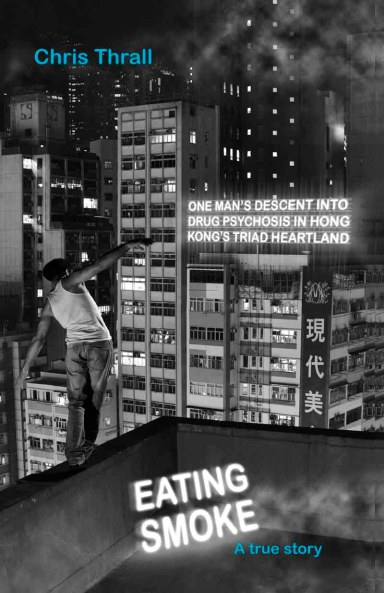
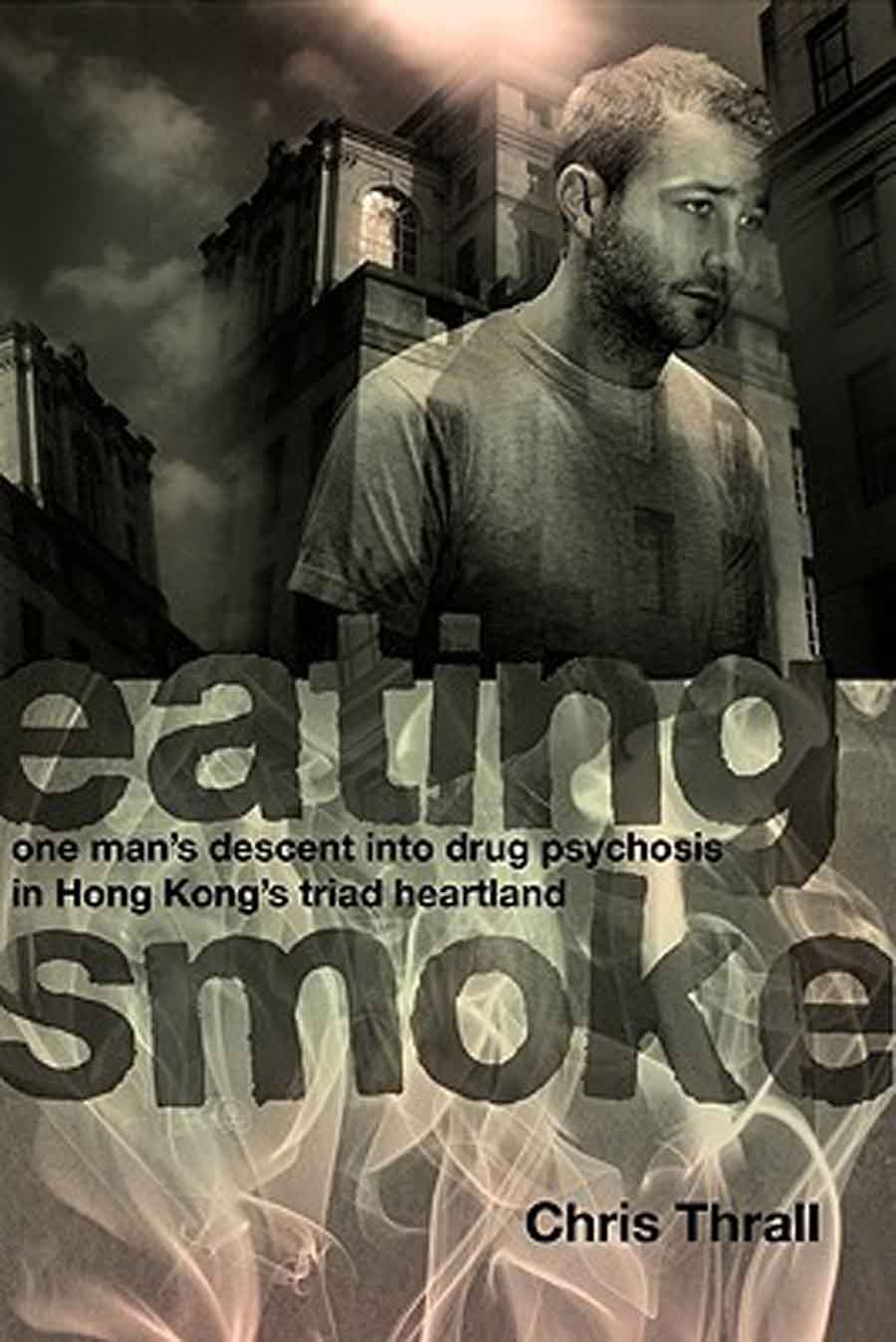



 Posted by Lloyd Lofthouse
 iLook China