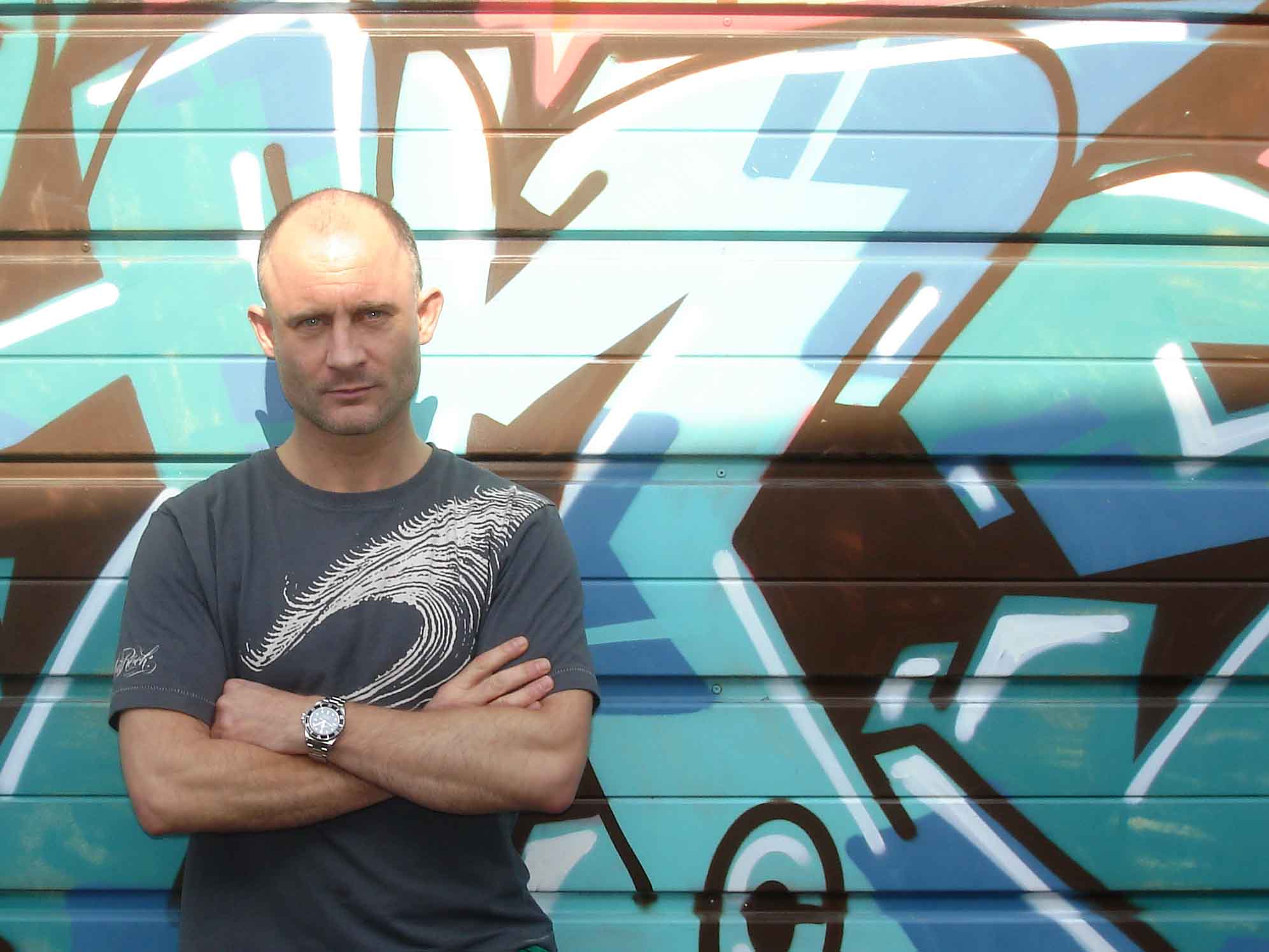
Discussion with Troy Parfitt, the author of “Why China Will Not Rule the World” – Part 2/12

November 28, 2011

First Question [Lofthouse]: Since 1949, Taiwan and mainland China have followed significantly different paths. While Taiwan held onto the old culture, the mainland went through a painful metamorphosis to rise from the ashes of the Civil War (1926 – 1949) as if it were a phoenix to be reborn.

One example of these differences may be found in the written language. While Taiwan held onto the old style of writing Mandarin, which goes back thousands of years, Mao simplified the language and instead of writing vertically from bottom right in columns toward the top left, the written language on the mainland was simplified with fewer strokes and is written from the top in horizontal lines from left to right ending in the lower right corner as Western writing does.

In addition, Mao saw Confucianism as a weakness that led to China’s decline in the 19th century as the world’s wealthiest and most technologically advanced nation on the earth — a position it held for about two thousand years. To rid Communist China of this weakness, Mao declared war on Confucius.

However, piety, which is a result of Confucian ethics and morals since the Han Dynasty, remains strong in both cultures. Since you lived in Taiwan and taught ESL for ten years and then traveled as a tourist through mainland China, how would you describe the differences you observed between how piety is practiced in mainland China and Taiwan?

Answer [Parfitt]:

First, as the term pertains to Taiwan, there is no such thing as mainland China. There is China, and there is Taiwan. The word ‘mainland’ denotes a connection, but there isn’t one and never really has been. The Dutch, not the Chinese, were the first to establish controls over Taiwan. When the Dutch arrived, there were a few thousand Fujianese farming families living on the Western plains (they had fled China despite a Qing ban on emigration) and aboriginals living in the mountains. The Dutch were eventually sent packing by the Ming loyalist, Koxinga, who in turn was toppled by the Qing. The Qing asked the Dutch if they wanted Taiwan back. They didn’t, so, mainly to prevent the island from falling into other foreign hands, it was annexed in 1885. The Qing, remember, were Manchus, considered foreign rulers by the Han Chinese.

Even today, the Chinese commemorate their demise. The Manchus admitted they held no jurisdiction over half of Taiwan. The other half they ruled badly.

In 1895, Taiwan was ceded to Japan, and though the Japanese exploited it, living standards exceeded any province in China.

In Cairo, in 1943, Chiang Kai-shek argued that Taiwan had been stolen by the Japanese and ought to be returned.

Roosevelt, Churchill, and Stalin agreed, hence the mainland myth, perpetuated to this day by the Communists and the Nationalists. Approximately 90 percent of Taiwanese want nothing to do with China, and why would they?

In addition to retaining some of the finer aspects of traditional Chinese culture, such as complex characters, Taiwan has liberalized through democratization and represents a major step forward for Chinese civilization.

As for the Confucian concept of piety, it is a core cultural component, virtually identical in China, Taiwan, Hong Kong, Singapore, and Macau. This is unfortunate because Confucianism is dogma. “The plague of heterodox theories can be eliminated by fierce attack,” says the Analects of Confucius. Until people realize the Analects represents only stone-age logic and dictums posing as wisdom, they will remain slaves to tyranny and history.

In China, I was no mere tourist.

Response [Lofthouse]:

The history of Taiwan is interesting.

However, if history decides who rules a territory, the US would not exist, and Hawaii’s native population would still rule an independent country instead of being the 50th state.

Taiwan’s fate was decided by Chiang Kai-shek (a Han Chinese) when he ordered KMT troops to slaughter Taiwanese natives. He ruled Taiwan as a dictator before and after he lost China’s Civil War.

As for democratization, America’s Founding Fathers despised democracy and saw it as a path to mob rule.

Regarding Confucianism, — under Mao, it was seen as a weakness and a brutal war was waged on the philosophy during the Cultural Revolution.

Indeed, Confucianism is but one element of China’s culture, which is a blend of Face, Guanxi, Confucianism, Legalism, Taoism , and Buddhism, etc.

In addition, the Mandate of Heaven plays an important role that often cancels out the negative aspects of Confucianism.

Final Word [Parfitt]:

Taiwan’s history has been irrevocably altered by Chiang Kai-shek, but its fate regarding China has not been decided.

Face is a puerile concept, a license to behave however one pleases.

Guanxi is important in all societies. It only seems more prevalent in China because people discuss it.

Confucianism, Legalism, and Taoism are enlightened philosophies to those who’ve never read them. The essence of Confucianism is obedience. Legalism is Machiavellian. “A weak people means a strong state…” says The Book of Lord Shang. The Tao Te Ching urges rulers to eradicate knowledge and desire. The strains of despotism in these native ideologies speak to communism’s appeal.

Nowhere in Jonathan Spence’s Mao does it say Mao’s Cultural Revolution had to do with waging war on Confucianism. Spence notes Mao “never wrote a single comprehensive analysis of what he intended to achieve by the Cultural Revolution, or… how he expected it to proceed.”

Continued on November 29, 2011 in Discussion with Troy Parfitt, the author of “Why China Will Never Rule the World – Travels in the Two Chinas” – Part 3 or return to Part 1.

See Discovering Intellectual Dishonesty – Part 1

______________

Lloyd Lofthouse is the award-winning author of The Concubine Saga. When you love a Chinese woman, you marry her family and culture too. This is the love story Sir Robert Hart did not want the world to discover.

Subscribe to “iLook China”
Sign up for an E-mail Subscription at the top of this page.

About iLook China


Discussion with Troy Parfitt, the author of “Why China Will Never Rule the World” – Part 1/12

November 27, 2011

Note from Blog’s host: In this discussion, Parfitt has agreed to ask me five questions and I will ask him five. After each answer, a response and then a final word will be allowed. Since each question, answer, response and final word may run 600 to a thousand words, this discussion of China and its culture will be a twelve-part series.

At times during this debate, the reader may sense that ‘Responses’ and ‘Final Words’ are clipped and often incomplete. That may be due to the fact that Parfitt and Lofthouse agreed to limit the number of words for each answer to 350 and 150 words for each ‘response’ in addition to another 150 for the ‘final word’.

In that case, readers may weigh in with comments that may request either Parfitt and/or Lofthouse to respond further. However, comments that insult and are deemed vulgar will not appear and will be “censored“.

Post 12 concludes this discussion with two 500 word ‘Closing Statements’. Each author selected the embedded videos that support his position/opinions.

Part 1 introduces the two authors showing the different paths each took to gain an understanding and education of China’s history, people and culture.

____________________________________

Troy Parfitt is the author of Notes from the Other China – Adventures in Asia and Why China Will Never Rule the World – Travels in the Two Chinas— From Saint John, New Brunswick, Canada, Troy has a background in American history and Canadian political science, as well as accreditation in teaching English as a Second Language (ESL).

Troy lived and taught ESL in Seoul, South Korea for nearly two years and in Taipei, Taiwan for more than ten. It was in Taipei where Troy became interested in Sinology. He currently resides in Canada and is a writing consultant at a Canadian university.

 ____________________________________

Lloyd Lofthouse is the author of The Concubine Saga — In early 1999, he was introduced to China’s history and culture through the woman he would marry a few months later. That education has continued for more than a decade.

His wife was born in Shanghai and grew up during Mao’s Great Leap Forward and then the Cultural Revolution where she spent three years in a labor camp along with tens of millions of mainland Chinese youth to be educated in Mao’s attempt to erase the old culture and make China stronger to recover and survive the Western invasion of Asia. One of Mao’s first moves was to liberate women and elevate them to be equal to men when he famously announced that women held up half of the sky.

Since 1999, Lloyd has traveled extensively in mainland China with his wife as his tutor. In fact, he and his wife have a flat in one of the suburbs of Shanghai. He also spent about a decade learning about China through Robert Hart’s journals and letters (1835- 1911).

Hart is known as the godfather of China’s modernization. The Concubine Sage is the fictional story of Robert Hart’s early years in China and of his real-life love story with a Chinese woman, his concubine Ayaou. Lloyd’s reference library of China fills several shelves in his home office and he has written more than a half-million words about China for this Blog.

Continued on November 28, 2011 in Discussion with Troy Parfitt, the author of “Why China Will Never Rule the World – Travels in the Two Chinas” – Part 2

See Discovering Intellectual Dishonesty – Part 1

______________

Lloyd Lofthouse is the award-winning author of The Concubine Saga. When you love a Chinese woman, you marry her family and culture too. This is the love story Sir Robert Hart did not want the world to discover.

Subscribe to “iLook China”
Sign up for an E-mail Subscription at the top of this page.

About iLook China


Eating Smoke — a question and answer with the author, Chris Thrall – Part 5/5

October 20, 2011

Guest-Post by Tom Carter
Interview with Chris Thrall, author of Eating Smoke continued…

CARTER: Let’s talk about the publishing of Eating Smoke, because I’m sure there are dozens of expats across Asia reading this who feel that they, too, have exciting stories which deserve a place on bookshelves, yet are unsure of how to go about getting published.

So once Blacksmith Books expressed an interest in your proposal what kind of writing process did you embark on to complete the book?

THRALL: After six months of writing, when Blacksmith Books contacted me, I had pretty much the first draft written – 230,000 words at the time. The problem was I’d never studied English above high school level, so I spent a year referring to books, websites and online forums, teaching myself proper punctuation (not what we were taught at school!), grammar, and the art of self-editing.

CARTER: What kind of final editing was done to Eating Smoke? Were there any major changes to it and, overall, was it a hostile or pleasant experience?  I ask because editors and authors don’t usually see eye-to-eye.

THRALL: According to Blacksmith’s editor, the manuscript was structurally sound. I’d pretty much worked out for myself what did and did not need to be in there.

Any anecdote not taking the story forward or adding to the understanding of a character or situation, I took out.

As far as the end result is concerned, it was great to see the manuscript polished, with some incorrectly used words amended, some over-ripe humor taken out, and some excess sentences deleted. That’s not to say it wasn’t a stressful experience at the time.

Editors are good at spotting mistakes and cutting out excess lines. But that can leave un-poetic passages that don’t flow well on the page. My editor and publisher were completely accommodating, allowing me to rewrite any amendments myself in my own writing style – or understanding when I insisted that certain lines were left in the book, for continuity, or sentimental reasons because the story is true-life.

Chris Thrall

CARTER: The literary landscape is changing, some say deteriorating.

Where once New York publishers actually sought out quality literature that would last through the ages (John Steinbeck, Pearl Buck), today they only seem interested in boardroom-created-blockbusters like “Twilight” or throwaway celebrity memoires.

To add insult to injury, newspapers like the “New York Times” are notoriously anti-POD (Print on Demand) and will only review Big 6-published books despite the recent sales surge of self-published titles.

What’s your advice, then, for aspiring authors who lack literary connections but feel that their book is too good for CreateSpace?

THRALL: If you truly believe you have a story that will be of interest to many people, think carefully about sending your manuscript to a busy executive in a publishing house that probably has fifty other manuscripts land on their desk everyday and no time to read them.

Instead, consider hiring (or find) an agent that has some influence with the big players or simply send your first chapter to an author in a similar genre. Authors tend to be very kind and approachable people – as I found out, Tom! – and having been through the process themselves, they know what a publisher is looking for. If they like what they read then there’s a good chance they’ll recommend you.

Writers want other writers to have success. In addition, you’ll get pointers if your writing is lacking in any area. I’m currently writing a free e-book that will be available to download soon from http://www.christhrall.com to guide people through the process of writing a memoir and getting it published.

CARTER: What’s next for Chris Thrall? Tales from your time with the Corps of Her Majesty’s Royal Marines? Or perhaps some fiction?

THRALL: Not sure. You’ll have to ask the readers of Eating Smoke that question!

Return to Eating Smoke – Part 4, start with Part 1, or or if you have the time and do not want to wait for the five-part series to finish posting, click View as Single Page.

Chris Thrall was born in the UK. At eighteen, he joined the Royal Marine Commandos. Following active service in the Northern Ireland Conflict and training in Arctic warfare and survival, he earned his parachutist’s ‘wings’ and went on to serve as part of a high-security detachment onboard an aircraft carrier. In 1995, Chris moved to Hong Kong to oversee the Asia-Pacific expansion of a successful network-marketing operation he’d built, part-time, while serving in the Forces. Less than a year later, he was homeless, hooked on crystal methamphetamine and working for the 14K, Hong Kong’s largest triad crime family, as a doorman in Wanchai’s infamous red-light district. Eating Smoke, a humorous yet deeply moving first book, is his account of what happened.

__________________________

Travel photographer Tom Carter is the author of CHINA: Portrait of a People, a 600-page book of photography from the 33 provinces of China, which may be found on Amazon.com.

To subscribe to “iLook China”, sign up for an E-mail Subscription at the top right-hand side of this page and then follow directions.


Eating Smoke — a question and answer with the author, Chris Thrall – Part 4/5

October 19, 2011

Guest-Post by Tom Carter
Interview with Chris Thrall, author of Eating Smoke continued…

CARTER: A really interesting observation I felt you made in Eating Smoke was of those expatriates who come to places like China looking to assert their dominance over the culture, and those expats who “go native” and completely immerse themselves in the language and customs, sometimes to the point of arrogance towards other foreigners.

Why do westerners behave like this in other countries, and why, in your opinion, do Asian immigrants in America or the UK have seemingly the exact opposite attitude?

THRALL: That’s a good question but probably a long-winded answer. It’s important to remember that not all westerners misbehave when abroad and not all Asian immigrants immerse themselves in or accept western culture and etiquette.

When you consider the West’s history and of colonialism and capitalism – arguably practices that require the population of one country to believe they are racially superior to another’s – it’s not hard to appreciate why some westerners behave this way.

Add to that a “functionalist” education system, a class system, a one-sided record of history…I could go on, couldn’t I?

CARTER: Comparisons are being made between “Eating Smoke” and Gregory David Roberts’ “Shantaram” (about a drug-addicted escaped convict who joins a crime family in Mumbai, India) and Alex Garland’s “The Beach” (young backpackers living on an isolated island in Thailand who goes mad from solitude and drugs).

Have you read either of these, and how does Eating Smoke stand apart in this genre?

THRALL: “Eating Smoke” is 100%  true life – whereas “Shantaram” and “The Beach” are fiction, though loosely based on their authors’ travel experiences, no doubt.

Although it’s on my shelf, I haven’t read “Shantaram”, but “The Beach” is one of my all-time favorites.

The reason “Eating Smoke” stands apart in this genre is that it works – or so the reviewers say – on so many levels and therefore appeals to readers of all ages, sex and genre.

I’m told my story is unique and an eye-opener and that my writing style – honesty, humor, originality, and pacing – makes the book impossible to put down. Even though it is over 500 pages as a traditional paperback, I often receive Facebook messages and emails from people who have read it in two days.

CARTER: I’d like to go on record as saying that I think “Eating Smoke” has “Hollywood” written all over it, and I expect your story to be optioned for film rights. Johnny Depp is slated to play the lead role in “Shantaram”, and Leo DiCaprio starred in “The Beach”.

Do you have any preference for actors to play yourself in “Eating Smoke”: The Motion Picture, like Shia LaBeouf or Justin Bieber (just joking!)? Who would you want to direct?

THRALL: *laughing* So long as the guy was English, a good actor, and resembled my character at the time, I wouldn’t mind. I don’t have a preference – I’m not that clued up on 25-year old English actors, to be honest!

As for a director, Danny Boyle would be my choice. I loved “The Beach”, “Trainspotting”, “Slumdog Millionaire” and “127 Hours”. It would require someone with his perception to be able replicate the psychosis that I experienced, accurately.

Continued on October 20, 2011  in Eating Smoke – Part 5, return to Part 3, or if you have the time and do not want to wait for the five-part series to finish posting, click View as Single Page.

Chris Thrall was born in the UK. At eighteen, he joined the Royal Marine Commandos. Following active service in the Northern Ireland Conflict and training in Arctic warfare and survival, he earned his parachutist’s ‘wings’ and went on to serve as part of a high-security detachment onboard an aircraft carrier. In 1995, Chris moved to Hong Kong to oversee the Asia-Pacific expansion of a successful network-marketing operation he’d built, part-time, while serving in the Forces. Less than a year later, he was homeless, hooked on crystal methamphetamine and working for the 14K, Hong Kong’s largest triad crime family, as a doorman in Wanchai’s infamous red-light district. Eating Smoke, a humorous yet deeply moving first book, is his account of what happened.

__________________________

Travel photographer Tom Carter is the author of CHINA: Portrait of a People, a 600-page book of photography from the 33 provinces of China, which may be found on Amazon.com.

To subscribe to “iLook China”, sign up for an E-mail Subscription at the top right-hand side of this page and then follow directions.


Eating Smoke — a question and answer with the author, Chris Thrall – Part 3/5

October 18, 2011

Guest-Post by Tom Carter
Interview with Chris Thrall, author of Eating Smoke continued…

CARTER: One of the main characters in “Eating Smoke” is a Filipina prostitute named Apple who, after being your friend, sells you out to the triads.  Filipinos are the second largest ethnic group in Hong Kong, however their career paths seem to be limited as nannies for wealthy families, cover bands, or bar girls.

Why is that, and do you think their situation will ever improve?

THRALL: I think it’s because the Philippines’ economy is relatively poor when compared to Hong Kong’s. Even with the pittance they receive in wages, these women are able to send a lot of hard-earned dollars home to their families, while getting a travel experience they likely otherwise ill afford.

As to whether their situation will improve, Filipinos are generally humble, in my experience. They don’t complain and seem to appreciate the chance to earn money abroad.

Of course, wherever there is inequality, they’ll be incidents of exploitation, which isn’t nice. But if their union – if there is such a thing – pushed for higher pay then perhaps the demand for their services would drop off as there are Hong Kong locals who could fill these jobs.

CARTER: Another reoccurring character in Eating Smoke is an expatriate named Cameron who insists on trying crystal meth despite your warnings of its highly addictive nature.  Cameron shows up later in the book exclaiming how much he loves the drug even though it’s obvious that he, too, is now addicted.  To quote a passage in your book, “Unable to stop and not wanting to anyway.”

What about methamphetamine makes it so popular even though everyone knows that it can, nay, will destroy you?

THRALL: I can only speak from my own experience. Some people try meth and say, “Ah. It’s OK. But nothing special.” Then get on with their life. For others it seems to be the key in lock, the answer to all of life’s insecurities and problems. Perhaps people in the former category have had more stable upbringings and hence less insecurity and the resultant need to feel “right” for a change.

A drug that makes you feel cool, calm and supremely confident, in addition to giving you a massive surge of creative energy – allowing you to discover abilities you were told you were a failure at in school – is always going to be in demand.

The problem is, like Superman with his Kryptonite, you begin to crave that feeling more and more to the point where you no longer feel normal without it. That’s called addiction. Either you beat it or it destroys you.

Continued on October 19, 2011  in Eating Smoke – Part 4, return to Part 2 or if you have the time and do not want to wait for the five-part series to finish posting, click View as Single Page.

Chris Thrall was born in the UK. At eighteen, he joined the Royal Marine Commandos. Following active service in the Northern Ireland Conflict and training in Arctic warfare and survival, he earned his parachutist’s ‘wings’ and went on to serve as part of a high-security detachment onboard an aircraft carrier. In 1995, Chris moved to Hong Kong to oversee the Asia-Pacific expansion of a successful network-marketing operation he’d built, part-time, while serving in the Forces. Less than a year later, he was homeless, hooked on crystal methamphetamine and working for the 14K, Hong Kong’s largest triad crime family, as a doorman in Wanchai’s infamous red-light district. Eating Smoke, a humorous yet deeply moving first book, is his account of what happened.

__________________________

Travel photographer Tom Carter is the author of CHINA: Portrait of a People, a 600-page book of photography from the 33 provinces of China, which may be found on Amazon.com.

To subscribe to “iLook China”, sign up for an E-mail Subscription at the top right-hand side of this page and then follow directions.