This holistic timeline in no way represents all of China’s history. This menu of China’s history is here for individuals who want to learn about China and the Chinese from near the beginning to today.
What I’ve done is provide links in chronological order—or as close as possible—to posts on this site that offer a look at China’s long history and her people. Click on the links [in red] to discover some of China’s historical, cultural and artistic evolution.
If you see a post that you feel is in the wrong time slot, let me know and I will look into it. New links may be added at any time.
This timeline takes up a lot of memory and may load too slowly. That is why I divided the timeline up into five parts. If your system can handle the larger file, click on Timeline Viewed as Single Page. However, if the single page loads too slowly, stick to the five parts and visit one at a time.
Lloyd Lofthouse is the award-winning author of My Splendid Concubine [3rd edition]. When you love a Chinese woman, you marry her family and culture too. This is the love story Sir Robert Hart did not want the world to discover.
Subscribe to “iLook China”!
Sign up for an E-mail Subscription at the top of this page, or click on the “Following” tab in the WordPress toolbar at the top of the screen.
In February 2010, Gallup reported, “In general, the larger group of Asian-Americans tends to be more Democratic and more liberal than average Americans. Exit-poll data from the 2008 presidential election generally confirm this, with Asian-American voters having supported Barack Obama over John McCain by roughly a 2-to-1 margin.”
In fact, Asian Week says Chinese-Americans voted for President Obama by more than a 3-1 ratio.
Now that we have discovered that more than 75% of Chinese-Americans vote Democratic and are considered liberal, they may be surprised to discover that they fear Global Warming, trust what they read or hear in the traditional media, trust (scientific) experts more than emotional opinions, and are prone to hysteria.
If you are Asian-American or Chinese-American, does that describe you?
In Environmentalism in China, I mentioned that an “old” friend of mine all but “worships” this man. In fact, my “old” friend sounds as if he were a “Prager Parrot” (used as a metaphor).
For more about this embedded video, click on
HIV/AIDS Global Pandemic
Dennis Prager is an American syndicated radio talk show host, syndicated columnist, author and public speaker noted for his conservative political and social views.
In addition, Prager graduated from Brooklyn College in 1970 with a major in Middle Eastern Studies and History. He then studied at the Russian Institute at Columbia University.
He started broadcasting on radio in Los Angeles in 1982. Today, his talk show appears on about 100 radio stations across the nation influencing the opinions of millions of people that believe if you vote Democratic and/or believe Global Warming “may” be caused by carbon emissions, you are a hysterical leftist-liberal.
To understand Dennis Prager and his flock of Parrots (used as a metaphor), one must know the difference between facts, theories and opinions.
A fact has undisputed evidence to support its truth and is driven by rational thought. In science, “fact” is an objective and verifiable observation. For example, several centuries ago, many in the West held an opinion that the earth was flat and that the sun and stars revolved around the earth until explorers (such as Christopher Columbus) and scientists proved that wasn’t true.
A scientific theory is a well-confirmed hypothesis that explains a large body of facts inspired by a large body of research. When the body of research is convincing, many people accept the theory as a potential fact.
Since most of our objective and verifiable observations come from experts and/or scientists, according to Dennis Prager, if you believe these experts about Global Warming, you would be a hysterical leftist-liberal that trusts what the traditional media reports as news.
An opinion is based on a belief or personal view and varies according to an individual’s knowledge, experience, culture, beliefs and is driven and reinforced by emotion. An opinion may also be a simple, uniform message designed to be acceptable to a large number of people. An opinion is not a fact, because opinions have not been proven or verified.
As we know, Google returned to China on China’s terms. Did Prager later apologize for his praise of Google’s Sergey Brin after Google backed down? Prager says he suspects China needs Google more. Wrong again. China has Baidu, which is a search engine with about 76% of the search traffic in China.
In the Global Warming essay, Prager says, “Observers of contemporary society will surely have noted that a liberal is far more likely to fear global warming than a conservative.”
In the previous opening sentence of his essay of Global Warming, Prager defined the difference between liberals and conservatives in a simple generalization, which is an opinion and he has no facts to support what he claims.
However, to Prager and his fans, if you fear global warming, you are a leftist-liberal and are prone to hysteria. He then goes on to say that leftists also believes what The New York Times and other liberal news sources report, which means if you are a liberal, you will believe almost anything you hear or read in the mainstream media.
However, Gallup reported in September 2010 that “Distrust in U.S. Media edges Up to Record High” saying, “For the fourth straight year, the majority of Americans say they have little or no trust in the mass media to report the news fully, accurately and fairly.”
The Gallup study also reveals that 33% of conservatives had a great deal of trust in the media while 46% of liberals had little or no trust.
Hmm, if we return to Prager’s opinion (I meant essay), we see that he said, “Liberals rarely question the authority of the mainstream media,” but when we examine the facts gathered by experts working for Gallup, this isn’t true.
Do you see the difference between Prager’s opinions and the facts, and how he relies on reinforcing his opinions by using terms that manipulate emotions?
Did you know that Prager wrote in the Jewish World Review that Mao “butchered” 60 million Chinese? However, there are no facts from eyewitnesses to support the claims and opinions that Mao deliberately “butchered” any Chinese. To discover more, I suggest you read China’s Great Famine – Fact or Fiction.
Dennis Prager says that liberal and/or leftists tend to trust experts more, are more likely to revere and even “worship” nature, while fearing death more than a conservative. Does this sound like a stereotype?
Pay attention to the emotional words Prager uses to drive his fans to accept his opinions. To a conservative, born again Christian reading that someone “worships” nature over God is a mortal sin and unforgivable.
This is how Prager manipulates the emotions of those that believe what he preaches. Has any expert studied if conservatives fear death less than liberal-leftists do? I doubt it.
He infers that if we allow the leftist-liberals to focus too much on reducing carbon emissions to deal with the potential threat of Global Warming, which he infers is a hoax, we will “lose the war” against “Islamic fascism” that threatens the free world.
Wow! That is HUGE leap of flawed logic. Imagine how “lose the war against Islamic fascism” is going to inflame the emotions of his conservative audience driving them to believe his opinions.
In addition, how is this going to happen? Well, by too many of us wasting our time working to cut back on carbon emissions reducing pollution so Global Warming may not threaten the world we live in.
To discover more of Prager’s fraud, I suggest watching To Hell and Back and discover that only one percent of the American population is fighting the war in Afghanistan and Iraq—to stop Prager’s “Islamic fascism” from taking over the world.
In addition, if we develop alternative forms of energy and break our Middle Eastern oil habit, won’t that help defeat Prager’s “Islamic fascism” by cutting off the West’s money from flowing into the Middle East?
Prager Claims “Equality” Isn’t American (because controversy is the bread and butter of talk radio)
If only one percent of Americans are fighting the war against Prager’s “Islamic fascism”, then why can’t the other 99% deal with the potential threat of Global Warming “possibly” caused by carbon emissions as supported by facts gathered and interpreted by many experts — In 1997, Science Daily reported that more than 1,500 of the world’s most distinguished senior scientists, including the majority of Nobel laureates in science, signed a consensus declaration urging leaders worldwide to act and prevent potentially devastating consequences of human-induced global warming.
However, in his Global Warming essay, Prager urges us to ignore these experts — that is unless we want to be seen as a hysterical, death fearing leftist-liberal.
In addition, if you click on that link To Hell and Back, you will discover from the video that many of America’s troops believe the wars (in Afghanistan and Iraq) are wrong.
A recent Pew research poll found that a third of American veterans who served after 9/11 believe the wars in Iraq and Afghanistan are not worth fighting.
Did you know that in Townhall.com, Dennis Prager wrote, “The president (of the US) does not wish to annoy China’s dictators prior to his upcoming visit to Beijing?”
However, Prager is wrong again. If we use the accepted definition, a dictator does not rule China today. Instead, China is a one-party Republic and China’s leaders are selected by the consensus of 80 million Communist Party members — a decision based on the merit of the individuals running for the position (instead of the popularity contest of American politics), which I wrote about in Dictatorship or one party-republic.
It is obvious why Prager used the word “dictator” to describe China’s government — to stir emotions driving his fanatical followers (Prager’s Parrots — used as a metaphor) to accept his opinions as if they were facts.
Did you know Dennis Prager wrote on Creators.com that, “Consider the facts (I’m surprised he used this word): Tibet, at least 1,400 years old, is one of the world’s oldest nations, has its own language, its own religion and even its own ethnicity. Over 1 million of its people have been killed by the Chinese, its culture has been systematically obliterated, 6,000 of its 6,200 monasteries have been looted and destroyed, and most of its monks have been tortured, murdered or exiled.”
All of Prager’s emotionally driven claims such as “killed, obliterated, looted, destroyed, tortured, murdered or exiled” have been proven wrong, but most of Prager’s Parrots are not interested in the facts. I say that Prager owes China an apology.
In fact, Tibet was not a nation until 1911 when the British convinced the Dalai Lama to declare freedom from China, after having been ruled by China since 1279 AD during the Yuan Dynasty, then the Ming Dynasty starting in 1368 AD and last the Qing Dynasty until its collapse in 1911.
In addition, only one percent of all Tibetans are self-exiled from Tibet. China did not drive those former landowners and Buddhist monks out of Tibet — they fled and there is no evidence other than emotional opinions that China killed over 1 million Tibetans in 1950.
All the “facts” are there for anyone willing to trust the experts and sources such as Sir Robert Hart (1835 – 1911) and a piece published in the October 1912 National Geographic Magazine by an expert Western trained medical doctor named Shaoching H. Chuan, M.D. that happened to spend two years in Tibet starting in 1907 after the last Qing emperor ordered him there to deal with a cholera epidemic.
In addition, Prager forgot to mention that there are more than sixty spoken languages in China and one written one. China has 56 minorities and each has its own language as the Tibetan minority does. It’s been this way in China for more than 2,000 years.
In fact, by not mentioning America’s native minorities, Dennis Prager is a hypocrite and deceitful.
North American native tribes and nations were free and governed themselves for more than ten thousand years (much longer than the 1,400 years he claims Tibet governed itself before 1950) before Europeans arrived and drove them from their land.
If you visit Native American Nations, you will discover how many spoke their own languages and many still do — the only difference is today native Americans live on reservations and the US Department of the Interior is responsible for the administration of programs relating to Native Americans, Alaska Natives and Native Hawaiians.
One example is the Navaho Nation, the largest Native American reservation in the United States, which is in Arizona. The Navaho Nation covers 27,425 sq miles (71,000 km2) with a population of about 174,000.
The Navajo Nation, like Tibet, is a semi-autonomous Native American-governed territory within the United States.
Another example is the Cherokee Nation, which had its own written language developed early in the 19th century by a mixed-blood Cherokee called Se-Quo-Yah, so the Cherokee Nation would be considered educated, literate and capable of governing itself as an equal, independent nation.
However, this did not stop the United States from breaking treaties and waging war with the Cherokee Nation to exploit the natural resources of their land. It’s called conquest and anyone that studies history knows this is a natural part of the evolution of all species including man.
How is this situation different from Tibet and China? Native Americans had their own religions too and were not allowed to practice them by the United States, while China allows Tibetan Buddhists to practice their religion within a semi autonomous territory, which is administered by a CCP government agency similar to the US Department of the Interior.
Another fact that Prager conveniently left out of his opinionated rant of an essay is that after 1976, China rebuilt many of the Buddhist temples in Tibet that were destroyed during Mao’s Cultural Revolution when religions in China were banned and the entire population suffered.
Today, there are seven-major religions in China including Christianity and Islam.
Rush Limbaugh, the host of the number-one conservative talk-radio show, explains how talk-radio works.
Michael Orion Powell writes, “Prager is a good example of what happens when a commentator ties himself to one side of the political spectrum permanently.”
By Seattle standards, Michael Powell calls himself a conservative, but by actual conservative standards (as defined by talk show hosts such as Dennis Prager), he says he is a raving liberal.
In addition, decades ago, I too listened to Rush Limbaugh and then deserted him for Dennis Prager.
I eventually fled Prager too, after I questioned his emotionally driven opinions and compared them to the facts of experts discovering that he was often wrong and misleading. Now that I’m an ex-Prager Parrot, I guess that makes me a leftist-liberal prone to hysteria that fears death even though I support the Second Amendment to the US Constitution, which guarantees the right to bear arms (weapons such as rifles and pistols).
So, we either trust the emotionally-driven opinions of conservative talk-show hosts such as Dennis Prager (with a major in Middle Eastern Studies and History who also studied about Russia), or trust 1,500 of the world’s most distinguished senior scientists, including the majority of Nobel laureates in science.
And the truth is, there is a chance the experts could be wrong about Global Warming, since it is only a theory supported by facts, but are we willing to risk ignoring them and support an unproven opinion as Prager and his Parrots argue?
From Griffith University, Australia, Poverty, by David C. Schak, Associate Professor
______________________________
Lloyd Lofthouse is the award-winning author of My Splendid Concubine [3rd edition]. When you love a Chinese woman, you marry her family and culture too. This is the unique love story Sir Robert Hart did not want the world to discover.
Subscribe to “iLook China”!
Sign up for an E-mail Subscription at the top of this page, or click on the “Following” tab in the WordPress toolbar at the top of the screen.
Lloyd Lofthouse is the award-winning author of My Splendid Concubine [3rd edition]. When you love a Chinese woman, you marry her family and culture too. This is the love story Sir Robert Hart did not want the world to discover.
Subscribe to “iLook China”!
Sign up for an E-mail Subscription at the top of this page, or click on the “Following” tab in the WordPress toolbar at the top of the screen.
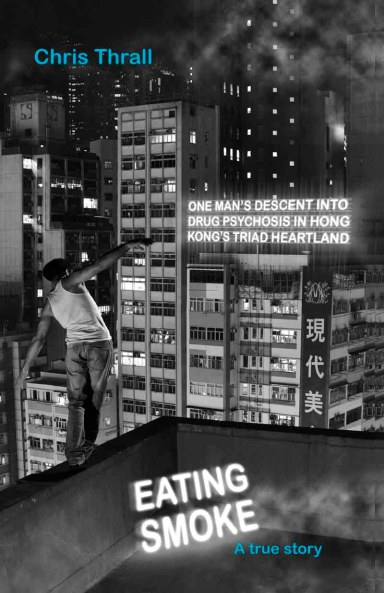
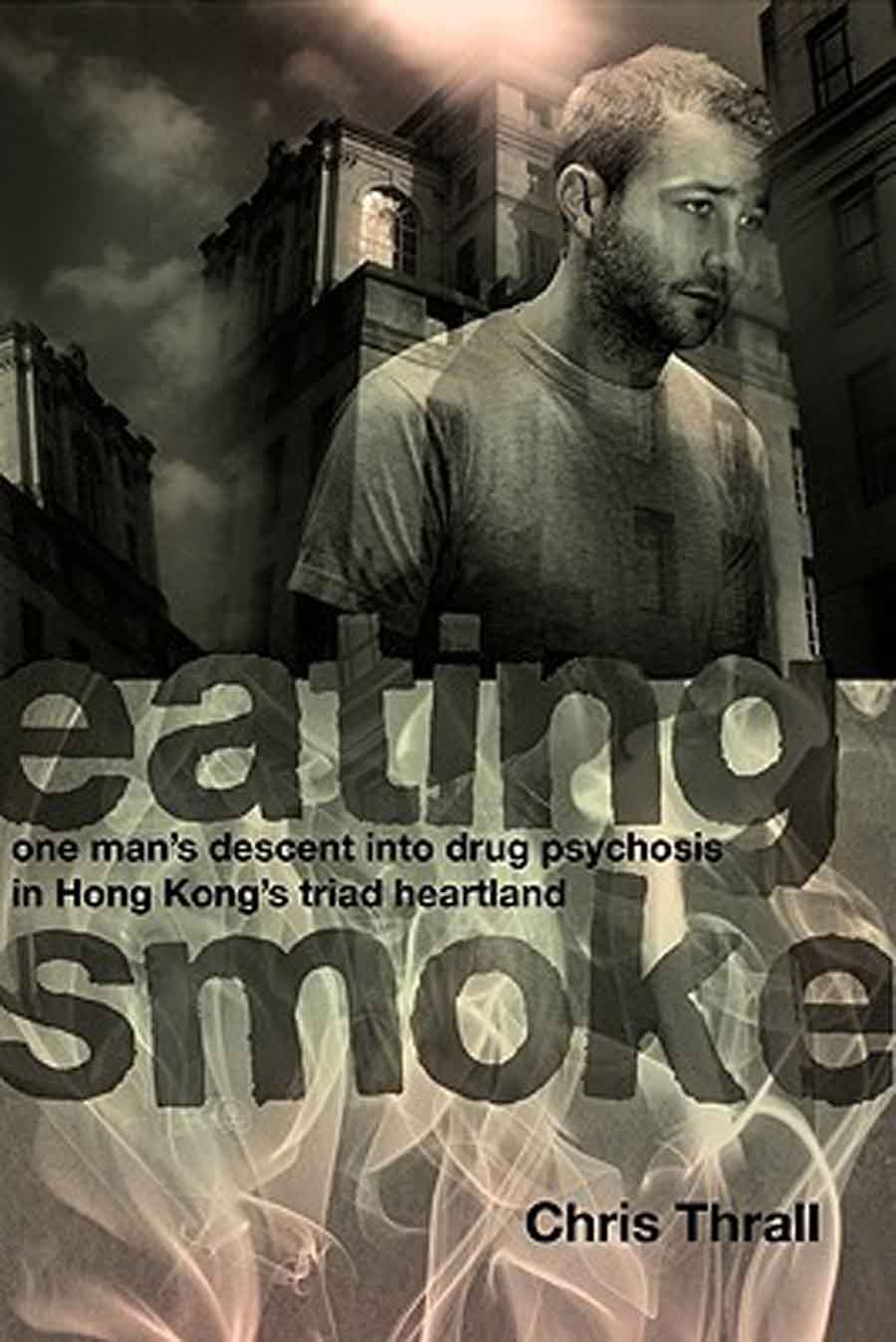
Tom Carter, author of “CHINA: Portrait of a People”, catches up with Chris Thrall to discuss his new book “Eating Smoke“, a memoir about Thrall’s descent into drug psychosis in Hong Kong’s triad heartland.
“In the fall of 2009,” says Tom Carter, “whilst traveling in India to create my next photography book, I was contacted via email by a British writer who had read Down and out in Hong Kong, one of my online travel articles, which described this poor, dusty backpacker’s real-time impressions of Asia’s wealthiest city.”
Chris Thrall said he connected with my article’s conclusion that, in spite of my western heritage, and due to my personal circumstances, I ultimately had more in common with the destitute third-world inhabitants of the Chungking Mansions, the infamous immigrant ghetto of Kowloon, than I did with the rich white bankers et al who comprise the other half of Hong Kong’s multinational population.
Chris went on to explain that he was writing a book about his own experiences living in Hong Kong, which was dramatically different from mine or any other expatriate I ever knew, and that he once worked for the 14K, the world’s largest Chinese crime family.
Attached to his email was the first chapter of his memoir, a gripping opening salvo that finds the narrator hiding from pursuing henchmen on a roof top—alongside two corpses, a disemboweled mother and child.
As a voracious reader, I know a bestseller when I see it. I immediately forwarded Chris’s manuscript to my publisher in Hong Kong, Pete Spurrier, who runs the iconic Blacksmith Books, which specializes in Asian-themed literature.
Pete likewise was knocked off his feet by Chris’s incredible story; the next I heard, Chris was a fellow Blacksmith label mate with a book deal.
Chris Thrallwas born in the UK. At eighteen, he joined the Royal Marine Commandos. Following active service in the Northern Ireland Conflict and training in Arctic warfare and survival, he earned his parachutist’s ‘wings’ and went on to serve as part of a high-security detachment onboard an aircraft carrier. In 1995, Chris moved to Hong Kong to oversee the Asia-Pacific expansion of a successful network-marketing operation he’d built, part-time, while serving in the Forces. Less than a year later, he was homeless, hooked on crystal methamphetamine and working for the 14K, Hong Kong’s largest triad crime family, as a doorman in Wanchai’s infamous red-light district.
“Eating Smoke“, a humorous yet deeply moving first book, is his account of what happened.
On October 16, 2011, nearly two years since Chris Thrall originally contacted me, his long-awaited book, “Eating Smoke”, will be released in America and Amazon.com.
Advanced sales have already brought the title to the top of the Hong Kong bestseller list (patting my own back for my prediction) while Eating Smoke has achieved a massive cult following on Facebook. Hailed as a “Sin – Shantaram” in a review by the South China Morning Post, and being compared by fans to Alex Garland’s The Beach for its drug-adelic theme, we can now confidently predict that Eating Smoke will, too, be optioned for film rights and follow those popular books to Hollywood.
Despite his past connections with Chinese triads, and in spite of his newfound celebrity as a bestselling author, Thrall remains one of the nicest and humblest people I have ever had the pleasure of knowing…even though I have yet to actually meet the man in person. So it wasn’t too hard to twist his arm into putting my Q&A at the top of his to-do list of media interview requests (ah, the fame!).
TOM CARTER: My first and most pressing question, Chris, is if you are at all worried that the 14K will be hitting you up for a percentage of your book royalties once word of Eating Smoke’s success trickles up the Wan Chai gangland hierarchy?
CHRIS THRALL: Ha ha! The news from Hong Kong is that “serious players” are reading my book as we speak. But I’m not worried as it’s not a tell-all on Hong Kong organized crime. It’s more the story of a former Royal Marine Commando who thought he knew a bit about life, who then moves to Asia to run what was a successful business but spirals down into psychosis from drug addiction.
In that respect, Eating Smoke is unique. I’m not aware of any other book that gives the reader the opportunity to experience what it’s actually like to descend into mental illness through the eyes of someone as they do. I just happened to work for the 14K as a nightclub doorman – moreover, their “East-West go-between” – when it happened.
CARTER: Eating Smoke is about your decent into drug psychosis in Hong Kong’s triad heartland, but it’s also about the series of unfortunate, albeit hilarious, events that prevented you from ever finding your financial footing in Hong Kong, ironically Asia’s wealthiest city; a “testament to the stark reality and ephemeral nature of the relationship between people, drugs and profit,” as you wrote in the book.
Do you have anything to say to all those coked-out rich white bankers that Hong Kong is notorious for?
THRALL: No! I have nothing to say to anyone – coked-out rich white bankers included. If people truly enjoy what they do, they should carry on doing it.
Personally, I didn’t want to see my youth slipping away in a suit as I chased dollar signs at the expense of more fulfilling experiences. So having overcome addiction, I made an inventory of what I wanted to get out of life. Then I set out across six continents through seventy-five countries to get it. Writing a book was the last thing on my bucket list.
CARTER: China is adamantly anti-drugs, and the court system does not hesitate to execute drug traffickers, even foreigners.
In fact, China even blames foreigners for being responsible for a majority of its drug trade, a grudge no doubt held over from the Opium Wars. Even though there are arguments to be made against the death penalty, the fact remains that, due to their zero-tolerance policy, China has one of the world’s lowest crime rates, a statistic that, all things considered, I’m sure America and the UK envy.
As a former drug user, what’s your take on criminalization of drugs, and do you think the west should follow China’s example?
THRALL: I don’t have a take on it. I’m not a spokesperson on substance use or the law surrounding it. I just told my own story.
However, research would likely show that mankind has always taken drugs in various forms and continues to do so (alcohol and cigarettes often cited as the most damaging), which might suggest that education on their usage and dangers is the way forward, in addition to harm-prevention strategies.
As for crime, a sociologist once said that a zero crime rate would make society a frightening place to be. I think Orwell’s 1984 was meant to imply this. I take no stance on drugs per se or cast judgment on people who choose to buy, sell, or use them.
It was addiction that I battled and that’s a separate issue. It’s a psychological condition that could relate to gambling, sex or food. It makes you wonder how prohibition could ever fix this.
CARTER: One of the main characters in “Eating Smoke” is a Filipina prostitute named Apple who, after being your friend, sells you out to the triads. Filipinos are the second largest ethnic group in Hong Kong, however their career paths seem to be limited as nannies for wealthy families, cover bands, or bar girls.
Why is that, and do you think their situation will ever improve?
THRALL: I think it’s because the Philippines’ economy is relatively poor when compared to Hong Kong’s. Even with the pittance they receive in wages, these women are able to send a lot of hard-earned dollars home to their families, while getting a travel experience they likely otherwise ill afford.
As to whether their situation will improve, Filipinos are generally humble, in my experience. They don’t complain and seem to appreciate the chance to earn money abroad.
Of course, wherever there is inequality, they’ll be incidents of exploitation, which isn’t nice. But if their union – if there is such a thing – pushed for higher pay then perhaps the demand for their services would drop off as there are Hong Kong locals who could fill these jobs.
CARTER: Another reoccurring character in Eating Smoke is an expatriate named Cameron who insists on trying crystal meth despite your warnings of its highly addictive nature. Cameron shows up later in the book exclaiming how much he loves the drug even though it’s obvious that he, too, is now addicted. To quote a passage in your book, “Unable to stop and not wanting to anyway.”
What about methamphetamine makes it so popular even though everyone knows that it can, nay, will destroy you?
THRALL: I can only speak from my own experience. Some people try meth and say, “Ah. It’s OK. But nothing special.” Then get on with their life. For others it seems to be the key in lock, the answer to all of life’s insecurities and problems. Perhaps people in the former category have had more stable upbringings and hence less insecurity and the resultant need to feel “right” for a change.
A drug that makes you feel cool, calm and supremely confident, in addition to giving you a massive surge of creative energy – allowing you to discover abilities you were told you were a failure at in school – is always going to be in demand.
The problem is, like Superman with his Kryptonite, you begin to crave that feeling more and more to the point where you no longer feel normal without it. That’s called addiction. Either you beat it or it destroys you.
CARTER: A really interesting observation I felt you made in Eating Smoke was of those expatriates who come to places like China looking to assert their dominance over the culture, and those expats who “go native” and completely immerse themselves in the language and customs, sometimes to the point of arrogance towards other foreigners.
Why do westerners behave like this in other countries, and why, in your opinion, do Asian immigrants in America or the UK have seemingly the exact opposite attitude?
THRALL: That’s a good question but probably a long-winded answer. It’s important to remember that not all westerners misbehave when abroad and not all Asian immigrants immerse themselves in or accept western culture and etiquette.
When you consider the West’s history and of colonialism and capitalism – arguably practices that require the population of one country to believe they are racially superior to another’s – it’s not hard to appreciate why some westerners behave this way.
Add to that a “functionalist” education system, a class system, a one-sided record of history…I could go on, couldn’t I?
CARTER: Comparisons are being made between “Eating Smoke”and Gregory David Roberts’ “Shantaram” (about a drug-addicted escaped convict who joins a crime family in Mumbai, India) and Alex Garland’s “The Beach” (young backpackers living on an isolated island in Thailand who goes mad from solitude and drugs).
Have you read either of these, and how does Eating Smoke stand apart in this genre?
THRALL: “Eating Smoke” is 100% true life – whereas “Shantaram” and “The Beach” are fiction, though loosely based on their authors’ travel experiences, no doubt.
Although it’s on my shelf, I haven’t read “Shantaram”, but “The Beach” is one of my all-time favorites.
The reason “Eating Smoke” stands apart in this genre is that it works – or so the reviewers say – on so many levels and therefore appeals to readers of all ages, sex and genre.
I’m told my story is unique and an eye-opener and that my writing style – honesty, humor, originality, and pacing – makes the book impossible to put down. Even though it is over 500 pages as a traditional paperback, I often receive Facebook messages and emails from people who have read it in two days.
CARTER: I’d like to go on record as saying that I think “Eating Smoke” has “Hollywood” written all over it, and I expect your story to be optioned for film rights. Johnny Depp is slated to play the lead role in “Shantaram”, and Leo DiCaprio starred in “The Beach”.
Do you have any preference for actors to play yourself in “Eating Smoke”:The Motion Picture, like Shia LaBeouf or Justin Bieber (just joking!)? Who would you want to direct?
THRALL: *laughing* So long as the guy was English, a good actor, and resembled my character at the time, I wouldn’t mind. I don’t have a preference – I’m not that clued up on 25-year old English actors, to be honest!
As for a director, Danny Boyle would be my choice. I loved “The Beach”, “Trainspotting”, “Slumdog Millionaire” and “127 Hours”. It would require someone with his perception to be able replicate the psychosis that I experienced, accurately.
CARTER: Let’s talk about the publishing of Eating Smoke, because I’m sure there are dozens of expats across Asia reading this who feel that they, too, have exciting stories which deserve a place on bookshelves, yet are unsure of how to go about getting published.
So once Blacksmith Books expressed an interest in your proposal what kind of writing process did you embark on to complete the book?
THRALL: After six months of writing, when Blacksmith Books contacted me, I had pretty much the first draft written – 230,000 words at the time. The problem was I’d never studied English above high school level, so I spent a year referring to books, websites and online forums, teaching myself proper punctuation (not what we were taught at school!), grammar, and the art of self-editing.
CARTER: What kind of final editing was done to Eating Smoke? Were there any major changes to it and, overall, was it a hostile or pleasant experience? I ask because editors and authors don’t usually see eye-to-eye.
THRALL: According to Blacksmith’s editor, the manuscript was structurally sound. I’d pretty much worked out for myself what did and did not need to be in there.
Any anecdote not taking the story forward or adding to the understanding of a character or situation, I took out.
As far as the end result is concerned, it was great to see the manuscript polished, with some incorrectly used words amended, some over-ripe humor taken out, and some excess sentences deleted. That’s not to say it wasn’t a stressful experience at the time.
Editors are good at spotting mistakes and cutting out excess lines. But that can leave un-poetic passages that don’t flow well on the page. My editor and publisher were completely accommodating, allowing me to rewrite any amendments myself in my own writing style – or understanding when I insisted that certain lines were left in the book, for continuity, or sentimental reasons because the story is true-life.
Chris Thrall
CARTER: The literary landscape is changing, some say deteriorating.
Where once New York publishers actually sought out quality literature that would last through the ages (John Steinbeck, Pearl Buck), today they only seem interested in boardroom-created-blockbusters like “Twilight” or throwaway celebrity memoires.
To add insult to injury, newspapers like the “New York Times” are notoriously anti-POD (Print on Demand) and will only review Big 6-published books despite the recent sales surge of self-published titles.
What’s your advice, then, for aspiring authors who lack literary connections but feel that their book is too good for CreateSpace?
THRALL: If you truly believe you have a story that will be of interest to many people, think carefully about sending your manuscript to a busy executive in a publishing house that probably has fifty other manuscripts land on their desk everyday and no time to read them.
Instead, consider hiring (or find) an agent that has some influence with the big players or simply send your first chapter to an author in a similar genre. Authors tend to be very kind and approachable people – as I found out, Tom! – and having been through the process themselves, they know what a publisher is looking for. If they like what they read then there’s a good chance they’ll recommend you.
Writers want other writers to have success. In addition, you’ll get pointers if your writing is lacking in any area. I’m currently writing a free e-book that will be available to download soon from http://www.christhrall.com to guide people through the process of writing a memoir and getting it published.
CARTER: What’s next for Chris Thrall? Tales from your time with the Corps of Her Majesty’s Royal Marines? Or perhaps some fiction?
THRALL: Not sure. You’ll have to ask the readers of Eating Smoke that question!
I have an “old” friend who often takes conservative theories, opinions and conjecture fueled by emotions, and believes in them as if God wrote them with His own hand.
In addition, many people believe any claim if it supports their own biased opinions and will attack anyone that disagrees with them no matter how valid the evidence presented. However, when it comes to China, that reaction is understandable due to Western democracies partnership with capitalism, which is the polar opposite of communism/socialism.
It makes sense that many in the West will bend over backwards (even fabricate evidence) to demonize anything from a rival seen as evil that was already demonized for decades during the West’s Cold War with global communism. In addition, the West fought three wars with communism in Korea, Cuba and Vietnam. The first ended in a stalemate and the other two were lost.
In other words, prejudice in the West of any country linked to socialism/communism is hardwired to be biased.
In this case, Mao has been tried and convicted in the court of public opinion of the crime of mass murder based on exaggerated theories and opinions supported by inflated evidence.
I wrote on this topic before in China’s Great Famine (1959-1961) Fact of Fiction. That doesn’t mean I was finished with it. If you shake a few trees, something falls out and you learn something new and compelling on a controversial topic, it’s time to return to the subject.
This time, I went looking for recent books about China and ran into several titles that perpetuated the myth that thirty to forty-five million (or more) people died during the Great Leap Forward (GLF) when in fact there may have been no massive loss of life due to the GLF — at least not in the numbers the mostly biased Western theorists and sources keep inflating higher in book after book, which is an example of the old saying that if you tell a lie enough it grows like cancer into a malignant ruth.
droughts cause famines, people starve and die
In Hungry Ghosts: Mao’s Secret Famine (April 1998), Jasper Becker claimed, “Population statistics made public since 1979 reveal that at least 30 million people starved to death in the wake of Mao’s Great Leap Forward.”
However, in one sentence the US National Library of Medicine National Institutes of Health reveals that Becker’s claim is a fraud. “Though population, disease and mortality statistics of modern China are spotty and sometimes questionable, common consensus among the researchers is that since 1949 the public health situation in China has improved tremendously.”
Then in Catastrophe and Contention in Rural China (May 2005), Ralph A. Thaxton Jr. says, “This book documents how China’s rural people remember the great famine of Maoist rule, which proved to be the worst famine in modern world history.”
If we examine “modern world history”, Thaxton’s claim is easily dismissed.
To claim this famine on Mao’s watch was the worst in “modern world history” is false once we learn more of global famines and what “modern history” means.
In the West, “modern history” may describe the beginning of a new era, such as the European Renaissance (about 1420-1630).
The term “modern history” may also be marked by the beginning of the Industrial Revolution. If so, then “modern history” started between 1760 and 1830.
If we use 1760 as the beginning of “modern history”, then there are other famines that may claim the title of worst famine in “modern world history.” [Note: only famines with one million or more verified deaths will be listed here — there were many more than what’s on this page.]
In 1769 to 1773, there was the Bengal famine with 10 million deaths while India was part of the British Empire. To understand the British corruption that led to these deaths, I suggest reading Three Episodes in the Criminal History of the British Empire
In 1883-84, the Chalisa famine in India killed 11 million while India was still part of the British Empire.
Between 1810 and 1849, there were a series of four famines in China that took an estimated 45 million lives.
In 1845 – 1849, the Great Irish Famine killed more than one million people while Ireland was part of the British Empire.
Then in 1850 to 1873, because of the Taiping Rebellion in China, drought and famine caused the population of China to drop by over 60 million people. (Note: the Taipings were converted Christians influenced by Western religious beliefs and one goal of the rebellion was to convert China into a Christian nation.)
The Great Irish Famine manufactured by the economy of the British Empire
In 1866, the Orissa famine in India led to one million deaths from starvation, while India was still part of the British Empire.
Three years later in 1869, the Rajputana famine in India took another 1.5 million lives when India was part of the British Empire.
In Persia in 1870-71, famine took two million lives.
Between 1878 – 1880, there were famines in India, China, Brazil, Northern Africa and other countries. Thirteen million died in Northern China and more than five million in India, which was still part of the British Empire.
In 1921, famine in Russia took 5 million, while in 1937 another famine in China took the lives of another five million and then the Soviet famine of 1947 added one million more to the death toll.
The last major famine during British rule in India was the Bengal famine of 1943. It has been estimated that some three to five million people died. [Note: at this point, almost 60 million died of famines in the British Empire—You may want to read How the British Empire Starved Millions… to learn more.]
Then, when we look at the number of major famines that have hit China since 108 BC, there were 1,828 or one nearly every year in one province or another and the famines varied in severity (except for the last fifty years while China’s Communist Party has governed the nation).
Moreover, in 1958-61, not all of China suffered from the so-called great famine. The provinces that suffered were Shandong, Henan, Shanxi, Anhui, Jaingsu and Sichuan — six of the twenty-three provinces in China.
To blame the famine and all loss of life due to starvation on Mao and the Maoists during the Great Leap Forward (1958 -61) and claim it was murder is a false accusation and an injustice. Mao was not a saint, but he was not guilty of this.
Before I reveal new evidence to cast doubt on the claims of Mao’s Western critics, two more books blame Mao for the loss of life due to the famine.
In Mao’s Great Famine (September 2010), Frank Dikotter claimed, “that as many as 45 million Chinese died from starvation, execution, and maltreatment under forced labor.”
Then, in Eating Bitterness (February 2011), two editors that compiled this book claimed that some “30 million peasants died of starvation and exhaustion during the GLF”.
I find it interesting how two editors claim the loss life was from starvation and exhaustion while another author claimed it was from starvation, execution, maltreatment and forced labor with a difference of 15 million deaths, which is a huge disparity.
In addition, In Henry Kissinger’sOn China (pg 184), he says, “The Great Leap Forward’s production goals were exorbitant, and the prospect of dissent or failure so terrifying that local cadres took to falsifying their output figures and reporting inflated totals to Beijing.”
Kissinger says this led to the deaths of over twenty million people from starvation—twenty-five (25) million less than Dikotter’s inflated claim. Other’s have estimated the loss of life closer to 15 million and even as low as 3 million or less.
Famines throughout the Ages: 19th to 21st Century
It appears that as the false accusations and the fraud grows, so does the emotional language.
There is a name for books of this sort, and it is “Yellow Journalism” where writers take advantage of popular opinions and without valid evidence spread lies and exaggerations as if they were the truth. I’m sure those authors also laugh all the way to the bank.
Before I continue, I want to mention that in 1949, the average life expectancy in China was 36 and in 1960, it was 36.3 years of age, as you shall eventually see from a reliable source. It has been estimated that it took at least a decade for the Chinese Communist Party to establish a political/governmental infrastructure in all or most of China, which means goals to develop the country and improve health were not in full swing until about 1959. However, impelling evidence shows they were improving from the beginning.
As for how many starved, opinions abound and cover a wide spectrum and all the deaths above 20 million are easily challenged as two Amazon reviewers of Dikotter’s flawed and biased book demonstrate with impressive facts.
From these two Amazon reviewers, I learned something new.
Amazon reviewer W Y Lu of Hong Kong said, there is absolutely no evidence the atrocities Dikotter mentions were ordered from the top. In fact, quite the opposite – they were often uncovered, even by Dikotter’s own admission, by investigatory teams sent out by the central authorities (Note — and later by members of Mao’s personal bodyguard sent to verify the claims of starvation Mao was hearing from Party members, which he doubted at first, since “local cadres took to falsifying their output figures and reporting inflated totals to Beijing”.)
Lu says, the fact is, even using Dikotter’s figures (grossly inflated as they are), China’s mortality during the Great Leap Forward (GLF) was in fact slightly lower than that of India’s at the end of British rule – just 9 years earlier.
“The calculation is very simple,” Lu says. ‘Excess’ deaths are calculated by counting all the deaths that happen in one year, and subtracting them from a mortality the researcher assumes would have been the case had the GLF not happened. ”
Dikotter adopts a ‘normal’ crude mortality in China of 10 per 1000 people annually. He then counts deaths above this number as the excess deaths caused by Mao’s GLF.
facts about extreme poverty and hunger
Lu then points out that Dikotter also increased (inflated) the mortality numbers by 50% to allow for under-reporting (assuming there was any) and came up with an average annual mortality of around 27.3 per 1000 during the GLF.
However, Lu then says, “A crude mortality of 27.3 per 1000 in the late 50s & early 60s was in fact quite typical for developing countries. ”
Lu then points out that India and Indonesia’s mortality rates were 23 and 24 per 1000 respectively, and China’s mortality in 1949, just 8 years before the Great Leap Forward was 38 per 1000 (Source: China’s Changing Population by Judith Banister published by Stanford University Press).
In her well researched work, Banister mentions evidence that a famine did take place in China at this time due to reduced fertility rates but says the fertility rate rebounded at least one year earlier than would be expected on the basis of grain production statistics, which can only be explained if supply and distribution of food improved considerably during 1961 as the government imported grain (from Canada and Australia—both allies of the US that broke ranks with the complete American embargo of China) and tried to ensure minimum supplies in famine areas.
In addition, Banister’s data makes it clear that the death rates for China in the years 1958, 1959, and 1961 were certainly far below anything known in China previously and loss of life from famine took place only in 1960 and was dealt with in 1961 once Mao and Beijing recognized the truth.
To wrap up his rebuttal, Amazon reviewer W Y Lu of Hong Kong says, Dikotter gets his 45 million by (a) inflating mortality rates gleaned from the archives by 50%, and (b) assuming a ridiculously low ‘normal’ death rate (the same as developed countries in the West) – even though China throughout the 1950s was one of the most wretchedly poor countries on earth.
A second review by M Chen uses similar evidence to refute Dikotter’s bogus claims of what happened in China during the GLF as mass murder.
Chen says 10 per 1000 deaths annually was the mortality rate in the advanced industrialized West in 1960, while mortality rates for the other big Asian countries in 1960 for India was 24 per 1000, Indonesia 23 per 1000, and Pakistan 23 per 1000
Chen says, “Dikotter claimed the GLF started early 1958 and ended in late 1962.” However, Judith Banister proved that theory false showing that the famine ended as early as 1961, while other valid evidence proves the droughts and floods that caused the famine and loss of life didn’t hit until 1959.
If China lowered the mortality rate between 1949 and 1958 from 38 per 1000 to 10 per 1000, a miracle must have taken place because the mortality rate Dikotter claims as normal for China was lower than the UK (11.5 per 1000) and France (11.4 per 1000) in 1960.
In addition, World Life Expectancy.com shows that in 1960, life expectancy in China was 36.3 years while India was 42.3 and Indonesia 41.5, which supports the higher mortality rate in China that Lu and Chen defend.
World Life Expectancy.com (WLE) shows that in one decade between 1960 and 70 (Mao did not die until 1976), life expectancy in Indonesia was 47.9, India 49.3 and China 61.7.
Did you do the math and see the results of Mao’s policies regardless of the suffering during the GLF and the Cultural Revolution? From 1960 to 1970, China added 25.4 years to life expectancy while Indonesia only added 6.4 years (six “point” four in case you missed the dot) and India seven years.
Then by 1980, Indonesia was 54.8, India 55.7 and China 65.5.
In 1990, Indonesia was 61.7, India 59.7 and China 68.3.
In 2000, Indonesia was 67.5, India 62.5, and China 71.4
In 2010, Indonesia was 71.1, India 66.5 and China 74.5
NCBI.gov (the US National Institute of Health) says, “Since the establishment of a new social order in 1949, China’s attempts to feed and nurture its large population has been a topic of serious study in many disciplines… In 1949, the life expectancy in China was only 36 years. By the early 1980s, it increased to 68 years.”
Since the NCBI says life expectancy in 1949 was 36 years and in 1960, it was 36.3 years (according to WLE), it is safe to say that the mortality rate in China in 1960 was still closer to 38 per 1000 and not 10 per 1000 as Frank Dikotter, the author of “Mao’s Great Famine” claims.
This increase in life expectancy is attributed mostly to improved nutrition and lowering of mortality rates due to decreases in infectious diseases. In fact, during the most dramatic gains in life expectancy, Mao ruled China (1949 – 1976).
Overwhelming facts from reliable sources show that Mao’s policies increased life expectancy and decreased mortality rates during the era he ruled, which included the Great Leap Forward and the Cultural Revolution.
That does not mean suffering did not take place but it does prove that even during hard times, life expectancy in China (on average) improved dramatically while mortality rates dropped.
mentions the British caused famines in India/Ireland and who really managed the Great Leap Forward in China
In addition, this video makes a case that only three million may have died from the famine.
After reading Lu and Chen’s figures, which were supported by Judith Banister’s scholarly and well researched work, China’s Changing Population (Stanford University Press – 1987), along with facts from the WLE and NCBI.gov, I sat down with my wife, who as a child grew up in Shanghai during the GLF and experienced the Cultural Revolution first hand. She lived with hunger but only remembers hearing of a few people that died of starvation in rural China and never saw anyone starving to death in Shanghai.
When I asked my wife her opinion, she doubted if the number of people that died of starvation in China during the GLF were anywhere near the massive numbers Western authors such as Frank Dikotter claims.
My wife then mentioned a few memoirs (published in Mandarin) she had read of troops from Division A-341 of the People’s Liberation Army (PLA), which guarded Mao, the Forbidden City (where Mao lived) and Beijing during the GLF.
The memoirs of a number of Mao’s personal PLA bodyguards from Division A-341 revealed that when Party members told Mao that rural Chinese in a few provinces were starving due to droughts and low crop yields, Mao did not believe what he was told.
However, to verify these claims, Mao sent people he trusted [troops from PLA Division A-341 that came from rural China] to their villages to investigate the claims of famine.
one in eight children in the United States go to bed hungry daily
When Mao’s trusted bodyguards returned in late 1960 or early 1961 and reported that the claims were true, Mao acted swiftly, cancelled the GLF several years early sending the peasants back to their villages from the larger collectives, and directed the Party to seek help from other countries to feed the people.
As my wife said, (due to Piety—considered the First of all Virtues, which I wrote of here) the Party would never have ordered an end to the GLF without Mao’s permission. The orders had to come from Mao and according to the memoirs of his personal bodyguards, he was the one that made the decision to end the GLF, five-year plan early and have China ask for outside help, which started to arrive from Canada and Australia in 1961.
In fact, Roderick MacForquhar wrote in his book, The Origins of the Cultural Revolution, that in May 1961, China entered into long-term arrangements with Canada and Australia to insure grain supplies until production in China recovered in addition to imports of American grain laundered through France to avoid the complete American embargo.
MacFarquhar makes it clear that drought, typhoons, plant disease and other forms of natural disaster were the principal cause of the famine of 1960.
More than one book has examined this topic from a scholarly perspective (instead of inflammatory unsubstantiated claims), but Mao’s Western critics have mostly ignored this work.
In China: Land of Famine (published in 1926 by the American Geographical Society) by Walter H. Mallory , we have a book that casts doubt on the inflammatory claims, which have been popularized in the West about the post-1949 Mao era. Mallory offers another perspective for understanding what really may have happened during Mao’s GLF.
Then from Stanford University Press, in the Economic Cold War by Shu Guang Zhang (August 2002), “the author argues that while the immediate effects (of the complete American embargo of China) may be meager or nil, the indirect and long-term effects may be considerable; in the case he reexamines, the disastrous Great Leap Forward and Anti Rightist campaign (The Cultural Revolution) were in part prompted by the sanctions imposed by the United States and its allies.”
In other words, if the West had been supportive of China by ending its complete embargo after the Korean Conflict (1950-1953), these events may never have taken place.
Once all the facts are taken into consideration and weighed without bias and emotional baggage, there is only one conclusion to reach regarding the editors of “Eating Bitterness” and the authors of “Hungry Ghosts: Mao’s Secret Famine“, “Catastrophe and Contention in Rural China” and “Mao’s Great Famine“.
These books are frauds supporting a hoax.
It is also a fact that there are millions of people with closed minds that will refuse to accept this verdict that if Mao was guilty of anything, he was guilty of distrust and/or incompetence and not murder — at least not the deaths from the famine that took place during the GLF in the land of famines.
If you have watched the nine videos embedded with this series, ask yourself, who is guilty of murder by starvation today? That “old” friend of mine I mentioned earlier is against abortions and believes we should trust in God in all things, which is based on this “old” friend’s interpretation of the Bible.
World Hunger.org reports, “Poor nutrition plays a role in at least half of the 10.9 million child deaths each year, which is more than five million deaths.” This means every four years, the number of children that die from hunger in the world equals the number of people that died of famine and starvation in China during the GLF.
In fact, between 13 and 18 million men, women and children die of starvation each year, which is one person every three and a half seconds.
Nevertheless, World Hunger.org says, “The world produces enough food to feed everyone. World agriculture produces 17 percent more calories per person today than it did 30 years ago, despite a 70 percent population increase.”
Ask yourself, will God feed the thousands that starve in the world daily, while 75% of Americans are overweight and 25% are obese?
Meanwhile, a few well-fed authors are writing books that perpetuate a hoax about Mao, who has been dead for 35 years, so who will they blame next? Maybe they should look in a mirror.
From Griffith University, Australia, Poverty, by David C. Schak, Associate Professor
______________
Lloyd Lofthouse is the award-winning author of The Concubine Saga. When you love a Chinese woman, you marry her family and culture too. This is the love story Sir Robert Hart did not want the world to discover.
Subscribe to “iLook China” Sign up for an E-mail Subscription at the top of this page.


 Posted by Lloyd Lofthouse