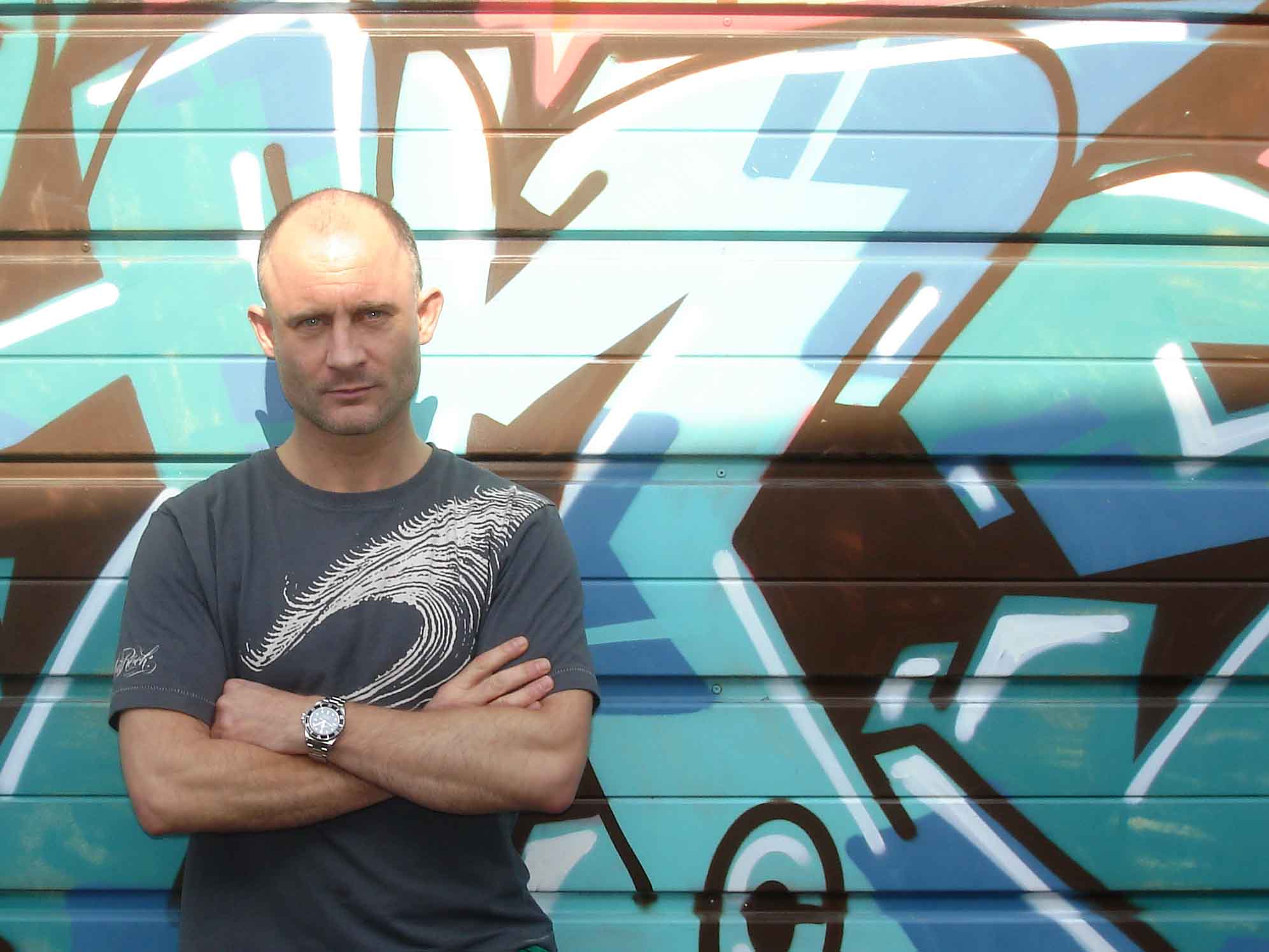
Eating Smoke — a question and answer with the author, Chris Thrall – Part 4/5

October 19, 2011

Guest-Post by Tom Carter
Interview with Chris Thrall, author of Eating Smoke continued…

CARTER: A really interesting observation I felt you made in Eating Smoke was of those expatriates who come to places like China looking to assert their dominance over the culture, and those expats who “go native” and completely immerse themselves in the language and customs, sometimes to the point of arrogance towards other foreigners.

Why do westerners behave like this in other countries, and why, in your opinion, do Asian immigrants in America or the UK have seemingly the exact opposite attitude?

THRALL: That’s a good question but probably a long-winded answer. It’s important to remember that not all westerners misbehave when abroad and not all Asian immigrants immerse themselves in or accept western culture and etiquette.

When you consider the West’s history and of colonialism and capitalism – arguably practices that require the population of one country to believe they are racially superior to another’s – it’s not hard to appreciate why some westerners behave this way.

Add to that a “functionalist” education system, a class system, a one-sided record of history…I could go on, couldn’t I?

CARTER: Comparisons are being made between “Eating Smoke” and Gregory David Roberts’ “Shantaram” (about a drug-addicted escaped convict who joins a crime family in Mumbai, India) and Alex Garland’s “The Beach” (young backpackers living on an isolated island in Thailand who goes mad from solitude and drugs).

Have you read either of these, and how does Eating Smoke stand apart in this genre?

THRALL: “Eating Smoke” is 100%  true life – whereas “Shantaram” and “The Beach” are fiction, though loosely based on their authors’ travel experiences, no doubt.

Although it’s on my shelf, I haven’t read “Shantaram”, but “The Beach” is one of my all-time favorites.

The reason “Eating Smoke” stands apart in this genre is that it works – or so the reviewers say – on so many levels and therefore appeals to readers of all ages, sex and genre.

I’m told my story is unique and an eye-opener and that my writing style – honesty, humor, originality, and pacing – makes the book impossible to put down. Even though it is over 500 pages as a traditional paperback, I often receive Facebook messages and emails from people who have read it in two days.

CARTER: I’d like to go on record as saying that I think “Eating Smoke” has “Hollywood” written all over it, and I expect your story to be optioned for film rights. Johnny Depp is slated to play the lead role in “Shantaram”, and Leo DiCaprio starred in “The Beach”.

Do you have any preference for actors to play yourself in “Eating Smoke”: The Motion Picture, like Shia LaBeouf or Justin Bieber (just joking!)? Who would you want to direct?

THRALL: *laughing* So long as the guy was English, a good actor, and resembled my character at the time, I wouldn’t mind. I don’t have a preference – I’m not that clued up on 25-year old English actors, to be honest!

As for a director, Danny Boyle would be my choice. I loved “The Beach”, “Trainspotting”, “Slumdog Millionaire” and “127 Hours”. It would require someone with his perception to be able replicate the psychosis that I experienced, accurately.

Continued on October 20, 2011  in Eating Smoke – Part 5, return to Part 3, or if you have the time and do not want to wait for the five-part series to finish posting, click View as Single Page.

Chris Thrall was born in the UK. At eighteen, he joined the Royal Marine Commandos. Following active service in the Northern Ireland Conflict and training in Arctic warfare and survival, he earned his parachutist’s ‘wings’ and went on to serve as part of a high-security detachment onboard an aircraft carrier. In 1995, Chris moved to Hong Kong to oversee the Asia-Pacific expansion of a successful network-marketing operation he’d built, part-time, while serving in the Forces. Less than a year later, he was homeless, hooked on crystal methamphetamine and working for the 14K, Hong Kong’s largest triad crime family, as a doorman in Wanchai’s infamous red-light district. Eating Smoke, a humorous yet deeply moving first book, is his account of what happened.

__________________________

Travel photographer Tom Carter is the author of CHINA: Portrait of a People, a 600-page book of photography from the 33 provinces of China, which may be found on Amazon.com.

To subscribe to “iLook China”, sign up for an E-mail Subscription at the top right-hand side of this page and then follow directions.


Eating Smoke — a question and answer with the author, Chris Thrall – Part 3/5

October 18, 2011

Guest-Post by Tom Carter
Interview with Chris Thrall, author of Eating Smoke continued…

CARTER: One of the main characters in “Eating Smoke” is a Filipina prostitute named Apple who, after being your friend, sells you out to the triads.  Filipinos are the second largest ethnic group in Hong Kong, however their career paths seem to be limited as nannies for wealthy families, cover bands, or bar girls.

Why is that, and do you think their situation will ever improve?

THRALL: I think it’s because the Philippines’ economy is relatively poor when compared to Hong Kong’s. Even with the pittance they receive in wages, these women are able to send a lot of hard-earned dollars home to their families, while getting a travel experience they likely otherwise ill afford.

As to whether their situation will improve, Filipinos are generally humble, in my experience. They don’t complain and seem to appreciate the chance to earn money abroad.

Of course, wherever there is inequality, they’ll be incidents of exploitation, which isn’t nice. But if their union – if there is such a thing – pushed for higher pay then perhaps the demand for their services would drop off as there are Hong Kong locals who could fill these jobs.

CARTER: Another reoccurring character in Eating Smoke is an expatriate named Cameron who insists on trying crystal meth despite your warnings of its highly addictive nature.  Cameron shows up later in the book exclaiming how much he loves the drug even though it’s obvious that he, too, is now addicted.  To quote a passage in your book, “Unable to stop and not wanting to anyway.”

What about methamphetamine makes it so popular even though everyone knows that it can, nay, will destroy you?

THRALL: I can only speak from my own experience. Some people try meth and say, “Ah. It’s OK. But nothing special.” Then get on with their life. For others it seems to be the key in lock, the answer to all of life’s insecurities and problems. Perhaps people in the former category have had more stable upbringings and hence less insecurity and the resultant need to feel “right” for a change.

A drug that makes you feel cool, calm and supremely confident, in addition to giving you a massive surge of creative energy – allowing you to discover abilities you were told you were a failure at in school – is always going to be in demand.

The problem is, like Superman with his Kryptonite, you begin to crave that feeling more and more to the point where you no longer feel normal without it. That’s called addiction. Either you beat it or it destroys you.

Continued on October 19, 2011  in Eating Smoke – Part 4, return to Part 2 or if you have the time and do not want to wait for the five-part series to finish posting, click View as Single Page.

Chris Thrall was born in the UK. At eighteen, he joined the Royal Marine Commandos. Following active service in the Northern Ireland Conflict and training in Arctic warfare and survival, he earned his parachutist’s ‘wings’ and went on to serve as part of a high-security detachment onboard an aircraft carrier. In 1995, Chris moved to Hong Kong to oversee the Asia-Pacific expansion of a successful network-marketing operation he’d built, part-time, while serving in the Forces. Less than a year later, he was homeless, hooked on crystal methamphetamine and working for the 14K, Hong Kong’s largest triad crime family, as a doorman in Wanchai’s infamous red-light district. Eating Smoke, a humorous yet deeply moving first book, is his account of what happened.

__________________________

Travel photographer Tom Carter is the author of CHINA: Portrait of a People, a 600-page book of photography from the 33 provinces of China, which may be found on Amazon.com.

To subscribe to “iLook China”, sign up for an E-mail Subscription at the top right-hand side of this page and then follow directions.


Litigation Nation Virus Spreading West to East

October 17, 2011

I have called the United States the “Litigation Nation” a number of times due to frivolous lawsuits, and it seems that China has earned that title too.

A disturbing story hit the Web from Yahoo.com — Chinese express horror at public indifference to toddler hit-run victim.

A surveillance camera in the Chinese city of Foshan in southeastern Guandong province caught a van hitting a two-year-old girl and then the van drove away.  Several minutes went by and no one went to the toddler’s aid.  In fact, a second van ran over her before someone dragged her off the street.

The injured toddler is now hospitalized and in a coma according to Reuters.

The conclusion to the Yahoo.com post says, “Many people in China are hesitant to help people who appear to be in distress for fear that they will be blamed,” Reuters’ Martina wrote in his report. “High-profile law suits have ended with Good Samaritans ordered to pay hefty fines to individuals they sought to help.”


This video of the hit-and-run has been edited and elements of the toddler being hit by the vans were blurred.

This brought to mind an incident when I was a few years old in the late 1940s or early 1950s when my father stopped at the scene of an accident in a heavy rainstorm.

Other drivers stopped too and gave assistance to a man trapped in his wrecked car.

The injured driver’s leg was pinned under the dashboard and he was bleeding heavily. To save his life, my father returned to our car and took out a hacksaw from his tool kit in the trunk.

My father told me and my mother to stay in the car and went back out into the heavy rain to the accident site.

Then he and several other people that stopped to help worked together to cut off the man’s leg where the bone was exposed to get him out of the car where they could apply a tourniquet to the stump and stop the bleeding saving the man’s life.

In that era, America had not earned the term “Litigation Nation”, and my father and the other Good Samaritans were not arrested or taken to court for helping to save the man’s life even though he lost a leg.

In China, thanks to the surveillance camera, the two hit and run drivers of the toddler were arrested.

The reason for the apathy might be that in the early 1980s, China implemented legal reforms and adopted a Western style legal system based on German law.  The reason China did this was that it was required to be accepted to the World Trade Organization.

In fact, this fear of being punished for being a Good Samaritan is not exclusive to China.


WARNING! — This video does not blur the hit-and-run and reveals the horror of the toddler being run over by the two vans.

In December 2008, the Los Angeles Times reported that Good Samaritans in California get no aid from high court. The California Supreme Court ruled that a young woman who pulled a co-worker from a crashed vehicle was not immune from civil liability because the care she rendered wasn’t medical.

In addition, sarbc.org, says, “American common law has little success in encouraging the Good Samaritan, and two famous cases strongly illustrate this point. In a 1964 case in New York, a woman was stabbed outside her apartment building while her neighbors watched. No one called the police. When she screamed, the attacker fled, only to return twice to stab and kill her when no one responded.

“The second incident occurred in Massachusetts, in 1983, when tavern patrons watched a woman being raped. The assault lasted more than an hour, but no one intervened or called for help. The predominant excuse in both cases was a fear of getting involved, and progress in changing laws to deal with apathy is still sporadic and slow.”

As for China, it appears that we are seeing the results of China adopting a Western legal system, which includes a virus called apathy and a fear of being punished for being a Good Samaritan.

Discover Growing China’s Legal System

______________

Lloyd Lofthouse is the award-winning author of The Concubine Saga. When you love a Chinese woman, you marry her family and culture too. This is the love story Sir Robert Hart did not want the world to discover.

Subscribe to “iLook China”
Sign up for an E-mail Subscription at the top of this page.

About iLook China


Eating Smoke — a question and answer with the author, Chris Thrall – Part 2/5

October 17, 2011

Guest-Post by Tom Carter
Interview with Chris Thrall, author of Eating Smoke continued…

On October 16, 2011, nearly two years since Chris Thrall originally contacted me, his long-awaited book, “Eating Smoke”, will be released in America and Amazon.com.

Advanced sales have already brought the title to the top of the Hong Kong bestseller list (patting my own back for my prediction) while Eating Smoke has achieved a massive cult following on Facebook.  Hailed as a “Sin – Shantaram” in a review by the South China Morning Post, and being compared by fans to Alex Garland’s The Beach for its drug-adelic theme, we can now confidently predict that Eating Smoke will, too, be optioned for film rights and follow those popular books to Hollywood.

Despite his past connections with Chinese triads, and in spite of his newfound celebrity as a bestselling author, Thrall remains one of the nicest and humblest people I have ever had the pleasure of knowing…even though I have yet to actually meet the man in person.  So it wasn’t too hard to twist his arm into putting my Q&A at the top of his to-do list of media interview requests (ah, the fame!).

TOM CARTER: My first and most pressing question, Chris, is if you are at all worried that the 14K will be hitting you up for a percentage of your book royalties once word of Eating Smoke’s success trickles up the Wan Chai gangland hierarchy?

CHRIS THRALL: Ha ha! The news from Hong Kong is that “serious players” are reading my book as we speak. But I’m not worried as it’s not a tell-all on Hong Kong organized crime. It’s more the story of a former Royal Marine Commando who thought he knew a bit about life, who then moves to Asia to run what was a successful business but spirals down into psychosis from drug addiction.

In that respect, Eating Smoke is unique. I’m not aware of any other book that gives the reader the opportunity to experience what it’s actually like to descend into mental illness through the eyes of someone as they do. I just happened to work for the 14K as a nightclub doorman – moreover, their “East-West go-between” – when it happened.

CARTER: Eating Smoke is about your decent into drug psychosis in Hong Kong’s triad heartland, but it’s also about the series of unfortunate, albeit hilarious, events that prevented you from ever finding your financial footing in Hong Kong, ironically Asia’s wealthiest city; a “testament to the stark reality and ephemeral nature of the relationship between people, drugs and profit,” as you wrote in the book.

Do you have anything to say to all those coked-out rich white bankers that Hong Kong is notorious for?

THRALL: No! I have nothing to say to anyone – coked-out rich white bankers included. If people truly enjoy what they do, they should carry on doing it.

Personally, I didn’t want to see my youth slipping away in a suit as I chased dollar signs at the expense of more fulfilling experiences. So having overcome addiction, I made an inventory of what I wanted to get out of life. Then I set out across six continents through seventy-five countries to get it. Writing a book was the last thing on my bucket list.

CARTER: China is adamantly anti-drugs, and the court system does not hesitate to execute drug traffickers, even foreigners.

In fact, China even blames foreigners for being responsible for a majority of its drug trade, a grudge no doubt held over from the Opium Wars.  Even though there are arguments to be made against the death penalty, the fact remains that, due to their zero-tolerance policy, China has one of the world’s lowest crime rates, a statistic that, all things considered, I’m sure America and the UK envy.

As a former drug user, what’s your take on criminalization of drugs, and do you think the west should follow China’s example?

THRALL: I don’t have a take on it. I’m not a spokesperson on substance use or the law surrounding it. I just told my own story.

However, research would likely show that mankind has always taken drugs in various forms and continues to do so (alcohol and cigarettes often cited as the most damaging), which might suggest that education on their usage and dangers is the way forward, in addition to harm-prevention strategies.

As for crime, a sociologist once said that a zero crime rate would make society a frightening place to be. I think Orwell’s 1984 was meant to imply this. I take no stance on drugs per se or cast judgment on people who choose to buy, sell, or use them.

It was addiction that I battled and that’s a separate issue. It’s a psychological condition that could relate to gambling, sex or food. It makes you wonder how prohibition could ever fix this.

Continued on October 18, 2011  in Eating Smoke – Part 3, return to Part 1, or if you have the time and do not want to wait for the five-part series to finish posting, click View as Single Page.

Chris Thrall was born in the UK. At eighteen, he joined the Royal Marine Commandos. Following active service in the Northern Ireland Conflict and training in Arctic warfare and survival, he earned his parachutist’s ‘wings’ and went on to serve as part of a high-security detachment onboard an aircraft carrier. In 1995, Chris moved to Hong Kong to oversee the Asia-Pacific expansion of a successful network-marketing operation he’d built, part-time, while serving in the Forces. Less than a year later, he was homeless, hooked on crystal methamphetamine and working for the 14K, Hong Kong’s largest triad crime family, as a doorman in Wanchai’s infamous red-light district. Eating Smoke, a humorous yet deeply moving first book, is his account of what happened.

__________________________

Travel photographer Tom Carter is the author of CHINA: Portrait of a People, a 600-page book of photography from the 33 provinces of China, which may be found on Amazon.com.

To subscribe to “iLook China”, sign up for an E-mail Subscription at the top right-hand side of this page and then follow directions.


Eating Smoke — a question and answer with the author, Chris Thrall – Part 1/5

October 16, 2011

Guest-Post by Tom Carter
Interview with Chris Thrall, author of Eating Smoke

Tom Carter, author of “CHINA: Portrait of a People”, catches up with Chris Thrall to discuss his new book “Eating Smoke, a memoir about Thrall’s descent into drug psychosis in Hong Kong’s triad heartland.

In the fall of 2009, whilst traveling in India to create my next photography book, I was contacted via email by a British writer who had read Down and out in Hong Kong, one of my online travel articles, which described this poor, dusty backpacker’s real-time impressions of Asia’s wealthiest city.

Chris Thrall said he connected with my article’s conclusion that, in spite of my western heritage, and due to my personal circumstances, I ultimately had more in common with the destitute third-world inhabitants of the Chungking Mansions, the infamous immigrant ghetto of Kowloon, than I did with the rich white bankers et al who comprise the other half of Hong Kong’s multinational population.

Chris went on to explain that he was writing a book about his own experiences living in Hong Kong, which was dramatically different from mine or any other expatriate I ever knew, and that he once worked for the 14K, the world’s largest Chinese crime family.

Attached to his email was the first chapter of his memoir, a gripping opening salvo that finds the narrator hiding from pursuing henchmen on a roof top—alongside two corpses, a disemboweled mother and child.

As a voracious reader, I know a bestseller when I see it.  I immediately forwarded Chris’s manuscript to my publisher in Hong Kong, Pete Spurrier, who runs the iconic Blacksmith Books, which specializes in Asian-themed literature.

Pete likewise was knocked off his feet by Chris’s incredible story; the next I heard, Chris was a fellow Blacksmith label mate with a book deal.

Chris Thrall was born in the UK. At eighteen, he joined the Royal Marine Commandos. Following active service in the Northern Ireland Conflict and training in Arctic warfare and survival, he earned his parachutist’s ‘wings’ and went on to serve as part of a high-security detachment onboard an aircraft carrier. In 1995, Chris moved to Hong Kong to oversee the Asia-Pacific expansion of a successful network-marketing operation he’d built, part-time, while serving in the Forces. Less than a year later, he was homeless, hooked on crystal methamphetamine and working for the 14K, Hong Kong’s largest triad crime family, as a doorman in Wanchai’s infamous red-light district.

Eating Smoke, a humorous yet deeply moving first book, is his account of what happened.

Continued on October 17, 2011 in Eating Smoke – Part 2, or if you have time and do not want to wait for the five-part series to finish posting daily, click View as Single Page.

__________________________

Travel photographer Tom Carter is the author of CHINA: Portrait of a People, a 600-page book of photography from the 33 provinces of China, which may be found on Amazon.com.

To subscribe to “iLook China”, sign up for an E-mail Subscription at the top right-hand side of this page and then follow directions.