Most people think China only rose by copying the West. History tells the exact opposite story.

November 24, 2026

Many people in the West believe China only became a superpower by copying Western secrets—a myth born out of historical amnesia. Because most schoolbooks focus on the last two centuries of European and American dominance, it is easy to forget that for over a thousand years, China was the richest, smartest, and most inventive civilization on Earth.

Before anyone ever accused China of taking ideas from the West, the rest of the world spent centuries borrowing China’s greatest breakthroughs just to catch up.

During powerful eras like the Han, Tang, Song, and Ming dynasties, China often generated over a quarter of the entire planet’s wealth through massive trade in silk, tea, and porcelain. At the same time, Chinese inventors led the world in engineering and science, giving humanity game-changing breakthroughs like paper, movable-type printing, gunpowder, the magnetic compass, and the world’s first paper money. While brief periods of civil war occasionally slowed China down—allowing regions like the Roman Empire and the Islamic world to surge ahead—China quickly regained its global lead after reuniting. This dominance lasted until the 1500s, when Europe began catching up through sea exploration and new scientific discoveries.

For centuries, neighboring nations and Western powers heavily borrowed—and sometimes took—breakthroughs from a far more advanced China to build their own civilizations. Early Japan, then a much simpler society, adopted China’s writing system to create its own written language, while also copying Chinese wooden joinery, architecture, and government styles.

Meanwhile, European traders and travelers absorbed major Chinese inventions like papermaking, printing, gunpowder, silk production, and the magnetic compass. Ultimately, these adopted technologies helped fuel Europe’s global exploration and reshaped the modern world.
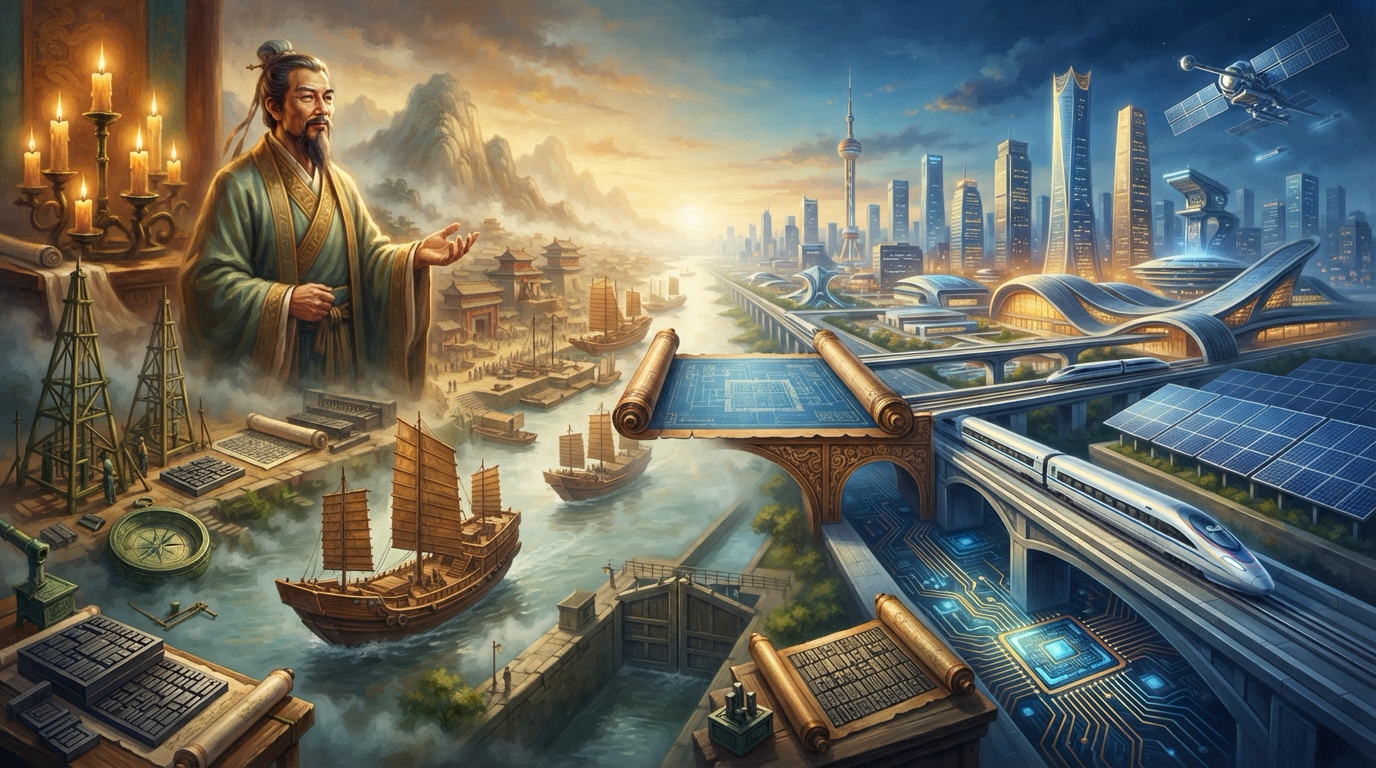
Long before the modern era, China was also the first to produce silk, brew tea, and pioneer assembly-line production—using standardized parts and divided labor over 2,200 years ago to mass-produce crossbows and the famous Terracotta Army. In addition, Chinese engineers were the first to drill deep wells using bamboo derricks, extracting oil and natural gas from hundreds of feet underground centuries before modern oil drilling began in the West. They also built the massive Grand Canal and invented the pound lock system in the 10th century to raise and lower boats between different water levels—an engineering breakthrough that later made major modern waterways like the Panama Canal possible. On the open ocean, Chinese shipbuilders invented watertight hull compartments by the 2nd century CE so damaged ships wouldn’t sink—a design the West did not adopt for over 1,600 years until the late 18th century. Furthermore, Chinese sailors prevented scurvy by growing fresh bean sprouts onboard at least 300 years before the British Navy finally figured out how to stop the deadly disease using citrus juice in the late 1700s. On land, China’s advanced farming methods—like row planting, seed drills, and iron plows—were so far ahead of the rest of the world that for thousands of years it has grown more food on less farmland than any other nation, a feat that still holds true today as China feeds roughly 20% of the world’s population using less than 10% of the planet’s arable land.

China’s long history of innovation—and its rapid rise back to the top today—is rooted in a deep cultural and institutional focus on education, merit, and long-term planning. Over 1,300 years ago, China created the world’s first nationwide civil service exam system, building a society that rewarded scholarship and hard work rather than noble birth. That same respect for learning continues today through massive investments in science, engineering, and technical training, proving that a nation’s lasting strength comes from how deeply it develops the minds and skills of its people.

About the Author

Lloyd Lofthouse is the founder and publisher of iLookChina, a former U.S. Marine, and an award-winning author whose works include the historical novel My Splendid Concubine. Married to acclaimed memoirist and novelist Anchee Min for nearly 16 years, Lofthouse edited many of her internationally bestselling books while dedicating decades to researching Chinese history, culture, and global influence.

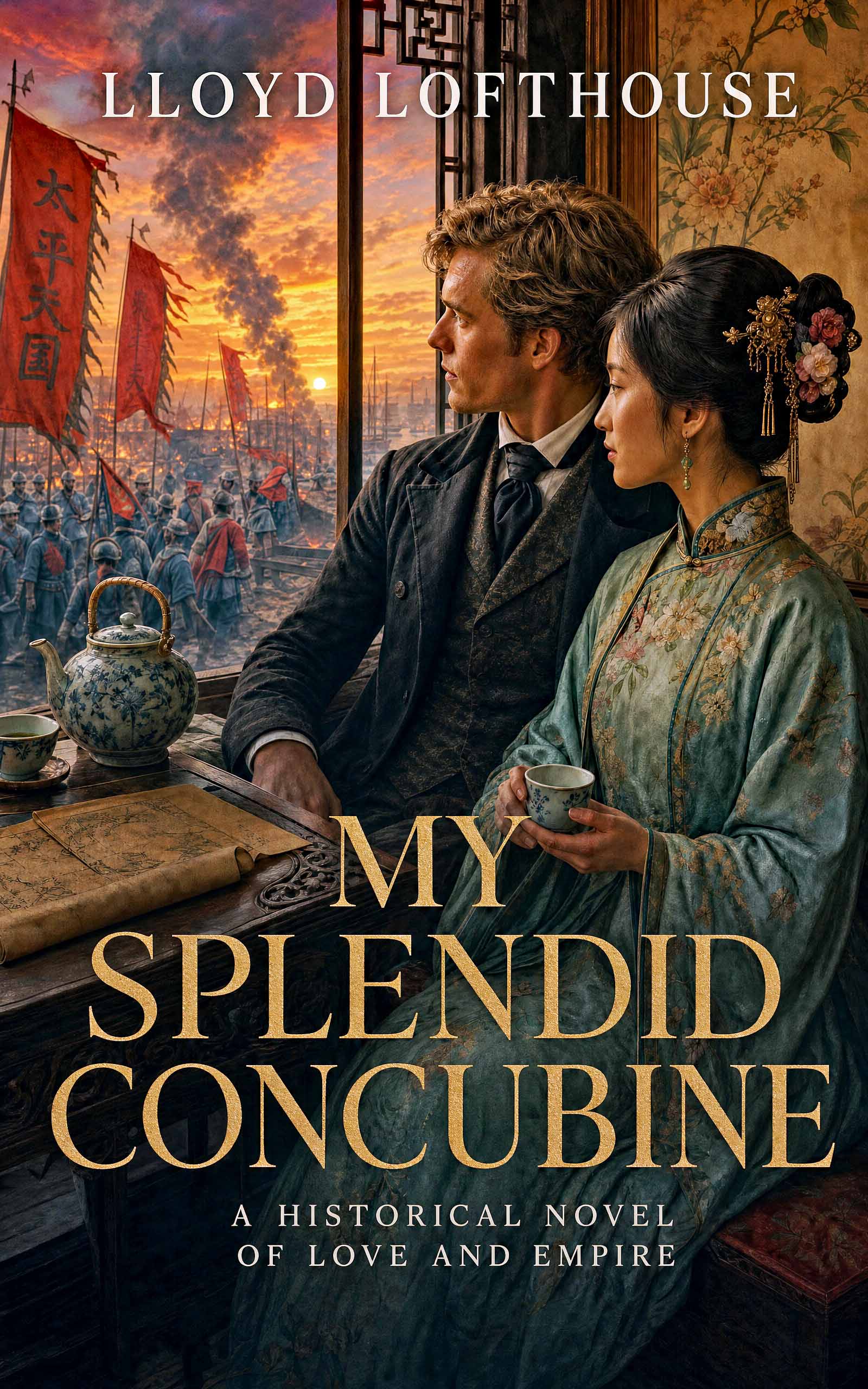
A forbidden love. A dynasty on the brink. Discover the true-to-life story of the quiet Chinese woman who guided an outcast foreigner to the inner circle of the Qing Empire.

A Forbidden Love Saved an Empire

August 27, 2026

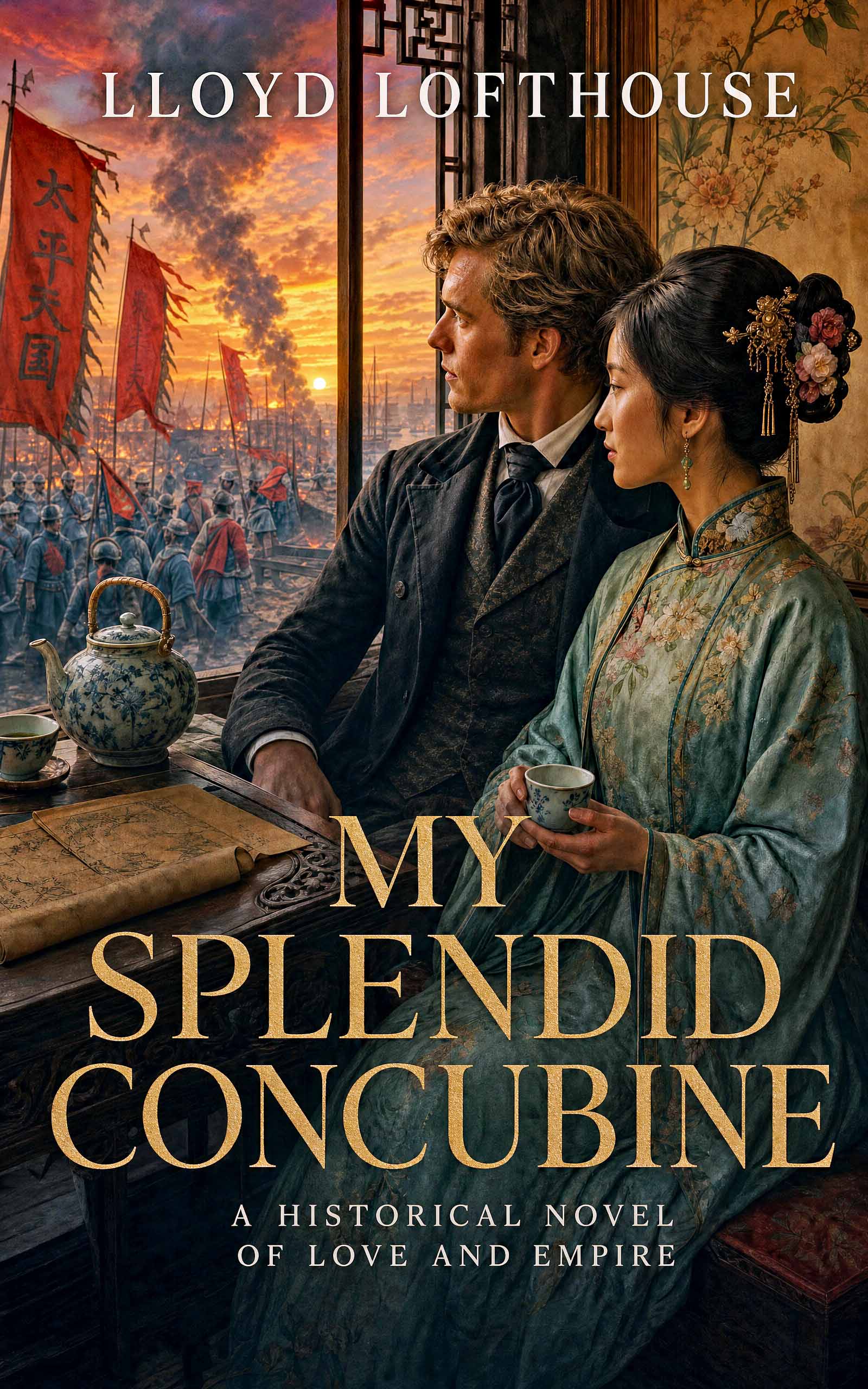
China, 1854. Nineteen-year-old Robert Hart crosses the world to outrun disgrace and illness, only to collide with a destiny far greater than his shame. In the teeming treaty ports of the Qing Dynasty, he purchased a quiet, perceptive concubine whose language, intuition, and courage open doors he never knew existed. As her whispered guidance leads him past courtiers and cutthroats, Hart learns to read a civilization from the inside out—and to risk everything for the woman who steadies his soul.

From the smoke-choked fields of the Taiping Rebellion to the shadow diplomacy of the Opium Wars, Hart navigates treacherous alliances with warring Western powers and wary imperial officials, rising from outcast foreigner to a confidant within the Dragon Throne. Battles rage and treaties twist, but in the hush of their shared rooms, a partnership of heart and mind forges the steel he’ll need to confront betrayal, negotiate peace, and drive an astonishing program of modernization that will reverberate across the Far East.

Dramatic, sensuous, and impeccably researched, My Splendid Concubine reveals the little-known genesis of a towering figure—haunted by scandal, sustained by love—whose vision transformed a nation. Lloyd Lofthouse’s rich prose and intimate storytelling illuminate the perilous bargain between passion and power, and the remarkable woman whose quiet strength helped alter the course of history.

Hart’s great understanding of Chinese culture and his ability to see things from the Chinese perspective meant that he became a trusted and influential figure, valued by the Chinese government and foreign ministers alike, who often sought his advice. The extent to which he was appreciated is reflected in the numerous titles and awards bestowed upon him by both the Chinese and the British. These included, on the part of the Chinese, the award of a Red Button (highest rank), a Peacock’s Feather, and the Order of the Double Dragon, while the British granted him the orders of CMG (1880), KCMG (1882), GCMG (1889) and ultimately, a baronetcy (1893). Source: SOAS

Sir Robert Hart oversaw the creation of China’s modern lighthouses, naval fleet elements, meteorological offices, and the Imperial Chinese Postal service, unifying the vast nation’s communication and trade networks. He managing trade relations and tariffs directly under Chinese imperial employment, he helped Beijing navigate intense Western imperial pressure saving an empire from total collapse.

Start Reading Today


As a species, humans do not share the same exact genome. The same could be said of different cultures.

January 22, 2026

Any two humans are about 99.9% genetically identical, but that tiny 0.1% variation accounts for millions of differences.

The world’s cultures are often described as existing on a spectrum between individualism with a focus on personal goals; independence, and collectivism with its focus on group harmony; loyalty, et al.

Then there’s religious influence which acts as a fundamental shaper of culture, deeply embedding values, behavior, and social structures within societies by providing a framework for daily life, morality and identity.

  • Christianity and Western Culture
  • Islam and Middle Eastern Culture
  • Hinduisum and South Asian Culture
  • With Buddhism, Taoism, and Confucianism influencing East Asian Culture

For those interested in China, who also LOVE coffee

December 11, 2025

She’s a Healer, but her body is death

October 14, 2025

The Tao of Poison is a powerful, believable story set in 18th century China during the White Lotus Rebellion. The nine-year conflict heavily impacted many districts in central China, leading to widespread losses in the mountainous regions separating Sichuan, Hubei, and Shaanxi provinces.

Qiezi, 17, has practiced mithridatism, a method of building poison resistance, for most of her life. Her body has become toxic. She also studied China’s famous encyclopedia of healing and learned from experts how to heal illness naturally.

Early in the story, a powerful Qing Dynasty official threatens her and her family if she won’t have sex with him. She warns the man that her body is poisonous. The man doesn’t believe her. After he dies, Qiezi and her family are blamed for the powerful official’s death and become fugitives.

Separated from her family while on the run, Qiezi eventually reunites with them after joining a group of Chinese Taoists. These Taoists practice consensual partnered or multi-partnered intimacy to harness sexual energy for self-improvement and spiritual development.

Still, what these Taoists practice is illegal. If caught, they will be executed.

This is a fascinating story of survival in a dangerous China.

The Author

Isham Cook is an American essayist and novelist based in China since 1994. His writing philosophy is big concept, discriminating, provocative. His influences are Ballard, Beckett, Borges, Dick, Kafka, Hesse, Melville, Mishima, Sade—authors and artists who fearlessly forge new territories.