Many people in the West believe China only became a superpower by copying Western secrets—a myth born out of historical amnesia. Because most schoolbooks focus on the last two centuries of European and American dominance, it is easy to forget that for over a thousand years, China was the richest, smartest, and most inventive civilization on Earth.
Before anyone ever accused China of taking ideas from the West, the rest of the world spent centuries borrowing China’s greatest breakthroughs just to catch up.
During powerful eras like the Han, Tang, Song, and Ming dynasties, China often generated over a quarter of the entire planet’s wealth through massive trade in silk, tea, and porcelain. At the same time, Chinese inventors led the world in engineering and science, giving humanity game-changing breakthroughs like paper, movable-type printing, gunpowder, the magnetic compass, and the world’s first paper money. While brief periods of civil war occasionally slowed China down—allowing regions like the Roman Empire and the Islamic world to surge ahead—China quickly regained its global lead after reuniting. This dominance lasted until the 1500s, when Europe began catching up through sea exploration and new scientific discoveries.
For centuries, neighboring nations and Western powers heavily borrowed—and sometimes took—breakthroughs from a far more advanced China to build their own civilizations. Early Japan, then a much simpler society, adopted China’s writing system to create its own written language, while also copying Chinese wooden joinery, architecture, and government styles.
Meanwhile, European traders and travelers absorbed major Chinese inventions like papermaking, printing, gunpowder, silk production, and the magnetic compass. Ultimately, these adopted technologies helped fuel Europe’s global exploration and reshaped the modern world.

Long before the modern era, China was also the first to produce silk, brew tea, and pioneer assembly-line production—using standardized parts and divided labor over 2,200 years ago to mass-produce crossbows and the famous Terracotta Army. In addition, Chinese engineers were the first to drill deep wells using bamboo derricks, extracting oil and natural gas from hundreds of feet underground centuries before modern oil drilling began in the West. They also built the massive Grand Canal and invented the pound lock system in the 10th century to raise and lower boats between different water levels—an engineering breakthrough that later made major modern waterways like the Panama Canal possible. On the open ocean, Chinese shipbuilders invented watertight hull compartments by the 2nd century CE so damaged ships wouldn’t sink—a design the West did not adopt for over 1,600 years until the late 18th century. Furthermore, Chinese sailors prevented scurvy by growing fresh bean sprouts onboard at least 300 years before the British Navy finally figured out how to stop the deadly disease using citrus juice in the late 1700s. On land, China’s advanced farming methods—like row planting, seed drills, and iron plows—were so far ahead of the rest of the world that for thousands of years it has grown more food on less farmland than any other nation, a feat that still holds true today as China feeds roughly 20% of the world’s population using less than 10% of the planet’s arable land.
China’s long history of innovation—and its rapid rise back to the top today—is rooted in a deep cultural and institutional focus on education, merit, and long-term planning. Over 1,300 years ago, China created the world’s first nationwide civil service exam system, building a society that rewarded scholarship and hard work rather than noble birth. That same respect for learning continues today through massive investments in science, engineering, and technical training, proving that a nation’s lasting strength comes from how deeply it develops the minds and skills of its people.
About the Author
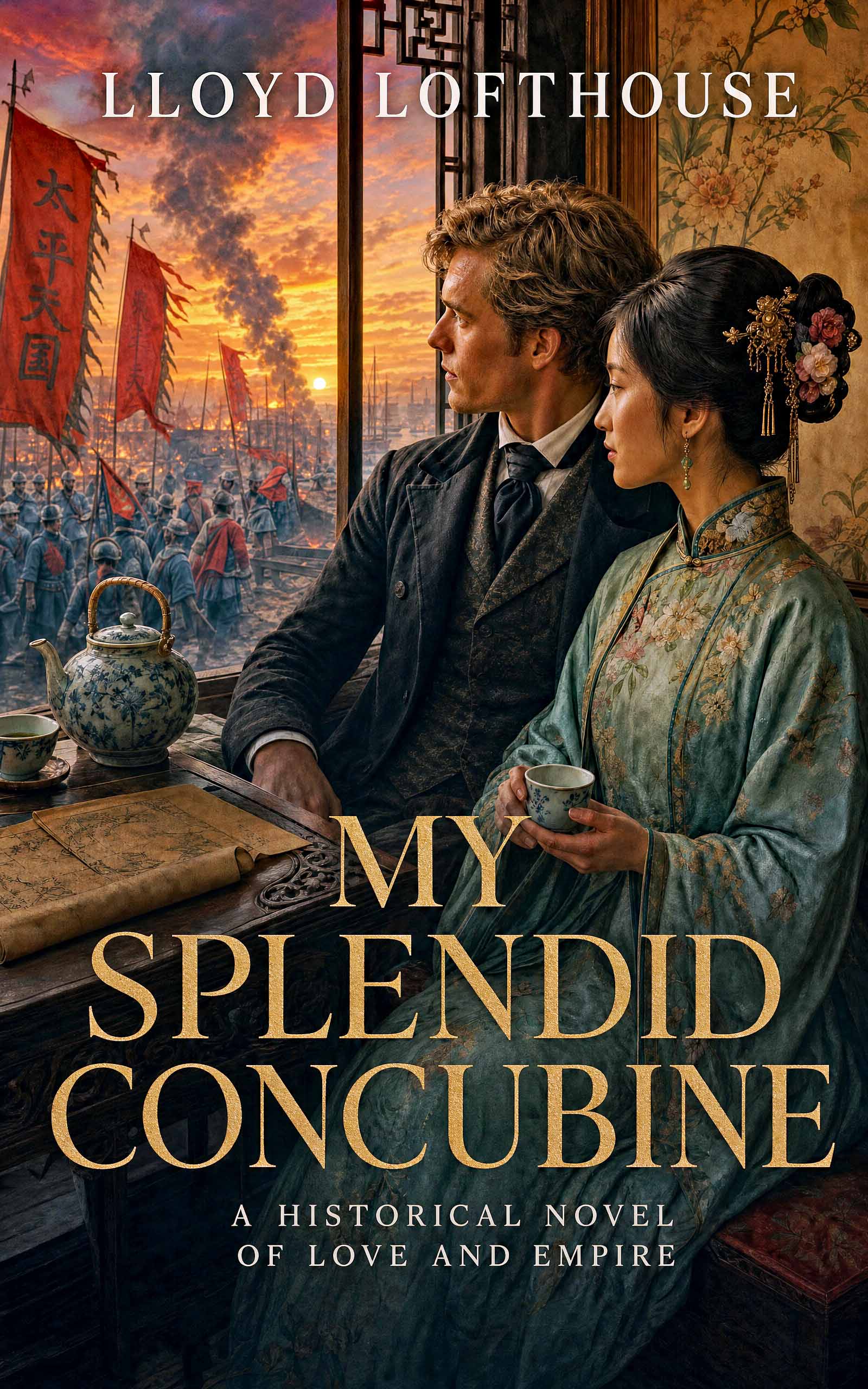
Lloyd Lofthouse is the founder and publisher of iLookChina, a former U.S. Marine, and an award-winning author whose works include the historical novel My Splendid Concubine. Married to acclaimed memoirist and novelist Anchee Min for nearly 16 years, Lofthouse edited many of her internationally bestselling books while dedicating decades to researching Chinese history, culture, and global influence.
A forbidden love. A dynasty on the brink. Discover the true-to-life story of the quiet Chinese woman who guided an outcast foreigner to the inner circle of the Qing Empire.


 Posted by Lloyd Lofthouse

