Women in Science & Business

March 25, 2010

In the Western media, I often read or hear about sex slaves and prostitution in China—Yellow Journalism at its worst.

To put this in perspective, data shows about 100,000 prostitutes are arrested each year in America, and the National Task Force on Prostitution suggests there are at least a million people in the United States who have worked as prostitutes or about 1% of American women. Some of these American prostitutes are sex slaves—something often denied while pointing fingers across the Pacific at China.

What we should hear about from the Western media (BUT DON’T) are stories about women like Dr. Zhang Yanxuan, an innovative scientist, who started a successful business in China to destroy mites that eat food crops. With twenty-seven years of scientific knowledge and government support, she raises predatory mites, a biologically safe method to kill the mites that eat crops. Her products are also being exported to other countries.
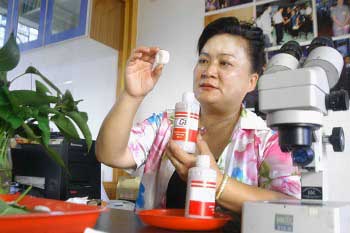
Dr. Zhan Yanxuan - mite expert

This is important, since China has become the world’s leading pesticide user allowing chemical companies to make hefty profits while poisoning the environment and the people. However, Dr. Yanxuan’s predatory mites may replace pesticides as China’s government is becoming greener in their thinking.

Learn more about Women’s Changing Status in China

______________

Lloyd Lofthouse is the award-winning author of the concubine saga, My Splendid Concubine & Our Hart. When you love a Chinese woman, you marry her family and culture too. 

If you want to subscribe to iLook China, there is a “Subscribe” button at the top of the screen in the menu bar. 


Google Going Hong Kong

March 25, 2010

In Google’s China Play? Search me by Muhammad Cohen, author of Hong Kong On Air, Cohen writes a compelling post about his anger concerning Google’s flight and fight with mainland China’s  government. He says Google has no reasonable objective baiting Beijing and inviting Chinese authorities to crack down on Hong Kong’s freedoms. He says, Google’s longstanding corporate hypocrisy raises questions about its claims of mainland cyber attacks and hacking. I talked about this in Google Recycled (http://wp.me/pN4pY-2r).

Any freedom is a precious gift.  Americans believe they have freedom but what they have isn’t far from what the Chinese have. After all, Americans must pay income tax, sales tax, property tax, wear seat belts while driving or helmets on motor bikes, no smoking in public, no drinking booze or talking on cell phones while driving, and the list goes on. Now Americans have to pay for health insurance, which has given birth to protests across the United States—it’s a shame so many eligible Americans don’t vote.

Many of those freedom restrictions don’t exist in China. What does exist is the fact that Chinese are not allowed to challenge their government in public or in the media—a privilege that has never existed in China ever. However, Hong Kong has this freedom and doesn’t want to lose it.  When Google wanted to do business in China, they agreed to the censorship rules. Now they have broken that agreement.

See “When in Rome, Do as the Romans” http://wp.me/sN4pY-354


PayPal Drooling for China

March 24, 2010

“Ebay failed in China because it relies on one leader who did not understand the market at all: Meg Whitman. Meg Whitman is Ebay Mao Zedong. No one dare tell her the truth. She exports her cultural revolution and it dont work in China. She is clearly a smart lady but is a no-nothing about China, taken advantage of at all turns.”  Source: Playin’ With It

This struggle for the Chinese consumer reminds me of the infant who bangs on his plate sending food flying everywhere while he screams for something else.

PayPal in China

That brings me to PayPal. eBay/PayPal are one and the same. When PayPal first went after Chinese consumers they lost to Alipay, the online payment service operated by China-based e-commerce firm Alibaba Group.  Most Chinese will pay with cash before they use a credit card and this may be where PayPal tripped up the first time.

PayPal is back. This time forming an aliance with Union Pay, with Chinese consumers holding 2.1 billion debit cards. This partnership will make it easier for Chinese consumers to make transactions outside China and pay cash.  Did PayPal learn their lesson the first time? Source: Internet Retailer

See Doing Business in China http://wp.me/pN4pY-2Y


Sounds like China

March 24, 2010

“But everything I’ve experienced … and heard from journalists there, suggests control over the message has reached obsessive proportions. Even background (anonymous) interviews morph into ‘background with authorization,’ so that a quote from ‘an official’ must pass the review process lest ‘an official,’ should misspeak.”

The West often criticizes China for censoring the Chinese Internet and the media. What they don’t tell us—this is the way it has been for more than a thousand years.

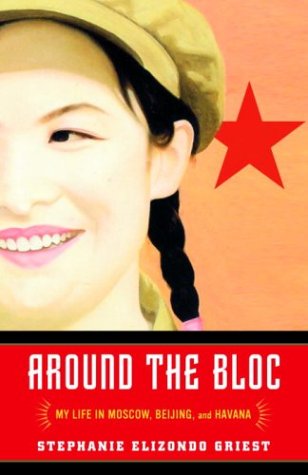
“Chinese media have been tightly regulated since the presses started running some 1,200 years ago …. When Mao Zedong founded People’s Daily as the official mouthpiece of the CCP in 1948, he basically just followed in his predecessor’s imperial footsteps.” Source: Around The Block by Stephani Elizondo Griest

That quote at the top of this post sounded like a  criticism of China, didn’t it?  Wrong.  That quote came from an opinion piece in the New York Times and Roger Cohen was writing about Washington D.C.

You may also want to read American Hypocrisy http://wp.me/pN4pY-6


The Erhu

March 22, 2010

An erhu is a Chinese two-stringed instrument similar to a fiddle. The erhu has a thin, slightly reedy sound. Since the erhu is so widely used, foreigners see it as an example of Chinese music.

The erhu

However, once you recognize the sound of an erhu, it can usually be readily picked out from other musical instruments, because it is unique. The history of the erhu spans thousands of years. The first erhus were heard during the Tang Dynasty. Since the traditional Chinese character for “erhu” indicates it has two strings, the erhu has probably changed little over the centuries. Alternate names for the erhu include huqin or hu, and Westerners sometimes call the instrument a “Chinese violin”. 

If you enjoyed learning about and listening to the erhu, you may enjoy Mao Wei-Tao’s Chinese Yu Opera

_________________________

Lloyd Lofthouse is the award-winning author of the concubine saga, My Splendid Concubine & Our Hart. When you love a Chinese woman, you marry her family and culture too. 

Sign up for an RSS Feed for iLook China