Blaming the Jews—Again!

March 28, 2010

Hitler blamed the Jews and killed millions. Christians blame today’s Jews for the crucifixion that happened almost two thousand years ago. Many in Islam want to destroy them.

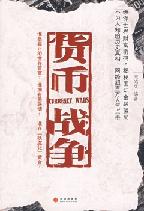
Now, the Mathaba News Network is doing it—blaming the Jews for the world’s financial crisis. Look at the headline Mathaba splashed across a page on their Website about “Currency Wars“, a best seller in China about the current world economic crises, and the picture they use. Both are biased and misleading . Are the writers and editors at Mathaba racists and anti-Semitic?

Cover for "Currency Wars"

“The book’s author, Song Hongbing, claims that behind world-changing events like the battle of Waterloo, Adolf Hitler’s rise to power, President Kennedy’s assassination, and the deep recession in Asia during the 1990s stood an intricate conspiracy aimed at increasing Jews’ wealth and influence.”  Huh—the Jewish people are responsible for Hitler’s rise to power?

Reading further, I discovered that the Rothschild family is mentioned as the prime villain. Since when does one Jewish family represent thirteen million people?

I’m not Jewish, but I have Jewish friends, who are not part of a global conspiracy to control the world’s currencies—two of my friends are teachers, another runs a non-profit, and a fourth is a designer, but according to Mathaba’s headline, they are guilty because they are Jews. Who owns Mathaba? Iran.

I’ll tell you the real reasons why “Currency Wars” is a bestseller in China. China hasn’t suffered from the economic crises, and they control their currency. The Chinese want to know how the “masters” did it and learn from their mistakes.

See Deep Family Roots

______________

Lloyd Lofthouse is the award-winning author of the concubine saga, My Splendid Concubine & Our Hart. When you love a Chinese woman, you marry her family and culture too.

If you want to subscribe to iLook China, there is a “Subscribe” button at the top of the screen in the menu bar.


Deep Family Roots

March 28, 2010

In 1967, I was stationed at Camp Pendleton, California. Between June 5 to 10, six months after I returned from Vietnam, Israel fought the Six-Day War defeating four Islamic nations that had twice the troops Israel had, three times the combat aircraft and three times as many tanks.

Israel and Syria During the Six Day War

I remember saying, “We should let them fight the Vietnam War for us.  At least Israel’s leaders know how to fight.”

The Jews and the Chinese have four things in common—loyalty to family, a high respect for education, a willingness to work long hours for low pay, and a canny acumen for business. Because of these similarities, the Chinese have even been called the Jews of Asia.

The Jews have a long history with China. In China: A New Promised Land, by R. E. Prindle, an interview with David Grossman, Israel’s leading novelist talks about the Jews moving to China.

When a father goes to work in China, he works for his family—not himself. After the children grow up, they must care for their parents—not the other way around like in America.  In America, many parents tell their children to do whatever they want and be anything they want. Most children follow that advice even if it means getting a degree to become an artist or skipping college to chase dreams of acting, singing or sports fame while attending parties or visiting theme parks like Disneyland because mom and dad said, “We want you to be happy—to have fun.”

It’s different for many Jews and Chinese. Working hard and earning an education are important to both cultures.  A close friend of mine and his wife, both Jewish, took out a loan on their home so their son could become a doctor and their daughter a lawyer. They bought a condominium near the university their children attended as a place to live. Both the mother and father were teachers, who did not earn much, which shows that Jewish parents, like the Chinese, are willing to sacrifice for their children in ways many American parents would find unacceptable in the age of credit cards and instant gratification.
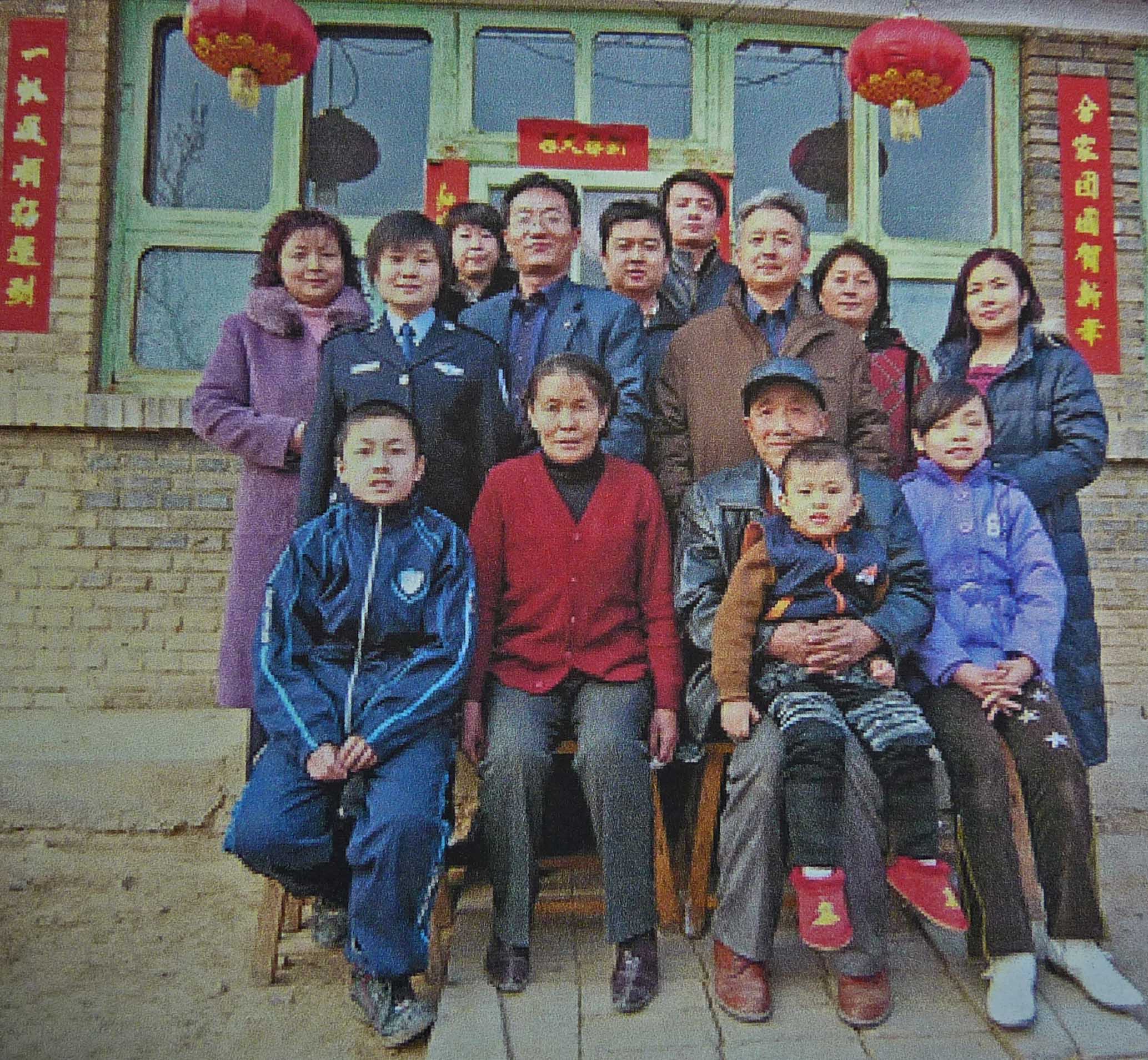
Li Family - Three Generations

Three Generations of the Proud Li Family

This willingness to sacrifice for the family and nation may have been the reason the Jews won the Six-Day War against overwhelming odds. Although the Chinese have the same values and are willing to make the same sacrifices for family, they did not know how to fight like the Jews—something the surviving Jews must have learned due to Nazi atrocities.

After Mao won China, he caused much suffering with the Great Leap Forward and the Cultural Revolution where the goal may have been to root out the weaknesses that caused China to become a victim to Western Imperialism in the 19th century and Japan during World War II.

I wonder if the Chinese learned the lessons Mao taught them through suffering similar to what the Jews experienced from Hitler.  I wonder if China will fight like Israel if threatened again. Before Mao, China was a country of poets and artists who painted watercolors on rice paper.  Even Mao and his generals wrote poems. I do not believe the Chinese are a military threat to anyone who does not threaten them.

Like Israel, China will only respond if they feel they are going to be attacked, and if Mao left them ready to defend themselves against aggressors, then the horrors that caused so much suffering and death during the 27 years he ruled China might have been worth the sacrifice for the survival of this family focused culture.

Most America families were like that once before the industrial revolution and the self-esteem movement made the individual more important than the family. Back then, 90% of the population lived on small family farms near towns and hamlets instead of bulging cities dominated by corporate cultures and sexy advertisements. Today, most family roots in the United States do not run deep—not like the Chinese and Jews.

Discover The First of all Virtues

______________

Lloyd Lofthouse is the award-winning author of My Splendid Concubine [3rd edition]. When you love a Chinese woman, you marry her family and culture too. This is the love story Sir Robert Hart did not want the world to discover.

His latest novel is the multiple-award winning Running with the Enemy.

Subscribe to “iLook China”!
Sign up for an E-mail Subscription at the top of this page, or click on the “Following” tab in the WordPress toolbar at the top of the screen.

About iLook China


Saying Goodbye

March 28, 2010

To the Chinese, the hardest goodbye is when white hair buries dark. This week, a  friend of our daughter’s died a tragic death at 17. The lost daughter’s name was Faith. Her story, like so many, was told in The Lost Daughters of China by Karin Evans, a book about abandoned girls and their journeys to American homes with loving adopted parents.

The phone call arrived at midnight from Faith’s mother. When my wife answered, I could hear and feel the grief like a bullet—my eyes filled with tears and an ache formed where my heart beats. No mother should suffer the loss of a child.

On the way to the airport, I listened to a memory about our daughter and Faith when they were in preschool together and a boy took a toy from our daughter. He refused to give it back. Faith came to the rescue.  She was only four or five. She demanded the toy be returned. The boy refused and Faith attacked biting him on the elbow.

You see, she had learned to survive in an orphanage in China where life can be a challenge. She was loyal to those she loved, who loved her. As long as those memories are shared and kept alive, she will always be with those who knew her.

The rest of Faith’s tragic journey may be discovered at Earth to Earth, Dirt to Dirt, Ashes to Ashes

2a-242-positive-reviews-hall-of-fame-reviewer-jan-16-2017

Where to Buy

Subscribe to “iLook China”!
Sign up for an E-mail Subscription at the top of this page, or click on the “Following” tab in the WordPress toolbar at the top of the screen.

About iLook China

China’s Holistic Historical Timeline


The Pipa

March 27, 2010

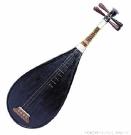
I’m taking a break from serious topics like politics and economics to write about the Chinese pipa, a four stringed lute (or Chinese guitar) with a pear-shaped body. Historical records show that the pipa first appeared during the Qin Dynasty (222 – 206 BCE), and it become one of the most popular stringed instruments in China and has survived more than two-thousand years.

pipa

Traditional Chinese music has been traced back 7,000 to 8,000 years. For centuries this music was heard primarily by the royalty and high government officials. By the Tang Dynasty, records show that this music had spread to the common people.

Traditional Chinese musical instruments can be divided into four categories: stringed instruments, percussion instruments, plucked instruments, and wind instruments.

If you enjoyed this, discover the The Erhu

______________

Lloyd Lofthouse is the award-winning author of The Concubine Saga. When you love a Chinese woman, you marry her family and culture too. This is the love story Sir Robert Hart did not want the world to discover.

Subscribe to “iLook China”!
Sign up for an E-mail Subscription at the top of this page, or click on the “Following” tab in the WordPress toolbar at the top of the screen.

About iLook China


Walking Barefoot on a Double Edged Blade

March 27, 2010

From what I’ve learned, when Mao died, many Chinese were tired of the Communists because of  the Cultural Revolution. If Deng Xiaoping hadn’t introduced a market economy resulting in decades of growth and prosperity, China may have fallen into chaos to emerge with a dictator similar to what they had with the Kuomintang.

Nichols Kristof

Nicholas Kristof wrote, China & Google (New York Times, March 24, 2010), an opinion piece that gets closer to the truth about China. Kristof seems to know what he is talking about when he said, “They (ordinary Chinese) don’t gripe  a lot about the regime imprisoning dissidents, who mostly have a negligible following around the country.”

It’s probably true that many in China want to have free access to the Internet, but I doubt it is serious enough to cause concern. The biggest concern is raising the standard of living for the 800 million rural Chinese who have not cashed in on the prosperity.

When there are accusations from Washington that China isn’t playing fair with currency control, China has a choice. Give in and wait for hundreds of millions of unhappy Chinese to rebel or stand firm and continue to grow the economy.

As far as Google is concerned, China has Baidu (with more than 60% of the market) and shedding Google probably feels like passing gas in public.