Americans doing Business in China – Part 10/16

March 1, 2012

Note from Blog host — another example of East meets West through business and trade: The Wall Street Journal reported, “Beijing Brews Up Its Own Craft Beers… With the recent opening of Slow Boat Brewery in Beijing, the city’s number of American-style microbreweries officially doubled — to two. Mr. Jurinka and Slow Boat co-founder Daniel Hebert are looking to open a tap room and sell their beer directly to local bars and restaurants… The other brewpub in town is Great Leap Brewing, set in a classic hutong in Beijing’s Gulou neighborhood… Great Leap’s owner, Carl Setzer, has been living in China and Taiwan for eight years… U.S. microbrew beer exports to China hit a record in 2010, with sales reaching $546,000, five times the level just five years ago…”

_____________________

Guest Post by Bob Grant — publisher/editor for Speak Without Interruption, an international online magazine.

As I write about my personal experiences in China, I again want to note that they are strictly that—my “personal” experiences. I am certain there are people, who have visited China who could contradict everything that I have, or will write. The products I imported perhaps did not lend themselves to the typical “Sweat Shop” stereotype in terms of the factories that produced them.

However, I never saw or visited any factory that, in my mind, would fit that definition.

If the factories were not what I would call “modern”—they were certainly clean. The employees (factory workers) wore uniforms at most places I visited. They seemed proficient in their work and the products produced, and for the most part, were without quality problems—certainly no different from products produced in other countries.
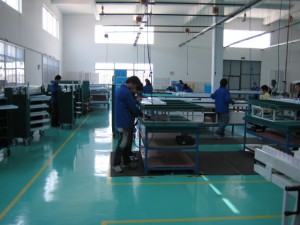
Most of the factories tended to be in Industrial Parks that were quite large. Usually, the factories were a “small city” into themselves. There was housing provided for the employees on the factory grounds along with areas for recreation. I don’t suppose there was another way of doing it, but I saw a lot of laundry hanging from outside the housing units plus commercial apartments buildings I saw throughout China.

Most factories had certifications that were either the same or similar to those held by US factories. I saw elaborate R&D sections in most of the factories I visited. The office space was usually as modern and pleasant as any I had visited in the US.

A ritual that I truly enjoyed was at every meeting when hot tea was served. Sometimes the owner or general manager had tea to make in their office and other times it was brought in. However, I can’t recall a meeting where tea was not offered.

Being a non-smoker, another ritual I did not enjoy was in almost every meeting I attending most of the parties present smoked. I heard a figure once that 85% of Chinese men smoked. I can attest that this is probably a good estimate. Once inside the office or meeting room, the smoke became quite thick and uncomfortable for me; however, I was their guest and felt I could put up with the discomfort in the course of conducting my business affairs.

I have fond memories of my factory visits and discussions. I think the fact that I came to China, and met with the factory personnel aided my business immensely versus doing business in name only.

Note from Blog host – If you plan to do business in China, I recommend visiting the China Law Blog first.

Continued March 2, 2012 in Americans doing Business in China – Part 11 (a guest post) or return to Part 9

______________

Lloyd Lofthouse is the award-winning author of The Concubine Saga. When you love a Chinese woman, you marry her family and culture too. This is the love story Sir Robert Hart did not want the world to discover.

Subscribe to “iLook China”
Sign up for an E-mail Subscription at the top of this page.

About iLook China

Note:  This guest post first appeared on March 5, 2010


Americans doing Business in China – Part 9/16

February 29, 2012

Note from Blog host — another example of East meets West through business and trade: Higher education is a business, and the number of international students at U.S. colleges and universities reached 723,277 during the 2010-11 academic year.  China, the top country of origin for international students, sent 157,558 undergraduate and graduate students to America, up 23% from the previous year.

International students and their dependents contributed more than $20 billion to the U.S. economy that academic year. For Chinese students, that means about $4.4 billion came from China.

Ann Stock, assistant secretary of the US State Department says, “Young people who study abroad gain the global skills necessary to create solutions to 21st-century challenges. In turn, international students globalize our campuses and communities.” SOURCE: USA Today

_____________________

Guest Post by Bob Grant — publisher/editor for Speak Without Interruption, an international online magazine.

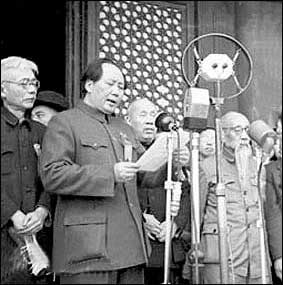
On October 1, 1949 the People’s Republic of China was formally established in a speech given by Mao Zedong from the Imperial Gate at Tiananmen Square. I stood at the very spot where Mao gave his speech and took a photo. From speaking with people – in China – who lived through his reign it was beyond believable. What he put his people through is an unforgivable act of power and brutality.

However, it is images from Mao’s era that some – outside of China – still have of the Chinese people. Nothing could be farther from the truth!

I never met a Chinese government official – did not even see one at least that I can recall. What I did meet were the people of China – the people with whom I had my business and personal interactions. I did not ask them questions about their government nor did they ask questions of mine.

The only political statement that I ever heard was a reference that China’s policy would probably change when the younger generation came into power, someday.

In meetings, over two years ago, I heard about the oil pipeline being built directly from Iran to China. None of the people in that meeting expressed an opinion one way or the other regarding this pipeline. It was a decision the Chinese government made.

Maybe my associates did not approve of dealing with Iran—maybe they did? The point being here is their government made this decision—not my associates.

Whether the officials in power in the US are republican or democrat, they have all made decisions of which I don’t agree. They did not consult me or ask my opinion—am I my government in these situations?

The point I am trying to make is that I found the Chinese people I met just like me in a lot of respects. I enjoyed doing business with them – learning their culture – and becoming their friend. No government – or its actions – is ever going to change that for me!

Note from Blog host – If you plan to do business in China, I recommend visiting the China Law Blog first.

Continued March 1, 2012 in  Americans doing Business in China – Part 10 (a guest post) or return to Part 8

______________

Lloyd Lofthouse is the award-winning author of The Concubine Saga. When you love a Chinese woman, you marry her family and culture too. This is the love story Sir Robert Hart did not want the world to discover.

Subscribe to “iLook China”
Sign up for an E-mail Subscription at the top of this page.

About iLook China

Note:  This guest post first appeared on March 9, 2010


Americans doing Business in China – Part 8/16

February 28, 2012

Note from Blog host — another example of East meets West through business and trade: Matt Egan of Fox Business.com reported, “Muhtar Kent, the CEO of All-American corporate giant Coca-Cola… knocked Washington over its handling of taxes and the level of political rancor and said he prefers investing in faster-growing countries like China, Russia and Brazil… In many respects, Kent told the paper, it is easier to do business with China, which he compared with a well-managed company.”

___________________

This guest post was Originally published by Bob Grant — publisher/editor for Speak Without Interruption.

The original is a long piece with many photos. If you want to see more of Hangzhou and the Westlake, I recommend that after you read the few paragraphs here, you click on the link above. My wife and I have visited this city and lake several times over the years, and I enjoyed Bob’s piece about his visit and had a few good laughs.

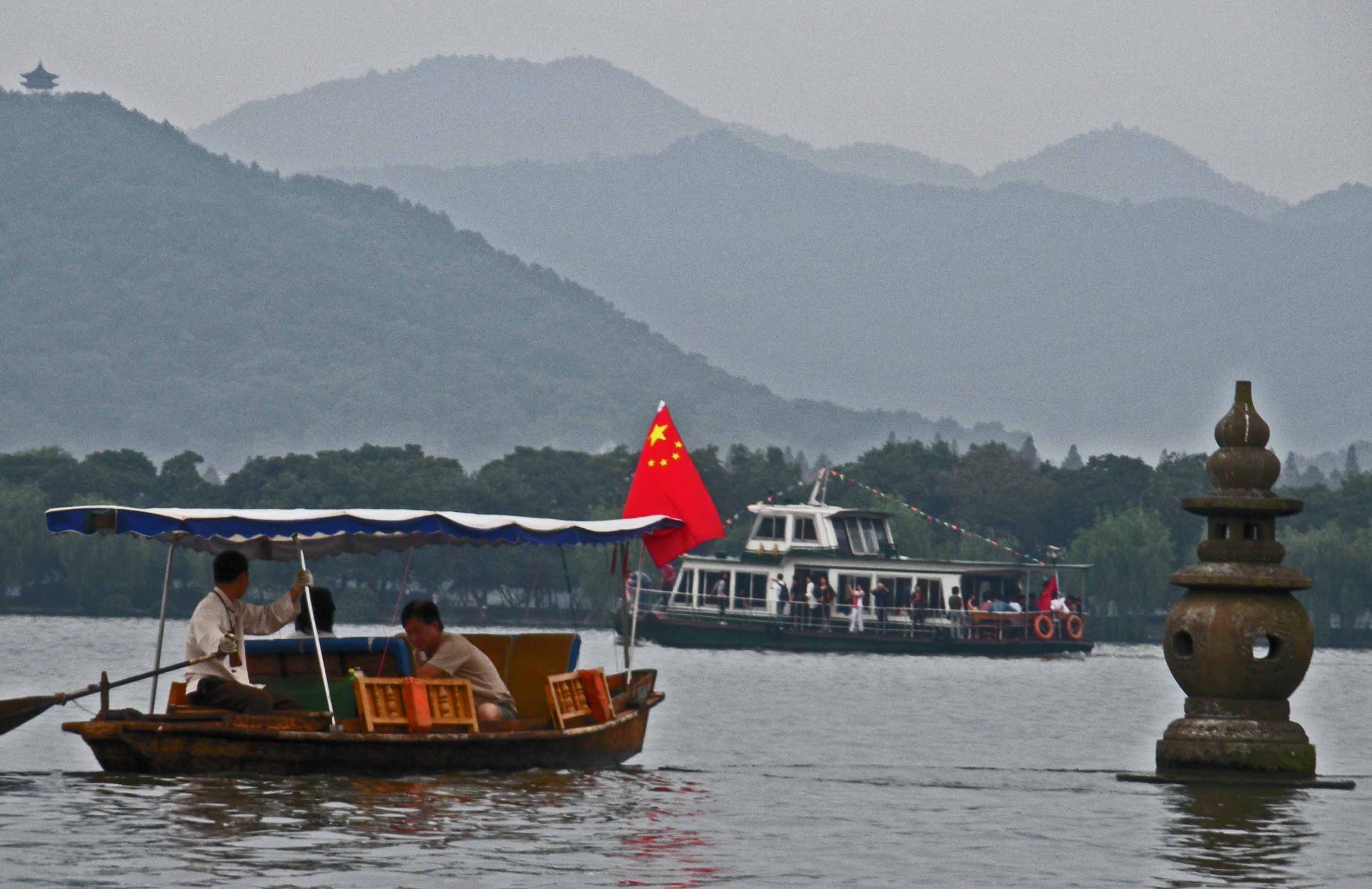
Bog Grant wrote, Below is something that I sent to my family and they all said they liked it. However, they are family and what else could they say? I have a manager/partner in China whose name is David – we have associates named Eric and Uncle Wong. I live in Missouri and my relatives live in Wyoming. This sets the stage for the following recap of My Big Day Off – In China:

We found ourselves on a Saturday in a city I have visited before named Hangzhou (Han-Joe) with no appointments and time on our hands before our plane departed for Shenzhen (Sin-Gin). There is a lake in Hangzhou named West Lake. Not a very original name for the Chinese, but using Chinese logic, I am certain – somewhere – there is a North Lake, South Lake, Southeast Lake, Southwest Lake, South South Lake – you get the picture. The possibilities are endless.

David said, “Let’s take a boat ride.” Great – sounded like a good idea. Sitting quietly in a boat watching the countryside and relaxing – NOT. Think Progressive Dinner.

Note from Blog host – If you plan to do business in China, I recommend visiting the China Law Blog first.

Continued February 29, 2012 in Americans doing Business in China – Part 9 (a guest post) or return to Part 7

______________

Lloyd Lofthouse is the award-winning author of The Concubine Saga. When you love a Chinese woman, you marry her family and culture too. This is the love story Sir Robert Hart did not want the world to discover.

Subscribe to “iLook China”
Sign up for an E-mail Subscription at the top of this page.

About iLook China

Note: This guest post first appeared on February 25, 2010.


Americans doing Business in China – Part 7/16

February 27, 2012

Note from Blog host — another example of East meets West through business and trade: Bloomberg Businessweek says, “Amway salespeople started selling door to door in China in 1995… Their eventual collapse sparked riots. Beijing felt uneasy for another reason: Direct selling seemed custom made to spread religious beliefs or political dissent. The government banned all direct sales companies, including Amway, in 1998. Amway hung on, opening actual stores to show its commitment to the market. Executives made numberless trips to Beijing before the government relented in late 2006 and let Amway agents sell directly to consumers again.”

_____________________

Guest Post by Bob Grant — publisher/editor for Speak Without Interruption, an international online magazine.

This guest post from Bob Grant had several photos. If you want to see them, I suggest you click on the Originally Published link and visit Speak Without Interruption. I will add two photos here that I took on my last trip, And yes, Bob, I also wish I had taken pictures every time I have visited China since 1999. I took my first pictures in 2008. Digital makes it easy.

Bob Grant wrote, During my trips to China, I wish I had taken more photos of the places I passed, to and from the factories I visited. In lieu of those photos, I am going to mix some that I found on the Internet with those that I took.

The one phenomenon that I experienced was the contradictions in times as I passed through the cities and into the countryside and back again. As I have mentioned in earlier postings, I have been traveling to China since 1998. My time spent there was mainly for business purposes—I rarely took time for sightseeing.

However, it was the “everyday” sights that interested me the most—not the so called tourist spots of which China has many. I would pass from new building construction to old crumbling buildings in a matter of blocks. I would drive by places in the countryside where it appeared to me that people were living the same way they had for millions of years. We would drive from beautiful multi-lane highways to rutted brick and dirt roads in a matter of miles. Workers were sweeping the freeways and other roads with large straw brooms. Everywhere I looked, I could see new and old in a single setting—a large high rise apartment building next to agricultural areas where people were working the land by hand and animals.

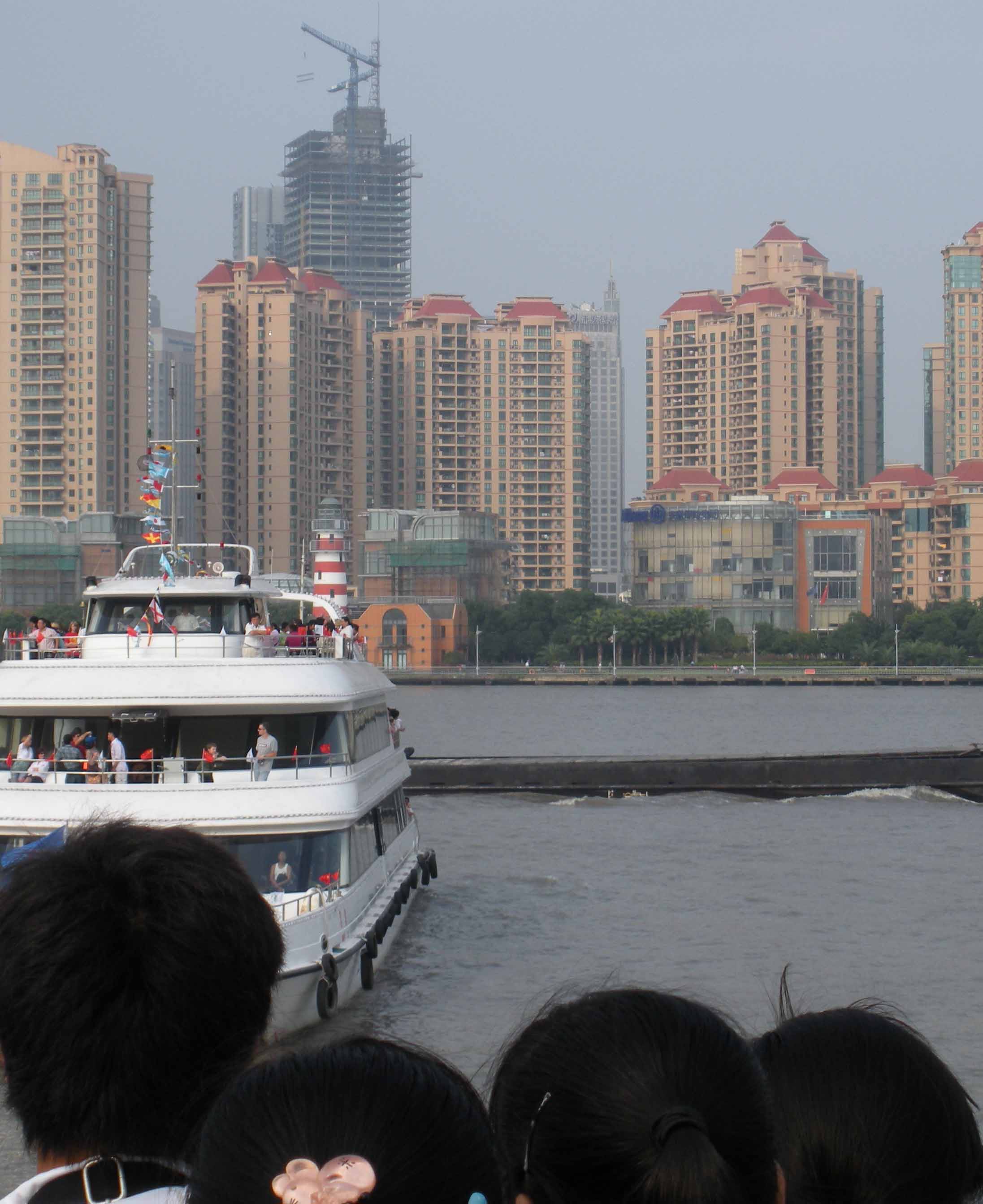
Our office was in Bao’an, which is a suburb, if you will, of Shenzhen which is in southern China across from Hong Kong. Here is a photo of the view from our office. Shenzhen has around 14 million people—according to the sources I checked—and it was nothing but swampland almost 30 years ago when it was designated China’s first economic zone.

The construction that goes on in this and other larger cities is unbelievable.

However, we visited one factory in what I would call the countryside where the owner was enticed to build a new factory because of the inexpensive cost of the land—somewhere around $4 per acre as I recall as the government wanted to build up business in this rural area.

This factory was in an extremely picturesque location and from the owner’s balcony, I took a photo of an older boat going down the river. It reminded me of how the setting (or view) must have been centuries ago. China has a tremendous amount of history associated with their country—I could see it, in many ways, as I looked out the vehicle window passing to and from our meetings during my numerous visits in country.

I certainly found China to be a country in transition—but as a visitor—I hope they never modernize their country to the extent that it is no longer a Contradiction of Times.

Note from Blog host – If you plan to do business in China, I recommend visiting the China Law Blog first.

Continued February 28, 2012 in Americans doing Business in China – Part 8 (a guest post) or return to Part 6

______________

Lloyd Lofthouse is the award-winning author of The Concubine Saga. When you love a Chinese woman, you marry her family and culture too. This is the love story Sir Robert Hart did not want the world to discover.

Subscribe to “iLook China”
Sign up for an E-mail Subscription at the top of this page.

About iLook China

Note: This guest post first appeared on March 1, 2010


Americans doing Business in China – Part 6/16

February 26, 2012

Note from Blog host — another example of East meets West through business and trade: Molly McMillan of McClatchy newspapers, reported, “In the past year, China has been ‘snapping up’ U.S. general aviation companies, including a recent deal to buy cash-strapped Cirrus Aircraft… In buying up established companies, China gets the management know-how, brand, distribution, technology in days, not decades,” said Brian Foley, with Brian Foley Associates.

_____________________

Guest Post by Bob Grant — publisher/editor for Speak Without Interruption, an international online magazine.

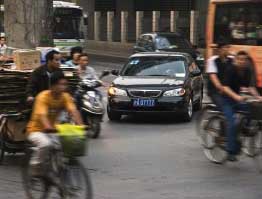
About any time, day or night, in major Chinese cities you can see any type of vehicle transporting all imaginable products on the roads. There are trucks carrying ocean containers and Mercedes carrying people. I have traveled to England, Ireland, Holland, Italy, Canada, Mexico, Indonesia, Malaysia, Korea, and China. I would not call myself a “world traveler” but, of all the countries in which I have traveled, I found China to be the most diverse in terms of the types of vehicles that transported goods on their roads.

Regardless of where my travels took me in China—rural or city—there were always a lot of people transporting goods in any type of vehicle that could move on its own, by animal, or under human power. The fact that people were busy working was not of particular note. It was the diversity of their means of transportation within a single view that was of interest to me. Also, they all seemed to move with purpose—whether carrying large or small items. I suppose that is really not so different than any other parts of the world—for some reason it just struck me as another admirable quality of the Chinese people.

Most of the smaller commercial trucks are blue—I have no idea why? I asked a couple of times but really did not receive an answer. Maybe there was a sale on blue paint? I am certain there is a reason, but since I don’t know it, I can’t share it with you—rather just make reference to it.

I will say that with all those vehicles on the road it did add to the air pollution. In most states in the U.S., vehicles have to pass safety inspections before they can be licensed. I am not certain this is a rule in China—if it can move it is road ready.

In my travels inside China for business, I found the Chinese to be very capitalistic in nature—certainly contrary to how I viewed the Chinese people prior to me actually visiting the country. The diversity in the means of transporting their goods is just one example of this fact at least in my mind.

Note from Blog host – If you plan to do business in China, I recommend visiting the China Law Blog first.

Continued February 27, 2012 in Americans doing Business in China – Part 7 (a guest post) or return to Part 5

______________

Lloyd Lofthouse is the award-winning author of The Concubine Saga. When you love a Chinese woman, you marry her family and culture too. This is the love story Sir Robert Hart did not want the world to discover.

Subscribe to “iLook China”
Sign up for an E-mail Subscription at the top of this page.

About iLook China

Note: This guest post first appeared on February 22, 2010