Mao’s ‘alleged’ Guilt in the Land of Famines – Part 2/8

November 12, 2011

To claim this famine on Mao’s watch was the worst in “modern world history” is a farce once we learn what “modern history” means.

In the West, “modern history” may describe the beginning of a new era, which was the European Renaissance (about 1420-1630).

The term “modern history” may also be marked by the beginning of the Industrial Revolution. If so, then “modern history” started between 1760 and 1830.

If we use 1760 as the beginning of “modern history”, then there are other famines that may claim the title of “worst famine in modern world history.” [Note: only famines with one million or more verified deaths will be listed here — there were many more than what’s on this page.]

In 1769 to 1773, there was the Bengal famine with 10 million deaths while India was part of the British Empire. To understand the British corruption that led to these deaths, I suggest reading Three Episodes in the Criminal History of the British Empire

In 1883-84, the Chalisa famine in India killed 11 million while India was still part of the British Empire.

Between 1810 and 1849, there were a series of four famines in China that took an estimated 45 million lives.

In 1845 – 1849, the Great Irish Famine killed more than one million people while Ireland was part of the British Empire.

Then in 1850 to 1873, because of the Taiping Rebellion in China, drought and famine caused the population of China to drop by over 60 million people. (Note: the Taipings were converted Christians influenced by Western religious beliefs and one goal of the rebellion was to convert China into a Christian nation.)


The Great Irish Famine manufactured by the economy of the British Empire

In 1866, the Orissa famine in India led to one million deaths from starvation, while still part of the British Empire.

Three years later in 1869, the Rajputana famine in India took another 1.5 million lives when India was part of the British Empire.

In Persia in 1870-71, famine took two million lives.

Between 1878 – 1880, there were famines in India, China, Brazil, Northern Africa and other countries.  Thirteen million died in Northern China and more than five million in India, which was part of the British Empire.

In 1921, famine in Russia took 5 million, while in 1937 another famine in China took the lives of another five million and then the Soviet famine of 1947 added one million more to the death toll.

The last major famine during British rule in India was the Bengal famine of 1943.  It has been estimated that some three to five million people died. [Note: at this point, more than 56 million died of famines in the British Empire—You may want to read How the British Empire Starved Millions… to learn more.]

Then, when we look at the number of major famines that have hit China since 108 BC, there were 1,828 or one nearly every year in one province or another and the famines varied in severity.

Moreover, in 1958-61, not all of China suffered from the so-called great famine, which has been blamed on Mao by many in the West. The provinces that suffered were Shandong, Henan, Shanxi, Anhui, Jaingsu and Sichuan — six of the twenty-three provinces in China.

To blame the famine and all loss of life due to starvation on Mao and the Maoists during the Great Leap Forward (1958 -61) and claim it was murder is a false accusation and an injustice. Mao was not a saint, but he was not guilty of this.

Continued on November 13, 2011 in Mao’s ‘alleged’ Guilt in the Land of Famines – Part 3  or return to Part 1

View as Single Page

Recommended reading on this topic for those who seek the unblemished truth: From the Monthly Review, Did Mao Really Kill Millions in the Great Leap Forward? by Joseph Ball

From Griffith University, Australia, Poverty, by David C. Schak, Associate Professor

______________

Lloyd Lofthouse is the award-winning author of The Concubine Saga. When you love a Chinese woman, you marry her family and culture too. This is the love story Sir Robert Hart did not want the world to discover.

Subscribe to “iLook China”
Sign up for an E-mail Subscription at the top of this page.

About iLook China


The Ugly Face of Intolerance – Part 2/3

July 4, 2011

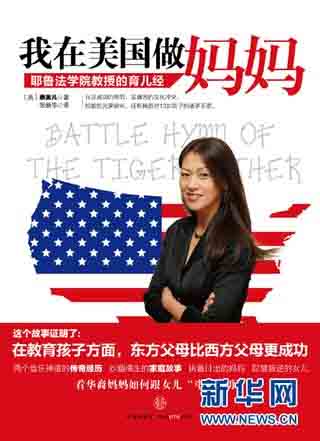
I first ran into this particular wall of intolerance on the Amazon Forum where Amy Chua’s critics left reviews and comments about her parenting methods in a hate fest that had mostly nothing to do with the memoir.

What these critics write are attacks on Chua accusing her of being a child molester, a sociopath, or a narcissist, etc.  Often, these critics do not know what they are talking about and the biased ignorance runs deep.

One claim I have been struggling to disprove was the one that said, “Amy Chua does not represent the average mainland Chinese parent and had no right to claim that her parenting methods were Chinese.”

After more than four months, the evidence I have been looking for appeared in China when the China Daily published Tiger Moms’ Popular in China on April 14, 2011.

The China Daily said, “The strict parenting style advocated by Amy Chua, the Yale law professor, in her latest book, Battle Hymn of the Tiger Mother, is still popular in the country today, according to a recent survey.”

“Among 1,795 people polled online by China Youth Daily‘s social research center, 94.9 percent said they know women who are strict mothers, and 55.1 percent said they see merit in Chua’s parenting.…”

“A Beijing high school teacher, surnamed Liu, was quoted as saying that his wife had enrolled their daughter in violin and ballet classes at an early age and had resorted to scolding and spanking when the girl refused to go.

“Strict parenting is also a tradition in other Asian countries, such as Japan and South Korea,” Liu said. “It has merits in raising smarter children and preparing them better for harsh competition in the future.”

In addition, a critic of Chua’s on the Amazon Forum referred to an opinion piece posted on the Psychology Today Blog where Peter Gray, a research professor of psychology at Boston College claimed that 42 one-star reviews from anonymous people that identified themselves as Chinese was enough to conclude that the majority of Chinese (there are more than 1.3 billion Chinese and almost four million are in the US) were critical of Amy Chua’s parenting methods.

When we compare Peter Gray’s opinion in the Psychology Today Blog with information from almost 2,000 people polled online in China, which source do you think is more credible?

Continued on July 5, 2011 in The Ugly Face of Intolerance – Part 3 or return to Part 1

______________

Lloyd Lofthouse is the award-winning author of the concubine saga, My Splendid Concubine & Our Hart. When you love a Chinese woman, you marry her family and culture too.

To subscribe to “iLook China”, look for the “Subscribe” button at the top of the screen in the menu bar, click on it then follow directions.


When it comes to Parenting, One Size Does Not Fit All – Part 4/5

April 10, 2011


In China and Asia, the average parent is the polar opposite of the average American parent. That’s why they are often called Tiger Parents.

However, Chinese/Asian parents will not all be the same. Though most would fit the description of a Tiger Parent as opposed to the average American parent more concerned with self-esteem and the child having daily fun, the average Chinese/Asian parent sets standards that do not take into account self-esteem or having fun, but those standards would vary from parent to parent.

Most urban parents in China would have higher standards than most rural parents. The higher the status and success of the parent, the better chance the standards would be higher for the child too, which explains why Amy Chua’s expectations for her daughters are set so high (Amy Chua is the author of Battle Hymn of the Tiger Mother.)

After all, Amy Chua is a Yale professor and the author of two New York Times bestsellers. Chua’s father also teaches or taught at the University of Berkeley in California as a math professor.

In China, most mothers identify who they are by the success of their children in school and later in life.

By contrast, American SAP parents may act as if their children were from another planet and a member of a fragile species until the child turns 18, becomes an adult, and reverts to being a member of the human species.

To be continued in Part 5, April 11, 2011 at 12:00 PST, or return to Part 3

______________

Lloyd Lofthouse is the award-winning author of the concubine saga, My Splendid Concubine & Our Hart. When you love a Chinese woman, you marry her family and culture too.

If you want to subscribe to iLook China, there is a “Subscribe” button at the top of the screen in the menu bar.


How a Unified Korea becomes a Win-Win for China and the U.S.

March 21, 2011

I subscribe to Imprimis, a publication of Hillsdale College.  While finishing my morning exercise routine on the stationary bike, I read an essay written by Sung-Yoon Lee of Keeping the Peace: American in Korea 1950 – 2010.

Professor Lee is an adjunct assistant professor of international politics at the Fletcher School of Law and Diplomacy at Tufts University and an associate in research at the Korea Institute at Harvard University.

He writes of the pressure North Korea has applied on the United States to sign a peace treaty that might require US troops to leave South Korea.  Professor Lee feels this would be a mistake, and I agree.

He says, “It is important for Washington to hold quiet consultations with Beijing to prepare jointly for a unified Korea under Seoul’s direction, a new polity that will be free, peaceful, capitalist, pro-U.S. and pro-China.”

This is the first I’ve read anywhere in a Western media source (and Hillsdale College is decidedly conservative in its political stance, which I don’t always agree with) that it is possible a country could be both pro-U.S. and pro-China at the same time.

In fact, Hillsdale College is often anti-leftist (liberal) and anti-entitlement to the point that it has rejected accepting Federal aid even in the form of student scholarships since almost every entitlement dollar from the Federal government comes with strings.

By saying that a unified Korea under Seoul would be both pro-China and pro-U.S. admits China is not the evil dragon so many in the West believe.

When Mao ruled China, North Korea and Communist China seemed as if they were evil twins.  However, today that is not true. In the 1980s, China emerged as a hybrid one-party republic with term limits and age limits so one man would never rule the Middle Kingdom again as Mao did for 26 years.

China became a hybrid capitalist-socialist economy while politically it was an authoritarian one party republic guided by the 1982 Constitution.

Prior to 1911, there was the imperial aristocracy, a “small” middle class (with an emphasis on small) and a huge peasant class living in severe poverty with hard labor and short life spans.

Today, China’s middle class has reached about 300 million and almost 500 million are connected to the Internet, and China’s attempt at censorship does not totally control the flow of global information to those that want it who then share what was learned through Chinese Blogs and e-mails with friends, fans and family.

North Korea is frozen in time, but South Korea and China have evolved and adapted to the global economy.  It would be in China’s interest to see North Korea merge with South Korea and become a capitalist nation open to the world for trade.

In fact, China does more trade with South Korea than the North, which by all accounts is a burden since China often feeds many of North Korea’s citizens to avoid famine sending food grown in China that should have gone to Chinese consumers.

If Korea is unified under Seoul’s leadership, the threat of war in Korea will evaporate.

However, under Pyongyang’s leadership. Korea becomes a larger threat to both China and the US and more difficult to contain.

The US must maintain a military pretense in South Korea and I’m sure China agrees even if it never says so publicly since a war between Pyongyang and Seoul would not be in China’s interest economically.

Learn of China in 1950 Korea Protecting the Teeth

______________

Lloyd Lofthouse is the award-winning author of the concubine saga, My Splendid Concubine & Our Hart. When you love a Chinese woman, you marry her family and culture too.

If you want to subscribe to iLook China, there is a “Subscribe” button at the top of the screen in the menu bar.


Border Crossings and the Blood on Our Hands

March 11, 2011

In 2006, China was crucified in the Western media due to a few unarmed Tibetans being killed attempting to illegally cross the border into India.

Buzzle.com repeated this news that originally ran in the UK’s Guardian. I recall the incident because it was on the news in the US at the time.

Of these few border deaths in China, Buzzle says, “A Romanian cameraman, whose footage of the incident revealed that snipers shot the unarmed Tibetans as they waded through thick snow. The shaky video shows two figures in a column of refugees fall to the ground. “They’re shooting them like, like dogs,” says a witness next to the cameraman.”

The headline shouted “International Anger Grows Over Tibet Shooting. Human Rights groups are calling for a UN Investigation into the killing of a nun by Chinese border patrol guards, writes Jonathan Watts in Beijing.”

Recently, I read another story I’d never heard of before from The Economist of another border where similar killings happen often, but I found no demand for a UN Investigation in the Western media. Even The Economist, which reported the story, did not call for an investigation.

Instead, The Economist concludes with, “Shooting the people you claim to want to do business with is a poor start.”

Maybe the difference is that the border killings reported by The Economist took place between two democracies — India and Bangladesh.


I couldn’t find a report of this India-Bangladesh incident in English on YouTube

The Economist says, “On January 7th India’s Border Security Force (BSF) shot dead Mr. Nur Islam’s 15-year-old (daughter) Felani, at an illegal crossing into Bangladesh from the Indian state of West Bengal. Felani’s body hung from the barbed-wired fence for five hours. Then the Indians took her down, tied her hands and feet to a bamboo pole, and carried her away. Her body was handed over the next day and buried in the yard at home.”

“The BSF (India’s Border Security Force) kills with such impunity along India’s 4,100-kilometer (2,550-mile) border with Bangladesh that one local journalist wonders what the story is about. According to Human Rights Watch, India’s force has killed almost 1,000 Bangladeshis over the past ten years.”

How many were reported killed by witnesses of the China incident? Two or three?

What about deaths along the US border? The Snow Report says, “Border deaths for illegal immigrants hit record high in Arizona sector.”

The Snow Report says, “The discovery of record numbers of bodies along the Tucson sector of the US-Mexico border suggests that border crossings for illegal immigrants are becoming deadlier as heightened security forces migrants into remoter and more forbidding areas.”

Maybe democracies (which are billed as better places to live), sort of like James Bond, get a free pass from the Western media to kill.

Discover more about India Falling Short

______________

Lloyd Lofthouse is the award-winning author of the concubine saga, My Splendid Concubine & Our Hart. When you love a Chinese woman, you marry her family and culture too.

If you want to subscribe to iLook China, there is a “Subscribe” button at the top of the screen in the menu bar.