A Snapshot of Democracy in Asia – Part 6/6

October 2, 2011

The last Asian democracy to shine a brief spotlight on is Taiwan, which isn’t really a country, since  the United States and most other significant nations recognize one China and thus include the boundaries of Taiwan as being part of the boundaries of (mainland) China.

In fact, China claims Taiwan as its province, and the international community does not want to contradict China, so Taiwan is not a member of the United Nations.

Although local elections were allowed in Taiwan as early as the 1950s, the Kuomintang (KMT) ruled Taiwan with martial law under Chiang Kai-shek (1887 – 1976), and repressed democracy advocates  for more than three decades.

After Chiang Kai-shek’s death, in 1976, the KMT held onto power until 2000. Then in direct elections, the Taiwanese people voted for a president in 1996, 2000, 2004 and 2008, but corruption reared its ugly head again.

In 2009, Time World reported on former President Chen Shui-bian‘s corruption trial. Chen was accused of taking $9 million dollars in personal kickbacks on a state-sanctioned land deal, embezzling over $3 million from a state fund and laundering millions to overseas accounts.

Then in 2010, the Taipei Times reported, “A former president (Chen Shui-bian) jailed for graft, a retired head of military police indicted for embezzlement, three top judges accused of taking bribes — the list goes on. Taiwan has a problem with corruption.”

In addition, New York Times reported, “Lee Teng-hui, a former president (served 1996 – 2000), who moved the self-governing island toward democracy, was indicted Thursday on charges of embezzling $7.79 million from a state fund, becoming the second former president of Taiwan to be charged with corruption.”

One good thing to say for Taiwan is a low poverty level similar to mainland China. However, in the world’s most powerful democracy, the U.S. 2010 Census says 15.7 percent of Americans live in poverty and that is 47.8 million people–more than twice the population of Taiwan.

After discovering the track record of  several so-called multi-party democracies in Asia, will mainland China’s growing middle class eventually demand a multi-party democracy?

For one answer, Professor Stephen Kobrin of the Wharton School of Knowledge at the University of Pennsylvania says, “We tend to assume all middle-class people have certain values. ”

Kobrin points to the common assertion that people rising into the middle class will press for democracy. However, that does not seem to be happening in China where he suggests that people may be willing to accept more autocratic regimes in return for stability and a middle-class lifestyle.

“The assumption has been that there’s a link between capitalism and democracy, that as incomes rise and people become educated, they will increase pressure for democracy and freedom and civil liberties,” notes Kobrin. “That may or may not be true.”

Return to A Snapshot of Democracy in Asia – Part 5 or start with Part 1

______________

Lloyd Lofthouse is the award-winning author of The Concubine Saga. When you love a Chinese woman, you marry her family and culture too. This is the love story Sir Robert Hart did not want the world to discover.

To subscribe to “iLook China”, look for the “Subscribe” button at the top of the screen in the menu bar, click on it then follow directions.


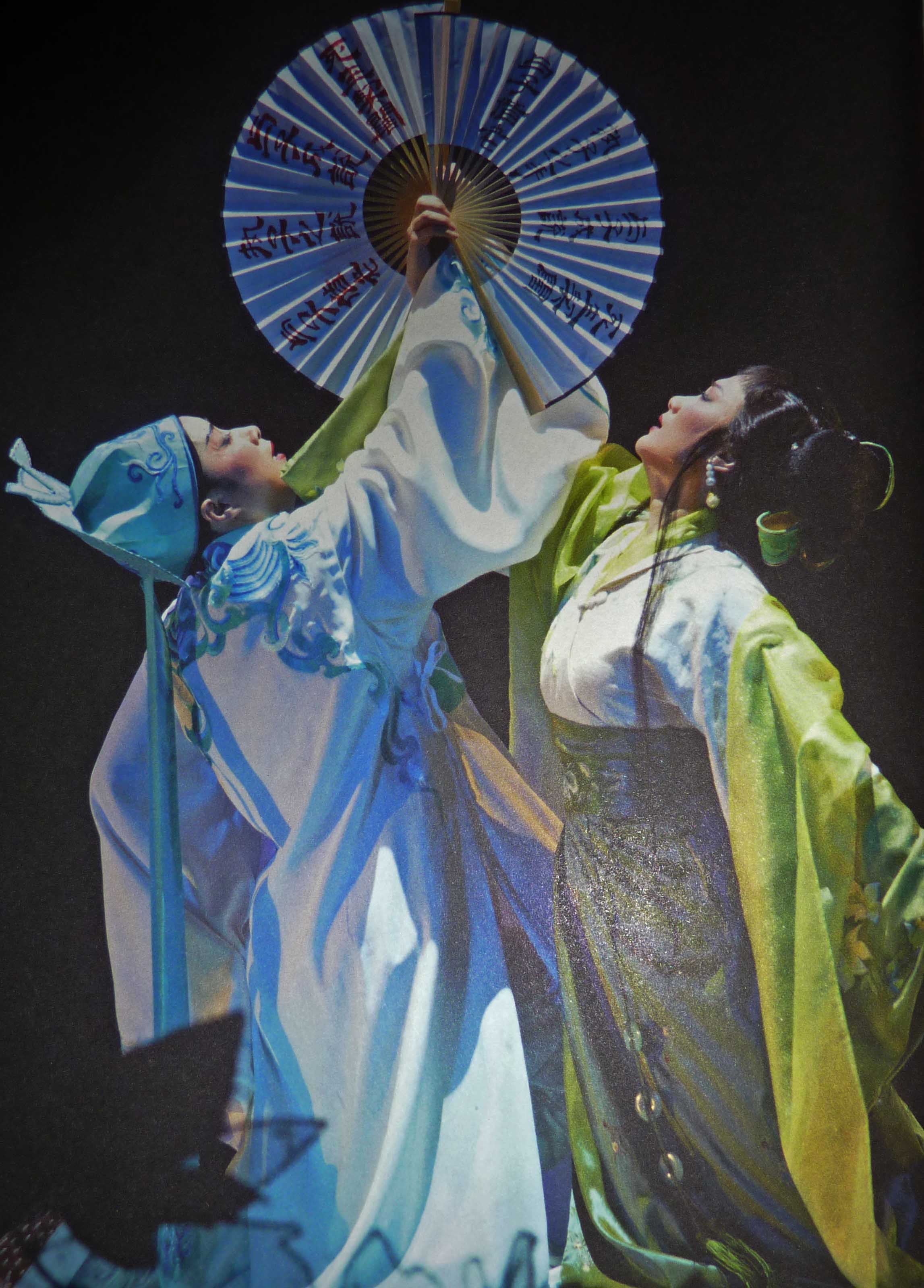
Chinese Opera and Mao Wei Tao, China’s Living Treasure

June 18, 2011

Mao Wei Tao is considered a living treasure in China. She imitates men in the opera roles she plays—a reversal from Imperial China when women were not allowed on stage so men played female roles.

“In 1923, the training of female actors for this art form was set up. Since 1928, the Shaoxing opera troupes, consisting of solely female actors, began their performances in Shanghai. In a few years, females impersonating males had become the most important feature of this opera form, and at the same time the Yue opera became well known all over China.”

East China’s Zhejiang province gave China Shaoxing Opera’s Mao Wei Tao.

In her thirty-year career on the stage, she’s best known as an outstanding male impersonator with a cult following of women.

I was introduced to Yue Opera in Hangzhou, Zhejiang Province about a decade ago.

Mao Wei Tao and her husband have a theater company near the shores of the famous Westlake. My wife translated while I watched the live-opera performance in fascination.

The costumes were lavish and the acting and opera was dramatic while classical Chinese music played in the background.

The challenge today is to keep this form of Chinese opera alive. The audience for opera is shrinking dramatically in China while remaining popular with the older generation.

Television, movies and the Internet are claiming the shorter attention spans of younger Chinese

Mao Wei Tao, considered an innovative genius on stage, adapts and works to keep the art form alive. According to her husband, no two performances are exactly alike.

In November 2010, she performed in Taiwan as a cultural ambassador from the mainland.

This revised and edited post first appeared on March 14, 2010 as Mao Weitao and Yue Opera

______________

Lloyd Lofthouse is the award-winning author of the concubine saga, My Splendid Concubine & Our Hart. When you love a Chinese woman, you marry her family and culture too.


To subscribe to “iLook China”, look for the “Subscribe” button at the top of the screen in the menu bar, click on it then follow directions.


The Founding of China’s Republic – a Movie Review

May 4, 2011

The Founding of a Republic was produced to coincide with the 60th anniversary (in 2009) of the Chinese Communist Party (CCP) winning the Civil War in October 1949. I first saw this movie March 2011.

The film has the largest number of Chinese movie stars in one movie. Many of the top stars were invited to star as leads, supporting characters, or to appear in cameos, such as internationally well known Jackie Chan and Jet Li, whom appear briefly in the film.

The film covers the period between 1946 and October 1949 — well before the infamous failed Great Leap Forward (1958-1962) and the Cultural Revolution (1966-1976), which are the events most people in the West identify with Mao.

There is seldom any mention in the West of how Mao won the hearts and minds of the hundreds of millions of Chinese that supported the CCP, while distrusting and spurning the Nationalist Kuomintang (KMT). This film (regardless of any propaganda that may exist) provides a glimpse of how Mao accomplished this feat.

The mild dose of propaganda that does appear in the film is nothing compared to the propagandized, anti-bourgeois PRC movies of the early 1950s or 60s.

It was because of how Mao won the Civil War (1926 to 1949 with a pause during a portion of World War II) that despite the deep collective scars left by the catastrophes of the Great Leap Forward and the Cultural Revolution, that he retains a strong measure of popular affection in China to this day.

In fact, many born in China prior to the 1980s still consider Mao to be China’s George Washington.

Directors Huang Jianxin and Han Sanping provide glimpses into the key moments during the final stages of the Chinese Civil War and the film was not just glorified propaganda since the Communists are given only one third of the screen time.

More time was given to people like Zhang Lan and Li Jishen, and key members of the China Democratic League. Until I watched this film, I only knew of the KMT and the CCP. I didn’t know there were other Chinese political parties involved.

In addition, Chiang Kai-shek and his son Chiang Ching-Kuo, who later guided Taiwan’s government to become a multi-party democracy (the first direct presidential election was held in 1996 eight years after Ching-Kuo’s death), are not demonized but are played as characters trapped between their responsibilities towards their country and pleasing political factions in the KMT.

The film suggests that the KMT lost because of the political agendas of these factions within the KMT, and not because of the power of the Communists, which was unexpected in a pro-Communist film.

After all, in war there are few if any saints and politics are more complex than most people ever know.

I urge everyone interested in modern Chinese history to see this film especially students in Chinese history classes and/or those majoring in East Asian studies. People that cannot understand Mandarin will be pleased that the movie has English subtitles.

______________

Lloyd Lofthouse is the award-winning author of the concubine saga, My Splendid Concubine & Our Hart. When you love a Chinese woman, you marry her family and culture too.

If you want to subscribe to iLook China, there is a “Subscribe” button at the top of the screen in the menu bar.


The KMT–CIA Heroin, Cocaine Pipeline to the US

March 20, 2011

The CIA, in an alliance with the Nationalist Chinese (KMT), addicted millions of Americans on drugs such as heroin and cocaine to finance a covert war against the spread of Communism.

The KMT’s leader was the brutal, authoritarian dictator Chiang Kai-shek of Taiwan, which the US still supports. Chiang Kai-shek ruled Taiwan with an iron fist until his death.

However, it wouldn’t be until the 2000 presidential election in Taiwan that the KMT’s hold on power came to an end there.

I first learned of the KMT-CIA drug pipeline into the US in the early 1980s when I read of Congressional hearings leading to the closing of Air America, a covert airline owned by the CIA that was one of the methods used to move illegal drugs out of Southeast Asia and into the hands of US citizens.

While writing of all things Chinese, I forgot about the Nationalist (KMT) Chinese generals that worked with the CIA during the Vietnam war to supply American troops in Vietnam and addicts in the US with heroin and cocaine in trade for weapons.

After the Chinese Communists under Mao won the Civil War in 1949, a large force of KMT troops in southern China fled to the Golden Triangle of Southeast Asia, which is located in Laos, Thailand and Burma. That’s when the KMT became involved in the drug trade with the CIA.

For reminding me of this dark chapter of America’s history (which evidence says is still an open book), I thank a ’21st Century Marco Polo, who is a committed and experienced human rights and legal education professional with a history of working internationally throughout the Asia-Pacific region.

Kevin Ryan writing for 911 Blogger.com reviewed American War Machine written by Peter Dale Scott.

Ryan writes, “This book examines a wide-ranging number of covert US operations since World War II, and, among other things, demonstrates that many of these operations were intimately connected with, and dependent on, illicit drug trafficking….”

The Senophobic, American capitalist obsession with everything Communist led the US down this dark path that introduced an expressway of  heroin and cocaine into the US in what may contribute to the eventual failure of the most successful and powerful democracy in the history of humanity.

I have embedded a four part series of an audio transcript of a 60 Minutes broadcast of the CIA controlled drug trade.


60 Minutes on CIA Drug Smuggling – Part 1


60 Minutes on CIA Drug Smuggling – Part 2


60 Minutes on CIA Drug Smuggling – Part 3


60 Minutes on CIA Drug Smuggling – Part 4

To understand the impact on US society, Drug Rehabs.org says, “The trafficking of illicit drugs burdens various components of domestic financial sectors as individuals and organizations frequently engage in illegal activates to generate income in order to purchase drugs or finance drug trafficking operations. Mortgage fraud (think 2008 financial crises which originated in New York), counterfeiting, shoplifting, insurance fraud, ransom kidnapping, identity theft, home invasion, personal property theft, and many other criminal activates often are undertaken by drug users and distributers to support drug addictions…”

Did you know that Mao, after winning the Chinese Civil War (1926 to 1949) between the Communists and Nationalists, ended drug trafficking and drug use in China in about 24 hours?

Illegal drugs wouldn’t return to China until after Mao’s death when China joined the WTO and opened its doors to world trade.

______________

Lloyd Lofthouse is the award-winning author of the concubine saga, My Splendid Concubine & Our Hart. When you love a Chinese woman, you marry her family and culture too.

If you want to subscribe to iLook China, there is a “Subscribe” button at the top of the screen in the menu bar.


China Reaching for Stealth and Aircraft Carriers

March 16, 2011

I read about China’s J-20 Stealth Fighter at the Huffington Post. Sinophobes seem to be all a Twitter saying, “The J-20 would pose the greatest immediate threat to Taiwan and undermine the Taiwan air force’s advantages.”

However, the US is currently the only country in the world with operational stealth fighters and bombers, and China is years away from deploying stealth aircraft.

As for China’s aircraft carrier, in April 2009 CCTV reported that China wanted an aircraft carrier and would eventually build their own.

China Business asks, “Will China’s future aircraft carriers be a threat to other nations?”

In fact, China’s first aircraft carrier is a very old, used Russian-made aircraft carrier and may be operational by 2012.

Wu Huayang, Deputy Political Commissar of the PLA Navy, says China has the economic and technological capacity to build its own aircraft carriers. Western military experts believe that China will eventually build five.

Liang Guanglie, China’s Defense Minister, says, “China will not be the only major country without an aircraft carrier to protect the country’s maritime security.”

Even Japan has an aircraft carrier, its first since World War 2.  It was launched in 2009.  In fact, Japan is planning to build six-light carriers. Sounds sinister to me. No wonder China wants stealth and aircraft carriers after what the Japanese did to China in World War 2.

An outdated list at Wiki shows that the US has 67 aircraft carriers with 11 in service and the United Kingdom has 40 with two in service.  India has two with one in service. Even Thailand has a light aircraft carrier.

For stealth, the US has the F-117 Nighthawk (about 64 were built), the B-2 Spirit Stealth Bomber (20 are active), the F-22 Raptor (168 built and 187 planned) and the R-35 Lightning II (13 test flight aircraft).

Discover When the Generals Laughed

______________

Lloyd Lofthouse is the award-winning author of the concubine saga, My Splendid Concubine & Our Hart. When you love a Chinese woman, you marry her family and culture too.

If you want to subscribe to iLook China, there is a “Subscribe” button at the top of the screen in the menu bar.