China’s god Culture Gone

May 27, 2010

For millennia, China’s emperors were considered the Sons of Heaven and worshiped as such.  When referred to as the Son of Heaven, a title that predates the Qin unification (221-207 BC), the emperor was recognized as the ruler of “all under heaven”. 

After Imperial China ended, Sun Yat-sen established a brief Chinese republic soon brought to an end by competing warlords, who plunged China into anarchy and violence. It wouldn’t be until 1928 that Chiang Kai-shek would become the victor and dictator of China and reestablish some order.

Mao won China in 1949 and stayed in power until his death in 1976. Mao has been called the modern emperor since he lived in the Forbidden City and ruled for twenty-seven years.  After Mao’s death, Deng Xiaoping and his supporters decided they didn’t want to have another god-like figure ruling China, and the Communist Party added amendments to the Chinese constitution creating term limits and an age limit. 

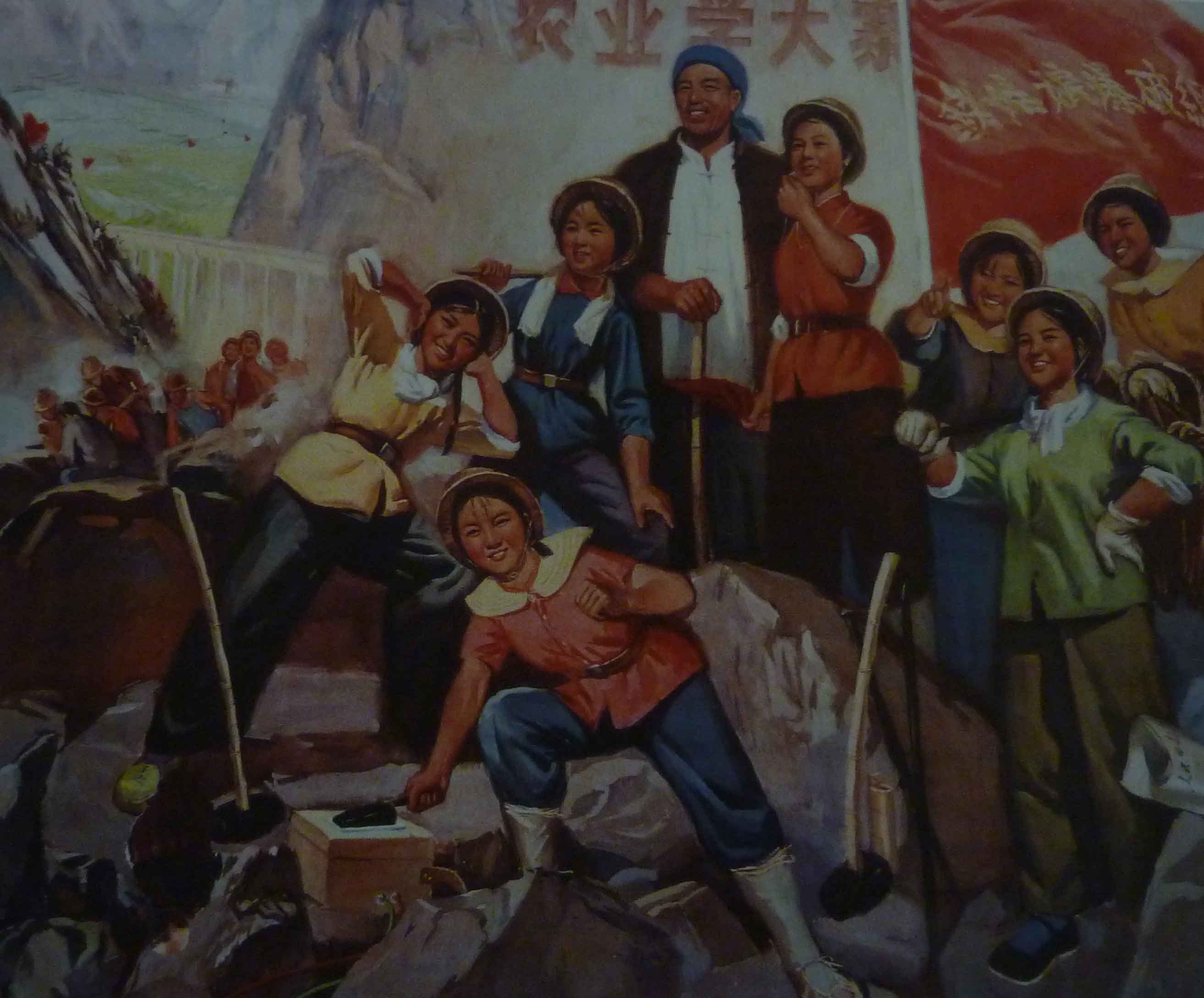
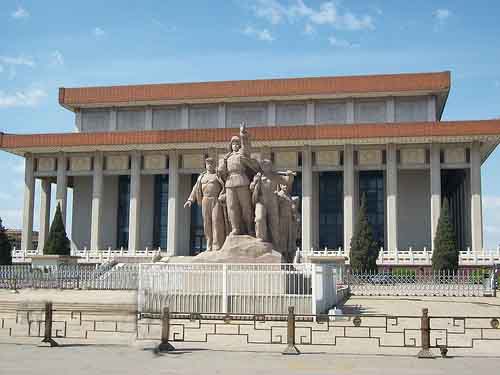
Mao's Tomb

Mao is still revered in China.  His tomb was built in Tiananmen square and his body is preserved beneath the tomb in refrigeration.  Visitors may pay a small fee to visit the tomb and possibly see China’s modern emperor on display behind bulletproof glass with attending guards.

Learn more about China’s Modern Dynasty

____________________________

Lloyd Lofthouse is the author of the award winning novels My Splendid Concubine and Our Hart. He also Blogs at The Soulful Veteran and Crazy Normal.

Sign up for an RSS Feed for iLook China


American Grasshoppers and Chinese Ants

May 26, 2010

In The Ant and the Grasshopper, as retold from Aesop’s fable and illustrated by Amy Lowry Poole, the grasshopper plays, while the ants work and save diligently gathering grain for winter. The ants urge the grasshopper to prepare for hard times, but the grasshopper will not be bothered.

After all, under Confucianism, absolute obedience to authority, a strict family structure and hard work have been valued for more than two millennia so the ants keep working while grasshoppers play.
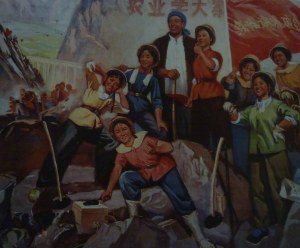
In Time to Defriend China, Elizabeth Economy (Is that really Liz’s last name—Economy?) and Adam Segal say we should stop negotiating with China. This post at the “Foreign Policy” Blog, like the grasshopper in Aesop’s fable, is self-centered and out of touch.

Liz and Adam say China isn’t cooperating globally as if China has an obligation. They say, “The sticking points in U.S.-China relations are mirrored in China’s relations with much of the rest world. The European Union and Japan, for example, find it no easier to negotiate with China on issues such as trade, climate change, cyber conflict and the Dalai Lama.”

Really— climate change and cyber conflict? Didn’t China recently announce they were going to cut carbon emissions by 40% or more in the next few years while President Obama thought the US might reach 17%? As for cyber conflict, that’s a two-way street, and the Dalai Lama’s claims are a mix of big lies and small truth.

Meanwhile, China has its hands full with a greater challenge—the 1.2 billion Chinese outside the Communist Party who expect a better life.

In 1950, China was generating 0.005 kilowatts of electricity and much of the country was without.  Under Mao, there was the tragedy of The Great Leap Forward and The Cultural Revolution costing tens of millions of lives. It wasn’t until Mao was gone that China started modernizing and improving the lifestyles of hundreds of millions of people.

Today, China is breaking records building modern cities and growing the second largest economy in the world and with a savings account. However, China still has 750 million people without proper medical care, electricity or modern connivances. In addition, they have problems with Tibet and with the Uyghurs in Xinjiang Province, who want to break free with support from Hollywood and maybe the CIA.

Then there is the Taiwan issue. If the US had not interfered in 1949, that issue would not exist. Taiwan would be part of China today and America would have a larger Chinese population.  Don’t forget that the Kuomintang until the 1980s, was a dictatorship that America supported and the Taiwanese were burdened with martial law for more than thirty years.

When China meets its goals at home, then “maybe,” China will be willing to help the West.
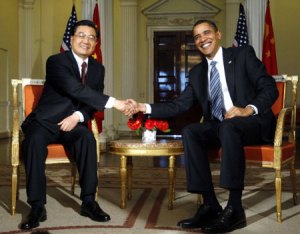
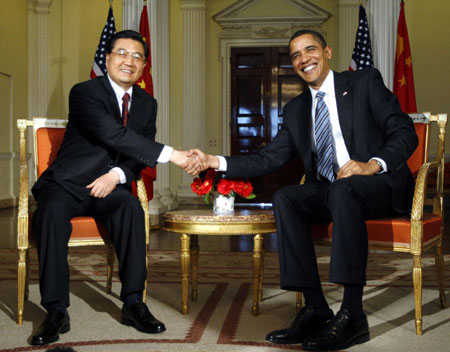
Hu Jintao and Obama shaking hands

Instead of walking away from negotiations as Liz and Adam suggest, the US and the rest of the developed world should find ways to offer a win-win situation that helps China meet its internal goals. How will China do that if they allow the global exchange rate for their currency to fluctuate putting millions of Chinese out of work? If America wants to grow jobs, the US must find ways to do so without hurting the Chinese worker any more than these people have already been hurt. Since the 2008 global economic crises caused by American greed, more than 20 million Chinese workers lost their jobs and 70,000 factories went out of business.

Like those ants in the fable, don’t expect the Chinese to come running to rescue nations that squandered their future while China is still building one. A better opinion on this topic might be this one from Martin Wolf in the Financial Times.

____________________________

Lloyd Lofthouse is the author of the award winning novels My Splendid Concubine and Our Hart. He also Blogs at The Soulful Veteran and Crazy Normal.

Sign up for an RSS Feed for iLook China

Cultural Differences and the Ignorant American in Vietnam

May 22, 2010

Another example of American ignorance and arrogance happened when I served in Vietnam. During the Vietnam war, a US senator spoke out and what he said was quoted in the media. He was angry that women could be bought and sold in Thailand, a staunch US ally. Thailand told him to stuff it and that they would continue to live and run their country as they saw fit.

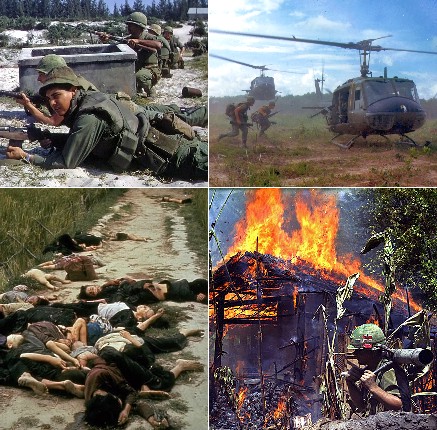
Vietnam Mural

Forty years later, Thailand hasn’t changed much. Women can still be bought and sold there even though Thailand is considered a democracy.

When I was in Vietnam, we fought alongside a South Korean division–great troops to have on your side. Brutal and tough. Another US senator complained about their brutal tactics with the Vietnamese, like the time they took a suspected Vietcong and hung him upside down from a tree branch and skinned him in front of an entire village to get villagers to reveal where the rest of the Vietcong were hiding.

The South Koreans got what they wanted and cleaned out that VC nest. When that US Senator complained, South Korea said “Shove It” (that’s not exactly the language they used but it means the same thing). The South Korean’s said, if you don’t like the way we fight, we will pull our division out and send our troops home.

That senator stopped protesting and the South Koreans stayed. I fought with the ROKs on an operation and was glad to have them by my side. At that time, The South Koreans hated communist due to North Korea, which made sense then.

Discover Why the Generals Laughed

____________________________

Lloyd Lofthouse is the author of the award winning novels My Splendid Concubine and Our Hart. He also Blogs at The Soulful Veteran and Crazy Normal.

Sign up for an RSS Feed for iLook China


Cultural Differences, the Ignorant American and Western Imperialism

May 21, 2010

Before Western Imperialism attempted to change Asia during the 19th century, China was a regional super power for more than two-thousand years. Over time, the Chinese believed they were too civilized and powerful to be threatened by anyone on the planet.  Then the British, French, Portuguese, Germans, Americans, Russians and Japanese arrived and waged war in China for a century starting with the First Opium War.

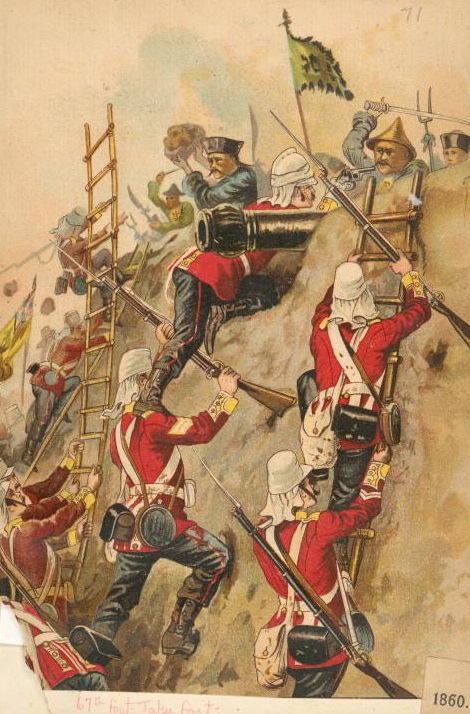
Opium Wars

China learned a lesson from all of these wars. It only took a century to recover and start over.

The leaders of China are called Communists, but the men and women who rule China were born Chinese and the decisions they make are based on being Chinese—not being Communists. The Chinese culture is a collective culture and when an “individual” crosses the line and breaks the rules doing or saying something that is unacceptable to the collective culture, they are erased (given a death sentence) or reeducated (if possible). That’s how the Chinese collective culture on the mainland does things.

In time, interaction with other cultures may change that.  In fact, China already has changed to some degree. Friendly, harmonious interaction is the key—not hate and accusations like those from Americans like Timothy V.

See Respecting Cultural Differences are Out-of-Focus

____________________________

Lloyd Lofthouse is the author of the award winning novels My Splendid Concubine and Our Hart. He also Blogs at The Soulful Veteran and Crazy Normal.

Sign up for an RSS Feed for iLook China


Cultural Differences, the Ignorant American and Star Trek

May 21, 2010

I’ve watched Star Trek since the 1960s and have seen most of the spin offs.  In the Star Trek Universe there are many cultures and races—far too many for even Christians or Islam to convert since that seems to be a driving force behind both of these major religions even if it means using war and violence to make it happen.

One way to look at this is to consider cultures and countries like China, Japan, both Koreas, Vietnam, Thailand, Singapore and others as if they are light-years away from Western culture.

If the US sent a spaceship to a far off world around another star and discovered a culture that was alien to our way of life, but these aliens had powerful, modern weapons and a strong military to defend themselves there would be no way to force them to change as the West did to so many cultures during the 19th century and a good portion of the 20th.

But what if this culture around that foreign star had products and materials  we wanted or needed for our civilization to survive. To do business with them, we would have to accept that culture the way it was and not attempt to change them or judge them as if that planet were an American Territory to be terrorized and converted.

None of the Asian cultures on our earth developed from Christianity, Judaism or Islamic roots. Even our staunchest allies in Asia, Singapore and Thailand, are Asian cultures with governments that do not fit the America model.

What does loss of Face mean to most Chinese?

______________

Lloyd Lofthouse is the award-winning author of The Concubine Saga. When you love a Chinese woman, you marry her family and culture too. This is the love story Sir Robert Hart did not want the world to discover.

Subscribe to “iLook China”!
Sign up for an E-mail Subscription at the top of this page, or click on the “Following” tab in the WordPress toolbar at the top of the screen.

About iLook China