An Attitude Shift in China

June 7, 2010

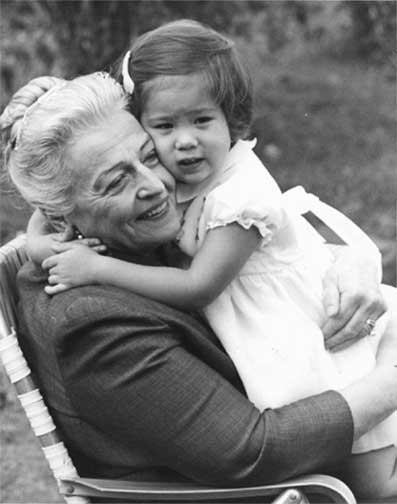
During Mao’s Cultural Revolution, Pearl S. Buck, who wrote The Good Earth and was awarded the Nobel Prize for Literature, the first American woman to win it, and the Pulitzer Prize, was denounced in 1972 as an “American cultural imperialist” by the Communists in China and was not allowed to visit China with Richard Nixon.

Pearl S. Buck

I recently read in Xinhua, the official voice of China’s government, that “A few months ago, the American novelist who spent most of the first 42 years of her life in China, from 1892 to 1934, putting her heartfelt and acute understanding of Chinese grassroots people in her Pulitzer Prize-winning novel, The Good Earth (1931), was voted one of the top “friends of China” in an international event hosted by the Chinese government.”

In February 2009, city officials in Zhenjiang, Jiangsu Province in China opened the Pearl S. Buck Museum and Philanthropy Pavilion adjacent to her historic home. The museum and pavilion were divided into three sections: one devoted to her humanitarian works, another to her life and achievements, and the last, to her writings.

See International Women’s Day

_____________________

Lloyd Lofthouse is the author of the award winning novels My Splendid Concubine and Our Hart. He also Blogs at The Soulful Veteran and Crazy Normal.

Sign up for an RSS Feed for iLook China


No Room for Arrogance

June 6, 2010

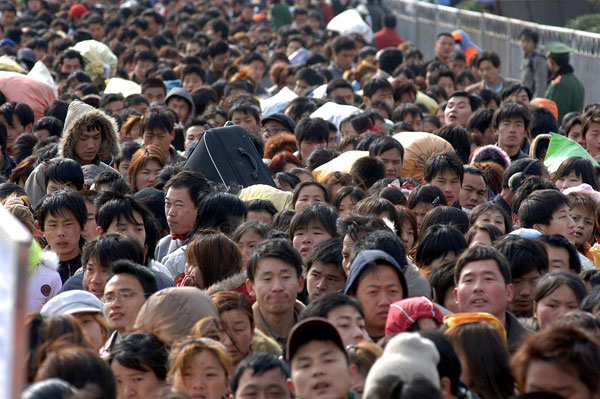
In Global Voices, I read that a successful, well-known Chinese film director, Ning Hao, got in a fistfight with a foreign man, who wanted a swimming pool lane to himself, in what Ning described as an already crowded Chinese public swimming pool, which is understandable in a country with 1.3 billion people. I’ve been in crowds in Shanghai, Beijing and Xian that resemble river currents where I’m a drop of water.

I suggest that you click on the link to Global Voices and read the narrative, which is in English and Chinese and leave a comment.

Reading that post reminded me of my first trip to China in 1999 when I was told that it was okay for foreigners to go to the front of the line. That bothered me then and still bothers me since my parents raised me to be polite and wait my turn.

The piece in Global Voices demonstrated an arrogant attitude that should have died with 19th century Western Imperialism.  However, the chances are that this rude, self-centered foreigner probably behaves like this everywhere—even the country of his birth. Rude, arrogant people are usually that way no matter where they are.

Think, When in Rome, Do as the Romans

_______________

Lloyd Lofthouse is the award-winning author of My Splendid Concubine [3rd edition]. When you love a Chinese woman, you marry her family and culture too. This is the love story Sir Robert Hart did not want the world to discover.

Subscribe to “iLook China”!
Sign up for an E-mail Subscription at the top of this page, or click on the “Following” tab in the WordPress toolbar at the top of the screen.

About iLook China


The Chinese Work Ethic

May 30, 2010

At the turn of the century, Jack London visited China (1904-05) and saw how hard the Chinese worked. He surmised that Westerners, living in ignorant bliss, had no understanding of Asian cultures and were far too confident of their superiority to realize that their days of world power were severely numbered. He urged that Westerners make concerted efforts to meet with Japanese and Chinese to understand each other better as equals. Source: History News Network

Jack London with his wife

In fact, I’ve met highly educated Chinese who came to the US and couldn’t get jobs in their field of study. Did they give up and lay around complaining how unfair life was?  No. They became handy men or worked in construction for far less than what a Latino, illegal immigrant worker earns. These same Chinese, with strong family values, also save money to send their children to college.

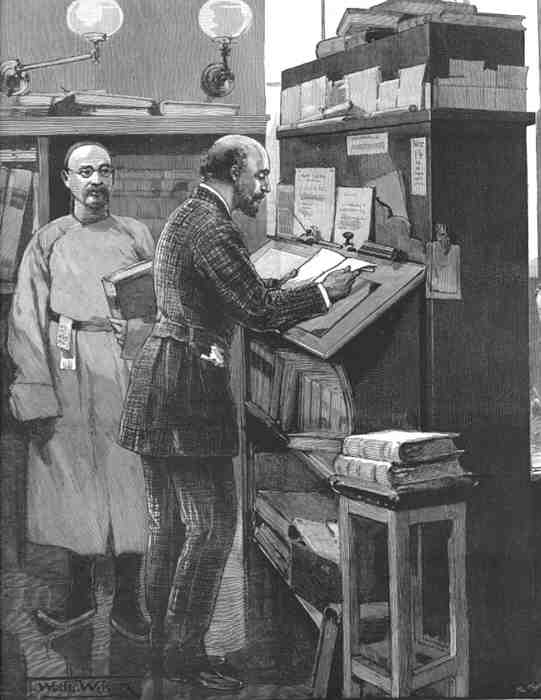
Sir Robert Hart, who lived and worked in China (1854 – 1908) and is considered the Godfather of China’s modernization said the same thing Jack London would say decades later. In the 1880s, he predicted that within a century China would be a super power again.

Sir Robert Hart in China

The Chinese work ethic is also reflected in Article 42 of the PRC’s Constitution.

“Citizens of the People’s Republic of China have the right as well as the duty to work. Using various channels, the state creates conditions for employment, strengthens labour protection, improves working conditions and, on the basis of expanded production, increases remuneration for work and social benefits. Work is the glorious duty of every able-bodied citizen. All working people in state enterprises and in urban and rural economic collectives should perform their tasks with an attitude consonant with their status as masters of the country. The state promotes socialist labour emulation, and commends and rewards model and advanced workers. The state encourages citizens to take part in voluntary labour. The state provides necessary vocational training to citizens before they are employed.”

Who built the Great Wall of China?
Who built China’s Grand Canal?
Who built the first emperor’s tomb and all those Terra Cotta Warriors?
Who took a country in 1950 that produced 0.005 kilowatts of electricity and built more than a hundred modern cities in less than three decades with plans to build 400 more—something historians say has never happened in the recorded history of humanity?
Whom has the only viable space program left on the earth with plans to go to the moon and beyond?
Who built America’s Western Railroads during the 19th century?

To learn more see All About Balance

______________

Lloyd Lofthouse is the award-winning author of the concubine saga, My Splendid Concubine & Our Hart. When you love a Chinese woman, you marry her family and culture too. 

If you want to subscribe to iLook China, there is a “Subscribe” button at the top of the screen in the menu bar.

China and North Korea

May 27, 2010

Due to the latest tension between North and South Korea over the sinking of a South Korean navy ship by North Korea, China has been asked to step in and help. However, China’s response has been for the “relevant parties” to “calmly and properly handle the issue and avoid escalation of tension.” Source: Politics News

If China is reluctant to be sucked into the latest North Korean conflict, what could be causing this response? One reason might be that China has a history with Korea going back to the Tang Dynasty in 688 AD, when there was an alliance with Silla, a Korean state.

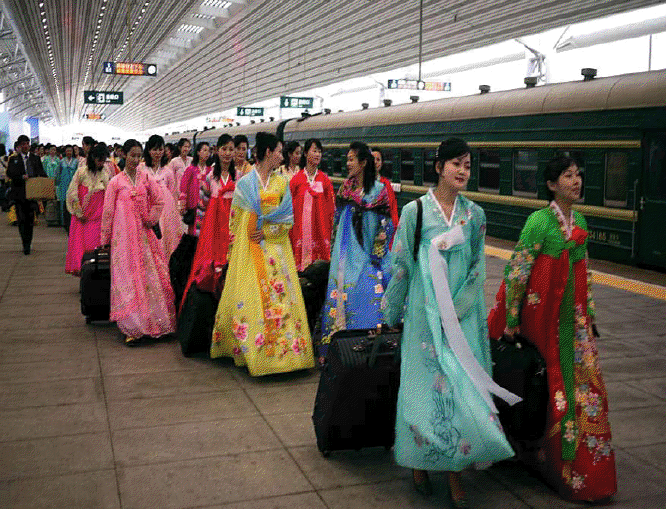
North Korean National Musical Troupe currently visiting China performing “Dream of Red Mansion” (adapted from Chinese classic novel).

Then it could be because Chinese culture, written language and political institutions have had an influence in Korea since the 4th century and in the 14th century, Korea came under the influence  of Confucian thought influenced by Buddhism and Daoism (Taoism).

China’s reluctance to put public pressure on Pyongyang to step off the warhorse might be because the Chinese feel it would be like pressuring a family member. A 1,700-year old relationship might have more weight than the one China has with America that isn’t even forty yet. However, measuring that weight may also depend on the trillion or more China has invested in America.

Punish North Korea or Not?

_______________

Lloyd Lofthouse is the award-winning author of My Splendid Concubine [3rd edition]. When you love a Chinese woman, you marry her family and culture too. This is the love story Sir Robert Hart did not want the world to discover.

His third book is Crazy is Normal, a classroom exposé, a memoir. “Lofthouse presents us with grungy classrooms, kids who don’t want to be in school, and the consequences of growing up in a hardscrabble world. While some parents support his efforts, many sabotage them—and isolated administrators make the work of Lofthouse and his peers even more difficult.” – Bruce Reeves.

lloydlofthouse_crazyisnormal_web2_5

Subscribe to “iLook China”!
Sign up for an E-mail Subscription at the top of this page, or click on the “Following” tab in the WordPress toolbar at the top of the screen.

About iLook China

China’s Holistic Historical Timeline


China’s god Culture Gone

May 27, 2010

For millennia, China’s emperors were considered the Sons of Heaven and worshiped as such.  When referred to as the Son of Heaven, a title that predates the Qin unification (221-207 BC), the emperor was recognized as the ruler of “all under heaven”. 

After Imperial China ended, Sun Yat-sen established a brief Chinese republic soon brought to an end by competing warlords, who plunged China into anarchy and violence. It wouldn’t be until 1928 that Chiang Kai-shek would become the victor and dictator of China and reestablish some order.

Mao won China in 1949 and stayed in power until his death in 1976. Mao has been called the modern emperor since he lived in the Forbidden City and ruled for twenty-seven years.  After Mao’s death, Deng Xiaoping and his supporters decided they didn’t want to have another god-like figure ruling China, and the Communist Party added amendments to the Chinese constitution creating term limits and an age limit. 

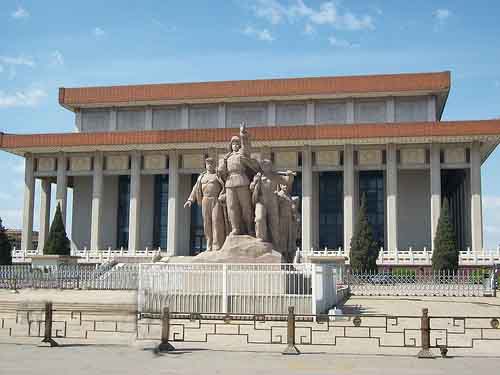
Mao's Tomb

Mao is still revered in China.  His tomb was built in Tiananmen square and his body is preserved beneath the tomb in refrigeration.  Visitors may pay a small fee to visit the tomb and possibly see China’s modern emperor on display behind bulletproof glass with attending guards.

Learn more about China’s Modern Dynasty

____________________________

Lloyd Lofthouse is the author of the award winning novels My Splendid Concubine and Our Hart. He also Blogs at The Soulful Veteran and Crazy Normal.

Sign up for an RSS Feed for iLook China