Sun Tzu’s “The Art of War” – 1/10

August 18, 2010

Around 500 BC, the King of Wu summons Sun Tzu, one of the greatest military minds in history, to save his kingdom from a more powerful enemy.

Sun Tzu was a warrior, a philosopher and the author of The Art of War.

Sun Tzu is important because he had a cohesive, holistic philosophy on strategy.  Sun Tzu tells the King of Wu he can defeat the enemy with a smaller army.  Doubting him, the king challenges Sun Tzu to turn the palace concubines into a fighting force and Sun Tzu accepts.

Sun Tzu shows the concubines what to do, selects the best two students and puts them in charge of the others.  When Sun Tzu orders the exercise to begin, the woman laugh.

He tries again but the concubines laugh again.

Sun Tzu says, “If instructions are not clear and commands not explicit, it is the fault of the general.  But if the orders are clear, and my orders are clear, it is the fault of the subordinate officers.”

Without warning, Sun Tzu beheads the two concubines he had selected to lead the others.  To Sun Tzu, war is a matter of life and death. This is the key principal of his teachings.  Once understood, everyone from the general to the solider will be motivated to win.

While the bodies of the first two concubines are still warm, Sun Tzu appoints two new concubines to lead the others. This time the concubines follow his orders without hesitation. The king of Wu is convinced and  appoints Sun Tzu commander of the Wu army.

Sun Tzu now must train an army of 30 thousand troops to fight a force ten times larger.

Go to Sun Tzu’s “The Art of War” – Part 2

Lloyd Lofthouse is the award-winning author of My Splendid Concubine [3rd edition]. When you love a Chinese woman, you marry her family and culture too. This is the unique love story Sir Robert Hart did not want the world to discover.
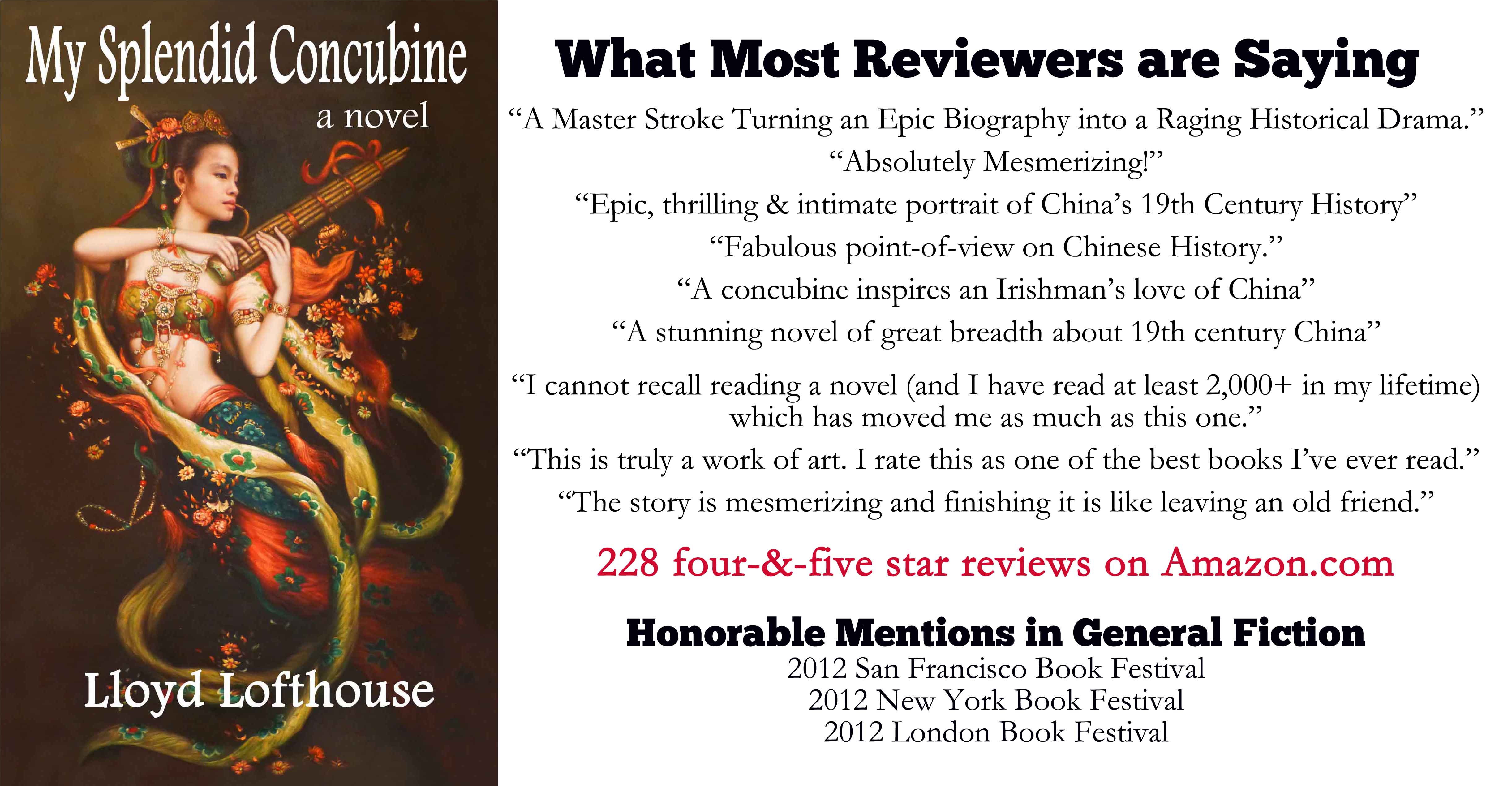
A1 on March 13 - 2016 Cover Image with BLurbs to promote novel

Where to Buy

Subscribe to “iLook China”!
Sign up for an E-mail Subscription at the top of this page, or click on the “Following” tab in the WordPress toolbar at the top of the screen.

About iLook China

China’s Holistic Historical Timeline


Fewer Workers and Rising Wages Equals More Spending

August 18, 2010

The Economist published an interesting piece about the changing economic landscape in China.   If you read between the lines, it appears that the Wall Street crash that shook the world in 2008 and is still generating pain may have been a catalyst for changes benefiting the Chinese worker.

In 2008, 670 thousand factories closed their doors in China putting 25 million migrant laborers out of work, but wages went up 17.3% by the end of 2009, which makes no sense.

When I was still teaching and California’s money was tight, schools saw funds cut, jobs lost and salaries frozen, which is still happening now because of the 2008 crash.

A shrinking workforce in China happened to coincide with the 2008 global economic meltdown.  The International Business Times reports that due to China’s longtime one-child, family planning policy, the population of 20 to 39 year-old workers, the backbone of China’s labor force, has dropped 22% in the last 10 years while older workers are staying in the villages.

These changes encouraged China’s central government to shift support from businesses to workers by encouraging the provinces to raise the minimum wage while keeping a low profile during labor unrest.

Some industries moved inland where wages are lower but ended up selling their products to local Chinese consumers, which caused other foreign companies to build factories inland—not for the cheap labor, but to get closer to those local consumers.

According to The Economist, “As pay goes up, the country’s domestic market will become more lucrative. Foreign firms that came for the workers will stay for the shoppers. China will become more of a workshop for itself and less of one for the world.” 

In today’s harsh global economy, China may have the only growing consumer market. In fact, this may generate jobs in America.  To understand, you’ll have to read both pieces yourself.

See Hitting Endless Home Runs

_______________

Lloyd Lofthouse is the award-winning author of the concubine saga, My Splendid Concubine & Our Hart. When you love a Chinese woman, you marry her family and culture too. 

Sign up for an RSS Feed for iLook China


Impressions of Liu Sanjie

August 16, 2010

While visiting China in September/November of 2008, we went to Guilin, went underground to the Reed Flute Cave, hiked the Dragon’s Back, cruised the Li River and spent two days in Yanghsuo.

A brief tour from Guilin to Yanghsuo

Then we saw Zhang Yimou’s breathtaking staged production, the Impressions of Liu Sanjie, which I recommend to anyone visiting Southeast China.

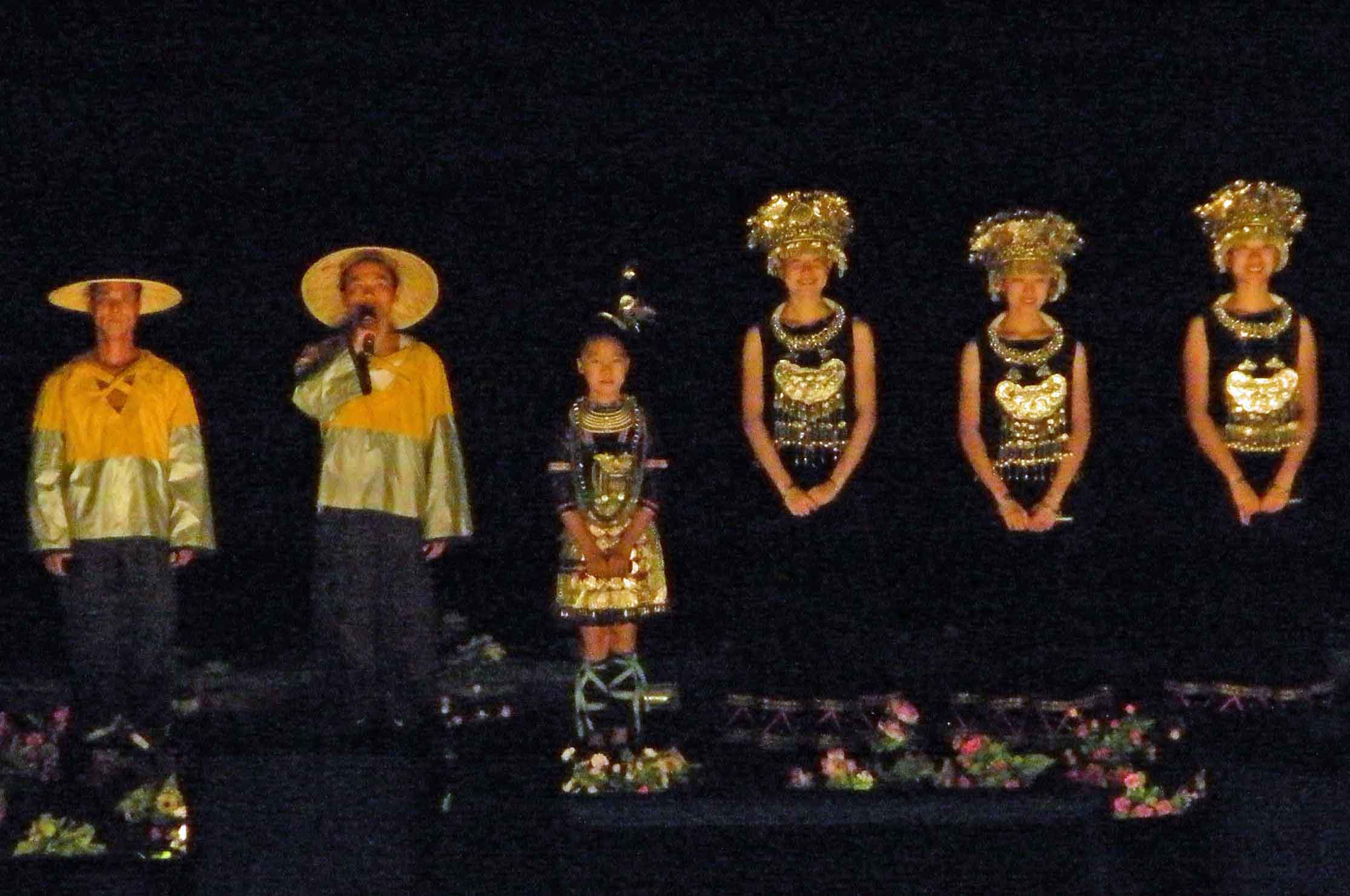
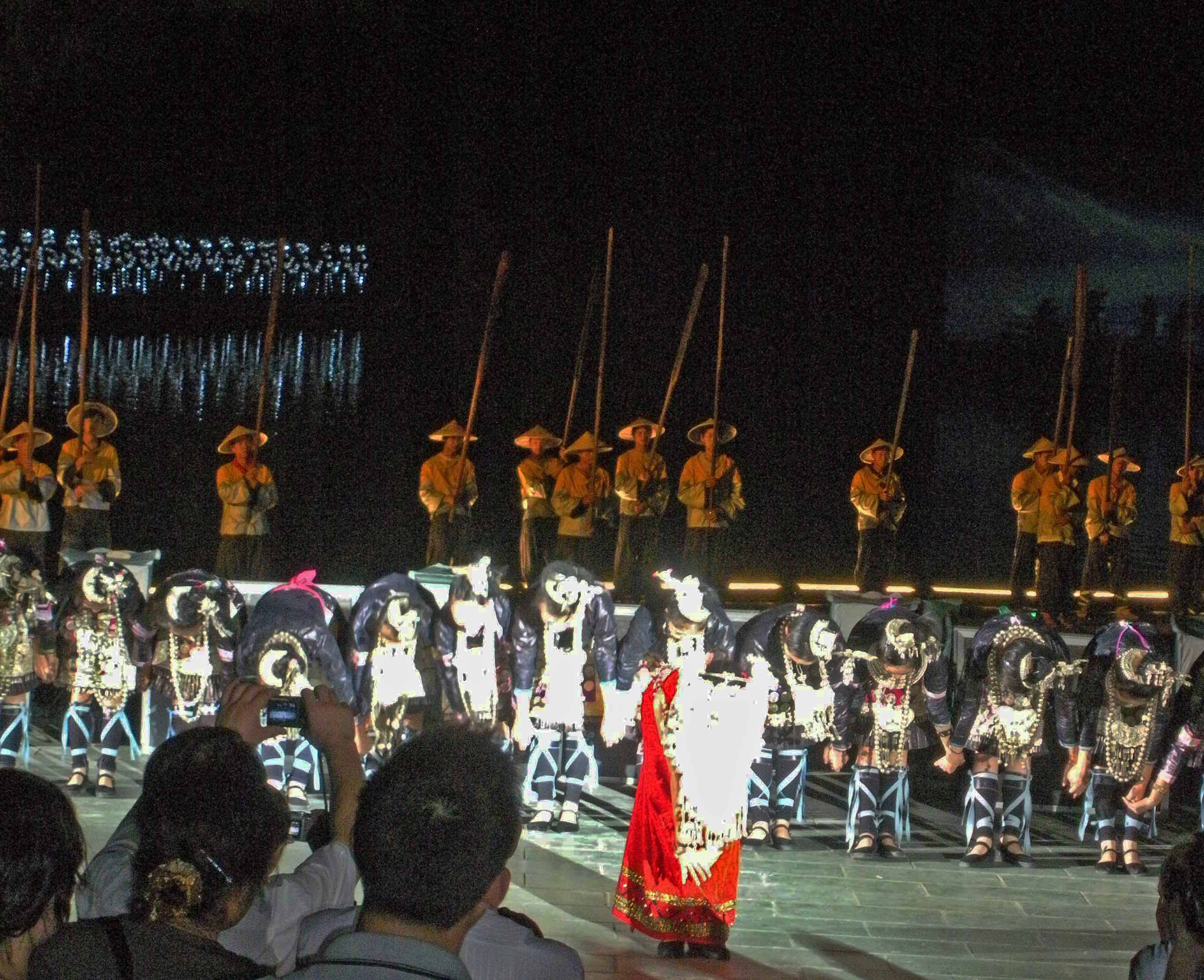
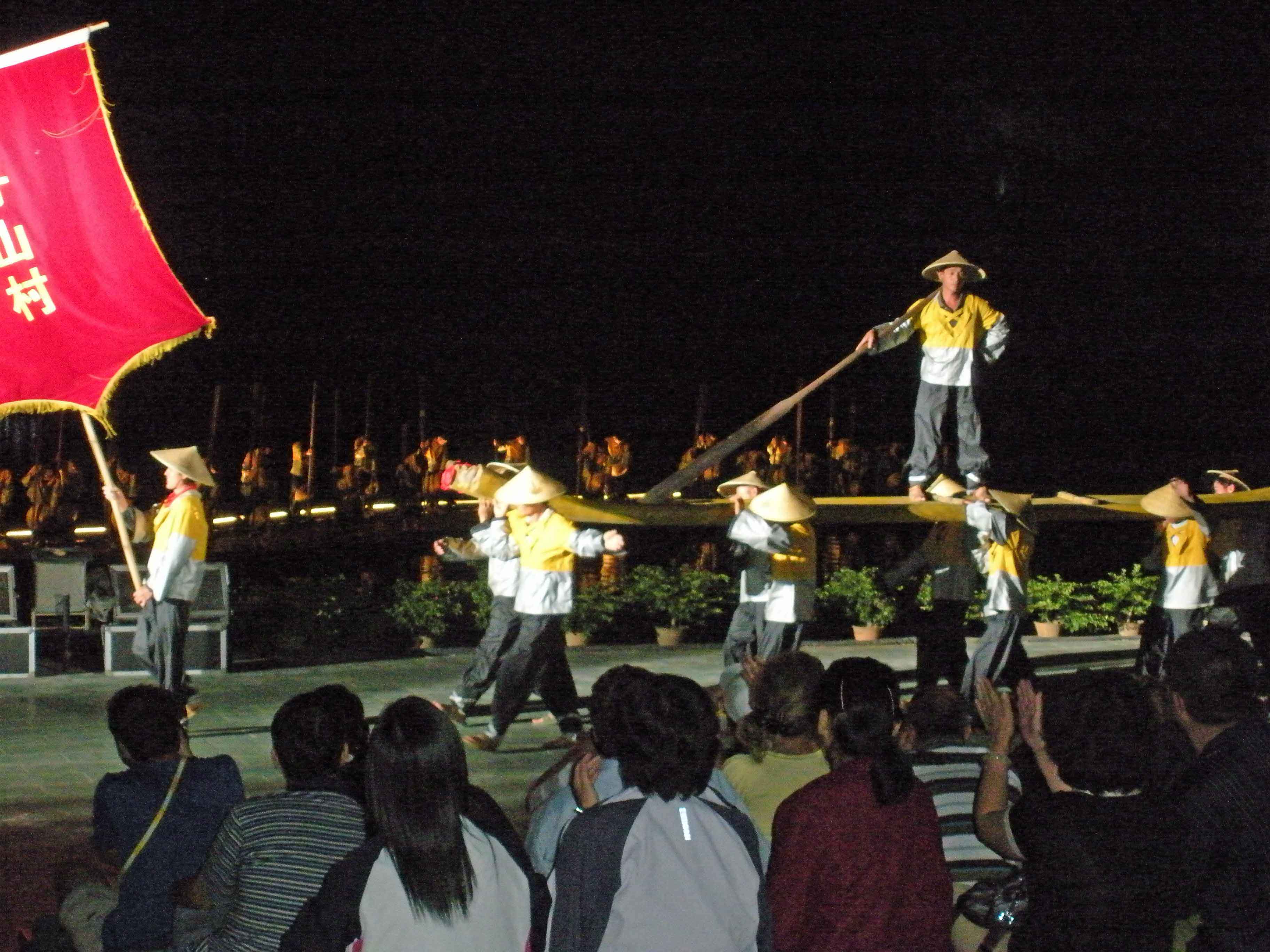
One of the lightshow scenes from “Impressions of Liu Sanjie”

Zhang Yimou, the director, is an internationally acclaimed Chinese filmmaker. He made his directorial debut in 1987 with the film “Red Sorghum”.

In the 1990s, Zhang Yimou directed “Raise the Red Lantern”—nominated for Best Foreign Language Film at the 1991 Academy Awards.

The “Impressions of Liu Sanjie” is performed on the river at night. However, you may be more familiar with Zhang Yimou’s opening and closing ceremonies for the 2008 Beijing Olympics.

More from the “Impressions of Liu Sanjie”


The “Impressions of Liu Sanjie” is performed with the Karst Mountains and the Li River as the setting.

The cast comes from the local Guangzi Zhuan Autonomous Region  and many may be fishermen by day and actors at night and are from the Zhuang and Yao minority groups, who live in that region.

_______________

Lloyd Lofthouse is the award-winning author of the concubine saga, My Splendid Concubine & Our Hart. When you love a Chinese woman, you marry her family and culture too. 

Sign up for an RSS Feed for iLook China


Stereotypes

August 15, 2010

In this post, I’m going to focus on Americans and Asians/Chinese.

I taught in a multi-ethnic, multi-cultural school district for thirty years (1975-2005). In fact, Nogales High School in La Puente California had a student population that was about 70% Latino, 8% black, 8% white, 8% Asian and 6% other.

Most of my Asian students did the homework and earned mostly A’s. One Asian girl earned an A minus on a quarter-report card and came after school to find out what she’d done wrong and how to fix it.  She was in tears.

My wife and daughter are Chinese and I’ve seen them worry about the occasional A minus too.  Why?  Because an A- is too close to a B+. Doing exceptional in school is an important cornerstone in most Chinese families.  Did you notice that I added “most”? There are always exceptions.

In one class I taught, a Latino student said that the Asians were smarter than the rest of the ethnic groups.  That particular class had no Asians in it. 

Everyone in the room agreed but me. I replied, “You’re wrong. Asians aren’t smarter than the other races. The difference is that Asian culture values learning more.  Most Asian parents are more dedicated and involved with their children’s educations.”

In this YouTube video, a female Chinese teen talks about the common Chinese stereotype that “all” Chinese eat rice, avoid the sun, are good at math and are Kung Fu experts.

This spoof shows Americans as stupid and violent.

This video is a Feel-Good rant from a Chinese teen who doesn’t want to be seen as an uncool, unpopular nerd who only eats fried rice and dumplings.  Kevin says there are three main Asian stereotypes that he has to deal with. 

1. Others think he is cheap
2. That he is a nerd
3. And has no social life…

This one was shot by a teen who points out that Americans are rebellious and meddling.

Another Chinese teen talks about Asians and school.  She says that in a Chinese family everything the child is “NOT allowed to do” is linked to success in school.

Australians think of Americans as being fat, arrogant, and obnoxious.

What do you think about other cultures and races?  Do you stereotype others?

See the Failure of Multiculturalism in the United States or Education and Cultures Collide in the US

_______________

Lloyd Lofthouse is the award-winning author of the concubine saga, My Splendid Concubine & Our Hart. When you love a Chinese woman, you marry her family and culture too. 

Sign up for an RSS Feed for iLook China


China Rejects Western Pressure on Human Rights

August 13, 2010

One place to read anything positive about China is in the “China Daily” or a few Blogs written by people like me, who have been to China and do their homework to know what’s really going on.

In China rejects Western standards on human rights, Xinhua (7-3-2010), Chinese Vice Foreign Minister Fu Ying says that the “West” ignores China’s political progress.

In fact, there has been much political progress since Mao died in 1976. See China’s Capitalist Revolution to learn more.

I’d like to rewrite Minister Fu Ying’s statement to say that most of the “Western media” and conservative and liberal political action groups in the US ignore China’s progress for a reason. These groups have a political agenda against anything that has the word “Communist” in front of it. To them, China is still a Maoist country that they fear, and they do not want to hear the truth.

Minister Fu Ying is correct when she says that the Western point-of-view on human rights in China is spread by “political extremists”.

The Tibetan separatists represent about one percent of the Tibetan population, and the Muslim separatists from China’s northwest are the same as the Islamic fundamentalists the West is fighting on the other side of the border in Afghanistan.

The other loud voice is the Falun Gong, a cult with enough money to support a traveling international musical troop, a TV station and a newspaper. That has to cost a small fortune, so where does that money come from?

Well, we know from Congressional hearings that the CIA supports the Tibetan separatists, so it isn’t a stretch to figure out who supports the Falun Gong and the Muslims.

I suggest you watch the three videos and tell me who isn’t guilty of human rights violations.

_______________

Lloyd Lofthouse is the award-winning author of the concubine saga, My Splendid Concubine & Our Hart. When you love a Chinese woman, you marry her family and culture too. 

Sign up for an RSS Feed for iLook China