American Genocide

February 15, 2010

Christ once said let he who has no sin cast the first stone.

The topic of the next few posts will be about minority native treatment in China and America. As I have done before, I will compare China to America. This post will focus on the United States with some historical background.

Atrocities abound in the history books concerning treatment of Native American Indians during the sixteenth to nineteenth centuries. The Spanish destroyed the Aztec and Inca civilizations with disease and warfare. The Catholic mission system in California enslaved American Indians.

After the Civil War, the United States military was sent west and drove North American Indians from the land they had lived on for thousands of years and slaughtered men, women and children—millions died. Today, many of the surviving natives live in horrible poverty on reservations.
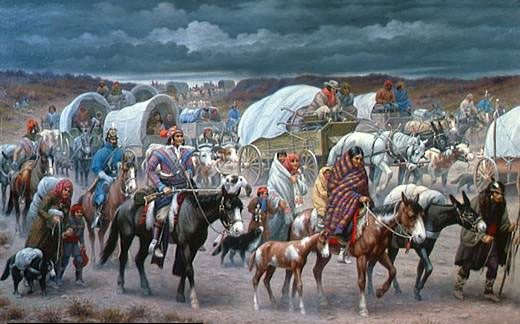
Trail of Tears

Then the American government grabbed Hawaii from the native Hawaiian people against their will. (There’s a native Hawaiian nonviolent separatist movement asking for freedom from America.)

It is always good to have the facts before passing judgment, and history counts.

Discover more at An American Shadow over the Philippines

______________

Lloyd Lofthouse is the award-winning author of The Concubine Saga. When you love a Chinese woman, you marry her family and culture too. This is the love story Sir Robert Hart did not want the world to discover.

To subscribe to “iLook China”, look for the “Subscribe” button at the top of the screen in the menu bar, click on it then follow directions.


Foreign Devils and Barbarians

February 14, 2010

While reading A World Too New by Edmund S. Morgan (Smithsonian Magazine, October 2009), an explanation was provided to explain the conquests and slaughters that were to take place for centuries between 1492 and modern times (and I’m not sure the crusades are over yet).

Morgan wrote that Columbus believed “Christ saved those who believed in him, and it was the duty of Christians to spread his gospel and thus rescue the heathens from the fate that would otherwise await them.” (pg 84)

“Slavery was an ancient instrument of civilization, and in the 15th century it had been revived as a way to deal with barbarians who refused to accept Christianity and the rule of civilized government.” (pg 86).

Although China was exposed to the world’s major religions centuries earlier than Columbus, none had a major influence in China by the 19th century. Even today, the majority of Chinese claim to have no religion.

Yet, the Chinese have a morality (honor and piety) that is equal (if not better) to Christianity and Islam without the need to convince others through wars to adopt the same behaviors and beliefs. There is no history that China went to war to change the beliefs of foreign devils and barbarians, as they saw the rest of the world for thousands of years well before Columbus.

Lloyd Lofthouse is the author of the award winning novels My Splendid Concubine and Our Hart.


Education Chinese Style – Part 7

February 12, 2010

One of the Five Great Relationships that Confucius taught was the one between father and son. Nothing has changed. In addition, because of the relationship between husband and wife, the wife is expected to support the husband. It is the husband and wife’s responsibility to see that a son or daughter grows up to be like the gentleman that Confucius described. To do anything less would be a ‘loss of face’, because the child’s failure or success is a walking advertisement to everyone that the parents did not do their job.

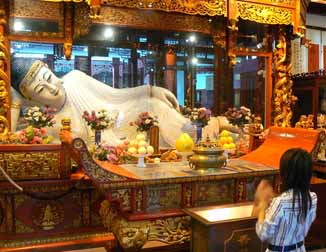
Jade Budda Temple, Shanghai, China

Because of Confucius, most people in China have mutual obligations and responsibilities to each other. If you watched the opening Olympic ceremony in Beijing on TV, you may remember the little boy that risked his life after the big earthquake in Sichuan province. He said it was his duty. According to Confucius, he was right. Buddhism also plays an important part in everyday life in China.

These expectations go back more than two thousand years—well before Constantine made Christianity the moral and ethical foundation for the Roman Empire and Western civilization. Does that mean that everyone in China follows what Confucius taught? Do all Christians, Muslims or Jews follow what their God, spiritual teachers and prophets taught? The answer is no, but the foundations of these cultures are still built on those teachings.

See Part 1

Lloyd Lofthouse is the author of the award winning novels My Splendid Concubine and Our Hart.


Education Chinese Style – Part 3

February 10, 2010

It seems that many of the six-thousand students I taught over thirty years felt the same way—that learning would make them mad like Acts says in the New Testament: 26:24 And as he thus spake for himself, Festus said with a loud voice, Paul, thou art beside thyself; much learning doth make thee mad.

Emperor Wudi

In China, during the early Han Dynasty, a different moral standard was set where earning an education was valued. Emperor Wudi from 141-187 BCE (two hundred years before Jesus Christ and five hundred years before Constantine), solidified the ideological framework of official Confucianism with a blending of Confucian, Taoist, and Legalist elements.

It looks like China may be officially returning to Confucianism or some form of it. Confucius taught that a ‘gentleman’ is the ideal figure. Among the traits of this ideal man is continued learning to develop moral character and to gain knowledge that is useful in serving others.

In China, teachers are treated with respect. Not so in the United States. Although a few students were respectful when I was a teacher, many were not. To understand what I mean, read the prologue from my memoir, Crazy Normal.

See Part 1

Lloyd Lofthouse is the author of the award winning novels My Splendid Concubine and Our Hart.


Education Chinese Style – Part 2

February 10, 2010

There is no evidence that the Christian Bible supports literacy or education. After the Roman Empire collapsed, the Catholic Church did not attempt to educate the masses. It was much easier to tell ignorant, uneducated people how to live and what to do. The illiterate kings and peasants looked to the Pope and educated priests for guidance. It was sort of like those with sight leading the blind.
___________________________

Proverbs (Old Testament)
1:5 A wise man will hear, and will increase learning; and a man of understanding shall attain unto wise counsels:
9:9 Give instruction to a wise man, and he will be yet wiser; teach a just man, and he will increase in learning.
16:21 The wise in heart shall be called prudent: and the sweetness of the lips increaseth learning.

Daniel
1:4 children in whom was no blemish, but well-favored, and skilful in all wisdom, and cunning in knowledge, and understanding science, and such as had ability in them to stand in the king’s palace, and whom they might teach the learning and the tongue of the Chalde’ans.

Acts (New Testament)
26:24 And as he thus spake for himself, Festus said with a loud voice, Paul, thou art beside thyself; much learning doth make thee mad.

Romans
15:4 For whatsoever things were written aforetime were written for our learning, that we through patience and comfort of the Scriptures might have hope.
____________________________

I looked for passages in the Bible that would focus on the importance of gaining an education similar to what Confucius taught.

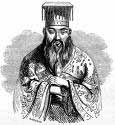
Confucius

I didn’t find anything. If you find something, let me know. Instead, this is the sentiment that I discovered, “Paul, thou art beside thyself; much learning doth make thee mad.”

 See Part 1

Lloyd Lofthouse is the author of the award winning novels My Splendid Concubine and Our Hart.