Romance of the Three Kingdoms

December 10, 2012

When I was a kid, I loved reading historical fiction like those about Alexander the Great or Genghis Khan. I still do. I also see historical movies and for that reason, I bought the movie version for the Romance of the Three Kingdoms—an epic from China’s history.

Don’t let the title fool you. This story is not about romance as Westerners think of it. It’s about the romance of politics, war and conquest. There’s even a love story with sacrifice.

The novel was written in the 14th century and was more than a thousand pages long with 120 chapters. The translated English version is longer. After the Han Dynasty collapsed (206 BC to 219 AD), China shattered into three warring kingdoms.

This story is about how China was reunified as one nation again. I’ve seen it once and plan to watch it again. The DVD version has 84 episodes and runs for more than fifty hours. It has even been made into a game.

Before starting this epic, you may want to read these posts to have a better understanding of the behavior of the characters.

Discover the First of All Virtues or Honor Chinese style in addition to the meaning of Face.

______________

Lloyd Lofthouse is the award-winning author of The Concubine Saga. When you love a Chinese woman, you marry her family and culture too. This is the love story Sir Robert Hart did not want the world to discover.

Subscribe to “iLook China”!
Sign up for an E-mail Subscription at the top of this page, or click on the “Following” tab in the WordPress toolbar at the top of the screen.

About iLook China


Hangzhou – Paradise on Earth

December 4, 2012

If you ever visit Hangzhou, after cruising on the West Lake, you may want to see this tourist attraction in the city. Before 1949, it was the home of a wealthy family but was first owned by Hu Xue-yan (1823-1885).

Hu Xue-yan made his money in banking then expanded into pawn shops, import-export, real estate and made his biggest fortune as the founder of a Chinese herbal medicine company. After he died, his family lost the fortune and sold the house.

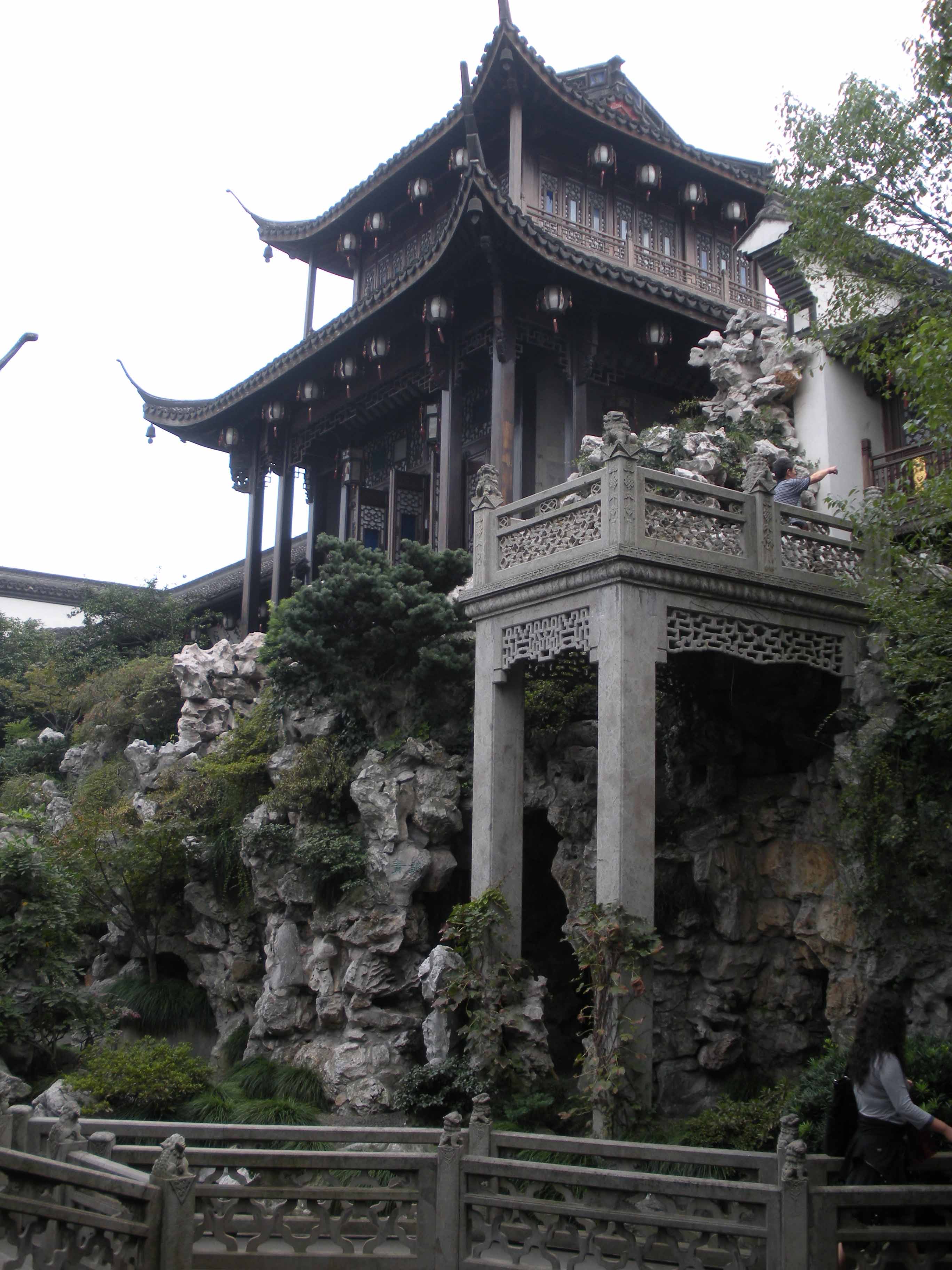
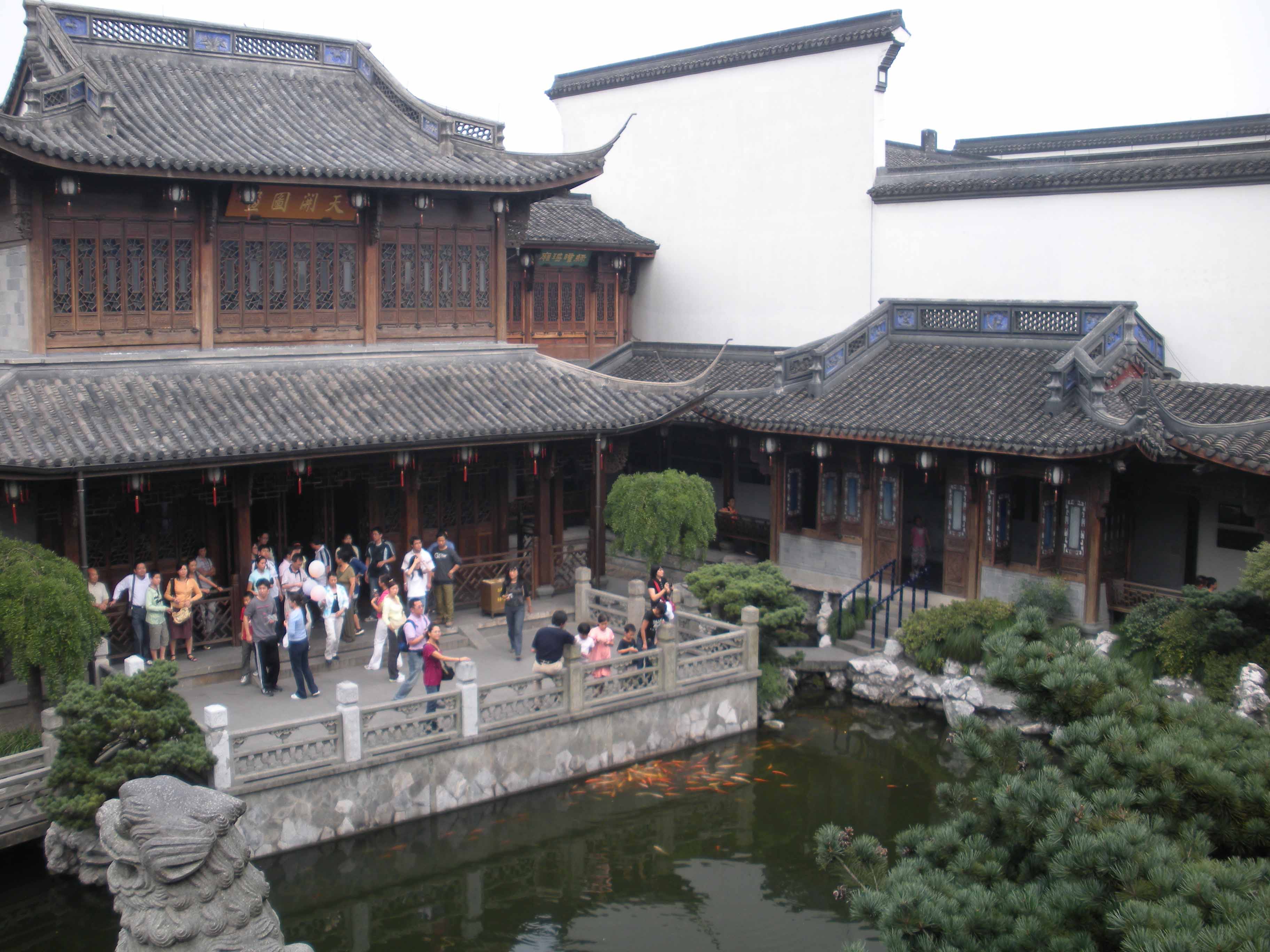
The house in these pictures and video was built in 1872. After it was renovated in 2008, it was turned into a museum and tourist attraction worth seeing.

When the Communists won China’s Civil War in 1949, the mansion (covering about two acres) was owned by another family that made its fortune first in the silk industry then banking.


rock art in garden with tunnels

There’s more to the mansion than this example of rock art in the garden you see in the photo above.  These rocks were added when the mansion was built. There was a time in China during the Imperial era when rock art was popular. Hidden under the building and among the rocks are manmade caves.

During a visit to Hangzhou, for a few yuan, you will be able to tour most of the mansion and the gardens (there is more than one garden beyond what you see in the two photographs).

The Hu Xue-yan mansion is in a city with a population of more than eight million, but once inside its walls you have no sense of the crowded city outside. Once the owner was home and the gates locked at night, it was a world-of-tranquility apart from the city.

The city of Hangzhou is more than two-thousand years old and was the capital of the Southern Song Dynasty (1127 – 1279 AD) before Kublai Khan, who founded the Yuan Dynasty (1206-1368 AD), conquered all of China.

Pond with carp – Hu Xue-yan’s Mansion

While Kublai Khan ruled China, Marco Polo visited Hangzhou in 1290.

There is a famous Chinese saying that says, “In heaven there is paradise, on Earth there is Su and Hang (Hangzhou – Paradise on Earth).

Discover Kublai Khan’s Yuan Dynasty

______________

Lloyd Lofthouse is the award-winning author of The Concubine Saga. When you love a Chinese woman, you marry her family and culture too. This is the love story Sir Robert Hart did not want the world to discover.

Subscribe to “iLook China”!
Sign up for an E-mail Subscription at the top of this page, or click on the “Following” tab in the WordPress toolbar at the top of the screen.

About iLook China


Mao and Snow

December 3, 2012

During one of our trips to Shanghai, China, my wife and I went to see a film called Mao Zedong and Edgar Snow.

Edgar Snow (1905 – 1972) was an American journalist known for his books and articles on Communism in China and the Chinese Communist revolution. He is believed to be the first Western journalist to interview Chinese Communist leader Mao Zedong, and is best known for Red Star Over China (1937) an account of the Chinese Communist movement from its foundation until the late 1930s.

The film was in Mandarin and wasn’t subtitled, so I had to watch carefully to understand what was going on. I Googled the move and found little about it on the Internet.

However, I discovered that Edgar Snow’s wife threatened to sue China if the movie was released but that didn’t stop the Chinese.

There’s no doubt that Mao had to have charisma to lead so many men in battle for so many years to win the civil war.


Edgar Snow and Mao

However, Mao changed after he became a modern emperor, and the power corrupted him. The evidence—the results of the Great Leap Forward, the Cultural Revolution and the purges that killed so many.

There was a positive side too.  Mao’s success in the CCP’s war against poverty, the increase in life expectancy that almost doubled during Mao’s rule and the health programs that were implemented such as the bare foot doctors. The reason so many Chinese still think of Mao as the George Washington of China was because life after 1949 was better than life before the CCP won the Civil War.

Students of China may want to see this movie, but the only place one may buy a DVD of this movie is probably China.

When Edgar Snow came down with pancreatic cancer, Zhou Enlai dispatched a team of Chinese doctors to Switzerland to treat him.

The next best thing would be to read Snow’s book about Mao, Red Star Over China and/or discover about Health Care During Mao’s Time.

______________

Lloyd Lofthouse is the award-winning author of The Concubine Saga. When you love a Chinese woman, you marry her family and culture too. This is the love story Sir Robert Hart did not want the world to discover.

Subscribe to “iLook China”!
Sign up for an E-mail Subscription at the top of this page, or click on the “Following” tab in the WordPress toolbar at the top of the screen.

About iLook China


Honoring Foreign Devil Heroes

November 20, 2012

It is ironic that in the 1940s we were fighting with the Chinese against the Japanese. Then in 1950, China and the US fought against each other in North Korea and Chinese advisers were sent to assist North Vietnam to fight the US in the 1960s.

Then Nixon arrives in China in the 1970s and we were friends again.

In February 2010, I had an instant message chat with Ian Carter, an Australian expatriate living in Southeast China, and learned that during World War II in 1944 an American B-24 Liberator bomber vanished without a trace in Southeast China.

Fifty-two years later in 1996, farmers discovered the bomber’s wreckage and the remains of the ten-man crew on Mao’er Shan (Little Cat Mountain), Southern China’s highest peak. The name of the B-24 bomber was Tough Titi.

These Americans are considered heroes (click on this link for more about this story) to the Chinese, and the remains of the crew were returned to the United States for burial.

There’s a memorial stone near the crash site and Chinese tourists pay honor to these Americans by leaving flowers and other gifts.

To honor these heroes further, the Chinese recovered some of the bomber’s parts and used them as a centerpiece for a museum in Xing’an, about four hours from the crash site.

Discover Country Driving (in China) by Peter Hessler

______________

Lloyd Lofthouse is the award-winning author of The Concubine Saga. When you love a Chinese woman, you marry her family and culture too. This is the love story Sir Robert Hart did not want the world to discover.

Subscribe to “iLook China”!
Sign up for an E-mail Subscription at the top of this page, or click on the “Following” tab in the WordPress toolbar at the top of the screen.

About iLook China


China’s Venice, Zhouzhuang

November 12, 2012

We arrived early when the parking lot and the streets were about empty.  That’s the best time to get there.

Zhouzhuang is surrounded by water, and boats are needed for most short trips.

Zhouzhuang history is rooted in China’s Spring and Autumn Period (770 BC – 476 BC) more than a thousand years before Venice was established. However, it would not be called Zhouzhuang until 1086 AD .

The town is well known for its preservation of numerous buildings from the Ming and Qing Dynasties.

Zhouzhuang, the Venice of Asia,  is on the United Nations Reserve List for the World Cultural Heritage and the Dubai International Best Practice to Improve the Living Environment.

As you can see, it gets crowded. Most of these tourists were Chinese citizens from the growing middle class.

This is where I was a photo thief. I wanted to take a picture of these captured birds but the owners wouldn’t let me.  He pointed at a sign that said I’d have to pay.

I walked a distance and used my meager telephoto lens to take this shot of the birds tied to the owner’s boat.

For a comparison with Venice in Europe, while there are no historifcal records that deal directly with the founding of Venice, available evidence has led some historians to agree that the original population of Venice were refugees from Roman cities near Venice (420 – 568 AD). From the ninth to the twelfth centuries Venice became a city state.

If you enjoyed this photo essay, see the Li River Cruise

______________

Lloyd Lofthouse is the award-winning author of The Concubine Saga. When you love a Chinese woman, you marry her family and culture too. This is the love story Sir Robert Hart did not want the world to discover.

Subscribe to “iLook China”!
Sign up for an E-mail Subscription at the top of this page, or click on the “Following” tab in the WordPress toolbar at the top of the screen.

About iLook China