Sounds like China

March 24, 2010

“But everything I’ve experienced … and heard from journalists there, suggests control over the message has reached obsessive proportions. Even background (anonymous) interviews morph into ‘background with authorization,’ so that a quote from ‘an official’ must pass the review process lest ‘an official,’ should misspeak.”

The West often criticizes China for censoring the Chinese Internet and the media. What they don’t tell us—this is the way it has been for more than a thousand years.

“Chinese media have been tightly regulated since the presses started running some 1,200 years ago …. When Mao Zedong founded People’s Daily as the official mouthpiece of the CCP in 1948, he basically just followed in his predecessor’s imperial footsteps.” Source: Around The Block by Stephani Elizondo Griest

That quote at the top of this post sounded like a  criticism of China, didn’t it?  Wrong.  That quote came from an opinion piece in the New York Times and Roger Cohen was writing about Washington D.C.

You may also want to read American Hypocrisy http://wp.me/pN4pY-6


The Erhu

March 22, 2010

An erhu is a Chinese two-stringed instrument similar to a fiddle. The erhu has a thin, slightly reedy sound. Since the erhu is so widely used, foreigners see it as an example of Chinese music.

The erhu

However, once you recognize the sound of an erhu, it can usually be readily picked out from other musical instruments, because it is unique. The history of the erhu spans thousands of years. The first erhus were heard during the Tang Dynasty. Since the traditional Chinese character for “erhu” indicates it has two strings, the erhu has probably changed little over the centuries. Alternate names for the erhu include huqin or hu, and Westerners sometimes call the instrument a “Chinese violin”. 

If you enjoyed learning about and listening to the erhu, you may enjoy Mao Wei-Tao’s Chinese Yu Opera

_________________________

Lloyd Lofthouse is the award-winning author of the concubine saga, My Splendid Concubine & Our Hart. When you love a Chinese woman, you marry her family and culture too. 

Sign up for an RSS Feed for iLook China 


Powerful Chinese Women

March 22, 2010

Empress Wu Zetian founded her own dynasty in 690 and ruled to 705 AD. During the Tang Dynasty, women had more freedom and did not bind their feet. They also contributed in the areas of culture and politics.

The Empress Dowager Tzu Hsi, Orchid, ruled China for half a century (1861 – 1908) but was never officially the emperor. She ruled through her son and then a nephew.

Today, Chinese women have assumed important positions in the government. Female deputies total about 22% of the National People’s Congress, and women make up close to 18% of the 11th National Committee of the Chinese People’s Political Consultative Conference. There are more than 230 women holding ministerial or provincial positions. source

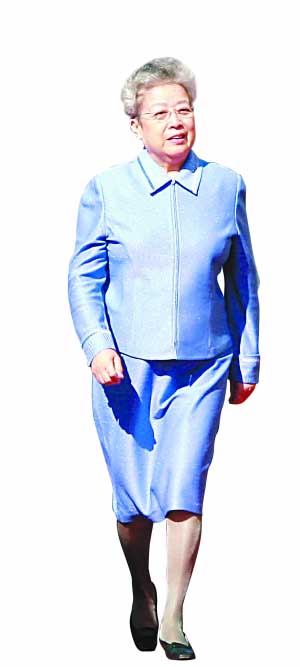
Wu Yi, known as the Iron Lady

Among these powerful women are examples such as Wu Yi, who served as vice mayor of Beijing; deputy minister in the foreign trade ministry and as the health minister, where she reshaped the nation’s image in the fight against SARS. Then there is Song Xiuyan, the governor of Qinghai Province. Song is the only female provincial governor in China. Next is Liu Liying, who, as a judge, developed a legendary reputation fighting corruption.

Discover The One-Child Tragedy

_______________

Lloyd Lofthouse is the award-winning author of My Splendid Concubine [3rd edition]. When you love a Chinese woman, you marry her family and culture too. This is the love story Sir Robert Hart did not want the world to discover.

His latest novel is the multiple-award winning Running with the Enemy.

Subscribe to “iLook China”!
Sign up for an E-mail Subscription at the top of this page, or click on the “Following” tab in the WordPress toolbar at the top of the screen.

About iLook China

China’s Holistic Historical Timeline


Women’s Rights in China

March 21, 2010

Dramatic changes in women’s rights have been achieved in a culture where for millennia women were stereotyped as inferior to men, had no rights and served as slaves, concubines and prostitutes. Marriages were arranged—sometimes at infancy.

In 1949, foot binding was abolished and the All-China Women’s Federation (ACWF) was formed and supported by the Communist Party. Change in China, as in the United States, has been a painful evolutionary process. However, the struggle to gain equality appears to have moved faster than the United States where the women’s rights movement started in 1848 and still isn’t over.

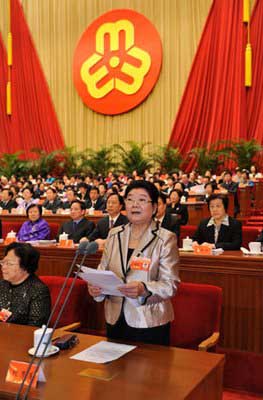
10th National Women’s Congress in China

At the 10th National Women’s Congress in the Great Hall of the People in Beijing, in 2008, Deputy-Chairwoman Huang Qingyi said, “Sex discrimination in employment should be eradicated and the income gap between men and women should be further narrowed.”

It was also been reported that domestic violence is a severe threat to women. Chinese authorities reported 50,000 complaints annually, according to figures released by the ACWF. The domestic violence fact sheet shows this is also a problem in the United States.

Sexual discrimination was supposed to have been abolished in China back in 1949, when Chairman Mao Zedong famously announced, “women hold up half the sky”, but it wasn’t.  It has only been a few years since China outlawed sexual harassment.

Today, statistics show China has about 27,000 women and children’s rights protection agencies.

Discover Changing Times for Women’s Rights

______________

Lloyd Lofthouse is the award-winning author of My Splendid Concubine [3rd edition]. When you love a Chinese woman, you marry her family and culture too. This is the love story Sir Robert Hart did not want the world to discover.

His latest novel is the multiple-award winning Running with the Enemy.

Subscribe to “iLook China”!
Sign up for an E-mail Subscription at the top of this page, or click on the “Following” tab in the WordPress toolbar at the top of the screen.

About iLook China

China’s Holistic Historical Timeline


China Law and Justice System

March 20, 2010

Over the years, I’ve talked to citizens in China and the opinion is that most of the police take their jobs seriously and are honest.  It is also believed that the judges in the court system follow the laws of China and are also honest.  Yes, there is corruption in China even at the highest level, but there is also corruption in America and any other country.

Chart for China's Court System


Article 5 of China’s Organic Law states the functions and powers of the people’s procuratorates at all levels as the following:

  1. to exercise procuratorial authority over cases of treason, cases involving acts to dismember the state and other major criminal cases severely impeding the unified enforcement of state policies, laws, decrees and administrative orders
  2. to conduct investigation of criminal cases handled directly by themselves;
  3. to review cases investigated by public security organs and determine whether to approve arrest, and to prosecute or to exempt from prosecution;
  4. to exercise supervision over the investigative activities of public security organs to determine whether their activities conform to the law;
  5. to initiate public prosecutions of criminal cases and support such prosecutions;
  6. to exercise supervision over the judicial activities of people’s courts to ensure they conform to the law;
  7. to exercise supervision over the execution of judgments and orders in criminal cases and over the activities of prisons, detention houses and organs in charge of transformation through labor to ensure such executions and activities conform to the law. source

A Western legal system would not work in China. China’s legal system represents China—not America or another country.

This series of posts about the legal system in China started with Officer in Action

______________

Lloyd Lofthouse is the award-winning author of the concubine saga, My Splendid Concubine & Our Hart. When you love a Chinese woman, you marry her family and culture too.

If you want to subscribe to iLook China, there is a “Subscribe” button at the top of the screen in the menu bar.