Three Hundred Years – Part 3 of 5

April 6, 2010

After the Opium Wars, Christian missionaries flooded China. Hong Xiuquan, a failed student of Confucian doctrine, found success after converting to Christianity. Hong claimed that he was the younger brother of Jesus Christ and started the Taiping Rebellion that lasted more than a decade and cost more than twenty million people their lives.
Hong Xiuquan - God's Chinese Son

Hong’s goals were to replace the Ch’ing Dynasty and rid China of Opium. After achieving that goal, he was going to convert China to a Christian nation and he would be the first Christian emperor.

Since the English and French did not want the opium trade stopped, these Christian nations helped the Ch’ing Dynasty defeat the Taipings even though the rebellion was a Christian uprising. I wonder if Liu Xiaobo had this in mind when he said what it would take to change China to be as Hong Kong is today.

See When in Rome, Do as the Romans http://wp.me/sN4pY-354


Three Hundred Years – Part 2 of 5

April 6, 2010

From Part 1, Liu Xiaobo’s last sentence, “I have my doubts as to whether 300 years would be enough.”, shows that he understands what it would take to change China’s people so they would accept a Western style government. To make this happen, China would have to be occupied by Western armies while hordes of Christian missionaries arrived to convert the population.  It would take generations to rid the culture of its Confucius Taoist influence—China’s cultural foundation.

Since the West attemped doing this during the 19th century, we already know what will happen. Tens of millions will die since there would be resistance.

Opium Poppy

During the 19th century, more than one of China’s emperors told Western representative that China had everything the empire needed and there was no need for trade with the West. This resulted in two Opium Wars started by England and France to force China to open its doors to Opium and other Western products and to allow Christian missionaries free access to convert the peasant population.

The result was catastrophic.  If it hadn’t been for World War II and Japan’s invasion of China, which cost almost forty million lives, the West might have eventually succeeded in another century or two to convert China into a Western culture as Liu Xiaobo said in Part 1 of this series.

See The Reasons Why China is Studying Singapore http://wp.me/pN4pY-2z


“Three Hundred Years” – Part 1 of 5

April 5, 2010

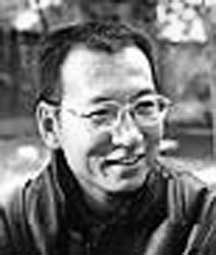
Liu Xiaobo is a Chinese human rights activist. He has been detained, arrested, and sentenced repeatedly for political activities, including participation in the Tiananmen Square protests of 1989.

In a 1988 interview with Hong Kong’s Liberation Monthly (now known as Open Magazine), Liu replied to a question on what it would take for China to realize a true historical transformation: “(It would take) 300 years of colonialism. In 100 years of colonialism, Hong Kong has changed to what we see today. With China being so big, of course it would take 300 years of colonialism for it to be able to change to how Hong Kong is today. I have my doubts as to whether 300 years would be enough.”

Liu Xiaobo - Chinese activist

Later, after being arrested and sentenced to eleven years in prison, Liu said this quote was taken out of context. To understand why the Chinese government would react so harshly to such a statement, knowing China’s history helps.

What Liu said could be taken to mean that to change China into a Western style culture would require a return to the 19th century when Western powers dominated China with their military—similar to what American neo-conservatives advocate for any country that does not have a Western style democracy or republic.

See Wearing China’s Shoes http://wp.me/pN4pY-1p


The Use of Power

April 4, 2010

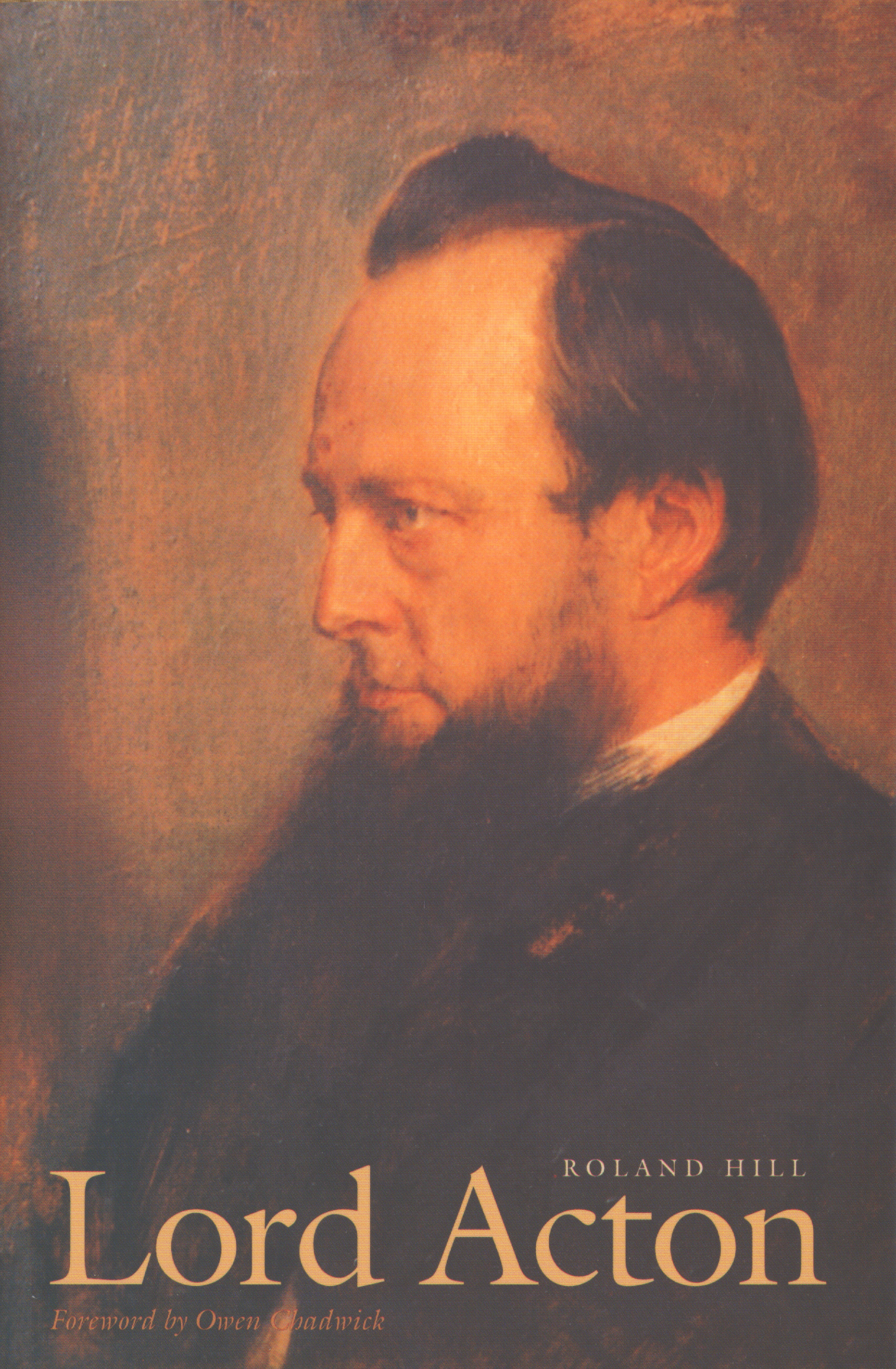
“Power tends to corrupt, and absolute power corrupts absolutely. Great men are almost always bad men.” Lord Acton

There’s a lot of truth to what Lord Acton wrote.

William Pitt, The Earl of Chatham and British Prime Minister from 1766 to 1778 said something similar: “Unlimited power is apt to corrupt the minds of those who possess it.”

The corruption that Lord Acton and William Pitt talk about does not only apply to a nation’s political and business leaders. It influences common citizens, who put pressure on their government to react violently.

As China grows its power, how will that corruption manifest itself?  Will China become like the British Empire or the United States and continue to wage wars around the globe in the national interest? Maybe, or will China re-define what the use of power means?

“China is presenting its ascent not as a power shift, but as a paradigm shift. It claims that its rise will be different from other powers in the past and sets an example for a fundamental revision of the nature of great power politics.” Source: In The New Times

See Power Corrupts http://wp.me/pN4pY-40


The Double Menu Caper

April 3, 2010

Our hotel was outside Xian’s city walls.  We had a view of the battlements that were centuries old. At night, the walls and towers were outlined with white Christmas lights.  I ached to get up there and walk those walls.  It was 1999, and I’d wait more than nine years before that happened.

Our second day in the city, we walked from the hotel into the city to a Xian restaurant. I went in first and the hostess, who didn’t speak a word of English, handed me a menu written in English.

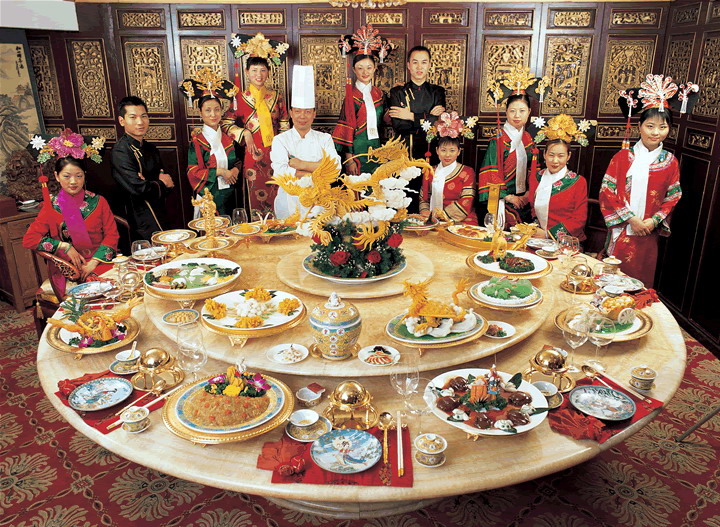
This is a different restaurant from the one I mention.

My wife, dressed more like a Chinese peasant than an American, came in after me and she was handed a menu in Chinese. My wife glanced at my menu. She took it out of my hands and gave it back to the hostess.

“We’ll use the Chinese menu,” she said. The prices in Mandarin were less than half the English version.  A stunned look appeared on the hostesses face.  It was a Candid Camera moment, and it was all I could do to avoid laughing.

See I ate no Dog, I Ate no Cat, Guest post by Bob Grant http://wp.me/pN4pY-8y