The world’s biggest country is going through the world’s largest sexual revolution. From the Internet to corner sex shops, China is changing. But lost in the mix, millions of single men can’t find a date much less a mate.
As China goes through what the West experienced in the 1960s, Mao’s Little Red Book has been replaced with a black book filled with phone numbers and date information.
Mao’s taboos against capitalism and sex have been gone for decades. With these changes comes the dark side—drugs, prostitution, HIV and STDs. Under Mao, sexuality was crushed. Everyone wore the same baggy colored clothes. Everyone had the same haircut. Young couples who fell in love and were caught were punished. But tday, cosmetics, perfume and stylish clothes have replaced Mao uniforms.
Millions are learning about romance and love. However, millions of others have been left with sexual, psychological problems and are very ignorant about sex. They were victims of Mao’s Cultural Revolution’s sexual repression.
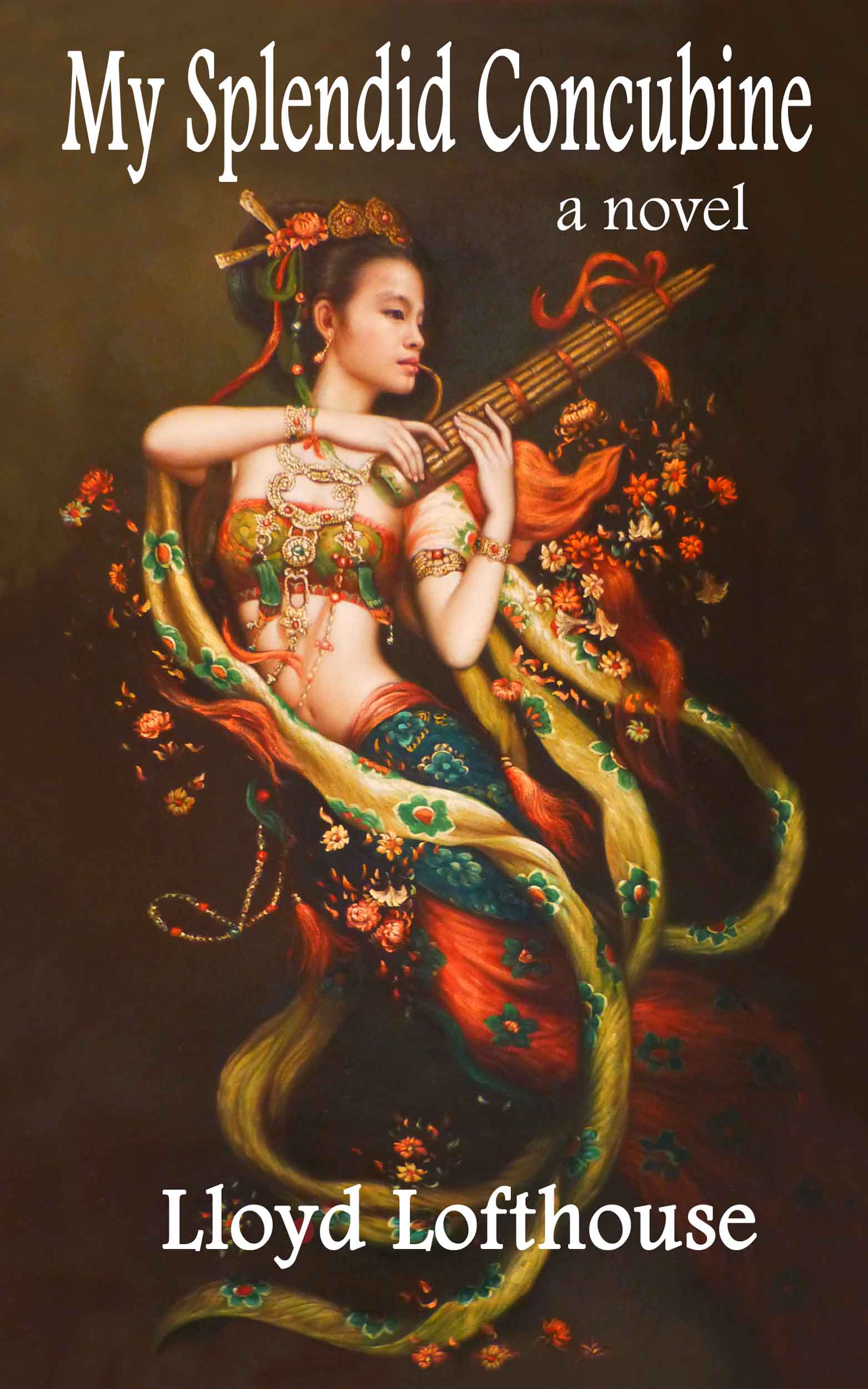
Lloyd Lofthouse is the award-winning author of My Splendid Concubine [3rd edition]. When you love a Chinese woman, you marry her family and culture too. This is the love story Sir Robert Hart did not want the world to discover.
Subscribe to “iLook China”!
Sign up for an E-mail Subscription at the top of this page, or click on the “Following” tab in the WordPress toolbar at the top of the screen.
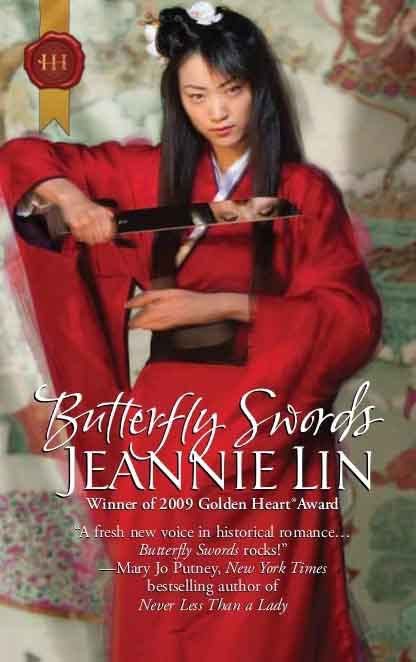
Enter Jeannie Lin, Harlequin’s rising red-star of romance writing. She isn’t the first author on Harlequin’s roster to set her books in China (that honor goes to Jade Lee and her infinite “Tigress” series).
However, Lin’s debut novel, Butterfly Swords, has been attracting a viral buzz louder than a summertime cicada not just for being the first Harlequin novel to NOT feature a man on the cover, but for using an Asian model as the cover girl, another Harlequin first.
The star of Butterfly Swords is a Chinese woman, yes. But to give American readers something that they can relate to, the male love interest of Lin’s novel is not Chinese but a wandering whiteboy from the west.
Ryam is drifting around the Tang (618-906 AD) empire begging for food (this sounds exactly like my own travels across China!) when he spots a disguised female being attacked by a pack of marauding bandits.
The swordsman, who evokes images of bare-chested, fur underwear-wearing Thundarr the Barbarian from the eponymous 80’s cartoon, rescues her, then agrees to escort her home.
Little does Ryam know that young Ai Li is really a princess on the run from an arranged marriage to a dastardly warlord. The two proceed on their journey together across the 7th-century frontier, getting in adventures and slowly but surely falling in love.
Pitting strength, courage and her fabulous butterfly swords against the forces of evil, Ai Li proves herself in the battlefield (“With Ai Li’s swords and determined spirit it was easy to forget that she was innocent”).
However, where the book has significant cultural crossover appeal is in author Jeannie Lin’s ability to keenly capture the multi-dimensional perspectives of both characters throughout their budding interracial relationship.
From Ryam’s course communicative abilities (“Where did you learn how to speak Chinese” Ai Li asks him, laughing. “You sound like you were taught in a brothel”) to his struggles with his inner-white demons as a big, bad bai gui (“It was so much easier to seduce a woman than talk to her”), the reader is introduced not to some empty-headed he-man but a complex male of the species who is genuinely torn between his biological needs and respecting Ai Li’s virtue.
“I don’t understand what she’s talking about half the time,” Ryam grumbles to himself. “Everything is about honor and duty.” Surely even expats living in present-day P.R.C. can relate to this dilemma.
Ai Li, meanwhile, finds herself attracted not only to Ryam’s “musky scent” and “sleek muscles” (Harlequin prerequisites; don’t blame the authoress), but his sincerity (“There was nothing barbaric about him. His manner was direct and honest. It was her own countrymen she needed to be worried about.”).
The protagonist does find herself frustrated with “this swordsman with blue eyes and the storm of emotions that came with him,” but, true to life, Ai Li comes with her own personality flaws as well (“she was being irrational and she knew it”).
Of course, it wouldn’t be a Harlequin without passionate love scenes, something my fiancée missed in the heavily censored Chinese versions.
This Jeannie Lin does in the poetic prose of a Tang Dynasty-era pillow book yet with just enough creatively-provocative language to keep sex-numbed westerners interested (“Ryam slipped his fingers into her silken, heated flesh…her body went liquid and damp in welcome.”). And thankfully without ever once resorting to the word “loin.”
Ryam proves himself to be an ideal lover for nubile Ai Li, “rough enough to make her breath catch, gentle enough to have her opening her knees,” though one can’t help but wonder how these two nomadic warriors can go so long without bathing nor brushing their teeth yet still manage to say things like “her mouth tasted just as sweet as he remembered.”
If only real life were as hygienic as a Harlequin novel.
One of the reasons why Harlequin is able to sell over 100 million units per year (the most profitable publishing company in the industry) is because every book is part of a series.
There are no individual Harlequin titles, which brilliantly leaves the reader yearning for more from the characters they have literally become so intimate with. In this respect, Butterfly Swords concludes with a wide opening that screams sequel, but thankfully lacks the typical Harlequin-happy ending of matrimonial bliss.
One familiar with Chinese culture can’t help but wonder, then, what kind of future Ai Li and Ryam actually have together: in reality, Ai Li would put on weight, cut her hair short and become a shrill nag; her parents and grandparents would all move into their cramped apartment, and a frustrated Ryam, now with beer-belly, would spend more and more time at card games and with karaoke parlor hostesses than at home.
But before the infuriating realties of interracial marriage set in, we hope Jeannie Lin has at least a few more of her trademark sword fights and steamy sensuality in store.
Turkey is a fowl the Chinese seldom eat. However, eating duck and chicken is common. Duck is even considered a delicacy. In fact, the Unvegan says, “No trip to Beijing is complete without eating some Peking Duck.”
Since I am a vegan, I didn’t eat Peking Duck, but I watched my wife eat it at Quan Ju De (Peking Duck) in Beijing.
The Virtual Tourist says, “It is thought that Beijing roast duck, like the tradition of roast turkey in America and the UK, owes its origin to the roast goose that is still popular in Europe on festive occasions.”
Most Americans do not celebrate the Chinese New Year (the Spring Festival) and most Chinese do not celebrate Thanksgiving. After all, Thanksgiving is an American holiday that Canadians celebrate too but on the second Monday in October.
Thanksgiving in Beijing with Peking Duck
China.org says, “From 2001 to 2005, China imported 486,000 tons of turkey, with all of the whole turkeys and 90 percent of Turkey parts coming from the US…. Currently, 70 to 80 percent of the consumers are Westerners.”
I’m assuming that Westerners eating turkey in China are there working, as tourists or are expatriates living in the Middle Kingdom and can’t do without turkey on Thanksgiving in October or November.
If you are from North America in China during Thanksgiving, you have a choice between Peking Duck, which is easy to find, and turkey.
Go China says, “Just head to your local international grocery store (Jenny Lu’s in Beijing, Cityshop in Shanghai) and stock up on all the fixings: frozen Butterball turkeys, cranberry sauce and pumpkin pie makings. But you better do it fast, there tends to be a run on these items so if you’re shopping on the last Thursday in November, you’ll be out of luck.”
And maybe I should have posted this before Thanksgiving day. :o)
_______________
Lloyd Lofthouse is the award-winning author of My Splendid Concubine [3rd edition]. When you love a Chinese woman, you marry her family and culture too. This is the love story Sir Robert Hart did not want the world to discover.
Subscribe to “iLook China”!
Sign up for an E-mail Subscription at the top of this page, or click on the “Following” tab in the WordPress toolbar at the top of the screen.
To understand the Chinese mind, we should start with Confucius (552 – 479 BC), who is arguably the most influential person in Chinese history and by extension the rest of East Asia: Korea, Japan, the Philippines, and Southeast Asia—thanks to China being a regional super power for more than two thousand years, while its merchants helped spread Chinese cultural influence and thought to the other East Asian countries they traded with.
An important Confucian influence on Chinese society and the rest of East Asia was his focus on education and scholarship, and it’s no secret that Chinese (and other Asian) students put in more hours in classroom study today than their Western counterparts—even in the United States.
In fact, we can measure the influence of Confucius on Asian-American students in the United States. For instance, in 2012, The Washington Post reported, “Researchers found that (high school) graduation rates vary by race, with 91.8 percent of Asian students, 82 percent of whites, 65.9 percent of Hispanics and 63.5 percent of blacks graduating on time.”
In China, the hallmark of Confucius’ thought was his emphasis on education and study. He disparaged those who had faith in natural understanding or intuition and argued that the only real understanding of a subject comes from long and careful study.
Confucius goal was to create gentlemen who carried themselves with grace, spoke correctly, and demonstrated integrity in all things. He had a strong dislike of the sycophantic “petty men,” whose clever talk and pretentious manner easily won them an audience of easy to fool people.
Confucius political/educational philosophy was also rooted in his belief that a ruler should learn self-discipline, should govern his subjects by his own example, and should treat them with love and concern.
To understand the importance of education in Western culture, we first look at what Plato (about 423 – 346 BC), Socrates (about 469 – 399 BC) and Aristotle (384 – 322 BC) thought.
When Plato talked about the education of the body, he said we had to take Spartan military gymnastics as a model, because it was based on physical exercises and prescribed severe control over all pleasures. Plato also argued for the public character of education and that it had to be given in buildings especially built for that purpose. In these schools, boys and girls should receive the same teaching and that the educational process should start as soon as possible, as young as three-to-six-years old.
Socrates believed that there were different kinds of knowledge, important and trivial. He acknowledges that most of us know many “trivial” things, and he said that the craftsman possesses important knowledge, the practice of his craft, but that this is important only to the craftsman. But Socrates thought that the most important of all knowledge was “how best to live.” He concluded that this was not easily answered, and most people lived in shameful ignorance regarding matters of ethics and morals. Socrates devoted much thought to the concept of belief, through the use of logic.
Aristotle, however, said that the purpose of the state was to educate the people—to make them virtuous. He said, virtue was the life principle of the state. The goal of the state was to educate with a view toward its own institutions (to preserve them)—through the political education of all citizens.
It is also arguable that the Bible probably has a large impact on what many Westerners think about the value of an education, but the focus of the Bible is mostly on fear of the Lord when it comes to learning—a mixed message at best when compared to what Confucius, Plato, Socrates and Aristotle thought.
Proverbs 9:9-10 says, “Give instruction to a wise man, and he will be still wiser; teach a righteous man, and he will increase in learning. The fear of the Lord is the beginning of wisdom, and the knowledge of the Holy One is insight.
Proverbs 1:7 – The fear of the Lord is the beginning of knowledge; fools despise wisdom and instruction.
2 Timothy 3:16 – All Scripture is breathed out by God and profitable for teaching, for reproof, for correction, and for training in righteousness,
2 John 1:9 – Everyone who goes on ahead and does not abide in the teaching of Christ, does not have God. Whoever abides in the teaching has both the Father and the Son.
Watch the video to discover that the agenda of the Common Core State Standards in the United States is similar to the agenda of the Prussian Model of Obedience.
In conclusion, the value of an education is clearly defined by Confucius providing a solid foundation for East Asia, while in the West, the message is murky and confusing at best, because the Bible focuses on fear of the Lord, and that Scripture is profitable for teaching and training the righteous compared to Plato’s focus on harsh Spartan physical training in addition to severe self-control over all pleasures starting at an early age, and Aristotle focused on preserving government through political education of the people—in other words, brainwashing them.
Socrates may have been closer to the way Confucius thought about the value of an education, but not as clearly defined as Confucius.
Out of this muddle of Western thought eventually emerged the 18th century, Prussian Industrial Model of education more aligned with what Aristotle thought, and this system was adopted by most of Western Culture during the industrial revolution, including the United States.
The Prussian system instituted compulsory attendance, specific training for teachers, national testing for all students (used to classify children for potential job training), national curriculum set for each grade and mandatory kindergarten.
The Prussian public education model attempted to instill social obedience in the citizens through indoctrination. Every individual had to become convinced, in the core of his being, that the King was just, his decisions always right, and the need for obedience paramount. There was no room for individual thought or questioning authority that would develop in the United States and other Western countries after World War II.
Maybe the blind obedience that gave power to dictators like Hitler had something to do with that change in Western thought about public education, but today, with the emphasis on the Common Core State Standards and harsh punishment of children and teachers who don’t measure up, the United States may be returning to the harsher Aristotelian, Prussian Model of education to brainwash children so they grow up and give blind obedience to their leaders.
_______________
Lloyd Lofthouse is the award-winning author of My Splendid Concubine [3rd edition]. When you love a Chinese woman, you marry her family and culture too. This is the love story Sir Robert Hart did not want the world to discover.
Subscribe to “iLook China”!
Sign up for an E-mail Subscription at the top of this page, or click on the “Following” tab in the WordPress toolbar at the top of the screen.
I’m sure that most people outside of China don’t think of love poems when they think of China. However, there has to be a reason for more than 1.3 billion people, other than the Great Wall of China, the Pacific Ocean and the biggest mountain range on the planet, the Himalayas, which helped shelter China from some of the violence that rocked the rest of the world for centuries—at least until the Opium Wars.
For poetry lovers, Chinese Love Poetry imparts a sense of the private passion that beats in the Chinese heart. The three arts of poetry, calligraphy and painting, the Triple Excellence, are represented on the pages.
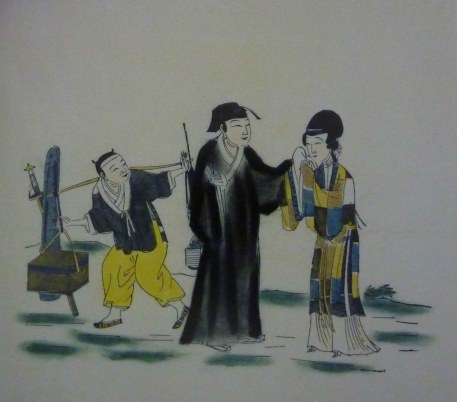
The following painting, lady weeping at parting from husband, 17th century, comes from the Qing Dynasty and the book says it is a color woodblock print on paper.
Chinese poetry is frequently personal and often linked to a particular occasion (page 9).
Deeply in love, but tonight
we seem to be passionless;
I just feel, before our last cup of wine
a smile will not come.
The wax candle has sympathy –
weeps at our separation:
Its tears for us keep rolling down
till day breaks.
by Du Mu (803-852 AD)
As you can see, the Chinese are a passionate people—they just don’t dramatize these passions publicly as many Westerners do—at least until the West invaded China to force—if possible—a different set of values on China’s collective culture.
_______________
Lloyd Lofthouse is the award-winning author of My Splendid Concubine [3rd edition]. When you love a Chinese woman, you marry her family and culture too. This is the love story Sir Robert Hart did not want the world to discover.
Subscribe to “iLook China”!
Sign up for an E-mail Subscription at the top of this page, or click on the “Following” tab in the WordPress toolbar at the top of the screen.


 Posted by Lloyd Lofthouse

 iLook China