Environmentalism in China – Part 1/4

October 31, 2011

To understand why China is often the focus of so much attention when it comes to pollution, such as carbon emissions from oil, coal, gasoline, diesel and burning wood, we should start where the industrial revolution began and that is in the West (more than two centuries ago).

I will start with an “old” friend that believes environmentalists worship the environment instead of God. I do not agree.

Instead, I see environmentalism as humanity’s effort to save the world from a potential catastrophe. If anything, the Christian God would support environmentalism, since He entrusted the earth to humanity’s care. Nowhere in Genesis or the Bible does God tell man to destroy and/or pollute the earth.

In fact, He says in Genesis 1:28, “Be fruitful, and multiply, and replenish the earth, and subdue it: and have dominion over the fish of the sea, and over the fowl of the air, and over every living thing that moveth upon the earth.”

Then, in Numbers 35:33, the Christian Bible says, “So ye shall not pollute the land wherein ye are…” and 35:34, “Defile not therefore the land which ye shall inhabit…”

My “old” friend, that claims Global Warming is a hoax, has joined those that shout “no” loudest at the scientific theories that current trends in Global Warming are caused by carbon emissions, which “may” create what is known as greenhouse gasses that become trapped in the atmosphere.

If you want to learn more about the theory behind Global Warming, visit the Environmental Defense Fund and read the Basics of Global Warming, which my “old” friend believes is a hoax.

My “old” friend may also be described as an evangelical, born-again Christian, conservative libertarian that believes everything bad that happens is the fault of liberals. He also listens to neoconservative talk show host Dennis Prager and belongs to a chapter of the Dennis Prager fan club, which meets regularly.

If you decide to discover what Dennis Prager preaches to his fans, I suggest reading Why Liberals Fear Global Warming more Than Conservatives Do. You may quickly learn how an American radio talk-show host uses emotional language to manipulate the people that “worship” what he preaches daily.


Black Carbon causes an estimated 1.5 million deaths per year.

However, when we return to what the Christian Bible says about pollution, how guilty is the US (and American conservatives such as Dennis Prager and his fans) when it comes to what the Christian Bible says not to do?

To discover the answer, we will focus on Black Carbon and CO2 emissions as a source of pollution.

Continued on October 30, 2011 in Environmentalism in China – Part 2

View as Single Page

______________

Lloyd Lofthouse is the award-winning author of The Concubine Saga. When you love a Chinese woman, you marry her family and culture too. This is the love story Sir Robert Hart did not want the world to discover.

To subscribe to “iLook China”, sign up for an E-mail Subscription at the top
right-hand side of this page and then follow directions.

About iLook China


The Conservative Carbon Conspiracy

October 27, 2011

Although China suffers from air pollution in its major cities and rivers, there are cities and rivers with cleaner air and water, such as Chengdu (more than 14 million people), Haikou (more than 2 million), Xiamen (about 3.5 million), Dalian (more than 6 million) and Zhuhai (1.5 million), and the Qi River in the north and the Li River in the south in addition to the Wusuli and Ussuri Rivers in the Northeast, and the Nenjiang River in the midwest.

Since the Western media often focuses on the pollution in China, this may come as a surprise to many, but China, like the United States, has environments that are not polluted.

After three decades of pollution, China is struggling to clean its environment, which in a capitalist, profit driven economic system is a challenge as it is in the United States.

Evidence of China’s efforts to clean its environment reveal itself in the fact that China has more hydroelectric dams (about 26,000—half the world total) than any nation, is replacing its old dirty coal-burning power plants with the latest clean-air technologies in coal power, and is the leader in solar and wind generating electricity in addition to developing safer, cleaner nuclear energy.

In fact, China produces more than 200 gigawatts (GW) of electricity from its hydroelectric dams while the US only produces 80 GW in third place behind Canada’s 89 GW.

However, in the US, conservatives from the Republican Party fight hard to curb environmental laws designed to decrease carbon based pollution due to coal burning power plants and the combustion engine.

There is an old saying in America that harkens back to the revolution, “Give me liberty or give me death,” but today, the unspoken conservative slogan should be “Give me carbon, profits and lower taxes or give me death.”

For example, the Huffington Post reported, “Obama’s Ozone Standards Retreat Angers Environmental Groups, Ignores Science… Only national enforcement will protect us here in Rhode Island from the ‘bad air’ days we experience due to ozone caused by out-of-state power plants,” Sen. Sheldon Whitehouse (D-R.I.) said in a statement. “Many of these Midwestern power plants have inadequate pollution controls or none at all, and use tall smokestacks to launch the pollution into prevailing winds that bring ozone here to Rhode Island.”

Why would President Obama do this? The answer is pressure from the conservative majority in the House of Representatives that value profit over life.  Conservatives ignore the fact that cutting back on ground-level ozone could save, according to the EPA, an estimated 12,000 American lives, 58,000 asthma attacks and 2.5 million missed school or work days annually.

Meanwhile, the war of words in the US over global warming between conservatives supporting the oil and coal industries and environmentalists continues.

More evidence that increased carbon in the atmosphere is causing global warming was reported in World Without Ice by Robert Kunzig in the October 2011 issue of National Geographic Magazine. “Fifty-six million years ago,” Kunzig wrote, “a mysterious surge of carbon into the atmosphere sent global temperatures soaring. In a geologic eye blink life was forever changed.”

What happened 56 million years ago is called the Paleocene-Eocene Thermal Maximum, or PETM.  Global warming during the PETM was caused by a massive and geologically sudden release of carbon. The PETM lasted more than 150,000 years until the oceans and forests reabsorbed the excess carbon. It brought on droughts, floods, insect plagues and extinctions.

If you doubt that carbon spewing into the atmosphere is not causing current global warming, I suggest reading the piece in National Geographic (link provided above).  Once the earth was hot and ice free, the ocean levels were 220 feet higher than they are now.

If we ignore these facts and continue business as usual as conservatives want, imagine what global warning and melting ice will do to property values and profits in areas that may soon be under water.

Discover The Cause of China’s Pollution

______________

Lloyd Lofthouse is the award-winning author of The Concubine Saga. When you love a Chinese woman, you marry her family and culture too. This is the love story Sir Robert Hart did not want the world to discover.

To subscribe to “iLook China”, sign up for an E-mail Subscription at the top right-hand side of this page and then follow directions.


Eating Smoke — a question and answer with the author, Chris Thrall – Part 5/5

October 20, 2011

Guest-Post by Tom Carter
Interview with Chris Thrall, author of Eating Smoke continued…

CARTER: Let’s talk about the publishing of Eating Smoke, because I’m sure there are dozens of expats across Asia reading this who feel that they, too, have exciting stories which deserve a place on bookshelves, yet are unsure of how to go about getting published.

So once Blacksmith Books expressed an interest in your proposal what kind of writing process did you embark on to complete the book?

THRALL: After six months of writing, when Blacksmith Books contacted me, I had pretty much the first draft written – 230,000 words at the time. The problem was I’d never studied English above high school level, so I spent a year referring to books, websites and online forums, teaching myself proper punctuation (not what we were taught at school!), grammar, and the art of self-editing.

CARTER: What kind of final editing was done to Eating Smoke? Were there any major changes to it and, overall, was it a hostile or pleasant experience?  I ask because editors and authors don’t usually see eye-to-eye.

THRALL: According to Blacksmith’s editor, the manuscript was structurally sound. I’d pretty much worked out for myself what did and did not need to be in there.

Any anecdote not taking the story forward or adding to the understanding of a character or situation, I took out.

As far as the end result is concerned, it was great to see the manuscript polished, with some incorrectly used words amended, some over-ripe humor taken out, and some excess sentences deleted. That’s not to say it wasn’t a stressful experience at the time.

Editors are good at spotting mistakes and cutting out excess lines. But that can leave un-poetic passages that don’t flow well on the page. My editor and publisher were completely accommodating, allowing me to rewrite any amendments myself in my own writing style – or understanding when I insisted that certain lines were left in the book, for continuity, or sentimental reasons because the story is true-life.

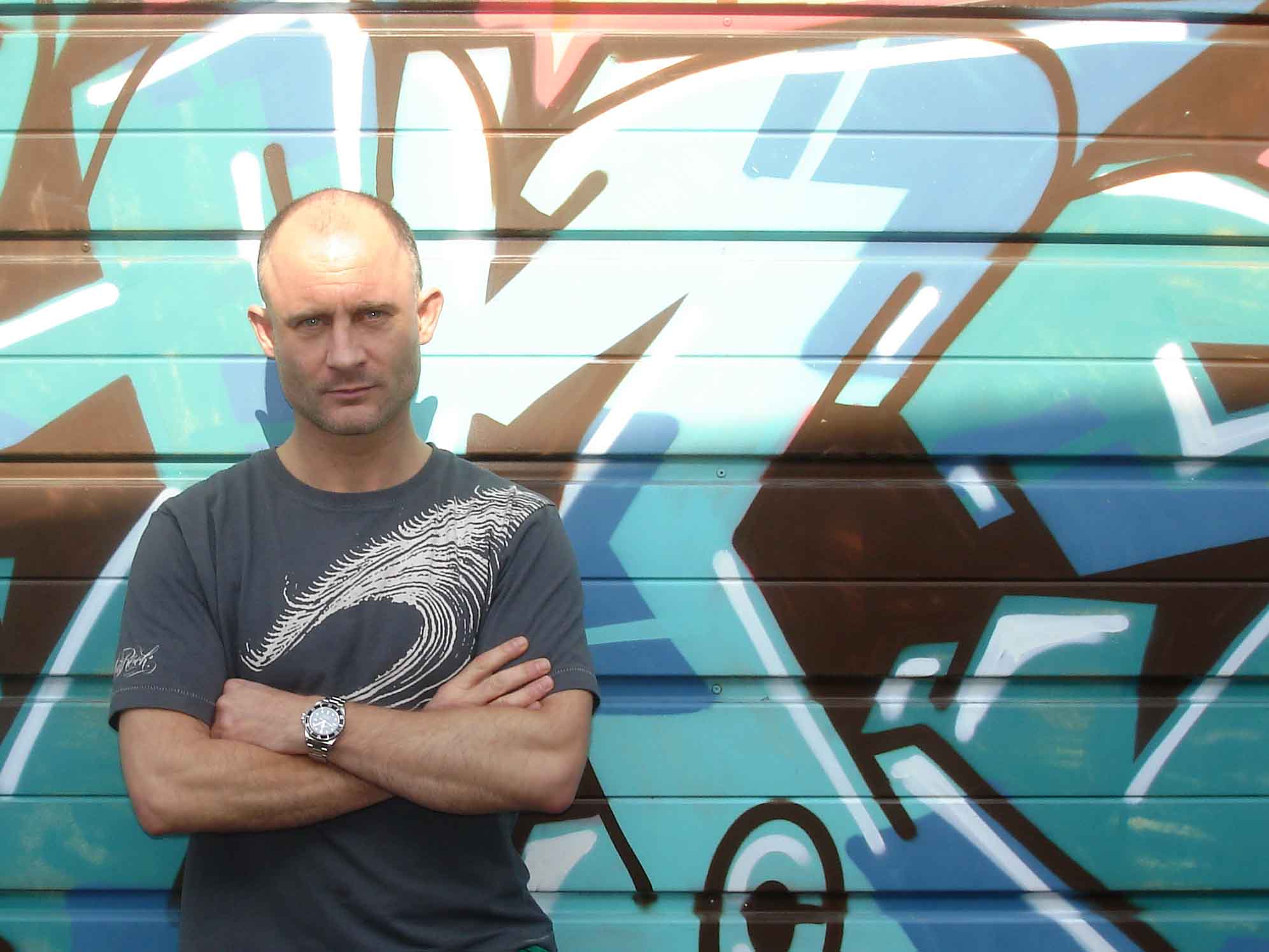
Chris Thrall

CARTER: The literary landscape is changing, some say deteriorating.

Where once New York publishers actually sought out quality literature that would last through the ages (John Steinbeck, Pearl Buck), today they only seem interested in boardroom-created-blockbusters like “Twilight” or throwaway celebrity memoires.

To add insult to injury, newspapers like the “New York Times” are notoriously anti-POD (Print on Demand) and will only review Big 6-published books despite the recent sales surge of self-published titles.

What’s your advice, then, for aspiring authors who lack literary connections but feel that their book is too good for CreateSpace?

THRALL: If you truly believe you have a story that will be of interest to many people, think carefully about sending your manuscript to a busy executive in a publishing house that probably has fifty other manuscripts land on their desk everyday and no time to read them.

Instead, consider hiring (or find) an agent that has some influence with the big players or simply send your first chapter to an author in a similar genre. Authors tend to be very kind and approachable people – as I found out, Tom! – and having been through the process themselves, they know what a publisher is looking for. If they like what they read then there’s a good chance they’ll recommend you.

Writers want other writers to have success. In addition, you’ll get pointers if your writing is lacking in any area. I’m currently writing a free e-book that will be available to download soon from http://www.christhrall.com to guide people through the process of writing a memoir and getting it published.

CARTER: What’s next for Chris Thrall? Tales from your time with the Corps of Her Majesty’s Royal Marines? Or perhaps some fiction?

THRALL: Not sure. You’ll have to ask the readers of Eating Smoke that question!

Return to Eating Smoke – Part 4, start with Part 1, or or if you have the time and do not want to wait for the five-part series to finish posting, click View as Single Page.

Chris Thrall was born in the UK. At eighteen, he joined the Royal Marine Commandos. Following active service in the Northern Ireland Conflict and training in Arctic warfare and survival, he earned his parachutist’s ‘wings’ and went on to serve as part of a high-security detachment onboard an aircraft carrier. In 1995, Chris moved to Hong Kong to oversee the Asia-Pacific expansion of a successful network-marketing operation he’d built, part-time, while serving in the Forces. Less than a year later, he was homeless, hooked on crystal methamphetamine and working for the 14K, Hong Kong’s largest triad crime family, as a doorman in Wanchai’s infamous red-light district. Eating Smoke, a humorous yet deeply moving first book, is his account of what happened.

__________________________

Travel photographer Tom Carter is the author of CHINA: Portrait of a People, a 600-page book of photography from the 33 provinces of China, which may be found on Amazon.com.

To subscribe to “iLook China”, sign up for an E-mail Subscription at the top right-hand side of this page and then follow directions.


Eating Smoke — a question and answer with the author, Chris Thrall – Part 4/5

October 19, 2011

Guest-Post by Tom Carter
Interview with Chris Thrall, author of Eating Smoke continued…

CARTER: A really interesting observation I felt you made in Eating Smoke was of those expatriates who come to places like China looking to assert their dominance over the culture, and those expats who “go native” and completely immerse themselves in the language and customs, sometimes to the point of arrogance towards other foreigners.

Why do westerners behave like this in other countries, and why, in your opinion, do Asian immigrants in America or the UK have seemingly the exact opposite attitude?

THRALL: That’s a good question but probably a long-winded answer. It’s important to remember that not all westerners misbehave when abroad and not all Asian immigrants immerse themselves in or accept western culture and etiquette.

When you consider the West’s history and of colonialism and capitalism – arguably practices that require the population of one country to believe they are racially superior to another’s – it’s not hard to appreciate why some westerners behave this way.

Add to that a “functionalist” education system, a class system, a one-sided record of history…I could go on, couldn’t I?

CARTER: Comparisons are being made between “Eating Smoke” and Gregory David Roberts’ “Shantaram” (about a drug-addicted escaped convict who joins a crime family in Mumbai, India) and Alex Garland’s “The Beach” (young backpackers living on an isolated island in Thailand who goes mad from solitude and drugs).

Have you read either of these, and how does Eating Smoke stand apart in this genre?

THRALL: “Eating Smoke” is 100%  true life – whereas “Shantaram” and “The Beach” are fiction, though loosely based on their authors’ travel experiences, no doubt.

Although it’s on my shelf, I haven’t read “Shantaram”, but “The Beach” is one of my all-time favorites.

The reason “Eating Smoke” stands apart in this genre is that it works – or so the reviewers say – on so many levels and therefore appeals to readers of all ages, sex and genre.

I’m told my story is unique and an eye-opener and that my writing style – honesty, humor, originality, and pacing – makes the book impossible to put down. Even though it is over 500 pages as a traditional paperback, I often receive Facebook messages and emails from people who have read it in two days.

CARTER: I’d like to go on record as saying that I think “Eating Smoke” has “Hollywood” written all over it, and I expect your story to be optioned for film rights. Johnny Depp is slated to play the lead role in “Shantaram”, and Leo DiCaprio starred in “The Beach”.

Do you have any preference for actors to play yourself in “Eating Smoke”: The Motion Picture, like Shia LaBeouf or Justin Bieber (just joking!)? Who would you want to direct?

THRALL: *laughing* So long as the guy was English, a good actor, and resembled my character at the time, I wouldn’t mind. I don’t have a preference – I’m not that clued up on 25-year old English actors, to be honest!

As for a director, Danny Boyle would be my choice. I loved “The Beach”, “Trainspotting”, “Slumdog Millionaire” and “127 Hours”. It would require someone with his perception to be able replicate the psychosis that I experienced, accurately.

Continued on October 20, 2011  in Eating Smoke – Part 5, return to Part 3, or if you have the time and do not want to wait for the five-part series to finish posting, click View as Single Page.

Chris Thrall was born in the UK. At eighteen, he joined the Royal Marine Commandos. Following active service in the Northern Ireland Conflict and training in Arctic warfare and survival, he earned his parachutist’s ‘wings’ and went on to serve as part of a high-security detachment onboard an aircraft carrier. In 1995, Chris moved to Hong Kong to oversee the Asia-Pacific expansion of a successful network-marketing operation he’d built, part-time, while serving in the Forces. Less than a year later, he was homeless, hooked on crystal methamphetamine and working for the 14K, Hong Kong’s largest triad crime family, as a doorman in Wanchai’s infamous red-light district. Eating Smoke, a humorous yet deeply moving first book, is his account of what happened.

__________________________

Travel photographer Tom Carter is the author of CHINA: Portrait of a People, a 600-page book of photography from the 33 provinces of China, which may be found on Amazon.com.

To subscribe to “iLook China”, sign up for an E-mail Subscription at the top right-hand side of this page and then follow directions.


Eating Smoke — a question and answer with the author, Chris Thrall – Part 3/5

October 18, 2011

Guest-Post by Tom Carter
Interview with Chris Thrall, author of Eating Smoke continued…

CARTER: One of the main characters in “Eating Smoke” is a Filipina prostitute named Apple who, after being your friend, sells you out to the triads.  Filipinos are the second largest ethnic group in Hong Kong, however their career paths seem to be limited as nannies for wealthy families, cover bands, or bar girls.

Why is that, and do you think their situation will ever improve?

THRALL: I think it’s because the Philippines’ economy is relatively poor when compared to Hong Kong’s. Even with the pittance they receive in wages, these women are able to send a lot of hard-earned dollars home to their families, while getting a travel experience they likely otherwise ill afford.

As to whether their situation will improve, Filipinos are generally humble, in my experience. They don’t complain and seem to appreciate the chance to earn money abroad.

Of course, wherever there is inequality, they’ll be incidents of exploitation, which isn’t nice. But if their union – if there is such a thing – pushed for higher pay then perhaps the demand for their services would drop off as there are Hong Kong locals who could fill these jobs.

CARTER: Another reoccurring character in Eating Smoke is an expatriate named Cameron who insists on trying crystal meth despite your warnings of its highly addictive nature.  Cameron shows up later in the book exclaiming how much he loves the drug even though it’s obvious that he, too, is now addicted.  To quote a passage in your book, “Unable to stop and not wanting to anyway.”

What about methamphetamine makes it so popular even though everyone knows that it can, nay, will destroy you?

THRALL: I can only speak from my own experience. Some people try meth and say, “Ah. It’s OK. But nothing special.” Then get on with their life. For others it seems to be the key in lock, the answer to all of life’s insecurities and problems. Perhaps people in the former category have had more stable upbringings and hence less insecurity and the resultant need to feel “right” for a change.

A drug that makes you feel cool, calm and supremely confident, in addition to giving you a massive surge of creative energy – allowing you to discover abilities you were told you were a failure at in school – is always going to be in demand.

The problem is, like Superman with his Kryptonite, you begin to crave that feeling more and more to the point where you no longer feel normal without it. That’s called addiction. Either you beat it or it destroys you.

Continued on October 19, 2011  in Eating Smoke – Part 4, return to Part 2 or if you have the time and do not want to wait for the five-part series to finish posting, click View as Single Page.

Chris Thrall was born in the UK. At eighteen, he joined the Royal Marine Commandos. Following active service in the Northern Ireland Conflict and training in Arctic warfare and survival, he earned his parachutist’s ‘wings’ and went on to serve as part of a high-security detachment onboard an aircraft carrier. In 1995, Chris moved to Hong Kong to oversee the Asia-Pacific expansion of a successful network-marketing operation he’d built, part-time, while serving in the Forces. Less than a year later, he was homeless, hooked on crystal methamphetamine and working for the 14K, Hong Kong’s largest triad crime family, as a doorman in Wanchai’s infamous red-light district. Eating Smoke, a humorous yet deeply moving first book, is his account of what happened.

__________________________

Travel photographer Tom Carter is the author of CHINA: Portrait of a People, a 600-page book of photography from the 33 provinces of China, which may be found on Amazon.com.

To subscribe to “iLook China”, sign up for an E-mail Subscription at the top right-hand side of this page and then follow directions.