Politically Correct Outside Tibet but Historically Wrong

May 31, 2010

In the “Contra Costa Times” this morning, I read Tibetan leaders seek East Bay help by Doug  Oakley, a politically correct news piece that’s partially accurate because Oakley only shares part of the history between China and Tibet—the part that favors Tibet’s so-called government in exile, which represents about 1% of all Tibetans—the rest still live in China.

Oakley writes that, “Tibet was invaded by the Chinese army in 1950. After the Tibetan army was defeated, both sides signed a 17-point agreement in 1951 recognizing China’s sovereignty over Tibet.” These facts are correct, but they do not tell the whole story.

Tibet, China

Any historian who checks primary sources that exist outside of Communist China will discover that Tibet was ruled by three Chinese dynasties: The Yuan, Ming and Qing Dynasties from 1277 – 1911.  Even after Sun Yat-Sen’s so-called Republic replaced the Qing Dynasty in 1911, Tibet was considered part of China.

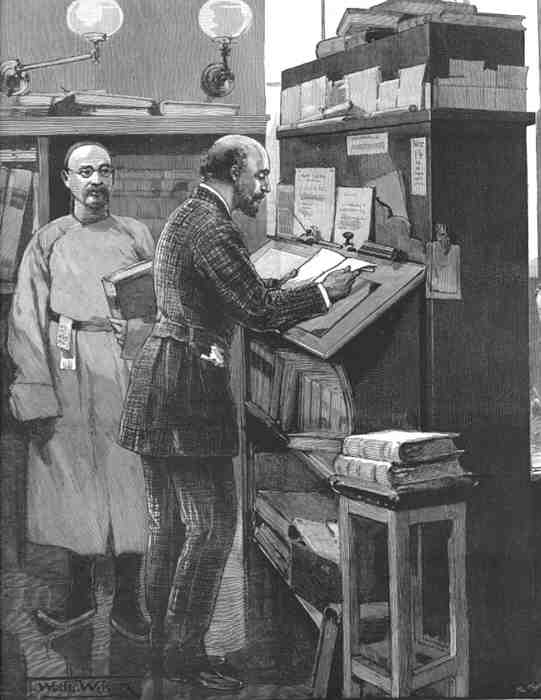
Primary sources like the October 1912 issue of The National Geographic Magazine and more than fifty letters written by Sir Robert Hart during the 19th century support the fact that Tibet was part of China for more than six centuries prior to 1913 when the British Empire convinced Tibet to break free for political reasons.

The so-called Tibetan government in exile says they are seeking autonomy within China. In fact, China does offer a form of autonomy to the 56 minorities that live in China, but this isn’t the level of autonomy that the Dalai Lama demands, which is a return to the old Tibetan ways described in that 1912 issue of National Geographic, which is unacceptable to China.

Discover more about today’s Tibet by reading Chinese Gold from Dead Tibetan Caterpillars, Buddhism in China, The Tea Horse Road, Water – Two Countries Tell a Tale and About Tibet.

_____________________

Lloyd Lofthouse is the author of the award winning novels My Splendid Concubine and Our Hart. He also Blogs at The Soulful Veteran and Crazy Normal.

Sign up for an RSS Feed for iLook China


When Islamic Fundamentalists become Activists

May 31, 2010

I’ve never seen the Western Media mention that Xinjiang is in Central Asia when reporting violence in that region of China.

Why are Islamic fundamentalists in Pakistan, Afghanistan and Tajikistan called terrorists and militants, but Islamic fundamentalists in China’s Xingjian province, just across the border from the Afghan war and the fighting in Pakistan, are referred to as activists in the Western media?

The Uighur people are Islamic and native to Xinjiang province in China. They are also culturally tied to Central Asia. Rebiya Kadeer, an “Uighur activist”, lives in exile in Washington D.C.   The walls of her small office are covered with photographs of meetings with former President G.W. Bush and Laura Bush.

I have never seen any mention of the fact that China has a history going back hundreds of years when the Ch’ing Dynasty (the Manchu) put down several rebellions by Islamic Uighur rebels in Xinjiang province. I wonder if Rebiya Kadeer is aware of this history.

In fact, with an estimated 74 billion barrels of oil in Xingjian province (three times the proven reserves in the US), China isn’t going anywhere for some time.

See China’s Oil Hunger Grows

_________________________

Lloyd Lofthouse is the author of the award winning novels My Splendid Concubine and Our Hart. He also Blogs at The Soulful Veteran and Crazy Normal.

Sign up for an RSS Feed for iLook China


A Clear Case of Western Media Bias

May 31, 2010

When an Islamic fundamentalist is killed or arrested anywhere in the world but China, they are labeled a terrorist in the Western media but when the same forces do something similar in China they are called activists. China’s Xinjiang province is located east of Kazakhstan, Kyrgyzstan, Tajikistan, Afghanistan and Pakistan.  All of these Central Asian countries share a border with China’s Xinjiang region.

Here are two examples from the Western media that were published in July 2009. Time printed a news piece Afghanistan’s Deadly Export: How the War is Spilling Over into Central Asia, by John Wendle/Moscow

The lead paragraph starts, “When five militants, all Russian citizens, were shot and killed in a gun battle at a remote military checkpoint near Tajikistan’s border with Afghanistan, the Tajik government was quick to label the dead as “members of an organized terrorist group.” The group has not been named, but the shootings highlight the grim irony of the struggle against terrorism in Afghanistan.”

A few days later, Chisa Fujioka wrote for Reuters, Uighur leader says 10,000 went missing in one night.  The lead said, “Nearly 10,000 Uighurs involved in deadly riots in China’s northwestern Xingjian region went missing on one night, exiled Uighur activist Rebiya Kadeer said Wednesday, calling for an international investigation.”

See What is the Truth about Tiananmen Square?

_____________________

Lloyd Lofthouse is the author of the award winning novels My Splendid Concubine and Our Hart. He also Blogs at The Soulful Veteran and Crazy Normal.

Sign up for an RSS Feed for iLook China


Kombucha Fermented Tea

May 30, 2010

Sometimes I wonder about the sanity of most Americans.  It seems they will drink or eat anything that arrives pretty on a plate or in a fancy bottle. I  read a piece this morning that said Lindsay Lohan and other Hollywood types like Madonna, Kirsten Dunst and Halle Berry are into this new (but old) synergy drink called Kombucha.

Kombucha Home Brew

No one knows for sure where this fermented tea originated but recorded history says it started in Russia during the late 19th century. Promotional material says the drink comes from ancient China or Japan. In fact, some say that kombucha, known as the Godly Tsche, dates back to the Qin Dynasty (221-206 BC) and was “a beverage with magical powers enabling people to live forever”. Since the first emperor, Qin Shi Huangdi, didn’t live forever, we can discount that claim.

I asked my wife about this tea and she said that as a child she saw it being fermented and that the stuff floating around inside the jar reminded her of dead cockroaches.  Once someone like Pepsi or Coke gets hold of something old like this there is no telling what kind of chemicals will be added. If you want to make this tea, click Kombucha Tea for the home brew recipe.

If you believe the health claims for this tea, you may want to learn about the Chinese “Chong Cao“. Remember, the Food and Drug Adminstration (FDA) hasn’t evaluated any of this stuff yet.

____________________

Lloyd Lofthouse is the author of the award winning novels My Splendid Concubine and Our Hart. He also Blogs at The Soulful Veteran and Crazy Normal.

Sign up for an RSS Feed for iLook China


The Chinese Work Ethic

May 30, 2010

At the turn of the century, Jack London visited China (1904-05) and saw how hard the Chinese worked. He surmised that Westerners, living in ignorant bliss, had no understanding of Asian cultures and were far too confident of their superiority to realize that their days of world power were severely numbered. He urged that Westerners make concerted efforts to meet with Japanese and Chinese to understand each other better as equals. Source: History News Network

Jack London with his wife

In fact, I’ve met highly educated Chinese who came to the US and couldn’t get jobs in their field of study. Did they give up and lay around complaining how unfair life was?  No. They became handy men or worked in construction for far less than what a Latino, illegal immigrant worker earns. These same Chinese, with strong family values, also save money to send their children to college.

Sir Robert Hart, who lived and worked in China (1854 – 1908) and is considered the Godfather of China’s modernization said the same thing Jack London would say decades later. In the 1880s, he predicted that within a century China would be a super power again.

Sir Robert Hart in China

The Chinese work ethic is also reflected in Article 42 of the PRC’s Constitution.

“Citizens of the People’s Republic of China have the right as well as the duty to work. Using various channels, the state creates conditions for employment, strengthens labour protection, improves working conditions and, on the basis of expanded production, increases remuneration for work and social benefits. Work is the glorious duty of every able-bodied citizen. All working people in state enterprises and in urban and rural economic collectives should perform their tasks with an attitude consonant with their status as masters of the country. The state promotes socialist labour emulation, and commends and rewards model and advanced workers. The state encourages citizens to take part in voluntary labour. The state provides necessary vocational training to citizens before they are employed.”

Who built the Great Wall of China?
Who built China’s Grand Canal?
Who built the first emperor’s tomb and all those Terra Cotta Warriors?
Who took a country in 1950 that produced 0.005 kilowatts of electricity and built more than a hundred modern cities in less than three decades with plans to build 400 more—something historians say has never happened in the recorded history of humanity?
Whom has the only viable space program left on the earth with plans to go to the moon and beyond?
Who built America’s Western Railroads during the 19th century?

To learn more see All About Balance

______________

Lloyd Lofthouse is the award-winning author of the concubine saga, My Splendid Concubine & Our Hart. When you love a Chinese woman, you marry her family and culture too. 

If you want to subscribe to iLook China, there is a “Subscribe” button at the top of the screen in the menu bar.