Not All Factories in China are Sweat Shops

March 5, 2010

Originally Published at Speak Without Interruption on February 15, 2010 by Bob Grant — publisher/editor for Speak Without Interruption. Posted on iLook China, 3/5/10 at 08:00

As I write about my personal experiences in China, I again want to note that they are strictly that—my “personal” experiences.  I am certain there are people, who have visited China who could contradict everything that I have, or will write.  The products I imported perhaps did not lend themselves to the typical “Sweat Shop” stereotype in terms of the factories that produced them.

However, I never saw or visited any factory that, in my mind, would fit that definition.

If the factories were not what I would call “modern”—they were certainly clean.  The employees (factory workers) wore uniforms at most places I visited.  They seemed proficient in their work and the products produced, and for the most part, were without quality problems—certainly no different from products produced in other countries.
There are more photos at Speak Without Interruption

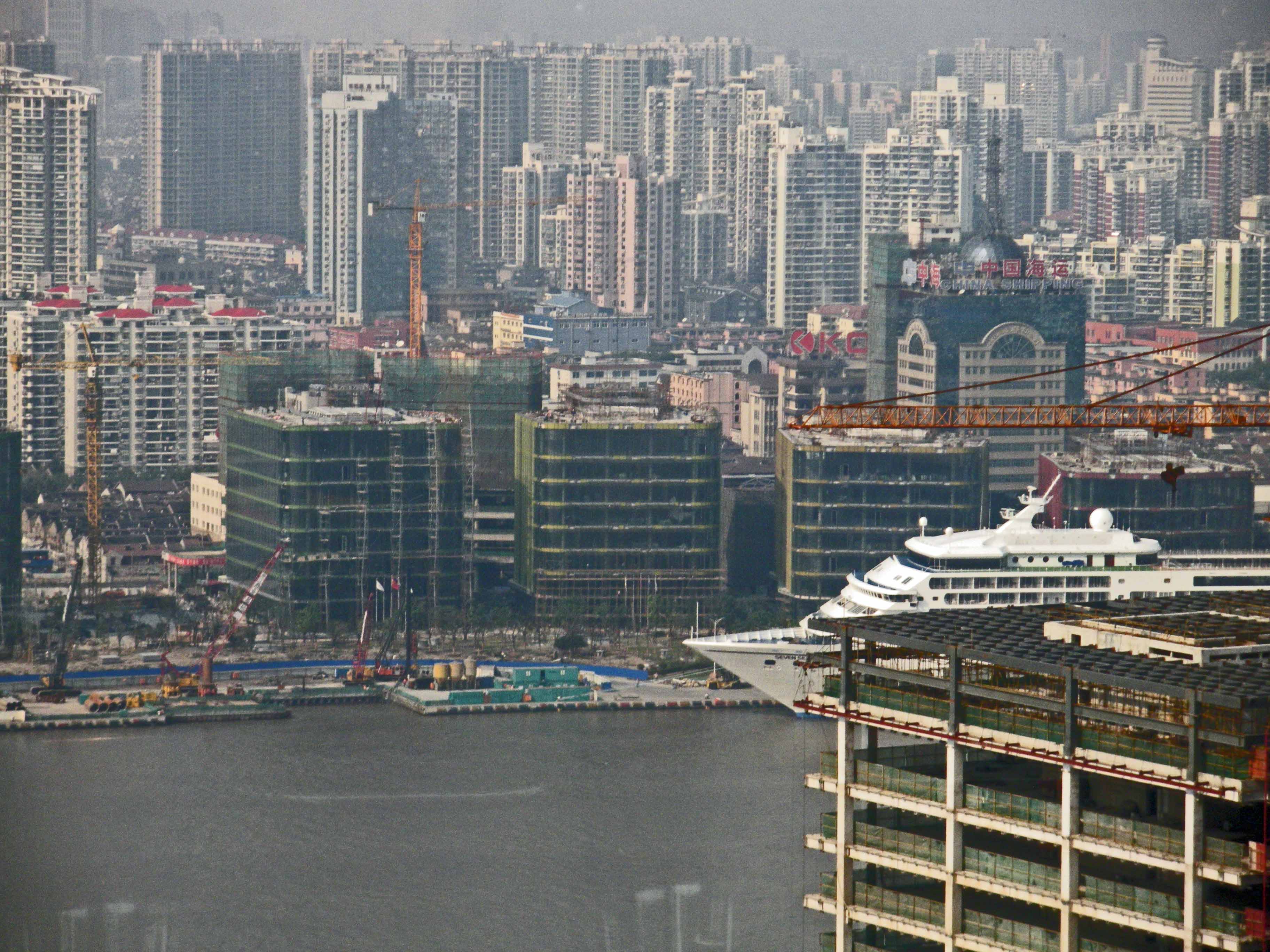
Most of the factories tended to be in Industrial Parks that were quite large.  Usually, the factories were a “small city” into themselves.  There was housing provided for the employees on the factory grounds along with areas for recreation.  I don’t suppose there was another way of doing it, but I saw a lot of laundry hanging from outside the housing units plus commercial apartments buildings I saw throughout China.

Most factories had certifications that were either the same or similar to those held by US factories.  I saw elaborate R&D sections in most of the factories I visited.  The office space was usually as modern and pleasant as any I had visited in the US.

A ritual that I truly enjoyed was at every meeting when hot tea was served. Sometimes the owner or general manager had tea to make in their office and other times it was brought in.  However, I can’t recall a meeting where tea was not offered.

Being a non-smoker, another ritual I did not enjoy was in almost every meeting I attending most of the parties present smoked.  I heard a figure once that 85% of Chinese men smoked. I can attest that this is probably a good estimate.  Once inside the office or meeting room, the smoke became quite thick and uncomfortable for me; however, I was their guest and felt I could put up with the discomfort in the course of conducting my business affairs.

I have fond memories of my factory visits and discussions. I think the fact that I came to China, and met with the factory personnel aided my business immensely versus doing business in name only.

If you enjoy this piece by Bob Grant, you may want to read “A Contradiction of Times” at http://wp.me/pN4pY-bT


Raise the Red Lantern

March 4, 2010

This film was directed in China by Zhang Yimou in 1991, and it offers a view of life within a closed, dictatorial culture that starts in the home. The film focuses on the ever-shifting balance of power between the various concubines while the husband ignores much of what is going on—taking his pleasures when he feels like it.

The central government in China did not approve this film since it parallels a return to a concubine society where men with new wealth stash women (the concubines) in different apartments. The more things appear to change, they don’t.

When my wife and I lived in Southern California, we visited a small restaurant near our home. The owner was a former concubine of a wealthy Chinese man, who paid her off and sent her packing when she got too old. He used his influence and wealth to help her reach the United States while he went in search of a young beauty to replace her. She used the money to start a business. She was lucky. Many modern-age concubines are just abandoned and have to find another master to support them and beauty does fade.

Discover more Chinese movies–Balzac and the Little Chinese Seamstress

______________________________

Lloyd Lofthouse is the award-winning author of My Splendid Concubine [3rd edition]. When you love a Chinese woman, you marry her family and culture too. This is the lusty love story Sir Robert Hart did not want the world to discover.

IMAGE with Blurbs and Awards to use on Twitter

Where to Buy

Subscribe to “iLook China”!
Sign up for an E-mail Subscription at the top of this page, or click on the “Following” tab in the WordPress toolbar at the top of the screen.

About iLook China

China’s Holistic Historical Timeline


Greed, the Beast that Escaped the Bag

March 4, 2010

Greed is universal the world over. Greed drove the likes of Bernie Madoff and other billion dollar rip-offs on Wall St.  Greed also motivates citizens in China to cut corners. If the United States government can’t stop people like Madoff, why should China’s central government be able to do any better?

Shanghai's Growth Pains

Then we have people like Zou Tao, who show us that the citizens of China are not afraid to speak out against injustices. Zou is evidence that the Chinese have a voice and use it. His is a David and Goliath story, and the Chinese Blog (http://wp.me/pN4pY-at) more than Americans.

If you are a skeptic that still believes China is a totalitarian state and everyone wears the same drab olive green uniform and marches in step, you would be surprised to discover how wrong you are, because local governments are defying Beijing.  The Chinese central government is learning the hard way how difficult it is to control a greed driven, capitalist, market economy.


Printing Books in China

March 4, 2010

I read a post about printing books in China at Chicken Scratchings, and this was my response.

If American’s stopped buying products made in China, Americans at home would lose jobs.  Since Wal-Mart has more than ninety percent of their products manufactured in China, Wal-Mart might go out of business or shrink (which might be a good thing).  But many low wage people that work for Wal-Mart in the United States would be unemployed like American autoworkers.

Most Chinese products are manufactured for American companies.  Some of Apple’s products are manufactured outside the country like iPods in China. Try to buy a car, any car, that’s 100% manufactured in the United States.  Does it matter where the jobs go?  They are still gone. People in India, Pakistan, Indonesia, Nigeria, etc. are manufacturing goods that are sold in the United States. China isn’t the only country that does this.  Yet China seems to get all the blame.

Many products may be built in other countries but an American puts them on the shelf, sells them and gets paid for it.

To understand the situation better, I recommend reading China’s Cheap Price Structure at  http://wp.me/pN4pY-2R
and/or Doing buisiness in China at  http://wp.me/pN4pY-2Y


First China Quiz (there is one prize)

March 3, 2010

China Quiz—the answers are in the first hundred posts at iLook China. The first person to answer all the questions correctly will win a free copy of either “My Splendid Concubine” or “Our Hart”.  If the winner lives outside the United States, I will provide a free e-book copy for them to download. There is no deadline. This quiz and the prize will be kept open until the first person answers all the questions correctly. The answers may be found in the first one-hundred posts.  If you find an answer from another source, provide the source but it must match or be similar to the answer found in iLook China. Write your answers in a comment to this post. Make sure there is a way for me to contact you.

1. Why did I write American Hypocrisy, my first post at iLook China?
2. What Chinese city would you find next to the Westlake?
3. What is the name of Zhang Zimou’s night spectacular on the Li River?
4. What is the first of all virtues to most Chinese and what does it mean?
5. Why was the Reuter’s employee roughed up outside Foxconn’s walled city-like facility in Guanlan?
6. During what Dynasty did the Chinese invent paper money and add credit type loans to the banking system?
7. Bob Grant said, “In all honesty, over the years, I have ___ ___ __ ___________ __ ________ flight anywhere inside China.” (fill in the blanks for the six words that are missing)
8. After Mao died in 1976, what did Deng Xiaoping introduce to China for a brief period-of-time, and what was the public allowed to do?
9. What American president’s administration seems to have been the role model for the changes in China’s health care system and what kind of health care system was this?
10. Before the Communists won China in 1949, what was the life expectancy for the Chinese people?
11. What was the name of the health care program that Mao started and how did this system work?
12. (Fill in the blank) Chinese Internet users are _____ times as likely to have blogs as Americans.
13. How far did Tom Carter walk while taking pictures for China: Portrait of a People?
14.  Where will a Disneyland be built in China?
15. On February 28, 60 Minutes ran a segment about a Taiwanese man spying on the United States for mainland China. What was this man trying to discover and why would China care?
16. Who moved China’s first Capital and what was the name of that first capital?
17. Construction of the Longi Rice Terraces was started during what Dynasty?
18. What do the Chinese think about the crew of the Tough Titi, an American B-24 Liberator bomber?
19. What did Confucius say about the importance of gaining an education?
20. What happened in 1421?