China: The Roots of Madness – Part 5/8

June 11, 2010

In Part 5, Mao’s troops in the hills of Yunnan grows food. His army, dressed in shabby clothing wearing straw sandals, doesn’t look like a fighting force. Mao says the people are the sea and guerrillas are like fish that swim in the sea. Within a year, Mao’s army grows to 200,000.

Meanwhile Chiang Kai-shek’s army loses battles and cities to the Japanese. To continue fighting, his government and army moves to the deep mountain city of Chongqing in Sichuan province. In 1939, the Japanese start bombing Chongqing 24/7. When asked about the Japanese threat, Chiang says that the Japanese are a disease of the skin, but the communists are a disease of the heart.

Then on December 7, 1941, Japan bombs Pearl Harbor and America enters the war. War supplies start to trickle to China through India and across the Himalayas to Chiang Kai-shek’s four-million-man army. However, his government is corrupt, his troops are poorly fed and moral is low.

Chiang Kai-shek is accepted as an equal among the West’s leaders while Mao works to keep up the moral of his Communist troops through political training—something Western leaders don’t understand and criticize.

Continued in Part 6, The Roots of Madness or return to Part 4, The Roots of Madness

View as Single Page

______________

Lloyd Lofthouse is the award-winning author of the concubine saga, My Splendid Concubine & Our Hart. When you love a Chinese woman, you marry her family and culture too.

If you want to subscribe to iLook China, there is a “Subscribe” button at the top of the screen in the menu bar.


Cultural Differences, the Ignorant American and Western Imperialism

May 21, 2010

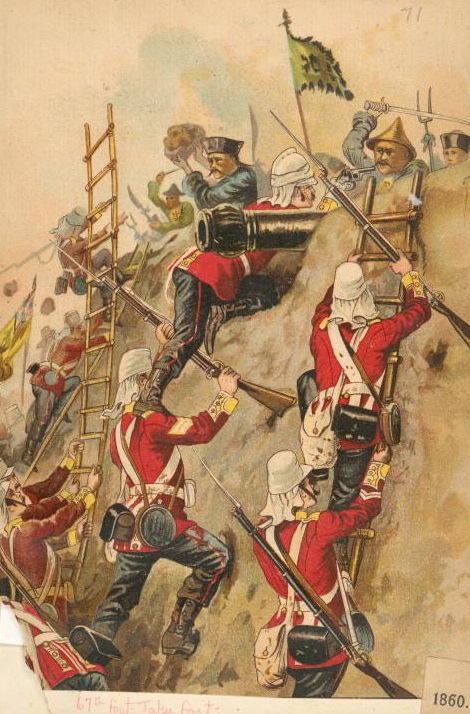
Before Western Imperialism attempted to change Asia during the 19th century, China was a regional super power for more than two-thousand years. Over time, the Chinese believed they were too civilized and powerful to be threatened by anyone on the planet.  Then the British, French, Portuguese, Germans, Americans, Russians and Japanese arrived and waged war in China for a century starting with the First Opium War.

Opium Wars

China learned a lesson from all of these wars. It only took a century to recover and start over.

The leaders of China are called Communists, but the men and women who rule China were born Chinese and the decisions they make are based on being Chinese—not being Communists. The Chinese culture is a collective culture and when an “individual” crosses the line and breaks the rules doing or saying something that is unacceptable to the collective culture, they are erased (given a death sentence) or reeducated (if possible). That’s how the Chinese collective culture on the mainland does things.

In time, interaction with other cultures may change that.  In fact, China already has changed to some degree. Friendly, harmonious interaction is the key—not hate and accusations like those from Americans like Timothy V.

See Respecting Cultural Differences are Out-of-Focus

____________________________

Lloyd Lofthouse is the author of the award winning novels My Splendid Concubine and Our Hart. He also Blogs at The Soulful Veteran and Crazy Normal.

Sign up for an RSS Feed for iLook China


Freedom’s Evolution

May 11, 2010

A debate took place on Left of the Right, not by Devin Barber, the Blog’s host, but between me and another person who called him or herself Timothy. This person made comments calling me an asshole and a propaganda spewing scumbag among other insults, because he disagreed with my opinions regarding China even though I supported most or all of my opinions with facts. You may read the entire debate by clicking on the above link to see an example of Timothy’s conservative beliefs.

One of my last responses was a comparison between America and China and the trail to freedom that both counties have followed and are still traveling. What follows is a slightly edited version.

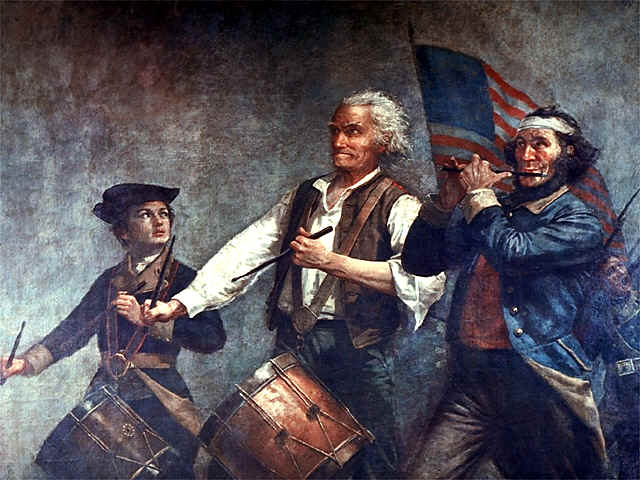
In 1781, the American War for Independence from the British Empire ended, but there was still slavery in the Southern States.
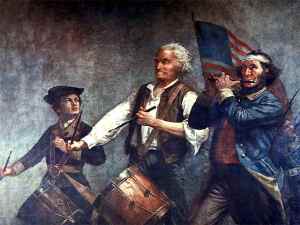
American Revolution

In 1861 to 1865, (eight-four years after America’s revolution) America divided and fought a bloody Civil War that ended slavery. More than six hundred thousand Americans died in that conflict. 

However, women still could not own property or vote. Women were considered chattel.  The women’s rights movement started in 1848. In 1920 (seventy-two years later), the 19th Amendment to the US Constitution granted women the vote.

American history is full of facts about how people of color were discriminated against and were second-class citizens until the Civil Rights Movement between 1955 to 1968.  It took one-hundred-and-three years after the end of slavery to end discrimination against people of color—at least legally.

_________________

The bloody and painful evolutionary trail to freedom in China started in 1913 when warlords ended Imperial rule.  Eventually a dictatorship replaced the warlords.  The Kuomintang under Chiang Kai-shek was a dictatorship under martial law even in Taiwan until the 1980s when the first election was held there.

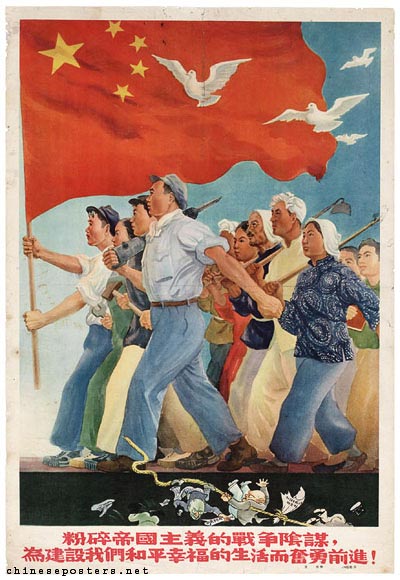
Another step back was World War II with the Japanese invading China that cost about 30 million Chinese their lives. That ended in 1945, followed by the revolution between the Communists and Kuomintang dictatorship.  Soon after Mao won that revolution in 1949 and took over China to become China’s modern emperor for twenty-seven years, he declared that women were equal to men.  Then there was the Great Leap Forward, which was more like two leaps back followed by the Cultural Revolution that cost another thirty-seven million Chinese their lives.
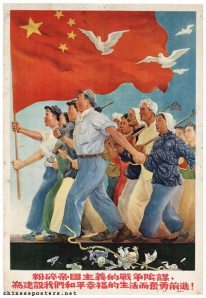
Chinese Revolution

After Mao died in 1976, the Communist Government under Deng Xiaoping’s guidance rewrote their constitution, repudiated Marxist, Maoist revolutionary doctrine and opened China to the world launching a market economy, which is on steroids today.

Since that new start, amendments have been added to the Chinese Constitution. Read it carefully and you will see that freedom of speech in China is limited by a constitution that is taught in the schools and in the factories. Although some Chinese dissidents have been arrested for speaking and jailed with other criminals, 98.8% of the population remains free and appears to have no problem obeying that law.

America’s journey to become a nation where ALL citizens are protected by the Bill of Rights took one-hundred-and-eight-seven years from 1781 to 1968.

China, after Mao, has had only thirty-four years to evolve.  Who knows where China will be in another century and a half. Timothy sees the glass half-empty. Since I watch China, I’ve seen the small steps that China has been taking, and I see the cup half-full and improving with time. I hope I’m right, because Timothy seems to believe that China is evil and will invade the United States in a few decades. What do you think?

____________________________

Lloyd Lofthouse is the author of the award winning novels My Splendid Concubine and Our Hart. He also Blogs at The Soulful Veteran and Crazy Normal.

Sign up for an RSS Feed for iLook China
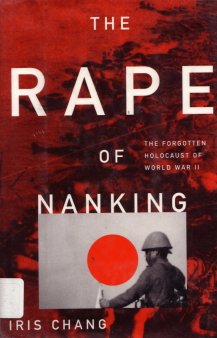

Great Generations

May 7, 2010

America and China both have a generation that matured during tough times.

I wonder if the American generation that survived the Dust Bowl of the 1930s, the Great Depression and won World War II, would riot like these Greek mobs

My parents were from the Great Depression generation. At fourteen, my dad went into the mountains near Los Angeles to fill fifty-pound bags with oak leafs for a nursery, and he mucked out horse stalls at Santa Anita. At fourteen, my mom was a server in a coffee shop in Eugene, Oregon. She supported her mother and younger sister from the tips. Mom and dad weren’t perfect. They had vices.

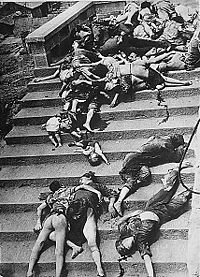
Japanese invasion of China, World War II, Chungking

What happened to America after World War II is happening in China today. The Chinese who are turning China into a super power are the ones who fought the Japanese during World War II, who won the revolution to free China from Chiang Kai-shek’s Kuomintang dictatorship and threw off the yoke of Western Imperial colonialism. They also survived the deprivations and repressions of the Cultural Revolution under Mao.

Hardships breed survivors, who do not riot when economies collapse. They work for less at any job. They eat yams, rice and soybeans instead of ice cream, candy, French fries, drinking sodas or Starbuck’s lattes.

People from the great generations did without TVs and iPods. They survived without phones and the Internet. They saved and paid with cash instead of using credit cards.

Discover more from Deng Xiaoping’s 20/20 Vision

Lloyd Lofthouse is the author of the award winning novels My Splendid Concubine and Our Hart. He also Blogs at The Soulful Veteran and Crazy Normal.

Sign up for an RSS Feed for iLook China


Change Mandated by Heaven

April 15, 2010

To many Chinese, the Taiping and Boxer rebellions failed because they were not blessed by Heaven. After World War II, when Mao’s Communists defeated the Nationalists, who— protected by America—fled to Taiwan, a case could be made that it was the Mandate of Heaven that brought about this change since World War II caused many in China to lose their lives demonstrating the Kuomintang’s inability to protect the Chinese people.

Chang Kai Shek - Leader of the Kuomintang

When Mao died, the new chairman of China’s Communist Party, Hua Guofeng, ordered the arrest of the Gang of Four. Almost everyone connected to the Gang of Four, which included Mao’s wife, Jian Qing, became non-persons. Some went to prison and died like Mao’s wife. Others were pushed aside and ignored. Since millions died due to the Cultural Revolution, they had lost the Mandate to rule.

Deng Xiaoping repudiated the Cultural Revolution and in 1977 launched the ‘Beijing Spring’, leading to a market economy and China’s prosperity today. The suffering that occurred during much of Mao’s twenty-seven year rule was criticized openly making if official that Mao had lost the Mandate of Heaven. After all, more than thirty-million Chinese died horrible deaths due to the Great Leap Forward and the Cultural Revolution.

See Deng Xiaoping’s 20/20 Vision http://wp.me/pN4pY-2o

Sign up for an RSS Feed for  iLook China