Comparing China’s Tiananmen Incident to the U.S. War on the Philippine People

April 22, 2015

China has admitted that some of its citizens and troops were wounded and killed during the unrest known as the Tiananmen Incident and/or Massacre. On Wiki, you will read that there were 241 – 2,600 deaths and 7,000 – 10,000 injured. In addition, on June 19, Beijing Party Secretary Li Ximing reported to the Politburo that the government’s confirmed death toll was 241, including 218 civilians (of which 36 were students), 10 PLA soldiers and 13 People’s Armed Police, along with 7,000 wounded (5,000 soldiers and police along with 2,000 civilians).

Now for the barbaric war the United States waged on the Philippine people. If you haven’t heard about this war before, don’t be surprised, because it has been suppressed (not censored). I mean, when’s the last time you’ve heard about it in the U.S. media compared to the number of times you’ve heard of China’s Tiananmen Square Massacre in 1989. In fact, when I posted What really happened in Tiananmen Square in 1989, Michael Brant left this comment, “This could have been written by the PRC media spin department.”  I wonder what Brant would say about the U.S. war against the Philippine People—if he’s ever heard of that brutal war.

After the Spanish American War, America took possession of the Philippine islands and waged war against the native people killing between 300k – 1 million noncombatants. This conflict was caused by the struggle of the First Philippine Republic to gain independence from the United States following the latter’s acquisition of the Philippines from Spain after the Spanish–American War.

There is a 2010 film about this war called Amigo. I think the odds favor that you have never heard of this film that doesn’t portray the U.S. as the freedom loving country most Americans think it is. In fact, the film’s widest release in the U.S. was in 10 theaters and total domestic earnings were $184,705.  The production budget for the film was $1.5 million, and it never had a global release. The film is available through Amazon as an instant video to stream, but no DVD is available. I haven’t seen this film yet, because I’m still waiting for the DVD.

I think it’s always good to have the facts before passing judgment, and history does count if you are aware of it as long as it isn’t suppressed or revised.

Jesus Christ said, So when they continued asking Him, He lifted Himself up and said unto them, “He that is without sin among you, let him first cast a stone at her.” John 8:7

If we take what He said seriously, then does any American have a right to annually condemn China for what happened during the Tiananmen incident in 1989 without also condemning the United States for what it did in the Philippines?

______________________________

Lloyd Lofthouse is the award-winning author of My Splendid Concubine [3rd edition]. When you love a Chinese woman, you marry her family and culture too. This is the love story Sir Robert Hart did not want the world to discover.
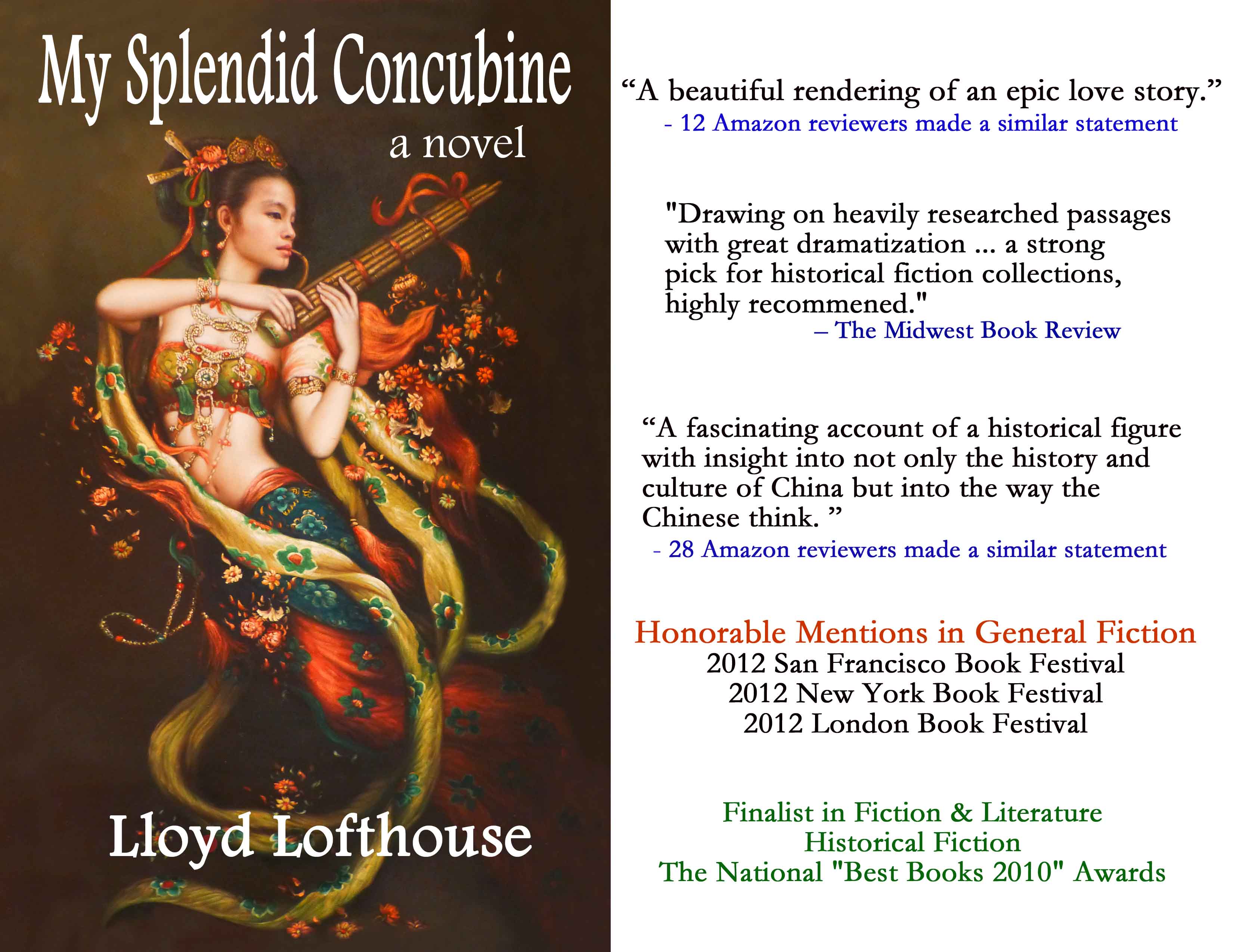
2015 Promotion Image for My Splendid Concubine

Subscribe to “iLook China”!
Sign up for an E-mail Subscription at the top of this page, or click on the “Following” tab in the WordPress toolbar at the top of the screen.

About iLook China

China’s Holistic Historical Timeline


Liu Xiaobo’s Manifesto, Charter 08 – Part 3/3

December 19, 2010

If you wish to learn more about Liu Xiaobo, there is a brief but flawed and biased biography that was written by Jean-Philippe Beja of Reporters Without Borders. The most revealing comments paint a portrait of Liu Xiaobo as a self-centered individual influenced by Western thought and literature.

Beja says, “Liu practiced a Nietzschean cult of the individual and took little interest in politics.” To understand Liu’s motives, one should understand how Nietzsche influenced the world.

Nietzsche was an influential German philosopher remembered for his concept of the superman and for his rejection of Christian values (he claimed God was dead); considered, along with Kierkegaard, to be a founder of existentialism (1844-1900).

In fact, Nietzsche’s ideas not only inspired Liu Xiaobo, they inspired Hitler since Nietzsche offered a philosophy for the Nazi ideology of a superior race, which exercised its power as the Nazi’s saw fit. 

Other warmongers also took up Nietzsche’s superman, God is dead philosophy, as well as other philosophers, artists and poets.

As you can see, Nietzsche’s widespread influence persists to this day. Source: Existential Murder: The Nietzsche Syndrome

When the 1989 Tiananmen Incident took place. Liu was a guest professor in Norway at Columbia University when the so-called “pro-democracy” movement (which was never a democracy movement) took place.

To learn what really caused the Tiananmen protests, I suggest you read and watch Part 7 of the BBC’s documentary of China’s Capitalist Revolution.

In fact, the BBC says, “The demonstrators did not begin by demanding democracy. Corruption, inflation and the hardship caused by economic reforms drove students and workers to confront the government and the army.”

Since China was shutting down the state-owned factories that were not productive and earning profits in the new capitalist economy, many workers lost their jobs. China was in transition from the old economy of Maoism to the new socialist capitalism of today’s.

Unrest was inevitable as was the violence that ended with the Tiananmen incident.  To allow the demonstrations to continue might have led to an insurrection and worse bloodshed and millions could have died.

Liu, with a PhD in literature from Beijing Normal University (influenced by the lies in the Western media) hurried home from Norway believing in the “so-called” pro-democracy demonstrations.

Bija writes that soon after Liu returned to China he took charge of the (student) negotiation to prevent greater bloodshed.

Without much evidence to support his claims, Bija writes that during the violent part of the (so-called) democracy movement, Liu took refuge in the Australian embassy but a sense of guilt drove him into the streets because “citizens and students who had taken part in the movement were being hunted down, arrested and executed.”

While cycling around Beijing Liu was arrested then spent 20 months in Qincheng prison. If the “citizens and students” that took part in the movement were being executed, why did Liu Xiaobo survive?

Return to Liu Xiaobo’s Manifesto, Charter 08 – Part 2 or start with Part 1

 ______________

Lloyd Lofthouse is the award-winning author of the concubine saga, My Splendid Concubine & Our Hart. When you love a Chinese woman, you marry her family and culture too.

If you want to subscribe to iLook China, there is a “Subscribe” button at the top of the screen in the menu bar.