Are You Your Government?

March 9, 2010

Originally Published at Speak Without Interruption on February 16, 2010 by Bob Grant — publisher/editor for Speak Without Interruption. Posted on iLook China, 3/9/10 at 08:00

On October 1, 1949 the People’s Republic of China was formally established in a speech given by Mao Zedong from the Imperial Gate at Tiananmen Square. I stood at the very spot where Mao gave his speech and took the photo at the right.  From speaking with people – in China – who lived through his reign it was beyond believable.  What he put his people through is an unforgivable act of power and brutality.  However, it is images from Mao’s era that some – outside of China – still have of the Chinese people.  Nothing could be farther from the truth!
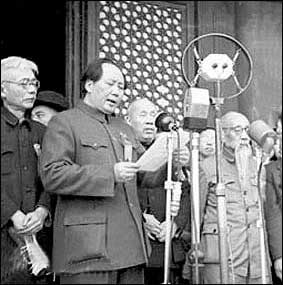
Mao Speech

I never met a Chinese government official – did not even see one at least that I can recall.  What I did meet were the people of China – the people with whom I had my business and personal interactions.  I did not ask them questions about their government nor did they ask questions of mine.  The only political statement that I ever heard was a reference that China’s policy would probably change when the younger generation came into power, someday. (for more on this topic read Changing the Guard at http://wp.me/pN4pY-e9 )

In meetings, over two years ago, I heard about the oil pipeline being built directly from Iran to China.  None of the people in that meeting expressed an opinion one way or the other regarding this pipeline.  It was a decision the Chinese government made.  Maybe my associates did not approve of dealing with Iran—maybe they did?  The point being here is their government made this decision—not my associates.

Whether the officials in power in the US are republican or democrat, they have all made decisions of which I don’t agree.  They did not consult me or ask my opinion—am I my government in these situations?

The point I am trying to make is that I found the Chinese people I met just like me in a lot of respects.  I enjoyed doing business with them – learning their culture – and becoming their friends.  No government – or its actions – is ever going to change that for me!


Not All Factories in China are Sweat Shops

March 5, 2010

Originally Published at Speak Without Interruption on February 15, 2010 by Bob Grant — publisher/editor for Speak Without Interruption. Posted on iLook China, 3/5/10 at 08:00

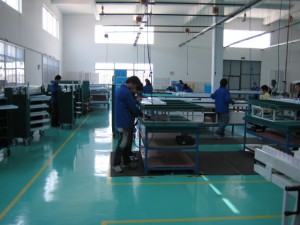
As I write about my personal experiences in China, I again want to note that they are strictly that—my “personal” experiences.  I am certain there are people, who have visited China who could contradict everything that I have, or will write.  The products I imported perhaps did not lend themselves to the typical “Sweat Shop” stereotype in terms of the factories that produced them.

However, I never saw or visited any factory that, in my mind, would fit that definition.

If the factories were not what I would call “modern”—they were certainly clean.  The employees (factory workers) wore uniforms at most places I visited.  They seemed proficient in their work and the products produced, and for the most part, were without quality problems—certainly no different from products produced in other countries.

There are more photos at Speak Without Interruption

Most of the factories tended to be in Industrial Parks that were quite large.  Usually, the factories were a “small city” into themselves.  There was housing provided for the employees on the factory grounds along with areas for recreation.  I don’t suppose there was another way of doing it, but I saw a lot of laundry hanging from outside the housing units plus commercial apartments buildings I saw throughout China.

Most factories had certifications that were either the same or similar to those held by US factories.  I saw elaborate R&D sections in most of the factories I visited.  The office space was usually as modern and pleasant as any I had visited in the US.

A ritual that I truly enjoyed was at every meeting when hot tea was served. Sometimes the owner or general manager had tea to make in their office and other times it was brought in.  However, I can’t recall a meeting where tea was not offered.

Being a non-smoker, another ritual I did not enjoy was in almost every meeting I attending most of the parties present smoked.  I heard a figure once that 85% of Chinese men smoked. I can attest that this is probably a good estimate.  Once inside the office or meeting room, the smoke became quite thick and uncomfortable for me; however, I was their guest and felt I could put up with the discomfort in the course of conducting my business affairs.

I have fond memories of my factory visits and discussions. I think the fact that I came to China, and met with the factory personnel aided my business immensely versus doing business in name only.

If you enjoy this piece by Bob Grant, you may want to read “A Contradiction of Times” at http://wp.me/pN4pY-bT


A Contradiction of Times

March 1, 2010

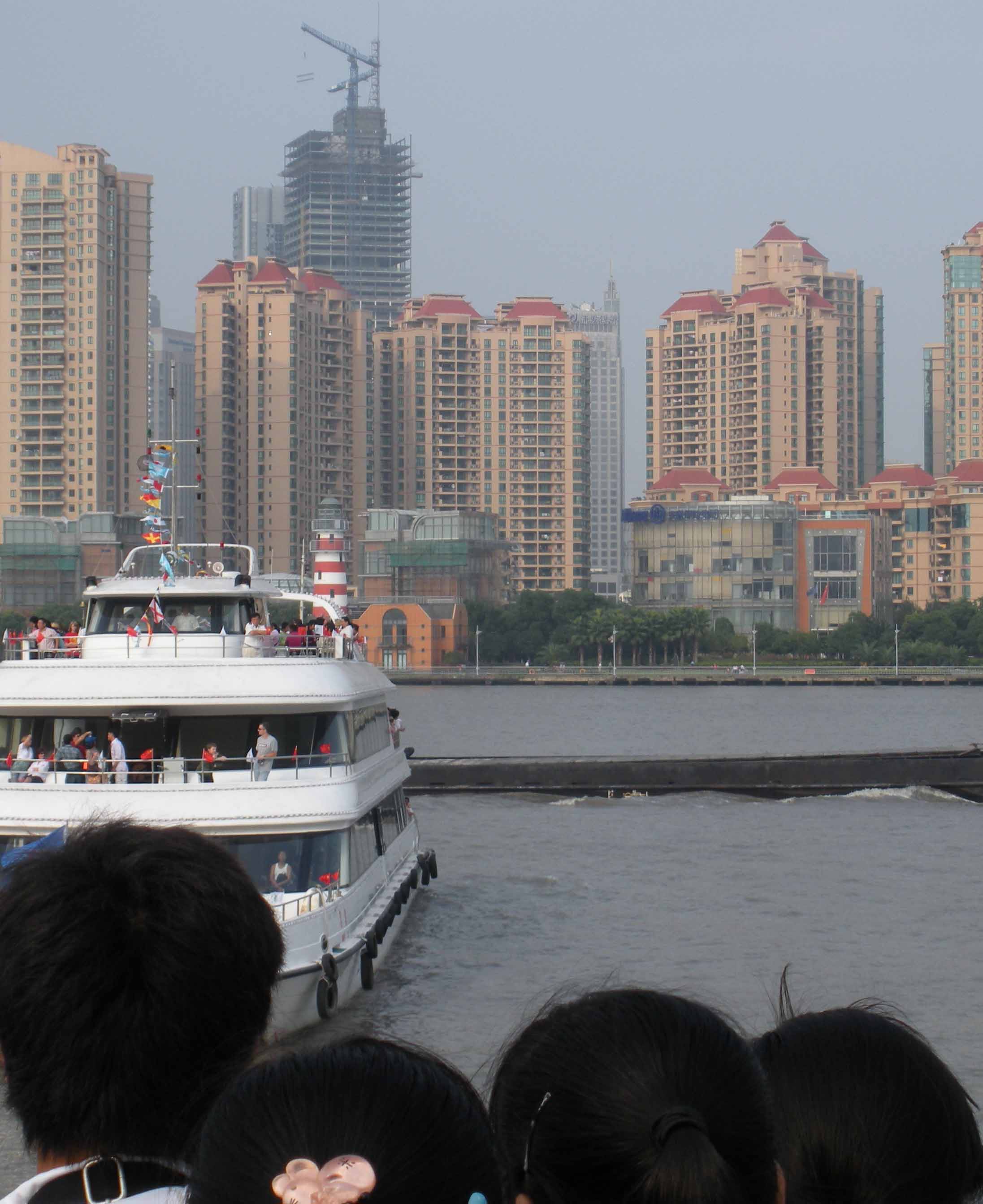
This guest post from Bob Grant had several photos.  If you want to see them, I suggest you click on the Originally Published link and visit Speak Without Interruption.  I will add two photos here that I took on my last trip, And yes, Bob, I also wish I had taken pictures every time I have visited China since 1999.  I took my first pictures in 2008. Digital makes it easy.

Shanghai

_____________

Originally Published at Speak Without Interruption on February 12, 2010 by Bob Grant — publisher/editor for Speak Without Interruption. Posted on iLook China, 3/1/10 at 12:00

During my trips to China, I wish I had taken more photos of the places I passed, to and from the factories I visited.  In lieu of those photos, I am going to mix some that I found on the Internet with those that I took.

The one phenomenon that I experienced was the contradictions in times as I passed through the cities and into the countryside and back again.  As I have mentioned in earlier postings, I have been traveling to China since 1998.  My time spent there was mainly for business purposes—I rarely took time for sightseeing.

Guilin

However, it was the “everyday” sights that interested me the most—not the so called tourist spots of which China has many.  I would pass from new building construction to old crumbling buildings in a matter of blocks.  I would drive by places in the countryside where it appeared to me that people were living the same way they had for millions of years.  We would drive from beautiful multi-lane highways to rutted brick and dirt roads in a matter of miles.  Workers were sweeping the freeways and other roads with large straw brooms.  Everywhere I looked, I could see new and old in a single setting—a large high rise apartment building next to agricultural areas where people were working the land by hand and animals.

Our office was in Bao’an, which is a suburb, if you will, of Shenzhen which is in southern China across from Hong Kong.  Here is a photo of the view from our office.  Shenzhen has around 14 million people—according to the sources I checked—and it was nothing but swampland almost 30 years ago when it was designated China’s first economic zone. 

The construction that goes on in this and other larger cities is unbelievable. 

However, we visited one factory in what I would call the countryside where the owner was enticed to build a new factory because of the inexpensive cost of the land—somewhere around $4 per acre as I recall as the government wanted to build up business in this rural area. 

This factory was in an extremely picturesque location and from the owner’s balcony, I took a photo of an older boat going down the river.  It reminded me of how the setting (or view) must have been centuries ago.  China has a tremendous amount of history associated with their country—I could see it, in many ways, as I looked out the vehicle window passing to and from our meetings during my numerous visits in country.

I certainly found China to be a country in transition—but as a visitor—I hope they never modernize their country to the extent that it is no longer a Contradiction of Times.

If you enjoyed this piece by Bob Grant, you may want to read these guest posts
I have a Love Affair with China and its People 
http://wp.me/pN4pY-5p

I Am Not the Manchurian Candidate
http://wp.me/pN4pY-6o

I ate no Dog, I Ate no Cat http://wp.me/pN4pY-8y


My Big Day Off – In China

February 25, 2010

This guest post from Bob Grant is a long piece with a lot of pictures.  If you want to see more of  Hangzhou and the Westlake, I recommend that after you read the first two paragraphs, you click on the link and visit “Speak Without Interruption.”  My wife and I have visited this city and lake several times over the years and I enjoyed Bob’s piece about his visit and had a few good laughs.

Originally published at Speak Without Interruption on February 11, 2010 by Bob Grant — publisher/editor for Speak Without Interruption

Below is something that I sent to my family and they all said they liked it.  However, they are family and what else could they say?  I have a manager/partner in China whose name is David – we have associates named Eric and Uncle Wong.  I live in Missouri and my relatives live in Wyoming.  This sets the stage for the following recap of My Big Day Off – In China:

We found ourselves on a Saturday in a city I have visited before named Hangzhou (Han-Joe) with no appointments and time on our hands before our plane departed for Shenzhen (Sin-Gin).  There is a lake in Hangzhou named West Lake.  Not a very original name for the Chinese, but using Chinese logic, I am certain – somewhere – there is a North Lake, South Lake, Southeast Lake, Southwest Lake, South South Lake – you get the picture.  The possibilities are endless.
 
David said, “Let’s take a boat ride.”  Great – sounded like a good idea.  Sitting quietly in a boat watching the countryside and relaxing – NOT.  Think Progressive Dinner.


Flying the Friendlier Skies in China

February 22, 2010

Originally published at Speak Without Interruption on February 10, 2010
By Bob Grant — publisher/editor for Speak Without Interruption

When I first started going to China, I was warned not to fly on Chinese domestic airlines.  I was told they were old, cast-off planes or old military planes, and that people were crammed into each plane with barnyard and other animals.  Before I felt daring and took a domestic flight one day, I was under the influence of yet another case of Chinese stereotyping. 

In all honesty, over the years, I have not had an uncomfortable or unpleasant flight anywhere inside China.  To get to our meetings we had to fly quite a bit.  We went, mainly, to cities up and down the eastern coast; however, we did fly occasionally to inland locations.  Some flights were long—some were short—all were without mishap.

Chinese Stewardess Photo courtesy of Bob Grant

I found the service provided, once inside the plane, to be exceptional.  I was always greeted in English even if I was the only non-Chinese on the flight, which occurred many times.  I was even handed Chinese newspapers in English. The flight attendants were quite efficient. On most flights, we received drinks, a snack, more beverages, a hot Chinese meal (which was always good), and then a last set of beverages.  I never paid extra for my checked luggage, the snacks, drinks, meals or great service.

I was also impressed with the screening, security, and overall terminal experience.  There “are” many people in China—most seemed to be flying on the same days that I flew.  However, in going through the document check (passport for me—identity cards for my Chinese associates) and then the security check which is similar to the security checks I have been through in other countries including the US, I found the process to be quite efficient.  I am an “early get to the airport” type of guy—my Chinese associates are not.  They gave me much concern on numerous occasions when we would arrive at the airport a half-hour before our plane departed.  Fortunately, we never missed our flight and never really had to run to catch it. We went through all stations in such an efficient manner that I should not have bothered to worry (but I always did).

Again, as with my other posts regarding China, I can only speak to my own experiences.  I am certain other travelers have horror stories about flying domestically within China.  My main reason for offering this insight is, for me, another example of incorrect information when it came to China, its people, and its functioning.

If you would like to read other guest posts by Bob Grant, start with They All Look Alike.