A Matter of Distance and Perspective

July 7, 2010

President Obama demonstrates that he does not understand the Chinese thought process in his response to President Hu Jintao of China over how to handle North Korea’s recent sinking of the Cheonan, a South Korean naval ship.

The New York Times Asia Pacific section reports that President Obama has accused Beijing of “willful blindness” toward what North Korea has done.  Some American officials say this was an act of war. Obama indicated the way China is handling this would not solve the problem.

There are two voices to pay attention to. Leon E. Panetta and China’s spokesman, Qin Gang. Mr. Qin said, “China is a neighbor of the Korean Peninsula, and on this issue our feelings differ from a country that lies 8.000 kilometers distant. We feel even more direct and serious concerns.”

Leon E. Panetta, the Director of the Central Intelligence Agency, said he believed that the sinking of the Cheonan was part of a succession struggle in North Korea.”

America tends to handle crises of this kind like a bull in a China shop, and what gets broken doesn’t hurt the US homeland. China, on the other hand, will handle this issue like delicate surgery.  One wrong move could end in disaster.  After all, who is closer to that nuclear bullring and how can Obama understand when China’s shoes won’t fit his feet?

See China and North Korea

_________________________

Lloyd Lofthouse is the award-winning author of the concubine saga, My Splendid Concubine & Our Hart. When you love a Chinese woman, you marry her family and culture too. 

Sign up for an RSS Feed for iLook China


Circular Thinking and Arrows

June 10, 2010

The school where I taught had students from more than a dozen nationalities. For that reason, I attended in-services to become aware of cultural differences.  I learned that Westerners think as an arrow flies—straight.  However, those from the Middle East and Asia think in circles as in figurative language with possibly more than one meaning.

This means that when someone from the Middle East or Asia says or does one thing, he or she may mean something different.

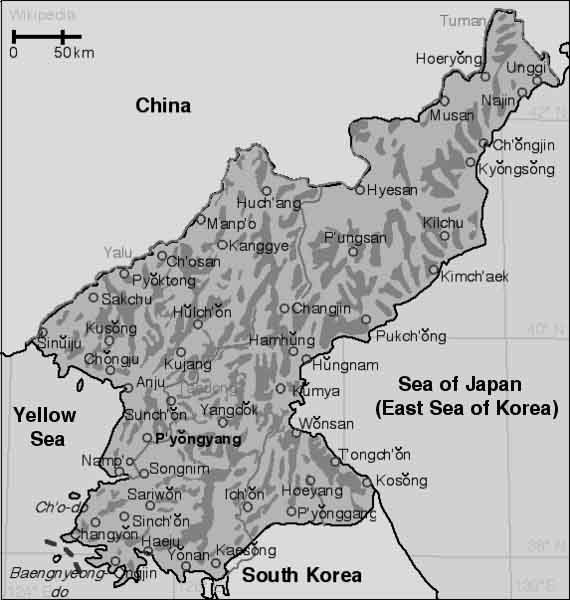
North Korea Map

Recently, China has been under global pressure to condemn North Korea for the sinking of a South Korean warship on March 26 that killed 46 sailors. The Christian Science Monitor reported on June 8 that China has  blamed North Korea for killing three of its citizens and arrested a North Korean government official for drug trafficking—something unheard of before.

Could this be China’s circular way to pressure North Korea to admit sinking the South Korean ship or to stop threatening war and return to the peace table? North Korea relies on China for food and financial aid and if China has a reason to limit or stop that support, the stability of Kim Jon-il’s government would be threatened.

See China and North Korea

_____________________

Lloyd Lofthouse is the author of the award winning novels My Splendid Concubine and Our Hart. He also Blogs at The Soulful Veteran and Crazy Normal.

Sign up for an RSS Feed for iLook China


China and North Korea

May 27, 2010

Due to the latest tension between North and South Korea over the sinking of a South Korean navy ship by North Korea, China has been asked to step in and help. However, China’s response has been for the “relevant parties” to “calmly and properly handle the issue and avoid escalation of tension.” Source: Politics News

If China is reluctant to be sucked into the latest North Korean conflict, what could be causing this response? One reason might be that China has a history with Korea going back to the Tang Dynasty in 688 AD, when there was an alliance with Silla, a Korean state.

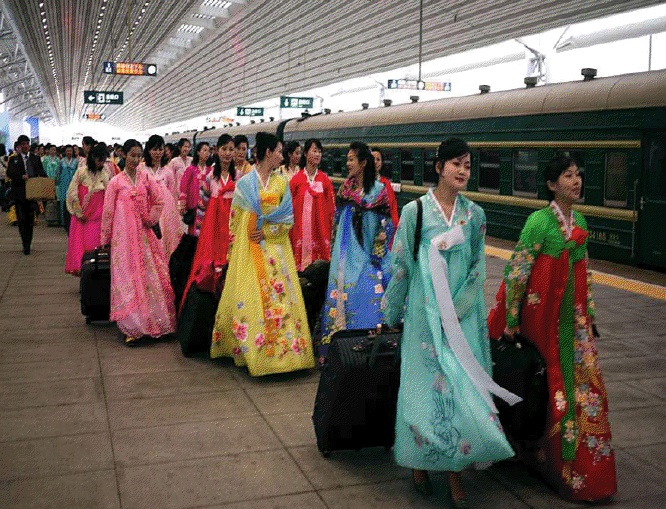
North Korean National Musical Troupe currently visiting China performing “Dream of Red Mansion” (adapted from Chinese classic novel).

Then it could be because Chinese culture, written language and political institutions have had an influence in Korea since the 4th century and in the 14th century, Korea came under the influence  of Confucian thought influenced by Buddhism and Daoism (Taoism).

China’s reluctance to put public pressure on Pyongyang to step off the warhorse might be because the Chinese feel it would be like pressuring a family member. A 1,700-year old relationship might have more weight than the one China has with America that isn’t even forty yet. However, measuring that weight may also depend on the trillion or more China has invested in America.

Punish North Korea or Not?

_______________

Lloyd Lofthouse is the award-winning author of My Splendid Concubine [3rd edition]. When you love a Chinese woman, you marry her family and culture too. This is the love story Sir Robert Hart did not want the world to discover.

His third book is Crazy is Normal, a classroom exposé, a memoir. “Lofthouse presents us with grungy classrooms, kids who don’t want to be in school, and the consequences of growing up in a hardscrabble world. While some parents support his efforts, many sabotage them—and isolated administrators make the work of Lofthouse and his peers even more difficult.” – Bruce Reeves.

lloydlofthouse_crazyisnormal_web2_5

Subscribe to “iLook China”!
Sign up for an E-mail Subscription at the top of this page, or click on the “Following” tab in the WordPress toolbar at the top of the screen.

About iLook China

China’s Holistic Historical Timeline


Jobless in America and Angry at China

May 17, 2010

When the economy tanks and Americans lose jobs, I often read or hear that it’s China’s fault.  Timothy V, a typical China basher that I’ve been debating on Gather, is an example. Using China as a scapegoat for lost jobs in America appears to be a popular pastime.  After all, many in America need someone to blame for the hard times.

The truth is that more jobs have been lost to Mexico and Canada than to China. Citizen.org says that because of NAFTA, Americans lost 3 million manufacturing jobs to Mexico and Canada…

The Economic Policy Institute says that between 1997 and 2006, the trade deficit between the U.S. and China could have supported 2,166,000 jobs. This report doesn’t say that manufacturing jobs were lost in America to China. It means that when China joined the WTO (World Trade Organization), jobs were created for Chinese workers that might have gone to the United States. 

What happened after America’s economic bubble popped in 2008? CNN reported that 2009 was the worst year for jobs lost in the United States since 1945.  A sobering U.S. Labor Department jobs report showed the economy lost 1.9 million jobs in the year’s final four months.

Do not forget who caused the current global economic crises and those job losses. “Global Issues.org” describes the crisis that was caused by greed in America.

If you believe someone like Timothy V, those job losses should be blamed on China, but he is wrong. The BBC reported that Chinese migrant factory job losses mount. A Chinese government official, Ma Jian Tang, told reporters in January (2009) he thought roughly 5% of the country’s 130 million migrant workers had returned to their villages after losing jobs. (Note: I wonder why I couldn’t easily find this from an American news source.)

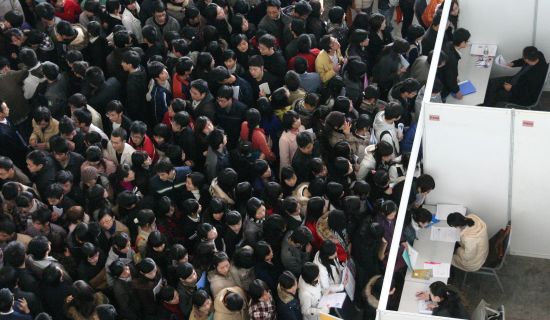
Out of work in China

In fact, a Chinese government survey revealed that 20 million migrant (factory) workers lost jobs, posing a risk for social instability. Some 15.3 percent of China’s 130 million migrant factory workers became jobless. Since the American induced global economic crisis in 2008, Beijing says about 70,000 factories nationwide have closed.

How can anyone in China be stealing jobs from Americans? Do I need to mention the millions of jobs lost to illegals that cross America’s Southern border and take hard, low-paying jobs that Americans don’t want? According to this report from NPR, that number is about 12 million.

When I was fifteen, I started my first job washing dishes in a department store coffee shop that served lunch and dinner and I worked nights and weekends there for three years while attending high school. There were several of us doing that job, and we were all American born teens. Before I joined the US Marines, I worked in a car wash, a McDonald’s and other jobs that most Americans won’t touch today. In Steinbeck’s novels, the farm workers he writes about were mostly poor Americans who went into the fields to plant and pick—not illegals from south of the border.

In fact, the jobs are there but too many Americans won’t consider them because they won’t pay for an American middle-class credit card driven, consumer lifestyle where people eat out more than they eat in and everyone “has” to have the American dream.  Can’t buy that with low wages.

This has happened before. After World War II, American jobs were lost to Japan and Germany.  Then after the Korean War, more jobs were lost to South Korea and Taiwan as they built factories.  In the 1950s, GM, Ford and Chrysler were building and selling about 90% of the cars and trucks globally.  Then Toyota and VW arrived in the United States. Who was stealing US jobs then?  It wasn’t China.

In reality, it’s all about finding a scapegoat to slaughter while the guilty quietly slip away.

Read about American Hypocrisy

____________________________

Lloyd Lofthouse is the author of the award winning novels My Splendid Concubine and Our Hart. He also Blogs at The Soulful Veteran and Crazy Normal.

Sign up for an RSS Feed for iLook China


Another Opinion about China’s Trade Surplus

May 14, 2010

China has an estimated 2.4 trillion in foreign reserves and recently, there have been accusations from American politicians and in the Western media, that China has been manipulating the exchange rate and costing Americans their jobs.

In a report on Vox (Research-based policy and commentary from leading economists), Zheng Song, Kjetil Storesletten and Fabrizio Zilibotti claim they can prove that China did not gain this huge trade surplus from manipulation of the exchange rate.

Chinese Currency

Instead, they will offer proof from similar economic growth in South Korea and Taiwan that both resulted in large surpluses from trade.

The three economists wrote that in the second half of the 1980s, South Korea saw booming growth and a series of large current account surpluses. In addition, Taiwan experienced large trade surpluses in the 1980s. Since both South Korea and Taiwan are smaller than China, their trade surpluses did not draw as much attention as China’s trade surplus has.

The authors of the study concluded that the call for trade sanctions against China might be unwarranted as well as dangerous.

Read more about America’s Assault on China’s Currency.

______________

Lloyd Lofthouse is the award-winning author of the concubine saga, My Splendid Concubine & Our Hart. When you love a Chinese woman, you marry her family and culture too.

If you want to subscribe to iLook China, there is a “Subscribe” button at the top of the screen in the menu bar.