The Opium Wars in the 19th Century (1800s)

June 28, 2010

China began the 19th century confident of its superiority over the rest of the world.  China’s population numbered 400 million. The Qing (Manchu) Empire controlled the world’s biggest economy.  China enjoyed a favorable balance of trade with the West—receiving a huge amount of money for its silk, porcelain, and tea.

By 1800, the British consumed 10,000 tons of tea annually.  So much money poured into China, that one Chinese merchant became the richest man in the world, and all foreign business with was restricted to one city, Canton.

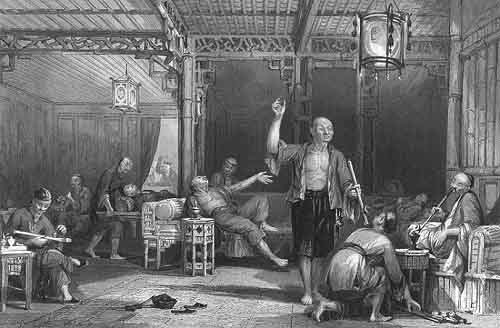
However, Britain had a product to reverse that balance of trade—opium. The British shipped opium into China and up its rivers to almost every part of China.  So many became addicted to the drug, the stability China was threatened.

Then in 1839, the Emperor acted to stop the opium trade. Lin, the man in charge, wrote to Queen Victoria asking for her help. Ignored by Great Britain, Lin resorted to confiscating the opium and destroying it, which led to the Opium Wars started by Britain and France, who respected nothing but force. China lost the war and was forced to pay for a war they did not want and did not start.

In the British parliament, William Gladstone criticized his government calling the Opium war a disgrace.

See Mao’s War Against Illegal Drugs

______________

Lloyd Lofthouse is the award-winning author of the concubine saga, My Splendid Concubine & Our Hart. When you love a Chinese woman, you marry her family and culture too.

If you want to subscribe to iLook China, there is a “Subscribe” button at the top of the screen in the menu bar.


Mao’s War Against Illegal Drugs

June 25, 2010

From The Opium Monopoly by Ellen N. La Motte, we learn how opium addiction became an epidemic in China. Although The Chinese knew about opium for more than a thousand years, it wasn’t until the Portuguese arrived in the 18th century that  the Chinese used it as a drug by smoking it. Merchants from Britain, France, Portugal, America and other nations became the drug cartels that plagued China into the 20th century.

In 1729, the emperor issued the first anti-opium edict, but the supply of opium flooding China went from 220 chests in 1729 to 70,000 in 1858.

It is estimated that before 1950, as many as 20 million Chinese were addicts. Then Mao had the Red Army execut the drug dealers and forced millions of addicts into compulsory treatment.

Opium growers, who did not want to comply, fled into the Golden Triangle Region of Southeast Asia where many of Chiang Kai-shek’s nationalist troops had gone to escape defeat. Those generals also did business with the CIA, and American soldiers in Vietnam became the new customers. It is estimated that at least 20% of the almost nine million American troops that served in Vietnam became addicted.

China remained free of drugs until Deng Xiaoping declared, “Getting Rich is Glorious” and opened China to world trade. In 2003, it was estimated that China had four million regular drug users even with China’s strict laws concerning illegal drug use.

Sources: Opium and Illegal Drugs in China and How Maoist Revolution Wiped Out Drugs in China

To learn more about Mao’s China, see China’s Great Leap Forward

______________

Lloyd Lofthouse is the award-winning author of the concubine saga, My Splendid Concubine & Our Hart. When you love a Chinese woman, you marry her family and culture too.

If you want to subscribe to iLook China, there is a “Subscribe” button at the top of the screen in the menu bar.


Belching about China

June 20, 2010

I sometimes read opinions about China from individuals who should stay quiet.  Leo Hindery wrote one for The Huffington Post, which  is an example of an American castigating China from a Western cultural point-of-view.

These biased voices bother me and probably bother many Chinese too. Of course, Hindery has a right to voice his opinions, but most Chinese don’t understand that the American government has no control (at least we like to think so) of what appears in the American media.

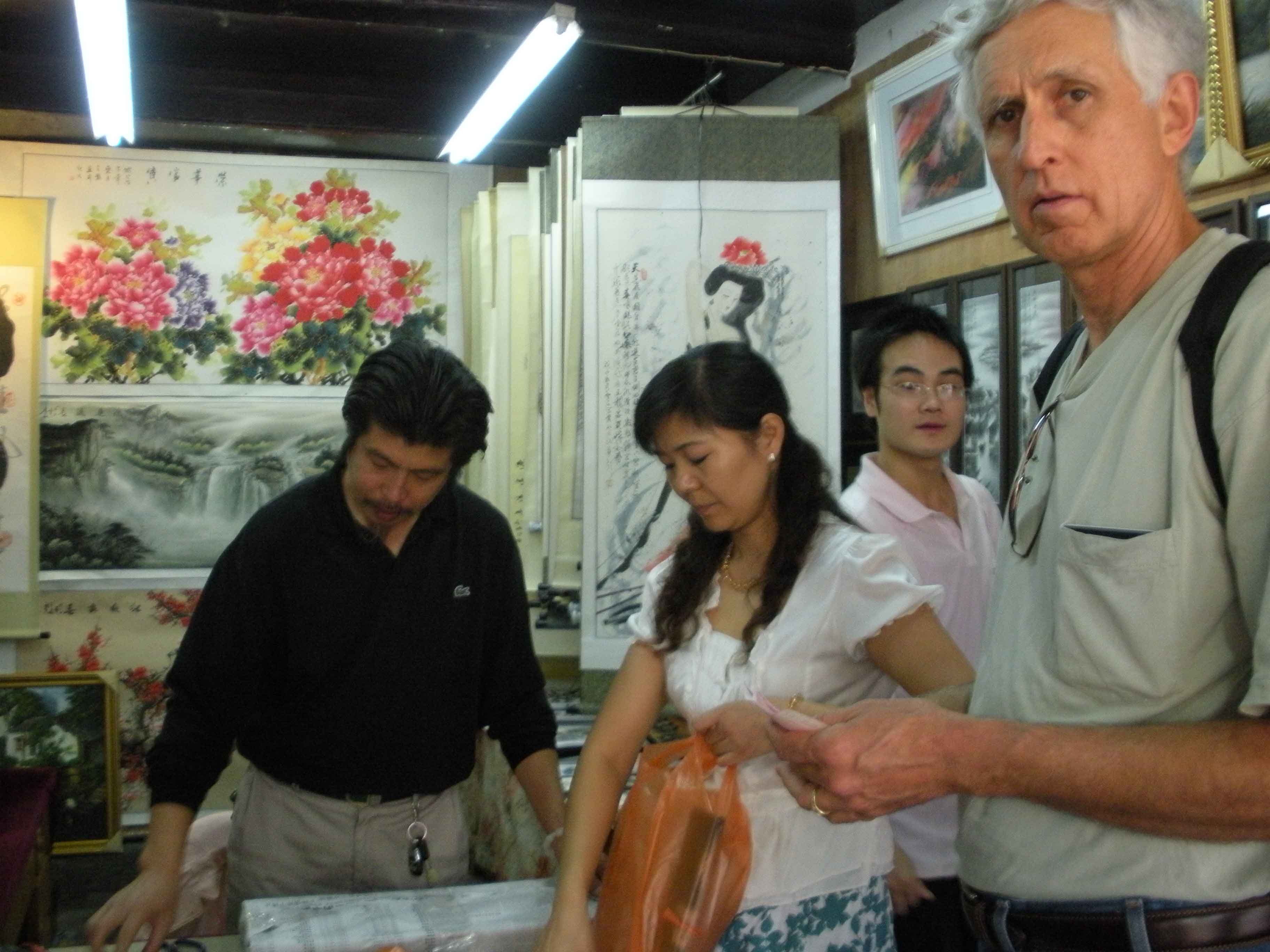
Xu Xiao-dong, in Zhouzhuang, China, an artist in his shop earning a living without help from the American labor movement.

Since the media in China is the official voice of the government, many in China see the Western media the same way. Hindery says he is eager to see the “American labor movement smartly and creatively provide all the help to China’s workers that it can responsibly offer” to help Chinese workers earn more money along with better benefits. Considering what the American labor movement did for the US auto industry, that is a bad idea.

Due to Western meddling in China  during the 19th century, there were two Opium Wars  forcing British, French and American opium into the country along with Christian missionaries, which led to the Taiping Rebellion started by a Christian convert ending in 20 to 100 million killed. Then there was the Boxer Rebellion, a peasant uprising caused by meddling Christian missionaries, greedy Western businessmen and pompous politicians.

In fact, due to the West forcing China to open its doors, more than two-thousand years of Imperial rule ended leading to four decades of chaos and anarchy between 1913 and 1950 where millions more were killed.

My opinion is to let the Chinese fix China and leave the American labor movement out of it.

See China’s Labor Laws

______________

Lloyd Lofthouse is the award-winning author of the concubine saga, My Splendid Concubine & Our Hart. When you love a Chinese woman, you marry her family and culture too. 

If you want to subscribe to iLook China, there is a “Subscribe” button at the top of the screen in the menu bar.


When the News becomes Propaganda

June 5, 2010

As a teen in China, my wife saw news film showing American solders using spoons to dig eyeballs out of Vietnamese children—blinding them. This is one example of how easy it is to use lies to demonize an enemy.

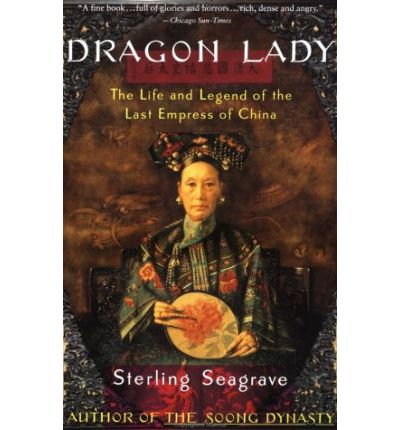
During the 19th century, to justify the Opium Wars and the brutal suppression of the Boxer Rebellion, the Western media demonized China and the Dowager Empress Tzu Hsi. Then, about a century later in “Dragon Lady”, Sterling Seagrave revealed that radicals and reformers who were in exile at the time spread lies saying the empress was an evil hag, and the Western media gobbled those lies up as if they were sweet chocolate.

In fact, a Western journalist, Dr. George Ernest Morrison was responsible for many of the slanders and half-truths about China that persist to this day.

In the June Smithsonian, one of those half- truths surfaced in 110 Years Ago, Sobby Boxers. The piece said the empress ordered the peasant’s known as the “Righteous and Harmonious Fists”, called Boxers by the Western Media, to kill all foreigners.

What it didn’t say was that the empress also told her military to make sure no foreigners died and water and food was carried to the legations through tunnels while the “Boxers” thought the empress was on their side.

The politics were complex. The Empress had nothing to do with the uprising. It was a popular peasant uprising against Christianity and the foreign powers. If she hadn’t supported the “Boxers”, the peasants might have turned on her.

Also see Media Slugfest Using Taiwan

_____________________

Lloyd Lofthouse is the author of the award winning novels My Splendid Concubine and Our Hart. He also Blogs at The Soulful Veteran and Crazy Normal.

Sign up for an RSS Feed for iLook China


Love, Business and War

June 2, 2010

What happens today will be history tomorrow. With that in mind, I copied this opening quote from what Willi Paul wrote for Sustain Lane.com, “By stealing our technology, copying our products, forcing us into a trade deficit, manipulating their own currency and then buying our debt, the Chinese may win the long-term war of globalization.” Paul’s rant goes on with examples of how the Chinese are unscrupulous spies and thieves.

Western Opium destroying Chinese lives

If America and the rest of the Western world are in a trade war with China, the Chinese did not fire the first shot. In the 18th century, the powerful Qianlong Emperor rejected proposed trade and cultural exchanges with the British Empire and said the Qing Empire had no need for goods and services the British could provide.

The Western powers did not like being told “no”, so during the 19th century two Opium Wars were fought with China to force the door to trade and Christianity open—I recall that Japan was forced to trade with the West too, which resulted in the bombing of Pearl Harbor leading to World War II.

In fact, those trade wars started by Western powers with China in the 19th century aren’t over yet and the rules of fair play do not apply to love, business and war.

See The Reasons Why China is Studying Singapore

_____________________

Lloyd Lofthouse is the author of the award winning novels My Splendid Concubine and Our Hart. He also Blogs at The Soulful Veteran and Crazy Normal.

Sign up for an RSS Feed for iLook China