China’s god Culture Gone

May 27, 2010

For millennia, China’s emperors were considered the Sons of Heaven and worshiped as such.  When referred to as the Son of Heaven, a title that predates the Qin unification (221-207 BC), the emperor was recognized as the ruler of “all under heaven”. 

After Imperial China ended, Sun Yat-sen established a brief Chinese republic soon brought to an end by competing warlords, who plunged China into anarchy and violence. It wouldn’t be until 1928 that Chiang Kai-shek would become the victor and dictator of China and reestablish some order.

Mao won China in 1949 and stayed in power until his death in 1976. Mao has been called the modern emperor since he lived in the Forbidden City and ruled for twenty-seven years.  After Mao’s death, Deng Xiaoping and his supporters decided they didn’t want to have another god-like figure ruling China, and the Communist Party added amendments to the Chinese constitution creating term limits and an age limit. 

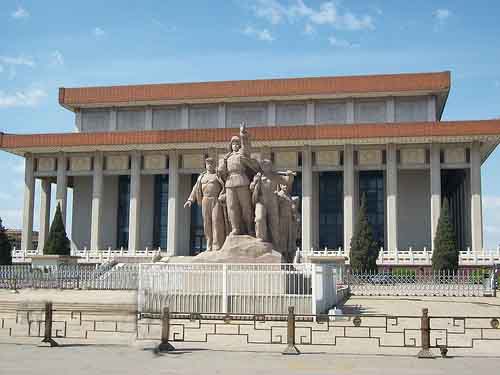
Mao's Tomb

Mao is still revered in China.  His tomb was built in Tiananmen square and his body is preserved beneath the tomb in refrigeration.  Visitors may pay a small fee to visit the tomb and possibly see China’s modern emperor on display behind bulletproof glass with attending guards.

Learn more about China’s Modern Dynasty

____________________________

Lloyd Lofthouse is the author of the award winning novels My Splendid Concubine and Our Hart. He also Blogs at The Soulful Veteran and Crazy Normal.

Sign up for an RSS Feed for iLook China


China’s Stick People

May 11, 2010

I’m always looking for information about China, and I hit gold with the May 8 The Economist. Click the link to read the entire piece or read this summary. I bought the magazine.

China has two classes—rural and urban.  The urban people have prospered for the last thirty years as China built a middle class.  Most rural Chinese have not been able to benefit from the booming economy and are getting restless.

Rural China

Rural land outside China’s cities belongs to collectives. When Mao won China, the Communists divided the land among villages—not individuals. Individuals do not hold title to farmland and cannot sell land that no one owns.

China saw what was happening in India when farmers sold their plots to developers.  Rural people in India flocked to the cities and built sprawling slums. To avoid that, the Chinese government created a system to keep rural people on their farms.  Another motivation was fear of another famine like the one that struck China from 1959 to 1961 killing millions from starvation. If farmers left the fields for a better lifestyle in cities, that nightmare might return.

Currently, an experiment is being tried in rural areas outside Chongqing to see if the land can be divided among individuals while increasing food production. Since the government still hasn’t figured out how to make the transition smoothly, don’t expect rural land reforms to happen quickly.

Discover China’s middle class expanding

_______________

Lloyd Lofthouse is the award-winning author of My Splendid Concubine [3rd edition]. When you love a Chinese woman, you marry her family and culture too. This is the love story Sir Robert Hart did not want the world to discover.

Subscribe to “iLook China”!
Sign up for an E-mail Subscription at the top of this page, or click on the “Following” tab in the WordPress toolbar at the top of the screen.

About iLook China


Freedom’s Evolution

May 11, 2010

A debate took place on Left of the Right, not by Devin Barber, the Blog’s host, but between me and another person who called him or herself Timothy. This person made comments calling me an asshole and a propaganda spewing scumbag among other insults, because he disagreed with my opinions regarding China even though I supported most or all of my opinions with facts. You may read the entire debate by clicking on the above link to see an example of Timothy’s conservative beliefs.

One of my last responses was a comparison between America and China and the trail to freedom that both counties have followed and are still traveling. What follows is a slightly edited version.

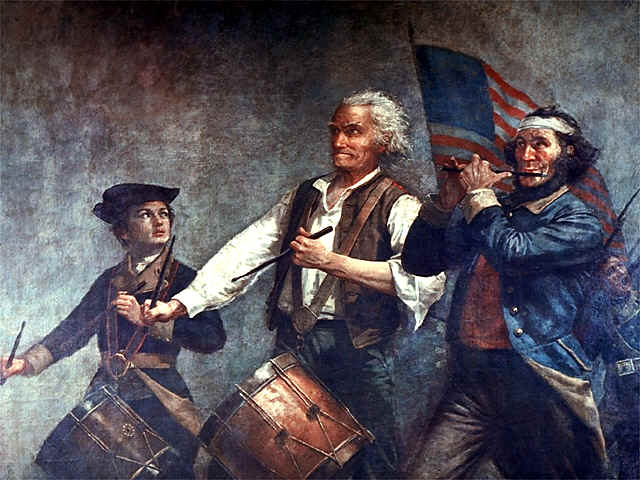
In 1781, the American War for Independence from the British Empire ended, but there was still slavery in the Southern States.
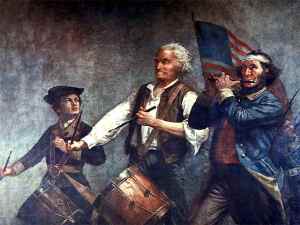
American Revolution

In 1861 to 1865, (eight-four years after America’s revolution) America divided and fought a bloody Civil War that ended slavery. More than six hundred thousand Americans died in that conflict. 

However, women still could not own property or vote. Women were considered chattel.  The women’s rights movement started in 1848. In 1920 (seventy-two years later), the 19th Amendment to the US Constitution granted women the vote.

American history is full of facts about how people of color were discriminated against and were second-class citizens until the Civil Rights Movement between 1955 to 1968.  It took one-hundred-and-three years after the end of slavery to end discrimination against people of color—at least legally.

_________________

The bloody and painful evolutionary trail to freedom in China started in 1913 when warlords ended Imperial rule.  Eventually a dictatorship replaced the warlords.  The Kuomintang under Chiang Kai-shek was a dictatorship under martial law even in Taiwan until the 1980s when the first election was held there.

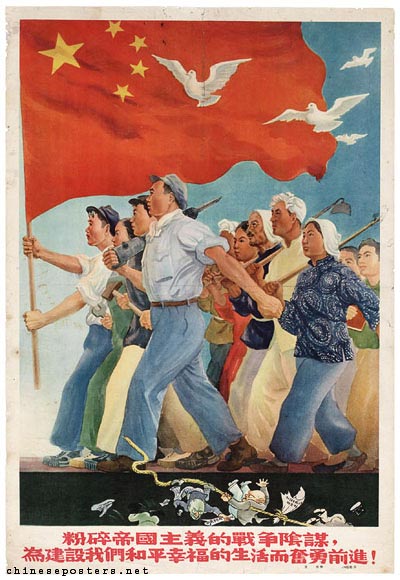
Another step back was World War II with the Japanese invading China that cost about 30 million Chinese their lives. That ended in 1945, followed by the revolution between the Communists and Kuomintang dictatorship.  Soon after Mao won that revolution in 1949 and took over China to become China’s modern emperor for twenty-seven years, he declared that women were equal to men.  Then there was the Great Leap Forward, which was more like two leaps back followed by the Cultural Revolution that cost another thirty-seven million Chinese their lives.
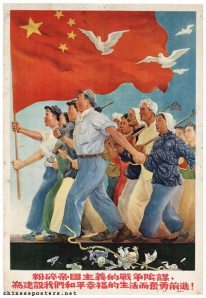
Chinese Revolution

After Mao died in 1976, the Communist Government under Deng Xiaoping’s guidance rewrote their constitution, repudiated Marxist, Maoist revolutionary doctrine and opened China to the world launching a market economy, which is on steroids today.

Since that new start, amendments have been added to the Chinese Constitution. Read it carefully and you will see that freedom of speech in China is limited by a constitution that is taught in the schools and in the factories. Although some Chinese dissidents have been arrested for speaking and jailed with other criminals, 98.8% of the population remains free and appears to have no problem obeying that law.

America’s journey to become a nation where ALL citizens are protected by the Bill of Rights took one-hundred-and-eight-seven years from 1781 to 1968.

China, after Mao, has had only thirty-four years to evolve.  Who knows where China will be in another century and a half. Timothy sees the glass half-empty. Since I watch China, I’ve seen the small steps that China has been taking, and I see the cup half-full and improving with time. I hope I’m right, because Timothy seems to believe that China is evil and will invade the United States in a few decades. What do you think?

____________________________

Lloyd Lofthouse is the author of the award winning novels My Splendid Concubine and Our Hart. He also Blogs at The Soulful Veteran and Crazy Normal.

Sign up for an RSS Feed for iLook China

Second China Quiz

May 8, 2010
The answers may be found anywhere in the first three hundred posts for this blog.  The first person to answer all the questions correctly will win a free copy of either My Splendid Concubine or Our Hart.

This prize will be open until the first person answers all the questions correctly. Write your answers in a comment to this quiz.  Make sure to number the answers so they match the questions and provide an e-mail address for me to contact you. Each question has a link that will take you to where you may find the answers.

China

1. What does the First of all Virtues mean?

2. What is the Chinese attitude toward health care?

3. What was the life expectancy for the average Chinese person before the Communists won China in 1949?

4. What was the debate on salt and iron about?

5. Chinese Internet users are _____________ as likely to have blogs as Americans. (fill in the blank)

6. (From Similar “Oily” Interests) What is Wahhabism and where does the money come from to pay for this?

7. What happened during Deng Xiaoping’s Beijing Spring?

8.  What happened to Deng Xiaoping’s son when he spoke out against the Cultural Revolution?

9. What vital key does China hold for humanity’s future?

10. How does Communist China treat its minorities compared to the way minorities have been treated in the United States?

11. Who was Faith Dremmer and what happened to her?

12.  What did Peter Hessler say about happiness?

13.  How many of the world’s smokers live in China?

14.  What is the name of China’s Oprah and how large is her audience?

15. What is the difference between China’s labor laws and United States?

16. What did Lin Yutang say about the Chinese and Christianity?

17. What did the first emperor of China consume that contributed to his madness and death? (This answer is in one of the nine linked posts in a series about Qin Shi Huangdi.) Why did Qin Shi Huangdi do this? (must answer both questions for # 17)

18. When the “Cult of the Dead Cow” gains access to your computer, what do they do?

19. Which issue of National Geographic magazine provides proof that Tibet was part of China for centuries before Mao’s invasion and reoccupation?

20. What is the name of the all-electric car being manufactured in a joint effort between Chinese and California partners?

____________________________

Lloyd Lofthouse is the author of the award winning novels My Splendid Concubine and Our Hart. He also Blogs at The Soulful Veteran and Crazy Normal.

Sign up for an RSS Feed for iLook China


Building Virtue

April 16, 2010

Regardless of the fact that the West calls the rulers of China Communists, it is clear that to the Chinese mind, the Mandate of Heaven shifted from Mao to Hua Guofeng and Deng Xiaoping and their predecessors. It will be up to China’s future rulers not to lose that mandate.

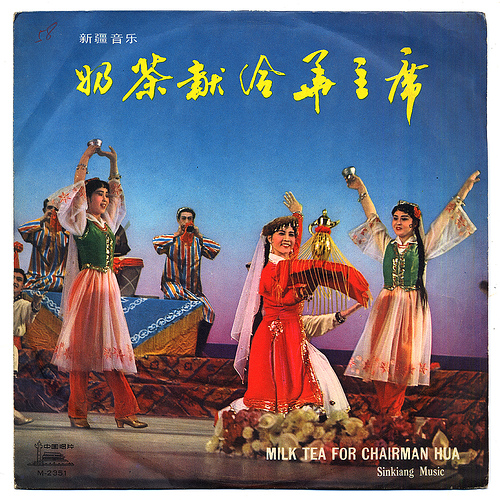
Milk and Tea for Chairman Hua

It doesn’t matter if the words ‘The Mandate of Heaven’ are invoked or not. It is obvious that the ‘Five Great Relationships’, as taught by Confucius, and the ‘Mandate of Heaven’ are infused in the Chinese thought process. Most born in China do not take a class to learn what this means, as students have to do in America to learn what the Declaration of Independence and the Bill of Rights mean. In China, one is raised with these philosophies in mind.

Piety, face, The Five Great Relationships, and the Mandate of Heaven are the foundation guide the behavior of the majority of Chinese.

The Western media and the political rulers of Western nations infer that Communism is evil because it is one party, (so-called) socialist political system, but most Chinese don’t see it that way.

To most Chinese, if the current rulers of China do their job and rule with the blessings of Heaven. The Western democratic political process is foreign to Chinese. To them, “Why change something that works? Leave it to Heaven.”

See The Mandate of Heaven http://wp.me/pN4pY-nc

 Sign up for an RSS Feed for  iLook China