China’s Capitalist Revolution (Part 2 of 9)

July 1, 2010

In 1978, Deng was elected leader of the Communist Party beating the Maoists.  His goal was to have China’s economy catch up with the West within 20 years. “In this new age we will focus our efforts on modernizing industry, agriculture, technology and national defense to transform the country by the end of the century in a Chinese way.”

The first challenge was to grow food for China’s starving peasants. During Mao’s failed programs, millions had died. At the end of 1979, peasants in Anhui had started a private farming system. In one year, food production had increased three fold.

Deng was happy to support whatever worked, but local party bosses resisted change after 30 years of Maoism. There was a saying, “We’d rather have the weeds of socialism than the fruits of capitalism.”

Deng surprised the Maoists by giving his blessing to the farmers of Anhui, and by 1981, Anhui was feeding itself. They said, “We’ve been liberated. It’s not like in the past when peasants were rounded up like an army.”

The next step was to modernize China’s industry and that meant China had to work with the United States. Deng also wanted and ally because of threats from the Soviet Union.

Return to China’s Capitalist Revolution Part 1 or go to Part 3

_________________________

 Lloyd Lofthouse is the award-winning author of The Concubine Saga. When you love a Chinese woman, you marry her family and culture too. This is the love story Sir Robert Hart did not want the world to discover.

To subscribe to “iLook China”, look for the “Subscribe” button at the top of the screen in the menu bar, click on it then follow directions.


China’s Capitalist Revolution (Part 1 of 9)

June 30, 2010

When Chairman Mao died in 1976, he left China in chaos due to the Cultural Revolution. Under Mao, who led the revolution and built the People’s Republic, millions had starved and died (due to poor decisions, droughts, floods, crop losses and a complete embargo by the United States). Deng Xiaoping, who overturned Maoism and taught the Chinese to love capitalism, succeeded him but not without a struggle.

Today, China has transformed the lives of many of its citizens and is challenging the world.  This BBC series is the story of how Communist China learned to love capitalism.  It is also the story of Deng Xiaoping—a survivor often punished by Mao, who refused to quit.

Unfortunately, for all the success Deng had in transforming China into a modern nation, his reputation was stained by what happened during the Tiananmen Square incident. During the demonstrations, Deng, who had been a military man most of his life, was faced with a choice between his modernizing instincts and his commitment to national stability to the party he had served for seventy years since 16.

By bringing wealth and stability to China, Deng defied those who said capitalism could not succeed without Western style politics.  He often said, “Our system has its advantages. We can make decisions quickly.”

If you enjoyed this, see The Roots of Madness or go to Part 2 of China’s Capitalist Revolution.

_________________________

 Lloyd Lofthouse is the award-winning author of The Concubine Saga. When you love a Chinese woman, you marry her family and culture too. This is the love story Sir Robert Hart did not want the world to discover.

To subscribe to “iLook China”, look for the “Subscribe” button at the top of the screen in the menu bar, click on it then follow directions.


Silence to Beauty

May 12, 2010

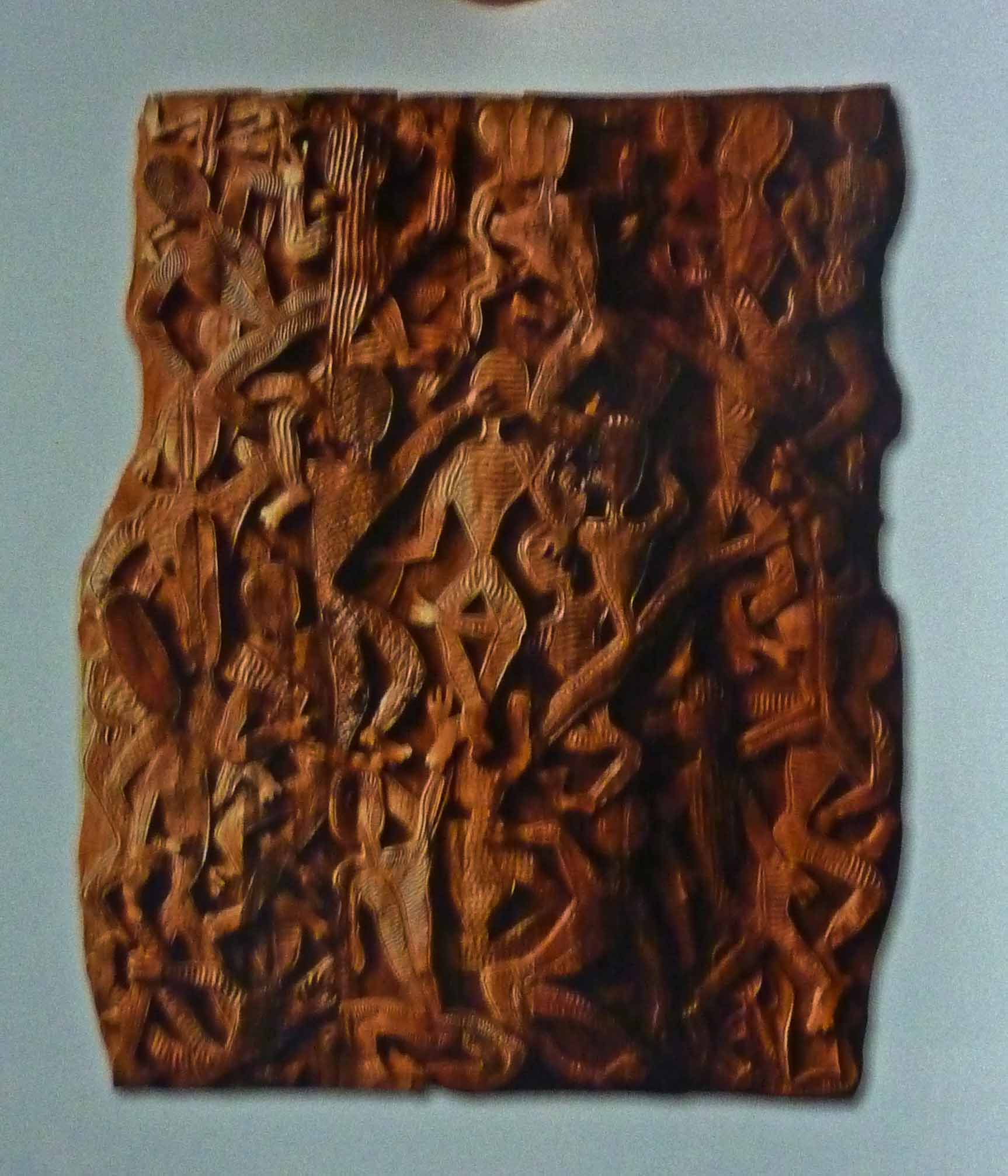
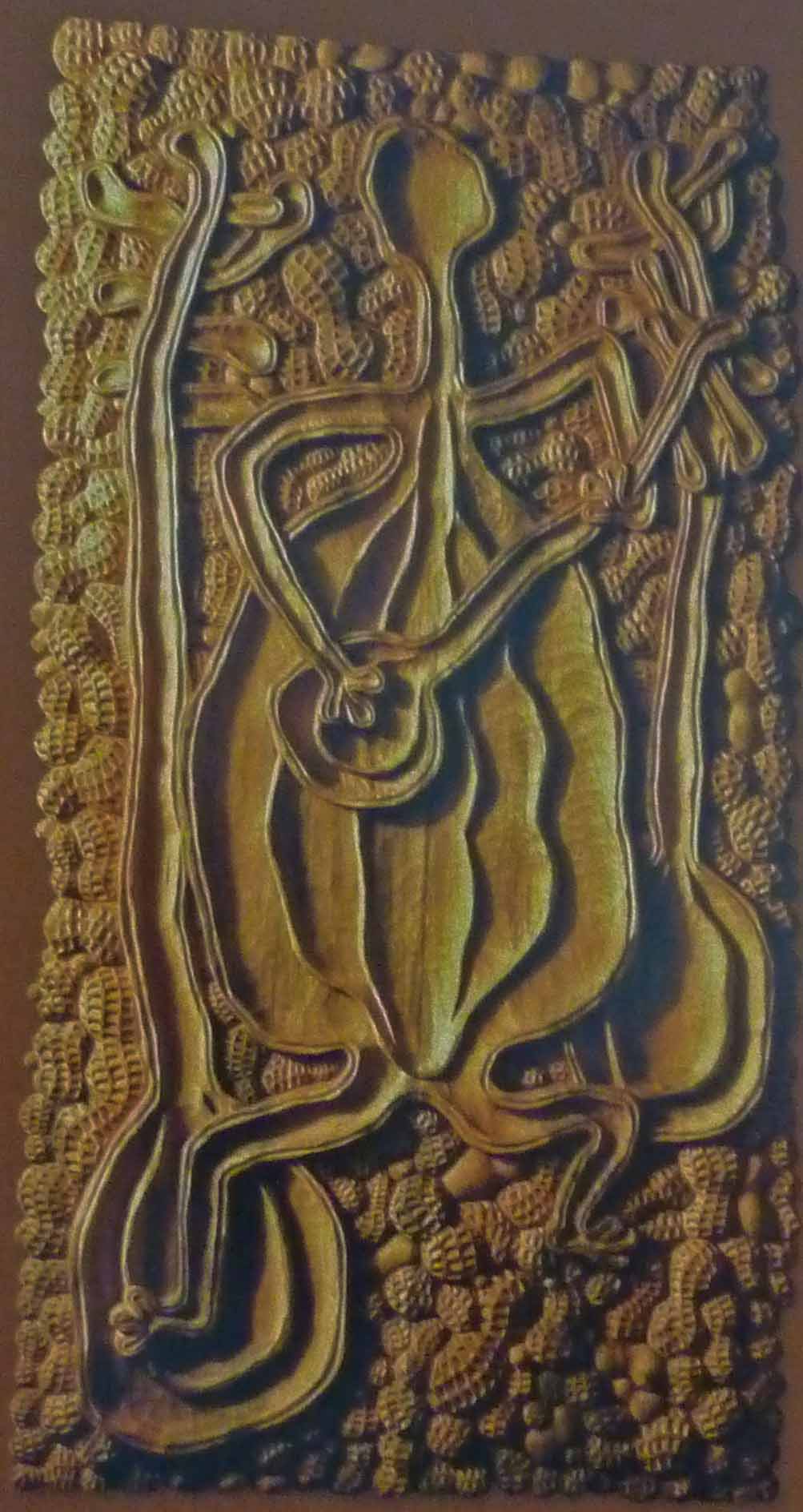
The art displayed in this post comes from artists, who are graduates of the Shandong Provincial Rehabilitation and Career School, an institute in China that trains young Chinese with disabilities. These artists are deaf.

In 1949, Mao Zedong launched the People’s Republic of China and ruled with an iron fist for almost three decades.

During Mao’s time, there was almost no free artistic expression in China unless the art served the propaganda needs of the state.

Zhang Guoli, Sons

After Deng Xiaoping opened China to a global market economy, the post Mao generation was introduced to Western art and theory.

Huang Jinpo, Earth

It wasn’t until the late 1980s and early 1990s that art from China started to emerge.

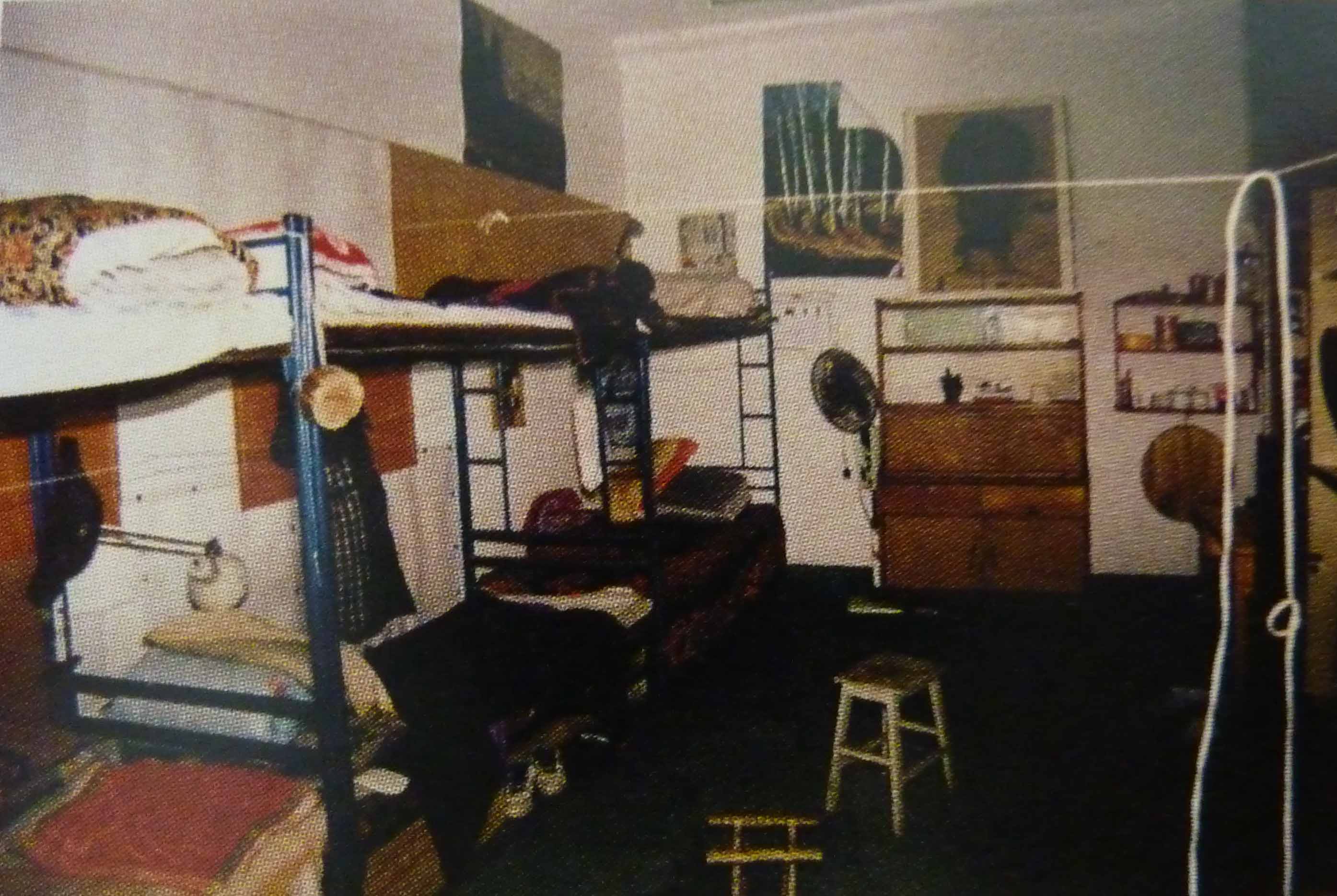
This is the dormitory where the artists live.

The photos in this post are presented with permission from “Embracing the Uncarved Wood, Sculptural Reliefs from Shandong, China“, which was made possible by a generous grant from the E. Rhodes and Leona B. Carpenter Foundation and with assistance from the Office of the Provost of Franklin & Marshall College. ISBN: 978-0-910626-04-0

Discover Chinese Yu Opera with Mao Wei-tao

______________

Lloyd Lofthouse is the award-winning author of The Concubine Saga. When you love a Chinese woman, you marry her family and culture too. This is the love story Sir Robert Hart did not want the world to discover.

To subscribe to “iLook China”, look for the “Subscribe” button at the top of the screen in the menu bar, click on it then follow directions.


The Orphan’s Life

April 2, 2010

More than 90% of babies in Chinese orphanages are girls. Prior to 1949, it was common for parents to murder girl infants. From the 1950s to the end of the 1970s, due to Mao’s leadership and a tough stance for women’s equality, the death rate went down. Then in the 1980s, with the population growing too fast, a desperate government implemented the one-child policy.

After that, many girl babies went missing or were abandoned to state-run orphanages. To end this tragedy, the government eventually allowed rural families to have two children per family—hoping for a boy.

The conditions in these rural, state-run orphanages are often not ideal. Girls, who are not adopted, usually end up being the caregivers for the younger children. Since these orphan caregivers were raised without the love of parents and siblings, they may not be loving themselves creating a cold environment to grow up in.

abandoned at birth

It isn’t as if China’s government has done nothing to stop a practice that has been around for thousands of years. During the 90s, tougher laws were passed but often ignored. Government inspectors were sent to rural areas to enforce these laws, but it isn’t easy controlling a population of 1.3 billion scattered over a mountainous country almost the size of the United States.

I will not criticize the Chinese government for these conditions. I’ve been to China and understand the challenges. What would you do if you had inherited a medieval country in 1949 that was bankrupt due to the Kuomintang looting the banks and treasury as they fled to Taiwan under American protection? Then there is a culture reaching back thousands of years where girls were considered worthless. That is a lot to overcome.

Discover Gendercide in China and India, and also see the conclusion of one orphan’s journey in Saying Goodbye

______________

Lloyd Lofthouse is the award-winning author of The Concubine Saga. When you love a Chinese woman, you marry her family and culture too. This is the love story Sir Robert Hart did not want the world to discover.

To subscribe to “iLook China”, look for the “Subscribe” button at the top of the screen in the menu bar, click on it then follow directions.


PayPal Drooling for China

March 24, 2010

“Ebay failed in China because it relies on one leader who did not understand the market at all: Meg Whitman. Meg Whitman is Ebay Mao Zedong. No one dare tell her the truth. She exports her cultural revolution and it dont work in China. She is clearly a smart lady but is a no-nothing about China, taken advantage of at all turns.”  Source: Playin’ With It

This struggle for the Chinese consumer reminds me of the infant who bangs on his plate sending food flying everywhere while he screams for something else.

PayPal in China

That brings me to PayPal. eBay/PayPal are one and the same. When PayPal first went after Chinese consumers they lost to Alipay, the online payment service operated by China-based e-commerce firm Alibaba Group.  Most Chinese will pay with cash before they use a credit card and this may be where PayPal tripped up the first time.

PayPal is back. This time forming an aliance with Union Pay, with Chinese consumers holding 2.1 billion debit cards. This partnership will make it easier for Chinese consumers to make transactions outside China and pay cash.  Did PayPal learn their lesson the first time? Source: Internet Retailer

See Doing Business in China http://wp.me/pN4pY-2Y