International Women’s Day

March 12, 2010

March 8, marks the 100th anniversary of International Women’s Day. Nations that officially honor women, range from China and Russia to Macedonia and Vietnam.

In Imperial China, women could not hold positions of power. They were considered “objects” to be sold into marriage or to serve men as concubines or prostitutes. However, while men ruled the world outside, women ruled the home. The head wife dictated who went where, how much money was spent on household needs, what education the children received, and ultimately the fate of the lives of the other wives and concubines beneath her.

When the Kuomintang ruled China, rural women were expected to stay home and care for the family, while women in the major cities were given a chance to have a formal education. When Mao came to power, he eliminated these differences between men and women. Afterwards, many women marched beside their fellow comrades in the same uniforms. They went to school and worked at jobs.

Today, Chinese women can be seen in all aspects of life. They are famous actors, accomplished musicians and skilled scientists. They are award-winning writers and politicians. Two successful Chinese women will be speaking at the Women in the World Summit  (starting the evening of March 12 to 14). The schedule of speakers and events shows that these two notable Chinese women will be speaking Saturday afternoon, March 13.

Wei Sun Christianson

Wei Sun Christianson, head of Morgan Stanley China manages all aspects of the firm’s China business. She has helped start many of the landmark privatizations critical to China’s economic progress.

Anchee Min

 Anchee Min is the author of the bestselling memoir Red Azalea, the story of her childhood in communist China. At age 17, Min was sent to a labor camp during Mao’s Cultural Revolution. In 1984, with help from a friend, Min went to America. At the time, she spoke no English, but within six months taught herself the language. Her next novel, Pearl of China, is a fictional account covering the 40 years Pearl S. Buck lived in China. The novel will be released in April by Bloomsbury.

Hillary Clinton will also appear. She said, the world “can’t solve problems of financial crisis, climate change, disease and poverty if half of the population is left behind.” The International Women’s Day doesn’t get much attention in the United States.

Discover China’s Modern Women

______________

Lloyd Lofthouse is the award-winning author of the concubine saga, My Splendid Concubine & Our Hart. When you love a Chinese woman, you marry her family and culture too. 

If you want to subscribe to iLook China, there is a “Subscribe” button at the top of the screen in the menu bar. 


Lessons from History

March 12, 2010

Most of the top men in China’s modern government are engineers. They think logically. They plan. For this reason, China has a powerful military to protect the country, and China is leading the world in green energy.

Prospect Hill

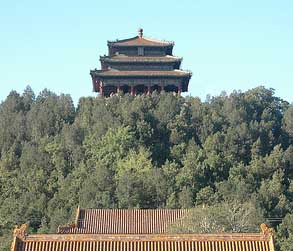
The last Ming Emperor, Ch’ung-Chen, hung himself from a tree on Prospect Hill when the Manchu claimed China.  Ch’ung-Chen failed. Instead of appointing ministers to different posts to help rule the empire, he tried to do all the work of government himself. The last Dynasty, the QING (MANCHU) 1644-1911, were not popular with the Han majority and there were brutal rebellions where millions died. The emperor before Ch’ung-chen, the T’ien-Ch’i emperor, spent most of his days doing carpentry instead of doing his job.

It appears that China’s current leaders learned from the mistakes of these Emperors. China’s president cannot serve for more than two, five-year terms, and retirement is mandatory at sixty-seven. In addition, the Chinese Communist Party has more than seventy million voting members who debate and discuss issues behind closed doors. Decisions are not made lightly.

Then there is the Communist Youth League with seventy million more members.

See “No Political Machine” http://wp.me/pN4pY-dh


Xiu Xiu: The Sent Down Girl

March 11, 2010

The Sent Down Girl was filmed in China and directed by Joan Chen. It is a Mandarin language film with English subtitles and was filmed on the hauntingly beautiful Tibetan high plains.

During the Cultural Revolution, millions of teens were sent from the cities to the country or camps to learn humility and a simpler, peasant life.

This movie stars Lu Lu as Xiu Xiu, a teenage girl and Lopsang as Lao Jin, a castrated Tibetan nomad who is assigned to teach the innocent teen how to handle and train horses.

Xiu Xiu

Lao Jin falls in love with his young charge but he is a eunuch. Then there is a local low ranking Communist official and others, who introduce Xiu Xiu to a brutal world of sex for favors. This movie was not a condemnation of Communist China. This example of sexual harassment can happen anywhere.

The movie was based on an award-winning novella banned in China because of political and sexual content.  This was the first film Joan Chen directed. She is best known for her role in The Last Emperor as one of the emperor’s wives.

Discover Farewell My Concubine

______________

Lloyd Lofthouse is the award-winning author of The Concubine Saga. When you love a Chinese woman, you marry her family and culture too. This is the love story Sir Robert Hart did not want the world to discover.

Subscribe to “iLook China”!
Sign up for an E-mail Subscription at the top of this page, or click on the “Following” tab in the WordPress toolbar at the top of the screen.

About iLook China


The Influence of Confucius

March 11, 2010

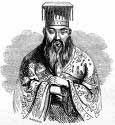
Confucius (551-470 B.C.E.) lived during the warring states period before China was unified as one nation. Confucius is considered the founder of the Chinese ethical and moral system based on the family and his Five Great Relationships:

1. between ruler and subject
2. father and son
3. husband and wife
4. elder and younger brother
5. friend and friend

In each pair, one role was superior and one inferior; one role led and the other followed. Yet each involved mutual obligations and responsibilities. Failure to properly fulfill one’s role could lead to the termination of the relationship.

Confucius

Did you notice that religion and God are not mentioned among the Five Great Relationships?

Discover The Meaning of “Honor” to Most Chinese

______________

Lloyd Lofthouse is the award-winning author of the concubine saga, My Splendid Concubine & Our Hart. When you love a Chinese woman, you marry her family and culture too. 

If you want to subscribe to iLook China, there is a “Subscribe” button at the top of the screen in the menu bar. 


Cults and Christian Cannon Balls

March 11, 2010

Organized religions and cults like the Falun Gong have been in China for centuries, but have never played a major role in the culture until the 19th century when Christianity was forced on China. C.M. Cipolla wrote in his book, Guns, Sails and Empires, “While Buddha came to China on white elephants, Christ was born on cannon balls.”

In the early months of 1900, thousands of Boxers, officially known as Fists of Righteous Harmony, roamed the countryside attacking Christian missions, slaughtering foreign missionaries and Chinese converts.

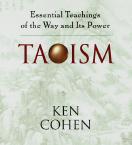
Confucius and possibly Lao-Tse have influenced the foundation of Chinese culture and morality the most.  These two along with Buddha offer more of a blended influence on Chinese culture than Christianity or Islam. Thanks to Confucius, China’s mainstream culture understands the importance of people within the family and society more so than many other countries and cultures. This may explain why China is a powerhouse of industry today.

Discover  The Man Who Made China

______________

Lloyd Lofthouse is the award-winning author of The Concubine Saga. When you love a Chinese woman, you marry her family and culture too. This is the love story Sir Robert Hart did not want the world to discover.

Subscribe to “iLook China”!
Sign up for an E-mail Subscription at the top of this page, or click on the “Following” tab in the WordPress toolbar at the top of the screen.

About iLook China