Three Hundred Years – Part 2 of 5

April 6, 2010

From Part 1, Liu Xiaobo’s last sentence, “I have my doubts as to whether 300 years would be enough.”, shows that he understands what it would take to change China’s people so they would accept a Western style government. To make this happen, China would have to be occupied by Western armies while hordes of Christian missionaries arrived to convert the population.  It would take generations to rid the culture of its Confucius Taoist influence—China’s cultural foundation.

Since the West attemped doing this during the 19th century, we already know what will happen. Tens of millions will die since there would be resistance.

Opium Poppy

During the 19th century, more than one of China’s emperors told Western representative that China had everything the empire needed and there was no need for trade with the West. This resulted in two Opium Wars started by England and France to force China to open its doors to Opium and other Western products and to allow Christian missionaries free access to convert the peasant population.

The result was catastrophic.  If it hadn’t been for World War II and Japan’s invasion of China, which cost almost forty million lives, the West might have eventually succeeded in another century or two to convert China into a Western culture as Liu Xiaobo said in Part 1 of this series.

See The Reasons Why China is Studying Singapore http://wp.me/pN4pY-2z


“Three Hundred Years” – Part 1 of 5

April 5, 2010

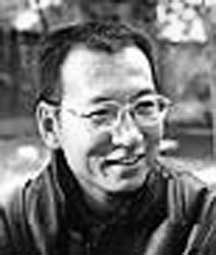
Liu Xiaobo is a Chinese human rights activist. He has been detained, arrested, and sentenced repeatedly for political activities, including participation in the Tiananmen Square protests of 1989.

In a 1988 interview with Hong Kong’s Liberation Monthly (now known as Open Magazine), Liu replied to a question on what it would take for China to realize a true historical transformation: “(It would take) 300 years of colonialism. In 100 years of colonialism, Hong Kong has changed to what we see today. With China being so big, of course it would take 300 years of colonialism for it to be able to change to how Hong Kong is today. I have my doubts as to whether 300 years would be enough.”

Liu Xiaobo - Chinese activist

Later, after being arrested and sentenced to eleven years in prison, Liu said this quote was taken out of context. To understand why the Chinese government would react so harshly to such a statement, knowing China’s history helps.

What Liu said could be taken to mean that to change China into a Western style culture would require a return to the 19th century when Western powers dominated China with their military—similar to what American neo-conservatives advocate for any country that does not have a Western style democracy or republic.

See Wearing China’s Shoes http://wp.me/pN4pY-1p


What is the Truth about Tiananmen Square?

April 5, 2010

I’ve heard from several Chinese American friends (now US citizens), who lived in China in 1989, that the student leaders behind the Tiananmen Square protest/massacre (April 14  to June 4, 1989) were supported by the CIA.

Oh, come on, I thought, another conspiracy theory!

However, my curiosity was stirred, so I spent hours hunting the internet for clues that this might be true. I discovered several coincidences that raised an eyebrow.

The U.S. Ambassador in China at the time, James Lilley (April 20, 1989 to 1991), was a former CIA operative who worked in Asia and helped insert CIA agents into China. President H. W. Bush served as Chief of the U.S. Liaison Office in Beijing (1974 – 1976) , then went to serve as Director of the CIA (1976 – 1977).

Why did President H. W. Bush replace Winston Lord as ambassador to China (1985-1989) during the early days of the Tiananmen Square incident with a former CIA agent? After all, Lord spoke some Chinese and was a key figure in the restoration of relations between the US and China in 1972.  Wasn’t he the best man for the job during a crisis like this?

I returned to my friends and asked, “How do you know the CIA helped the student leaders of the protest?”

“It’s obvious,” was the answer. The reason, my friends explained, was the fact that it is very difficult, almost impossible, for anyone in China to get a visa to visit the United States. Yet most of the leaders of the Tiananmen incident left China quickly and prospered in the West without any obvious difficulty. After these student leaders came to the West, many were successful and became wealthy.

I returned to my investigation to verify these claims. Let’s Welcome Chinese Tourists was one piece I read from the Washington Post documenting how difficult it was to get a visa to visit the US from China. I read another piece in the Chicago Tribune on the same subject. My wife told me her brother and two sisters were denied visas to the US.

After more virtual sleuthing, I learned that Wang Dan, one of the principal organizers of the Tiananmen incident, went to jail because he stayed in China when most of the student leaders fled. Today, Wang lives in the West and cannot go back. Two others went to Harvard and a third went to Yale. Where did they get the money? It’s expensive to attend these private universities.

How about the other leaders who fled to the West? “Some have reincarnated themselves as Internet entrepreneurs, stockbrokers, or in one case, as a chaplain for the U.S. military in Iraq. Several have been back to China to investigate potential business opportunities.” Source: Time
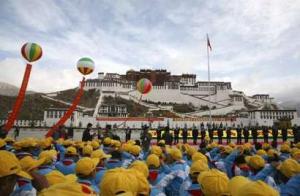
Lahsa, Tibet

Then there are the Dalai Lama and Tibetan separatists who have received CIA support. “The Dalai Lama himself was on the CIA’s payroll from the late 1950s until 1974, reportedly receiving $US15,000 a month ($US180,000 a year). The funds were paid to him personally, but he used all or most of them for Tibetan government-in-exile activities, principally to fund offices in New York and Geneva, and to lobby internationally.” Sources: Infowars; The CIA’s Secret War In Tibet and the CIA. “Retired CIA officer Roger E. McCarthy published his book, which describes his role in support of the CIA’s assistance to the Tibetan resistance to China’s occupation of Tibet, which began in 1950.”

Yes, the circumstantial evidence was compelling, but maybe all of these facts are just a coincidence.

______________________________

Lloyd Lofthouse is the award-winning author of My Splendid Concubine [3rd edition]. When you love a Chinese woman, you marry her family and culture too. This is the lusty love story Sir Robert Hart did not want the world to discover.
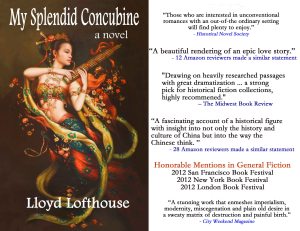
IMAGE with Blurbs and Awards to use on Twitter

Where to Buy

Subscribe to “iLook China”!
Sign up for an E-mail Subscription at the top of this page, or click on the “Following” tab in the WordPress toolbar at the top of the screen.

About iLook China

China’s Holistic Historical Timeline

Discover why The Sky is Falling but only in China


Human Rights the Chinese Way

April 5, 2010

In the West, the individual is more important than the whole. In China, the whole is more important than the individual.

Just like China created capitalism Chinese style, the Chinese are building a bridge to human rights the same way. However, they see things different from Western democracies that are burdened with debt, crime, serious drug problems and swelling prison populations. To allow the freedoms that led to these problems in the West would be a loss of face for China’s leaders.

Due to Confucius’s teachings twenty-five hundred years ago, most Chinese value family and piety first—something that has all but vanished in the West.

Luo Haocai

“China believes that human rights, like other rights, are not ‘absolute’ and the rights enjoyed should conform to obligations fulfilled. China opposes separating rights from obligations,” said Luo Haocai at the Beijing forum on human rights.

Many Chinese know what Western freedom is like. After all, many Chinese have attended universities in Western countries. Most of these individuals have experienced freedom Western style and learned that the Western concept of freedom doesn’t match Chinese values. Family obligations come first in China.

To understand the Chinese better, learn about The First of All Virtues

______________

Lloyd Lofthouse is the award-winning author of the concubine saga, My Splendid Concubine & Our Hart. When you love a Chinese woman, you marry her family and culture too. 

If you want to subscribe to iLook China, there is a “Subscribe” button at the top of the screen in the menu bar. 


The Use of Power

April 4, 2010

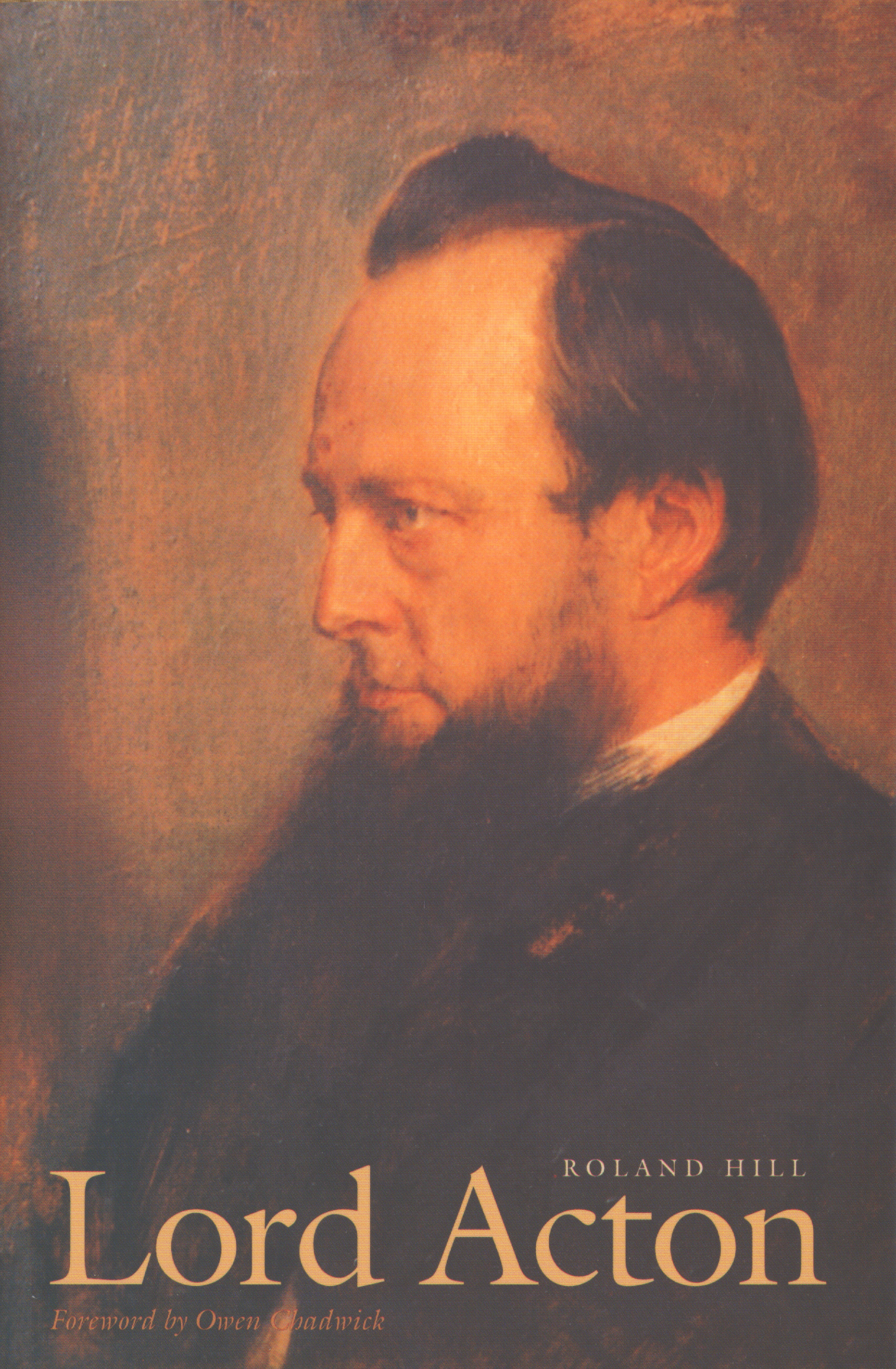
“Power tends to corrupt, and absolute power corrupts absolutely. Great men are almost always bad men.” Lord Acton

There’s a lot of truth to what Lord Acton wrote.

William Pitt, The Earl of Chatham and British Prime Minister from 1766 to 1778 said something similar: “Unlimited power is apt to corrupt the minds of those who possess it.”

The corruption that Lord Acton and William Pitt talk about does not only apply to a nation’s political and business leaders. It influences common citizens, who put pressure on their government to react violently.

As China grows its power, how will that corruption manifest itself?  Will China become like the British Empire or the United States and continue to wage wars around the globe in the national interest? Maybe, or will China re-define what the use of power means?

“China is presenting its ascent not as a power shift, but as a paradigm shift. It claims that its rise will be different from other powers in the past and sets an example for a fundamental revision of the nature of great power politics.” Source: In The New Times

See Power Corrupts http://wp.me/pN4pY-40