The Mental and Emotional state of “Face”

May 18, 2011

No, this is not about looks or Botox or face-lifting creams or hairstyles, or tanning salons, or the desire to have a rounder, paler moon face—the standard of beauty to most Chinese.

What I am writing about is the meaning of “face” to the Chinese

Dr. Martha Lee wrote, “Nobody ever said what you do with those who have ‘disgraced’ the family name by getting divorced.” Dr. Lee was writing of the ‘hongbao’ dilemma.

In China, if you do something that is considered a disgrace, like getting divorced, that may be considered a “loss of face” for everyone in the family.

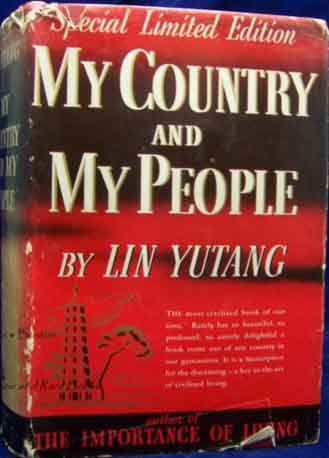
Lin Yutang wrote in My Country and My People, “it is easier to give an example of Chinese ‘face’ than to define it.

“The ‘face’ is psychological and not physiological.  Interesting as the Chinese physiological face is, the psychological ‘face’ makes a still more fascinating study.  It is not a face that can be washed or shaved, but a ‘face’ that can be ‘granted’ and ‘lost’ and ‘fought for’ and ‘presented as a gift’.”

When our daughter was a pre-teen, we went on weekend hikes in the hills behind our home. The end of the hike was a large park across the street from the La Puente Mall. On one fateful day, when she was nine or ten, she was the first to discover a dead man. She came running back with a shocked look.

It turned out the dead man was an architect from Taiwan and his company had gone broke. His “loss of face” for failing had driven him to take an extension cord from his mother’s house, find a suitable tree in an isolated portion of that park, and hang himself.

He was dead when we reached him.

Do not stereotype. The meaning of “face” may vary between Chinese. It depends on the balance between Confucianism and Daoism along with factors like Buddhism or belief in the Christian, Islamic or Jewish God.

“Face” is why most Chinese mothers ride their children hard to do well in school while telling everyone they know that their kid is stupid and/or lazy and has no chance to succeed.

Chinese mothers may often tell their children the same thing. However, if the child is accepted to a prestigious university, that Chinese mother has now earned bragging rights and “gained much face” for the job she did as a mother

To get a better idea, I recommend reading Amy Tan‘s “The Joy Luck Club” or watching the movie.

We had a house full of my wife’s Chinese friends over for dinner. After eating, the children gathered in our downstairs TV room to watch a movie. They picked “The Joy Luck Club“, and during one scene, when the Chinese mother was acting very Chinese, all the children looked at each other, nodded ‘yes’ and laughed ironically. Since my wife is Chinese, I knew why they reacted that way. They all had Chinese mothers.

“Face” is why the Chinese businessman will take great risks or take only a few risks and if given a chance may steal another person blind—that is if they believe they can get away with it. If they are caught and it is against the law, that is a “loss of face”—one reason for suicide.

Most Chinese men will wait until they are successful before they let others know. If they fail, it’s possible no one will hear about it beyond the family unit.

“Face” is why Chinese men often work twelve to sixteen hour days, seven days a week earning small but saving large. The Chinese will do without luxuries and save to pay for their child’s university education. Chinese women will work just as hard.

Studies in today’s China show that the average family saves/spends a third of its income for a child’s education.

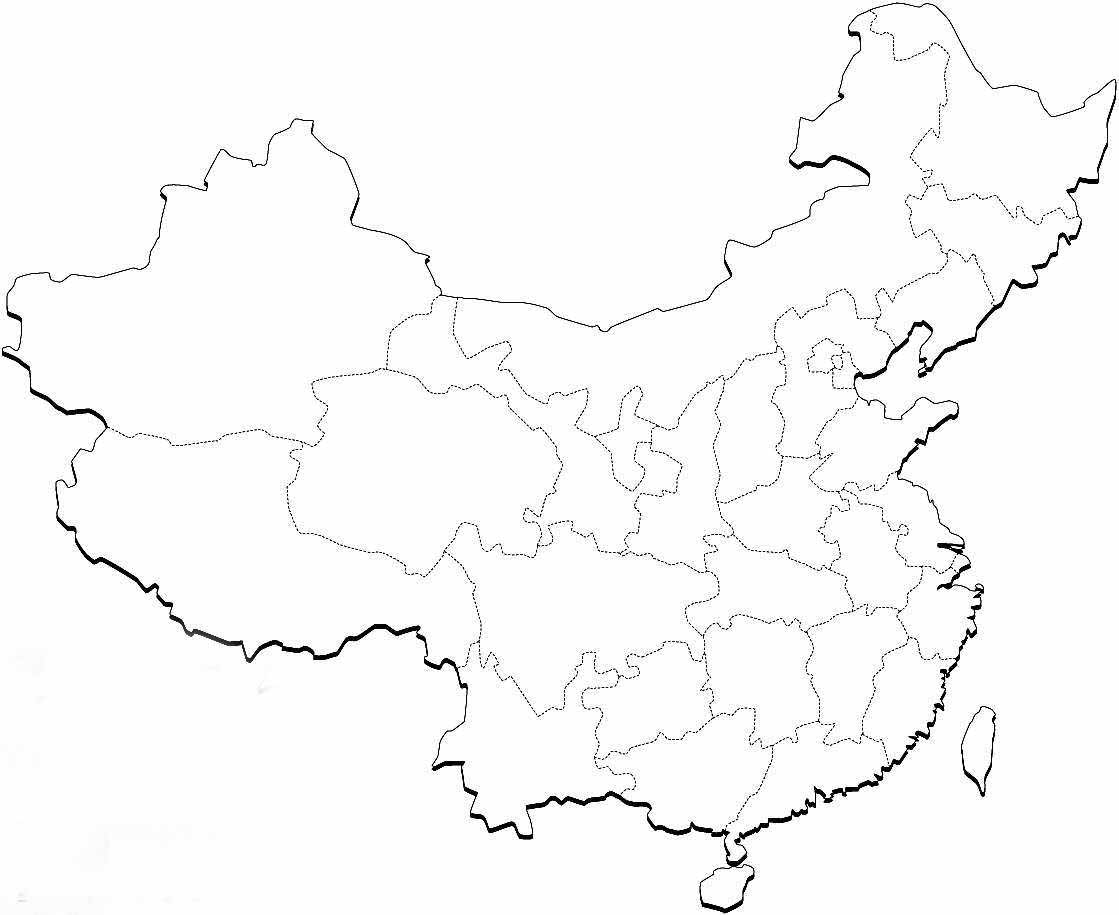
Regaining “face” may be one reason why Mao reoccupied Tibet for China in 1949. Look closely, and you may discover that even Taiwan claims Tibet for the same reason.

The other reason may have been tactical—to control the high ground as Israel controls the Golan Heights.

Having control over the Tibetan plateau was one of the tactical reasons Britain convinced the Dalai Lama to declare freedom from China in 1912.

“Face” may be why China’s leaders get so angry over Taiwan. As long as Taiwan is not ruled by the mainland, it may be seen as a “loss of face”.

It’s why the Chinese want to walk on the moon and reach the other planets before anyone else. In China, “face” is universal to most of the population and different for each person.

For the Chinese, taking risks is no stranger. It’s probably the reason the Chinese invented paper, the crossbow, the compass, the stirrup, developed a cure for scurvy, the printing press, gunpowder, and built multi-stage rockets centuries before anyone in the West did.

China’s list of revolutionary inventions is longer than this. Many of these inventions eventually appeared in the West where Westerners took credit for them.

Now you know the truth.

In “What the Chinese Want even More than Oil or Gold“, the focus was on Chinese gambling and about illegal lotteries going legal and national. Since I married into a Chinese family, I understand what the author of this piece was saying, but the topic is more complex than that.

To learn more, I suggest you read the Investoralist, “Where Curious Minds Meet”. The Investorilist piece says that gambling is China’s Achilles heel.

I disagree.

I believe it is risk taking that brought China to greatness in the past. It’s when most Chinese stopped taking risks that China lost its spot as a regional superpower. It’s all about ‘face’. Take a risk and win but make a mistake and get caught, you “lose face” and maybe your life too, which may explain many of the suicides in countries such as China, Japan and Korea.

This revised and edited post first appeared as a four-part series starting February 17, 2010 at Chinese “Face” – Part 1

______________

Lloyd Lofthouse is the award-winning author of the concubine saga, My Splendid Concubine & Our Hart. When you love a Chinese woman, you marry her family and culture too.

To subscribe to iLook China, look for the “Subscribe” button at the top of the screen in the menu bar, click on it then follow directions.


Conquest

July 9, 2010

I woke up this morning thinking that many in the West want nothing less than China to be something he or she understands, which means a capitalist, multi-party republic, Christian nation with a culture based on individualism rather than China’s more than two-thousand year old collective culture without religion. 

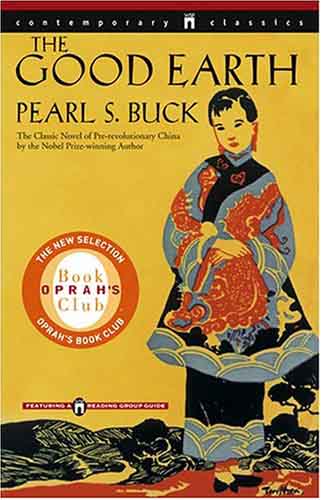
To help dispel this atmosphere of ignorance in the West, Pearl S. Buck urged Lin Yutang to write a book about China and its people. In the Preface for My Country and My People (1935), Lin Yutang wrote, “I write only for men of simple common sense…” Later, in the Prologue, he mentions how for every Sir Robert Hart, the Irish godfather of China’s modernization, there are ten thousand who do not understand the Chinese and do not care to learn.

Then in the Introduction for Lin’s book, Buck wrote, “It (My Country and My People) is truthful and not ashamed of the truth: it is written proudly and humorously and with beauty, seriously and with gaiety, appreciative and understanding of both old and new.”

It is unfortunate that most Sinophobes have no concept of China and its culture and do not want to learn, and men and women of simple common sense are as rare today as in Lin Yutan and Pearl S. Buck’s time.

Discover more about Lin YuTang’s “My Country and My People

_________________________

Lloyd Lofthouse is the award-winning author of the concubine saga, My Splendid Concubine & Our Hart. When you love a Chinese woman, you marry her family and culture too. 

Sign up for an RSS Feed for iLook China


Caressing Nature with Chinese Calligraphy

July 3, 2010

It would be difficult to talk about Chinese art without understanding Chinese calligraphy and its artistic inspiration. A painting has to convey an object, but a well-written character conveys only its beauty through line and structure.

In Shanghai, or Beijing, I’ve watched men with longed handled brushes, as seen in the first video, using water for ink and concrete for paper. With grace, they exhibit the skills of a Rembrandt breathing life to the characters.

Lin Yutang writes in My Country and My People that Western art is more sensual, more passionate, fuller of the artist’s ego, while the Chinese artist and art-lover contemplates a dragonfly, a frog, a grasshopper or a piece of jagged rock—more in harmony with nature.

Owing to the use of writing calligraphy with a brush, which is more subtle and more responsive than the pen, calligraphy as art is equal to Chinese painting. Through calligraphy, the scholar is trained to appreciate, as regards line, qualities like force, suppleness, reserved strength, exquisite tenderness, swiftness, neatness, massivness, ruggedness, and restraint or freedom.

Maybe this helps explain why the Chinese are not as warlike as Christian and Islamic cultures.

See Chinese Yu Opera with Mao Wei-tao

______________

Lloyd Lofthouse is the award-winning author of the concubine saga, My Splendid Concubine & Our Hart. When you love a Chinese woman, you marry her family and culture too.

If you want to subscribe to iLook China, there is a “Subscribe” button at the top of the screen in the menu bar.


Second China Quiz

May 8, 2010
The answers may be found anywhere in the first three hundred posts for this blog.  The first person to answer all the questions correctly will win a free copy of either My Splendid Concubine or Our Hart.

This prize will be open until the first person answers all the questions correctly. Write your answers in a comment to this quiz.  Make sure to number the answers so they match the questions and provide an e-mail address for me to contact you. Each question has a link that will take you to where you may find the answers.

China

1. What does the First of all Virtues mean?

2. What is the Chinese attitude toward health care?

3. What was the life expectancy for the average Chinese person before the Communists won China in 1949?

4. What was the debate on salt and iron about?

5. Chinese Internet users are _____________ as likely to have blogs as Americans. (fill in the blank)

6. (From Similar “Oily” Interests) What is Wahhabism and where does the money come from to pay for this?

7. What happened during Deng Xiaoping’s Beijing Spring?

8.  What happened to Deng Xiaoping’s son when he spoke out against the Cultural Revolution?

9. What vital key does China hold for humanity’s future?

10. How does Communist China treat its minorities compared to the way minorities have been treated in the United States?

11. Who was Faith Dremmer and what happened to her?

12.  What did Peter Hessler say about happiness?

13.  How many of the world’s smokers live in China?

14.  What is the name of China’s Oprah and how large is her audience?

15. What is the difference between China’s labor laws and United States?

16. What did Lin Yutang say about the Chinese and Christianity?

17. What did the first emperor of China consume that contributed to his madness and death? (This answer is in one of the nine linked posts in a series about Qin Shi Huangdi.) Why did Qin Shi Huangdi do this? (must answer both questions for # 17)

18. When the “Cult of the Dead Cow” gains access to your computer, what do they do?

19. Which issue of National Geographic magazine provides proof that Tibet was part of China for centuries before Mao’s invasion and reoccupation?

20. What is the name of the all-electric car being manufactured in a joint effort between Chinese and California partners?

____________________________

Lloyd Lofthouse is the author of the award winning novels My Splendid Concubine and Our Hart. He also Blogs at The Soulful Veteran and Crazy Normal.

Sign up for an RSS Feed for iLook China


Lin Yutang Explains Christianity in China

April 27, 2010

“For most Chinese the end of life lies not in life after death, for the idea that we live in order to die, as taught by Christianity, is incomprehensible, nor in Nirvana, for that is too metaphysical, not in the satisfaction of accomplishment, for that is too vainglorious, nor yet in progress for progress’ sake, for that is meaningless. The true end, the Chinese have decided in a singularly clear manner, lies in the enjoyment of a simple life, especially the family life, and in harmonious social relationships.

“The Chinese are a nation of individualists. They are family-minded, not social-minded… It is curious that the word ‘society’ does not exist as an idea in Chinese thought. In the Confucian social and political philosophy we see a direct transition from family, ‘chia’, to the state, ‘kuo’, as successive stages of human organization …

Lin Yutang

“The Chinese, therefore, make rather poor Christian converts, and if they are to be converted they should all become Quakers, for that is the only sort of Christianity that the Chinese can understand. Christianity as a way of life can impress the Chinese, but Christian creeds and dogmas will be crushed, not by a superior Confucian logic but by ordinary Confucian common sense. Buddhism itself, when absorbed by the educated Chinese, became nothing but a system of mental hygiene, which is the essence of Sung philosophy.” Source: My Country and My People, Lin Yutang. Halcyon House, New York. 1938. Pgs 94; 101; 103; 172, and 108)

Learn about Superior versus Civilized

______________

Lloyd Lofthouse is the award-winning author of the concubine saga, My Splendid Concubine & Our Hart. When you love a Chinese woman, you marry her family and culture too. 

If you want to subscribe to iLook China, there is a “Subscribe” button at the top of the screen in the menu bar.