Really Fast Trains in and from China

August 13, 2010

Devin Coldewey at Crunch Gear writes about plans for future-trains in China that may run at speeds of 1000 kilometers or 620 miles an hour.

China is looking into increasing speeds for longer distances by using maglev trains without air resistance by building vacuum-sealed tunnels. Today’s maglev trains with air resistance are capable of hitting speeds of about 500 km/h.

Darren Murph at engadget.com also wrote about these super-fast trains.  Darren mentions that China says they will have maglev trains ready in three years.  In fact, they have one now outside Shanghai. I have ridden the maglev train that runs from Pudong Airport to Shanghai. It seldom hits its top speed for the short trip, but it is smooth and fast—a few minutes compared to more than forty in a taxi or bus.

To reach speeds of 1000 km/h means more money. Each kilometer to build these vacuum tubes will cost an extra $2.95 million American. I have a question. What happens if the vacuum tube springs a leak?

Darren ends with “Pony up, taxpayers!”, but that’s not how the Chinese raise money.  Most money in China comes from the profits of state-run banks, industries and duties on imports and exports not on income or property, although that may be changing as China studies how the US government raises money.

China is also planning to build high-speed rail from Beijing to London. Source: The Sydney Morning Herald Traveller

See China On the Fast Track

______________

Lloyd Lofthouse is the award-winning author of The Concubine Saga. When you love a Chinese woman, you marry her family and culture too. This is the love story Sir Robert Hart did not want the world to discover.

To subscribe to “iLook China”, look for the “Subscribe” button at the top of the screen in the menu bar, click on it then follow directions.


Chiang Kai-shek

July 23, 2010

Chiang Kai-shek (also known as Jiang Jieshi) was born on October 31, 1887. His family was from the upper class and was wine merchants. At 18, he attended a military college in Japan. Chiang had four wives during his life. His first wife died in the Second Sino-Japanese War. His second wife contracted gonorrhea from Chiang (a known womanizer) soon after they married. His most famous wife lived to 106 and died in 2003. Before one marriage, he converted to Christianity as a condition to marry.

After training in Japan, he went to Russia to study the Soviet government and decided he did not care for the Communists. Returning to China, Sun Yat-sin appointed Chiang to command a military academy

Under Sun Yat-sen the Communists and the Nationalists worked together to rule China, and Soviet advisers provided the help needed to increase their power since most of China was ruled by warlords.

However, when Sun died in 1925, Chiang led the Kuomintang army north to defeat the warlords and destroy the Communists.

Meanwhile, in Shanghai, the Communist Party had organized labor unions to improve working conditions in the low paying sweat-shop factories. During Communist organized labor strikes, these factories were shut down.

When Chiang Kai-shek army reached Shanghai, he joined forces with gangsters then went on a killing spree known as the White Terror. Tens of thousands of workers, who belonged to the labor unions organized by the Communists, were hunted down and killed along with their Communist leaders. One of the few to escape was Mao Zedong.

For the next few years, Chiang would rule China unchallenged until 1931, when Japan invaded. During the early months of the war, Chiang ignored Japan and continued hunting for the Communist survivors, who had fled into the countryside.

In 1949, when Mao won the civil war, Chiang Kai-shek took the survivors of his nationalist army to Taiwan where, protected by the US military, he declared brutal martial law and ruled as a dictator until he died on April 5, 1975 at the age of eighty-seven.

______________________________

Lloyd Lofthouse is the award-winning author of My Splendid Concubine [3rd edition]. When you love a Chinese woman, you marry her family and culture too. This is the lusty love story Sir Robert Hart did not want the world to discover.

#1 - Joanna Daneman review posted June 19 2014

Where to Buy

Subscribe to “iLook China”!
Sign up for an E-mail Subscription at the top of this page, or click on the “Following” tab in the WordPress toolbar at the top of the screen.

About iLook China

China’s Holistic Historical Timeline


The Rape of Nanking

July 22, 2010

Warning, the video linked to this post may be disturbing. 

Although China and Nanking suffered from internal war and strife, China never invaded another nation in its four-thousand year history. China had always been self-sufficient and never needed anything from other countries. To wage war on its neighbors was not part of the Chinese character. 

Nanking was the capital of China from the third to the 6th century. In the 14th century, the first Ming Emperor made Nanking the capital again. To protect the capital, the largest city wall in the world was built. It was fifty -feet high, forty-feet wide and more than twenty-five miles long.

On July 1937, Japan attacked China. Chiang Kai-shek made himself the commander of China’s army and navy.  The battle for Shanghai came first. Tens of thousands of innocent Chinese were killed while 300 thousand Chinese troops died. After losing Shanghai, the Chinese army retreated to Nanking.

The Japanese soldiers were ordered to burn all, steal all, and kill all as they advanced through the countryside toward Nanking. It is estimated that 300 thousand innocent Chinese were murdered. 

For over one-hundred days, Japanese bombers bombed Nanking, while Chinese troops fought fiercely defending the city. Eventually, Chang Kai-shek fled with most of his generals and government officials, but ordered one general to stay behind with the army and fight.

As Nanking fell to the Japanese, mostly women, children and the elderly were killed by the tens of thousands. 

Part 2 continues the Rape of Nanking and it is so shocking and disturbing, you must go to YouTube and sign in showing that you are at least 18. If you do not wish to watch Part 2, the next post will continue to report about the Rape of Nanking, and it will not be as disturbing.

Go to Part 2, The Rape of Nanking

Also see The Roots of Madness

______________

Lloyd Lofthouse is the award-winning author of the concubine saga, My Splendid Concubine & Our Hart. When you love a Chinese woman, you marry her family and culture too.

If you want to subscribe to iLook China, there is a “Subscribe” button at the top of the screen in the menu bar.


Buddhism in China

May 24, 2010

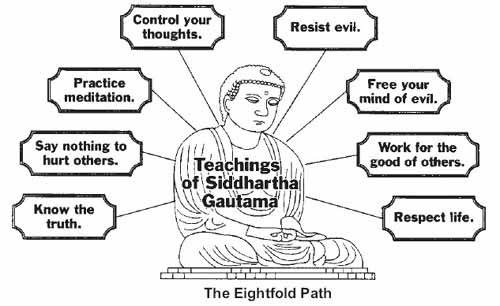
During the Han Dynasty in the first century B.C., trade with Central Asia introduced Buddhism to China.  Over the centuries, interest in Buddhism grew.  However, due to Confucianism and Taoism, the Chinese adapted Buddhist scripture to fit the Chinese culture creating the Mahayana sect, which spread to Korea and Japan.

Like most major religions, there are subdivisions within Buddhism but most may be classified into three. This is why Southeast Asian Buddhists differ from the Chinese.  The Theravada  form of Buddhism is found in Southeast Asia in countries like Burma, Thailand, Cambodia and Laos.

Tibetan Buddhism incorporates other beliefs, and there are four principal schools or types of Tibetan Buddhism. The Dalai Lama is the spiritual leader of one of the four, the Yellow Hat sect.

Buddhism in China reached its high point during the Tang Dynasty, 618 to 907. However, in 845 AD, the Tang emperor suppressed Buddhism and destroyed thousands of monasteries, temples and shrines.

Soon after Mao and the Communists won China, Buddhism flourished for a time but was repressed during the Cultural Revolution along with all other religions. Many monasteries and Buddhist texts were destroyed. After Mao, many of the major monasteries were rebuilt. Today, Buddhists represent the largest religious group in China between 100 to 200 million. Source: PEW Forum

Discover The First of all Virtues

_______________

Lloyd Lofthouse is the award-winning author of My Splendid Concubine [3rd edition]. When you love a Chinese woman, you marry her family and culture too. This is the love story Sir Robert Hart did not want the world to discover.

His third book is Crazy is Normal, a classroom exposé, a memoir. “Lofthouse presents us with grungy classrooms, kids who don’t want to be in school, and the consequences of growing up in a hardscrabble world. While some parents support his efforts, many sabotage them—and isolated administrators make the work of Lofthouse and his peers even more difficult.” – Bruce Reeves.

lloydlofthouse_crazyisnormal_web2_5

Subscribe to “iLook China”!
Sign up for an E-mail Subscription at the top of this page, or click on the “Following” tab in the WordPress toolbar at the top of the screen.

About iLook China

China’s Holistic Historical Timeline


Cultural Differences, the Ignorant American and Western Imperialism

May 21, 2010

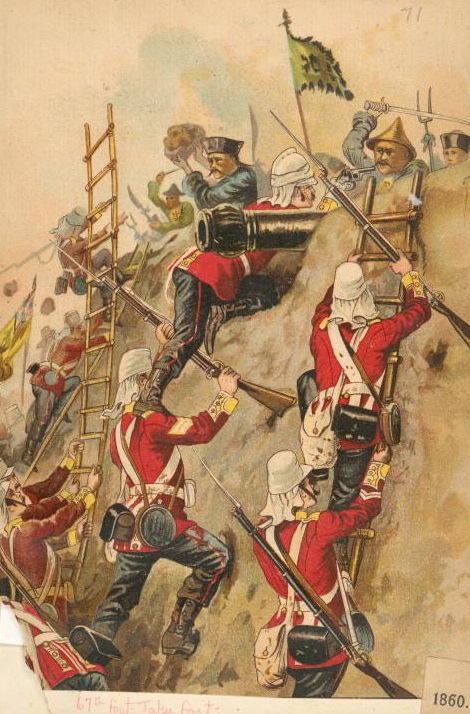
Before Western Imperialism attempted to change Asia during the 19th century, China was a regional super power for more than two-thousand years. Over time, the Chinese believed they were too civilized and powerful to be threatened by anyone on the planet.  Then the British, French, Portuguese, Germans, Americans, Russians and Japanese arrived and waged war in China for a century starting with the First Opium War.

Opium Wars

China learned a lesson from all of these wars. It only took a century to recover and start over.

The leaders of China are called Communists, but the men and women who rule China were born Chinese and the decisions they make are based on being Chinese—not being Communists. The Chinese culture is a collective culture and when an “individual” crosses the line and breaks the rules doing or saying something that is unacceptable to the collective culture, they are erased (given a death sentence) or reeducated (if possible). That’s how the Chinese collective culture on the mainland does things.

In time, interaction with other cultures may change that.  In fact, China already has changed to some degree. Friendly, harmonious interaction is the key—not hate and accusations like those from Americans like Timothy V.

See Respecting Cultural Differences are Out-of-Focus

____________________________

Lloyd Lofthouse is the author of the award winning novels My Splendid Concubine and Our Hart. He also Blogs at The Soulful Veteran and Crazy Normal.

Sign up for an RSS Feed for iLook China