Professor Jeffrey Riegel, of the University of California, Berkeley traveled to China to unlock the truth behind one of the earth’s greatest legends, a man larger than life, the first emperor of China, Shi Huangdi (259-210 BC). This post comes from the documentary film of China’s first emperor.
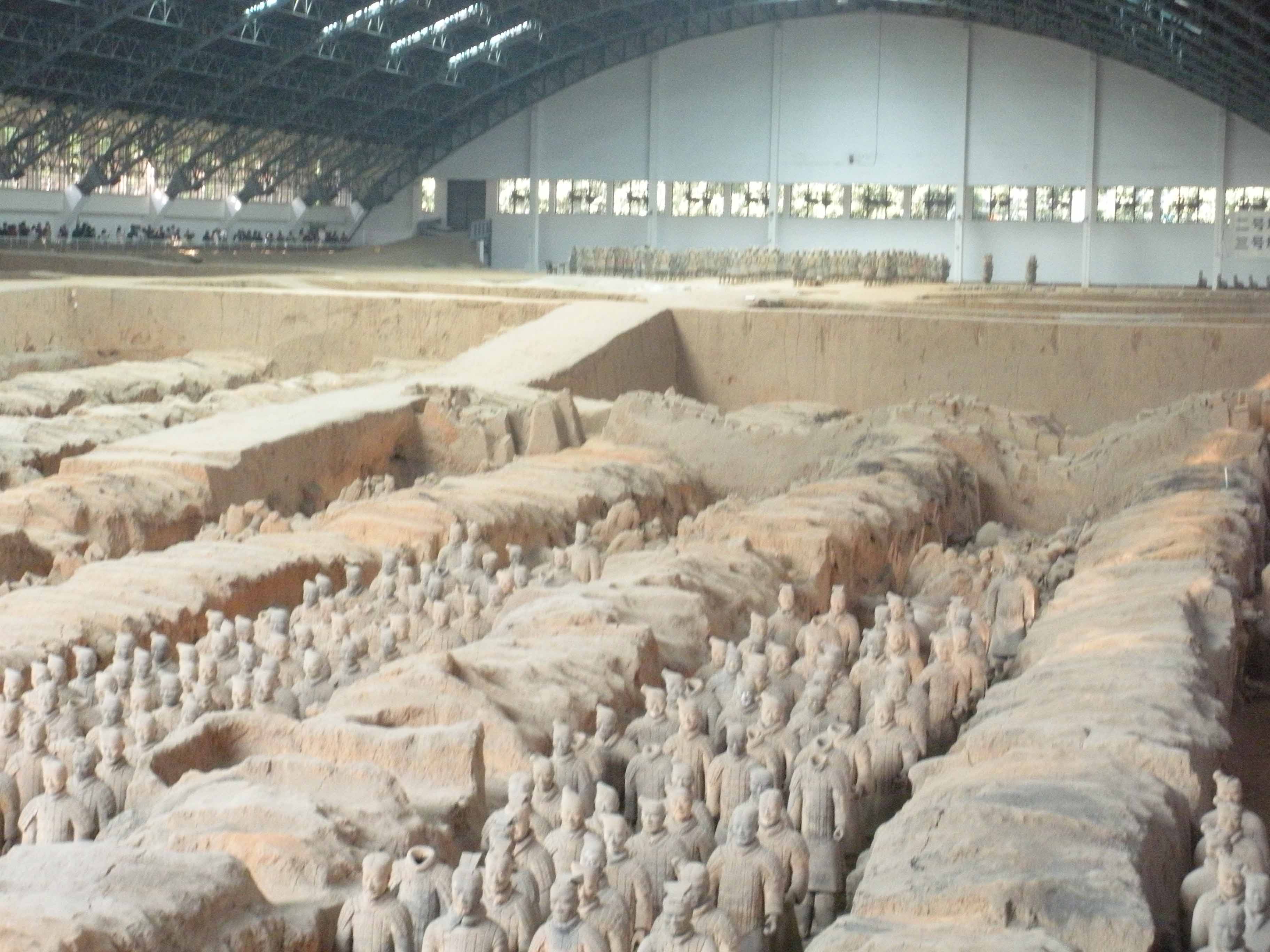
The first time we visited his tomb was December 1999.
Shi Huangdi was barely thirteen when his father died (246 BC) after being king of Qin for three years. The legends say Shi Huangdi was a tyrant driven mad by power.
He had a tomb built the likes of which humanity has never seen. When the first emperor died, he was the most powerful man on earth. He created an empire that outlasted Rome by a thousand years, he ruled ten times the population of ancient Egypt, and today’s China owes its existence to this man.
Months after becoming king at thirteen, Shi Huangdi overcomes his mother’s desire to rule in his name and took his nation to war. He was the youngest king to wage war and soon proved he was also the greatest warrior.
He soon becomes known as the Tiger of Qin.

Shi Huangdi wages war against his enemies for ten years. At the time, there were seven countries in China besides Qin. The seven countries in what we know as China today were Zhao, Yen, Wei, Han, Chi, Chu and Qin.
During the war to conquer Zhao, Shi Huangdi’s army took ten thousand prisoners. The rules of war say these prisoners must be fed and sheltered. However, Shi Huangdi changed the rules.
He shows his troops what to do by beheading an enemy troop and calls on his army to do the same.
He says, “There is only one way to treat weakness and that is to exploit it. There is only one way for Qin to survive, and that is to conquer.”
All 10,000 Zhao prisoners were beheaded.
By the time Qin Shi Huangdi turns twenty, he had captured thirteen cities from the state of Han and twenty from the other states. Huangdi’s rival countries send a combined army to stop him but they are repelled.
Some of Huangdi’s success is because of the precision weapons Qin craftsmen make for his loyal, highly trained army. Discover more of China’s Warrior King
However, while the king of Qin is conquering China, there is an enemy scheming to replace him.
His mother, the dowager queen, has taken a lover, who masquerades as a eunuch. The queen has had two illegitimate sons with this lover, who steals two royal seals that gives him authority to mobilize troops in an attempt to replace Shi Huandgi with one of the king’s half brothers.
Qin’s prime minister discovers the plot and a trap is set to destroy the rebel army. The dowager queen’s lover is captured, tortured and his mangled body pulled apart by four horses while the queen mother is forced to watch.
While the death sentence is being carried out, Huandgi has his two half brothers strangled to remove this threat to his throne.
With this challenge to the throne removed, Shi Huangdi has learned a lesson. He is ruthless and rids himself of his mother and his prime minister.
There is a dramatic scene where the prime minister asks for forgiveness for letting the queen mother do what she did.
The prime minister is exiled and not allowed to see the queen mother again. Within a year, the disgraced prime minister kills himself.
A scholar, who believes in harsh laws, becomes Huangdi’s closest advisor.
By 227 BC, the Qin state has conquered the states of Han, Wei and Zhao.
The state of Yen knows it is next and sends professional assassins disguised as peace emissaries to kill Shi Huangdi. The emissaries arrive in Xian with gifts and an assassin strikes.
Since no weapons are allowed in the throne room, there are no armed guards to protect the king. Only the king has a weapon and only the king can call the troops to save him.
By 223 BC, Shi Huangdi is ready to unify China. Only the states of Chi and Chu are left, but the Chu army destroys his first invasion force.
Shi Huangdi raises another army and invades again. A million troops face each other and it becomes a standoff. To win, Shi Huangdi tricks the Chu generals to make a mistake, and the last great obstacle to the unification of China falls.
Chi is the last country that has not been defeated. To avoid the slaughter, Chi joins Shi Huangdi without a fight.
Qin is now China.
At the age of 34, Qin Shi Huangdi was crowned with a veil of stars as the first god emperor of the Qin people and China.
The system of governance put into place will long outlast the emperor.
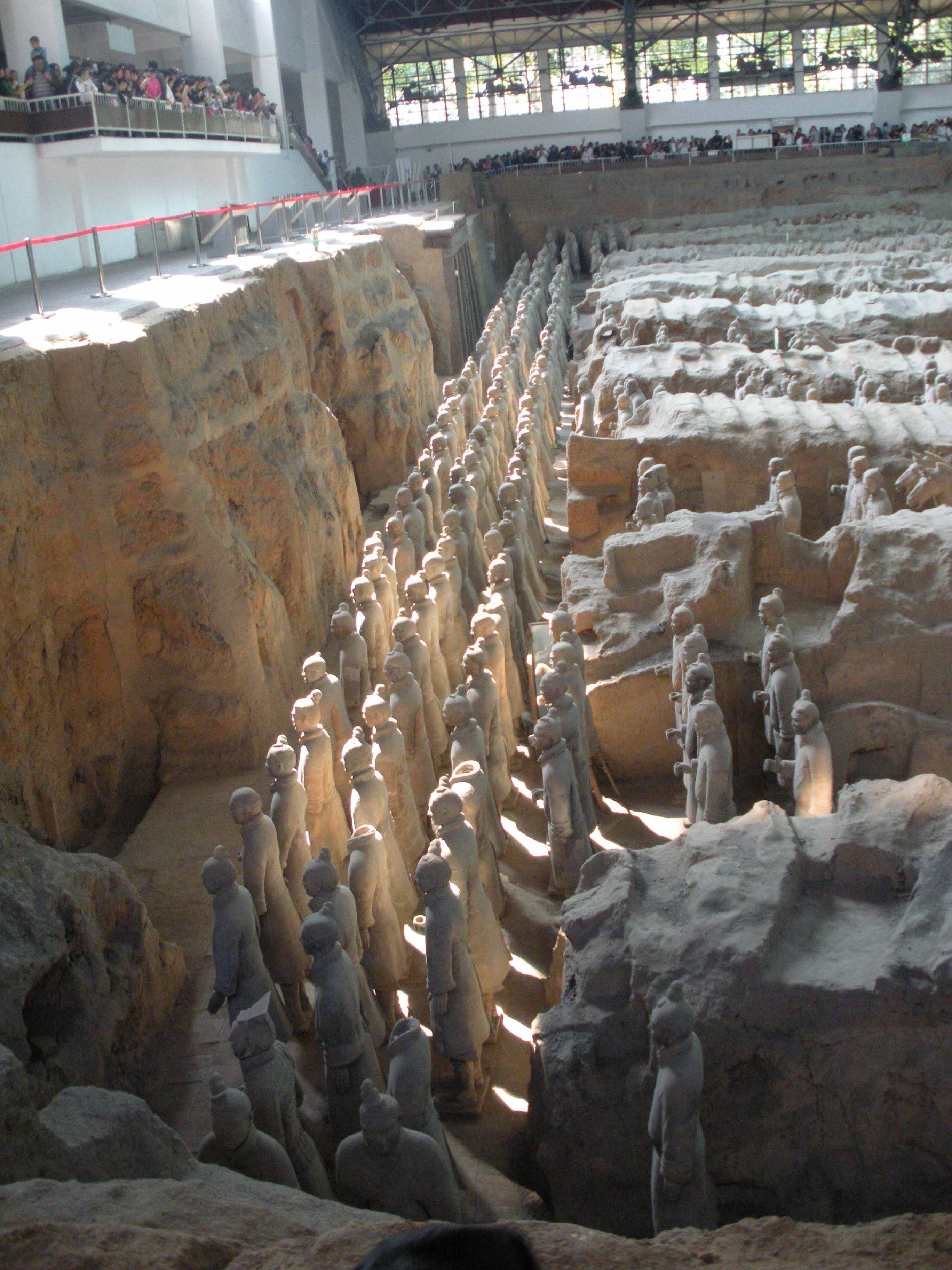
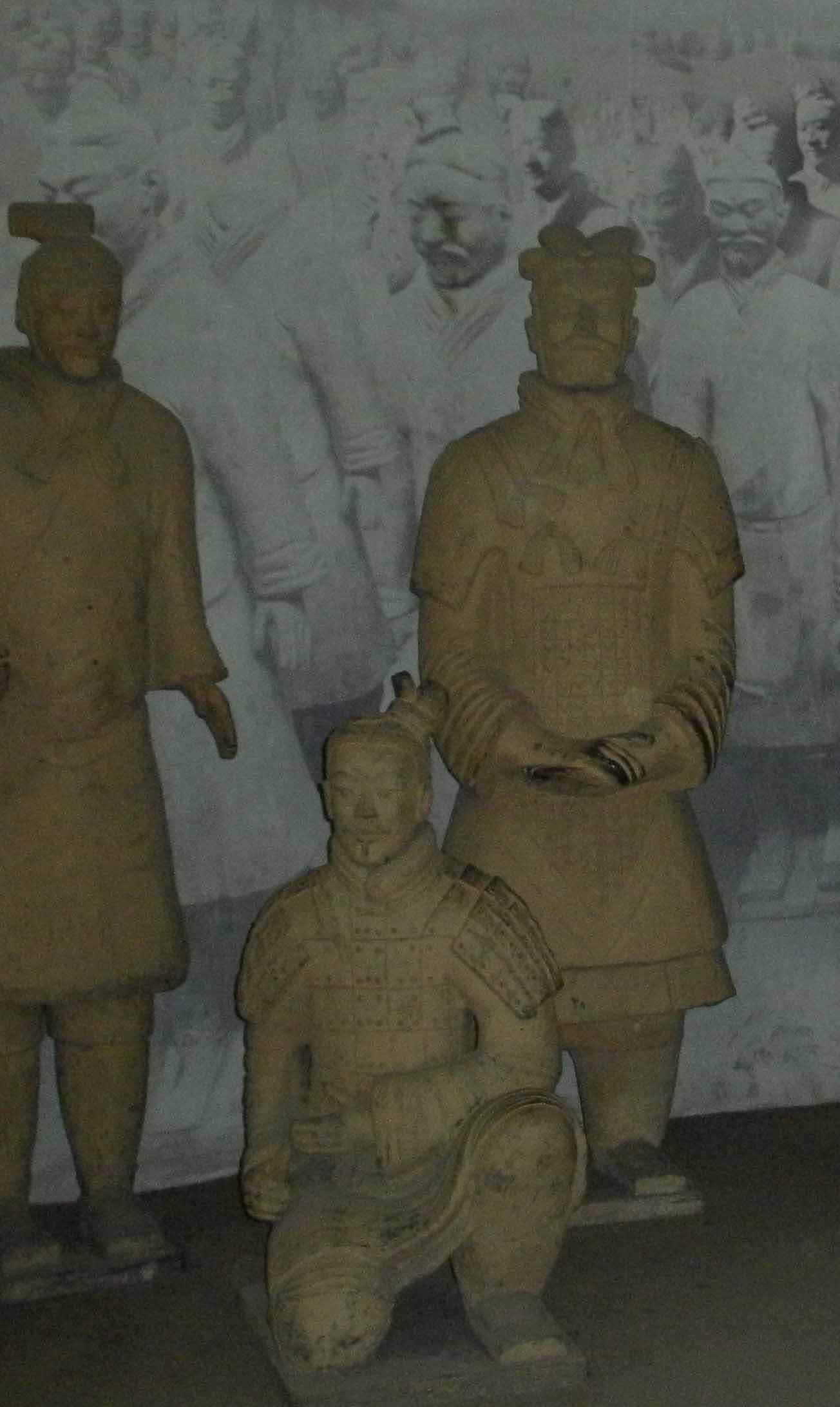
Qin Shi Huangdi commissions a Terra Cotta army that will guard him in death, and the troops are larger than life. In one pit, more than two hundred sets of armor made of stone have been found with no bodies to wear them.
It is believed that the armor may have been made for the spirits of dead soldiers who suffered violent deaths in combat so the dead would not become vengeful spirits.
The totalitarian philosophy in the new Chinese empire was called legalism.
Rules govern every part of every citizen’s daily life with the punishment spelled out. Physical punishment could mean mutilation.
For example, if two are caught having sex, they will be beheaded. Every aspect of private life is part of Qin law.
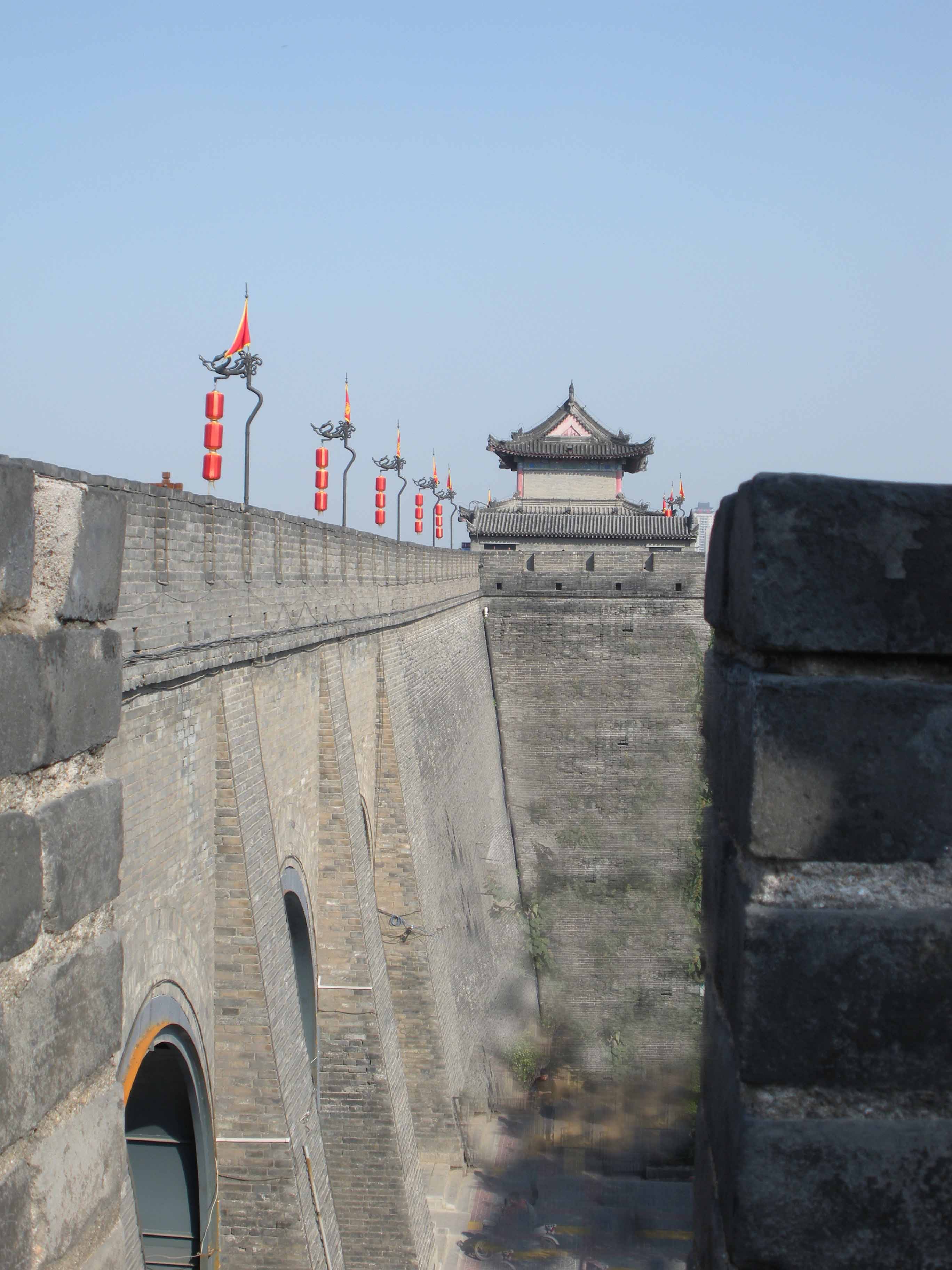
In 220 BC, Emperor Qin Shi Huangdi goes on an inspection tour of his empire. With the major wars over, millions of troops are put to work finishing the Great Wall of China, which was designed to stop the nomadic tribes to the north from raiding into China, which they have done for centuries.
The Great Wall is the greatest engineering project of the ancient world. It is thirty feet high and more than three thousand miles long. At one point, over a million people worked on the wall and about a quarter died.
The emperor makes more demands. He sends hundreds of thousands to build a tomb that fits his rank as the first divine emperor of China.
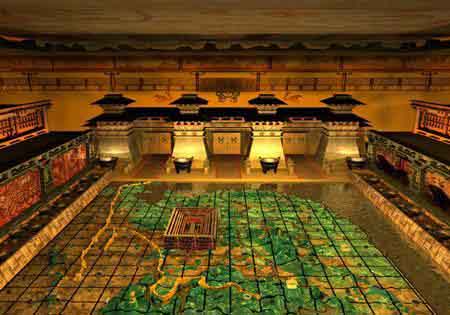
The burial mound, larger than the largest pyramid in Egypt, is at the center of an above ground and underground city. His tomb is made of bronze surrounded by
mercury rivers and oceans.
Recently, using ground penetrating radar and other instruments, a three dimensional model is built of this underground complex.
By 215 BC, Emperor Qin Shi Huangdi’s tomb is almost finished. The chamber where his body will rest is the size of a football field and will be hermitically sealed.
Then the tomb will be covered with a million tons of earth creating the hill we see today.

However, the Emperor doesn’t plan to die. Seeking advice from his doctor, he is given mercury capsules. At the time, it was believed that mercury would increase longevity.
Having lots of sex with multiple partners was also considered another way to increase life. The emperor follows the doctor’s advice and sends his doctor on an expedition to find an elixir for immortality.
The emperor isolates himself and delegates the power to rule the empire to those he trusts most. These men suppress free thought.
Entire libraries are burned. Those who try to hide documents are branded on the face and sentenced to a life of force labor — mostly on The Great Wall. Anyone who resists is buried alive.
Professor Jeffrey Riegel, of the University of California, Berkeley, says that Chinese archeologists have no immediate plans to unearth the tomb, because there is no way to safeguard the contents from decay.
Chinese alchemists knew liquid mercury as the only substance that could dissolve gold. To the ancient mind, that meant mercury had power that might prolong life.
However, the human body cannot absorb pure mercury so the Chinese alchemists made a compound the emperor could digest.
As the mercury is absorbed, it slowly destroyed his nervous system and brain.
Emperor Qin Shi Huangdi becomes aggressive, argumentative and paranoid. He goes into hiding. Anyone revealing his location is killed. His kidneys’ are failing and he starts talking to the gods.
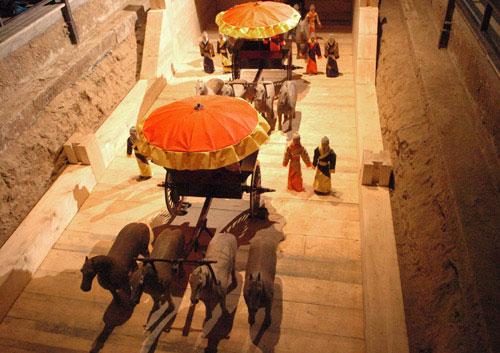
Thirty-five years after becoming the king of Qin at thirteen, he goes on another Imperial tour. But this time, he is blind to a nation that is bankrupt and near famine.
All the emperor can think about is living forever.
He’s told that giant fish guards the island of the immortals. The emperor dreams that he is a sea god who will kill the giant fish.
Near the end of 210 BC, he visits the ocean hunting the giant fish with a crossbow while wading in the surf.
His advisors plan what to do with China once the emperor dies. On the return to the capital, the emperor falls ill and the Imperial convoy stops.
In the seventh month of 2010 BC, the first emperor’s search for immortality ends. At the age of fifty, Qin Shi Huangdi is dead.
While China’s first emperor is being buried according to his wishes, a power struggle rages outside the tomb.
By tradition, the oldest son should have become the emperor but several ministers want a younger son on the throne. The others are assassinated and there is a slaughter.
The emperor will also not go alone to the afterlife.
While his chosen successors are being assassinated, hundreds of his favorite concubines will stay with their master and die with him.
The tomb’s designers and builders will be sealed in the tomb too. Everyone who knows the way dies.
Qin Shi Huangdi left a legacy—a unified nation with a single written language and a system of administration that is still in use today.
_______________
Lloyd Lofthouse is the award-winning author of My Splendid Concubine [3rd edition]. When you love a Chinese woman, you marry her family and culture too. This is the lusty love story Sir Robert Hart did not want the world to discover.

Subscribe to my newsletter to hear about new releases and get a free copy of my award-winning, historical fiction short story “A Night at the Well of Purity”.


 Posted by Lloyd Lofthouse
 iLook China