Vestiges of China’s Early Empires

August 8, 2010

 David Frum writes about China’s Early Empires referring to Belknap’s six-volume history of Imperial China. Frum says, “There is no Chinese equivalent of the Parthenon or the Roman Forum, no Pantheon or Coliseum.  For all its overpowering continuity, China does not preserve physical remains of the past… Lewis offhandedly mentions at one point that there remains not a single surviving house or palace from Han China. There are not even ruins,” which is wrong.

I recently wrote a three-part series about Han Dynasty tombs discovered in Xuzhou, which was the location of the capital of the Han Dynasty. The tombs, which had not been destroyed or looted, are now tourist attractions. A museum was built to house artifacts that were discovered. One tomb has a living room and a bedroom before the coffin chamber.  Since the tomb was built inside a hollowed-out mountain and made of rock, it survived more than two millennia with evidence of how the Han Dynasty lived then.

In fact, I’ve toured the Ming tombs, seen the graves of heroes from the Song Dynasty near the West Lake in Hangzhou, south of Shanghai.  Also, let’s not forget that the Grand Canal, which was started five centuries before the birth of Christ and is still in use today.

In fact, the Nationalists fled to Taiwan in 1949 with much of China’s imperial treasures.

Then, if you visit Tibet, there’s the Potala Palace, which was first built in 637 AD and is still lived in. Although much of ancient China has vanished, there are still vestiges that equal or surpass what the Roman and Greek civilizations left behind.

_______________

Lloyd Lofthouse is the award-winning author of the concubine saga, My Splendid Concubine & Our Hart. When you love a Chinese woman, you marry her family and culture too. 

Sign up for an RSS Feed for iLook China


Conversation—Sung Dynasty Philosophy

June 28, 2010

China may be the only ancient culture that survived the spread of Islam and Christianity and managed to hold onto its identity.

________________________________

“Guan-jiah,” Robert said, “before I came to China I read The Travels of Marco Polo. Do you know who he was?”

“No, Master,” Guan-jiah replied.

“He came to China from Europe more than six hundred years ago and served under Kublai Khan during the Yuan Dynasty. Polo wrote that Hangzhou was the finest and noblest city in the world.”

“Hangzhou was the capital of the Southern Sung Dynasty, Master,” Guan-jiah said. “I’ve heard it is beautiful. Sung philosophy says that we have the power in our minds to overcome our emotions.”

“Marco Polo believed it was God’s will that he came back from China so others in the West might know what he’d seen.” Robert turned to his servant, who was the last in line. “Do you believe in this Sung philosophy, Guan-jiah?”

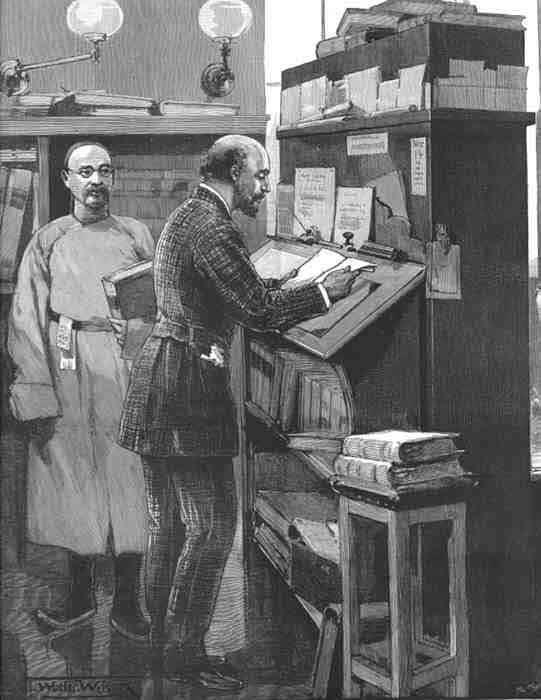
Guan-jiah and Robert Hart - 19th century China

“The Sung said that if you know yourself and others, you would be able to adjust to the most unfavorable circumstances and prevail over them.”

“That’s admirable, Guan-jiah. You never mentioned you were a scholar. If the Sung Dynasty was that wise, I want to see Hangzhou one day.”

“I am no scholar, Master, but I must believe in the Sung philosophy to survive. I have read and contemplated much literature. However, I am like a peasant and have never mastered calligraphy. It is a skill that has eluded me.”

“How old were you when you studied this philosophy?”

“I was eleven, Master, two years after I was sent to Peking.”

Source: From Chapter 4, My Splendid Concubine
See The Influence of Confucius

_________________________

Lloyd Lofthouse,
Award winning author of Hart’s concubine saga, My Splendid Concubine & Our Hart. When you love a Chinese woman, you marry her family and culture too. 

Sign up for an RSS Feed for iLook China


Mao Weitao and Yue Opera

March 14, 2010

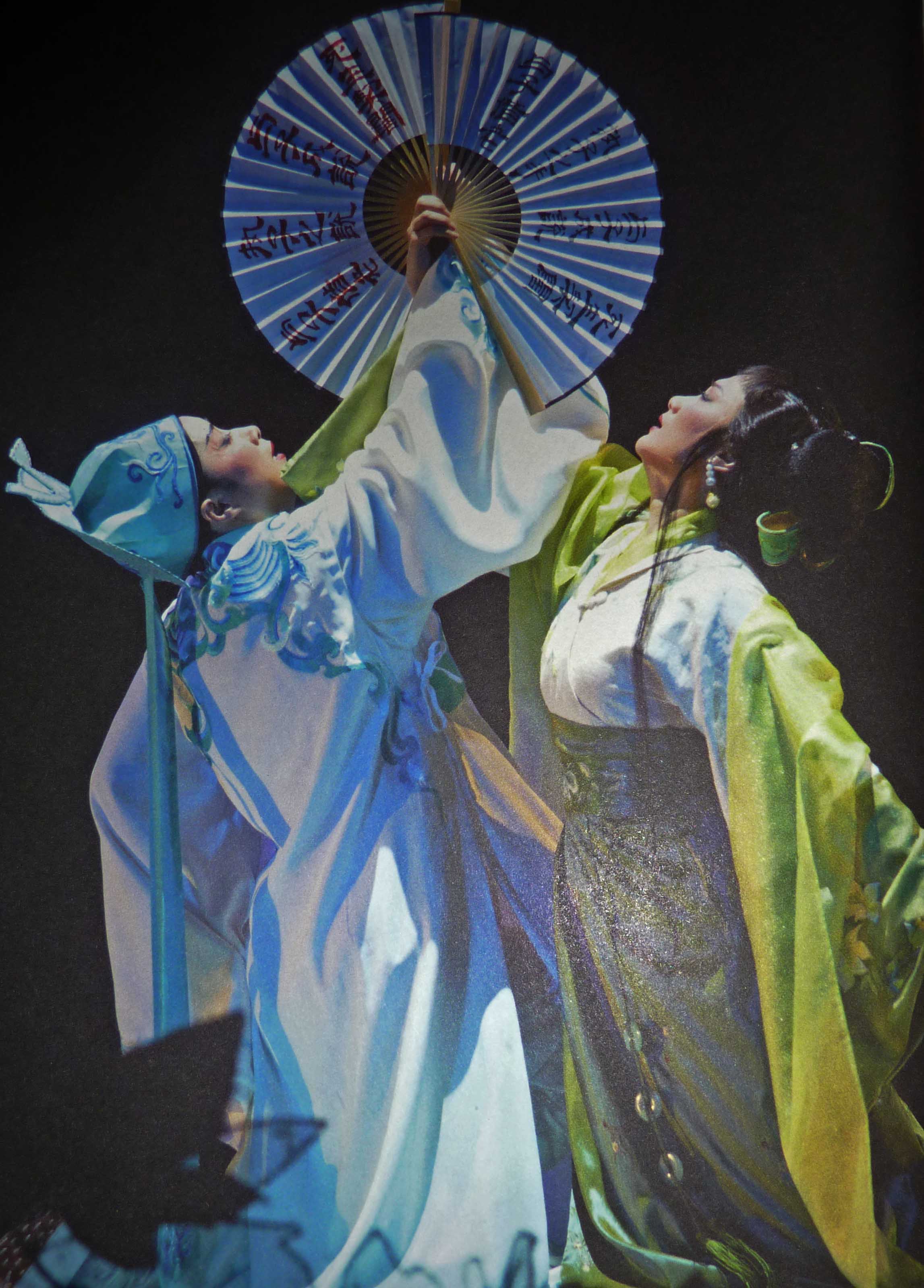
Mao Weitao is considered a living treasure in China. She imitates men in the opera roles she plays—a reversal from Imperial China when women were not allowed on stage so men played female roles.

Mao Weitao is on the left

I was introduced to Yue Opera in Hangzhou, Zhejiang Province about a decade ago. Mao Weitao and her husband have their own theater company near the shores of the famous Westlake. My wife translated while I watched the live-opera performance in fascination.

The costumes were lavish and the acting and opera was dramatic with a backdrop of classical Chinese music.

The challenge today is to keep this form of Chinese opera alive. The audience for opera is shrinking dramatically in China while remaining popular with the older generation. Television, movies and the Internet are claiming the shorter attention spans of the younger people.

Mao Weitao, considered an innovative genius on stage, adapts and works to keep the art form alive. According to her husband, no two performances are exactly alike.

Discover The Orphan’s Life

_______________

Lloyd Lofthouse is the award-winning author of My Splendid Concubine [3rd edition]. When you love a Chinese woman, you marry her family and culture too. This is the love story Sir Robert Hart did not want the world to discover.

His latest novel is the multiple-award winning Running with the Enemy.

Subscribe to “iLook China”!
Sign up for an E-mail Subscription at the top of this page, or click on the “Following” tab in the WordPress toolbar at the top of the screen.

About iLook China


My Big Day Off – In China

February 25, 2010

This guest post from Bob Grant is a long piece with a lot of pictures.  If you want to see more of  Hangzhou and the Westlake, I recommend that after you read the first two paragraphs, you click on the link and visit “Speak Without Interruption.”  My wife and I have visited this city and lake several times over the years and I enjoyed Bob’s piece about his visit and had a few good laughs.

Originally published at Speak Without Interruption on February 11, 2010 by Bob Grant — publisher/editor for Speak Without Interruption

Below is something that I sent to my family and they all said they liked it.  However, they are family and what else could they say?  I have a manager/partner in China whose name is David – we have associates named Eric and Uncle Wong.  I live in Missouri and my relatives live in Wyoming.  This sets the stage for the following recap of My Big Day Off – In China:

We found ourselves on a Saturday in a city I have visited before named Hangzhou (Han-Joe) with no appointments and time on our hands before our plane departed for Shenzhen (Sin-Gin).  There is a lake in Hangzhou named West Lake.  Not a very original name for the Chinese, but using Chinese logic, I am certain – somewhere – there is a North Lake, South Lake, Southeast Lake, Southwest Lake, South South Lake – you get the picture.  The possibilities are endless.
 
David said, “Let’s take a boat ride.”  Great – sounded like a good idea.  Sitting quietly in a boat watching the countryside and relaxing – NOT.  Think Progressive Dinner.


Risks on the Road

February 23, 2010

I’ve learned that the Chinese don’t restrict gambling to lotteries, dice or cards.  They also gamble on real estate along with any venture that might turn a profit.

Most Chinese are born entrepreneurs. I’ve read that the Chinese invented paper money and added credit to banking a thousand years ago during the Sung Dynasty. The Chinese are masters at doing business and that’s probably why my wife, who is Chinese, warned me not to do business in China. Do not misread my words—I don’t mean Westerners shouldn’t work with the Chinese. Read my piece on Doing Business in China or what Bob Grant has to say on the topic.

However, it was during a trip to the shores of the Westlake in Hangzhou where I learned how far Chinese drivers are willing to take risks to earn quick dollars. 

Traffic in China. This is mild!

On a drizzly, cold evening, we hired a three-wheeled motorcycle to carry us to the lake where there is a paved walkway along the shore.  It was raining but we had umbrellas. The driver decided traffic was too slow on the right side of the road so he drove onto the walkway where a police officer appeared from the shadows, blew a whistle and waved him off.

Then the driver drove down the wrong side of the street with a wall of traffic headed toward us. We were sitting on a seat behind the driver of a three-wheel motorcycle.

There was a bus in the lane we were in and the bus started to flash its lights.  Our driver did not blink, and the bus swerved out of the way.  All the cars behind the bus went around us too as if our driver were Moses parting the Red Sea.

We reached the lake alive, and the driver went in search of another paying customer.