Great Generations

May 7, 2010

America and China both have a generation that matured during tough times.

I wonder if the American generation that survived the Dust Bowl of the 1930s, the Great Depression and won World War II, would riot like these Greek mobs

My parents were from the Great Depression generation. At fourteen, my dad went into the mountains near Los Angeles to fill fifty-pound bags with oak leafs for a nursery, and he mucked out horse stalls at Santa Anita. At fourteen, my mom was a server in a coffee shop in Eugene, Oregon. She supported her mother and younger sister from the tips. Mom and dad weren’t perfect. They had vices.
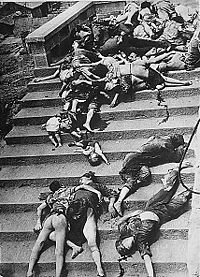
Japanese invasion of China, World War II, Chungking

What happened to America after World War II is happening in China today. The Chinese who are turning China into a super power are the ones who fought the Japanese during World War II, who won the revolution to free China from Chiang Kai-shek’s Kuomintang dictatorship and threw off the yoke of Western Imperial colonialism. They also survived the deprivations and repressions of the Cultural Revolution under Mao.

Hardships breed survivors, who do not riot when economies collapse. They work for less at any job. They eat yams, rice and soybeans instead of ice cream, candy, French fries, drinking sodas or Starbuck’s lattes.

People from the great generations did without TVs and iPods. They survived without phones and the Internet. They saved and paid with cash instead of using credit cards.

Discover more from Deng Xiaoping’s 20/20 Vision

Lloyd Lofthouse is the author of the award winning novels My Splendid Concubine and Our Hart. He also Blogs at The Soulful Veteran and Crazy Normal.

Sign up for an RSS Feed for iLook China


Change Mandated by Heaven

April 15, 2010

To many Chinese, the Taiping and Boxer rebellions failed because they were not blessed by Heaven. After World War II, when Mao’s Communists defeated the Nationalists, who— protected by America—fled to Taiwan, a case could be made that it was the Mandate of Heaven that brought about this change since World War II caused many in China to lose their lives demonstrating the Kuomintang’s inability to protect the Chinese people.

Chang Kai Shek - Leader of the Kuomintang

When Mao died, the new chairman of China’s Communist Party, Hua Guofeng, ordered the arrest of the Gang of Four. Almost everyone connected to the Gang of Four, which included Mao’s wife, Jian Qing, became non-persons. Some went to prison and died like Mao’s wife. Others were pushed aside and ignored. Since millions died due to the Cultural Revolution, they had lost the Mandate to rule.

Deng Xiaoping repudiated the Cultural Revolution and in 1977 launched the ‘Beijing Spring’, leading to a market economy and China’s prosperity today. The suffering that occurred during much of Mao’s twenty-seven year rule was criticized openly making if official that Mao had lost the Mandate of Heaven. After all, more than thirty-million Chinese died horrible deaths due to the Great Leap Forward and the Cultural Revolution.

See Deng Xiaoping’s 20/20 Vision http://wp.me/pN4pY-2o

Sign up for an RSS Feed for  iLook China


Walking Barefoot on a Double Edged Blade

March 27, 2010

From what I’ve learned, when Mao died, many Chinese were tired of the Communists because of  the Cultural Revolution. If Deng Xiaoping hadn’t introduced a market economy resulting in decades of growth and prosperity, China may have fallen into chaos to emerge with a dictator similar to what they had with the Kuomintang.

Nichols Kristof

Nicholas Kristof wrote, China & Google (New York Times, March 24, 2010), an opinion piece that gets closer to the truth about China. Kristof seems to know what he is talking about when he said, “They (ordinary Chinese) don’t gripe  a lot about the regime imprisoning dissidents, who mostly have a negligible following around the country.”

It’s probably true that many in China want to have free access to the Internet, but I doubt it is serious enough to cause concern. The biggest concern is raising the standard of living for the 800 million rural Chinese who have not cashed in on the prosperity.

When there are accusations from Washington that China isn’t playing fair with currency control, China has a choice. Give in and wait for hundreds of millions of unhappy Chinese to rebel or stand firm and continue to grow the economy.

As far as Google is concerned, China has Baidu (with more than 60% of the market) and shedding Google probably feels like passing gas in public.


Balzac and the Little Chinese Seamstress

March 18, 2010

Based on a novel written by Dai Sijie, who also directed the film.
ISBN: 978-0385722209
Publisher – Anchor (October 29, 2002)

I read Balzac and the Little Chinese Seamstress soon after it came out.  A few years later, we drove more than sixty miles to see the Mandarin language movie. Checking Amazon this morning, I saw there have been 230 customer reviews for the book with a four out of five star average. This short novel spent twenty-three weeks on the New York Times best-seller list. The author, born in China, moved to France where he learned to read, speak and write French. The book was originally written in French and translated into English by Ina Rilke.

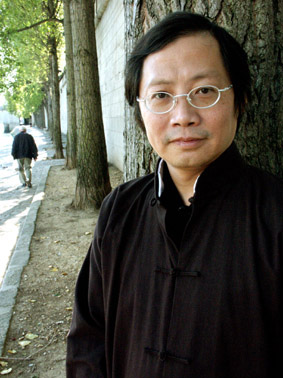
Dai Sijie

The story is about two likable, teenage boys and their struggle after being banished to a peasant village for “re-education” during the Chinese Cultural Revolution. Sons of doctors and dentists, the boys work at muscling buckets of excrement up the mountainside and mining coal. Then there is the little seamstress of the title, whom Luo, one of the boys, falls in love with. He dreams of transforming the seamstress from a simple country girl into a sophisticated lover. He succeeds beyond his expectations, but the result is not what he expected.

This link goes to the Mandarin language DVD with English subtitles.

Discover more Chinese cinema through Joan Chen’s Xiu Xiu: The Sent Down Girl

______________________________

Lloyd Lofthouse is the award-winning author of My Splendid Concubine [3rd edition]. When you love a Chinese woman, you marry her family and culture too. This is the lusty love story Sir Robert Hart did not want the world to discover.

#1 - Joanna Daneman review posted June 19 2014

Where to Buy

Subscribe to “iLook China”!
Sign up for an E-mail Subscription at the top of this page, or click on the “Following” tab in the WordPress toolbar at the top of the screen.

About iLook China

China’s Holistic Historical Timeline


About Tibet

February 16, 2010

How does Communist China treat its minorities compared to the way minorities have been treated in the Americas?

Yes, human rights violations did happen in Tibet, but most happened during the Cultural Revolution. Mao ruled China for twenty-seven years (1949 – 1976) but the Cultural Revolution started in the mid 1960s and ended in 1976 with his death, and everyone in China suffered during that decade.

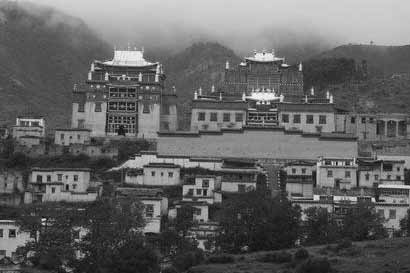
Since Mao considered Tibet to be part of China (and recorded, nonbiased evidence from primary sources prior to the rise of Communism supports that claim), those who suffered in Tibet were treated the same as the rest of China. Monasteries in Tibet were destroyed–but this was going on everywhere in China and after 1976 many of the major monasteries were rebuilt by China.

The next post shows what happened after Mao died—facts we seldom if ever hear. It is always good to have the facts to see who sins and who doesn’t.

Learn what happened After Mao and more about Tibet – Inside China

______________

Lloyd Lofthouse is the award-winning author of the concubine saga, My Splendid Concubine & Our Hart. When you love a Chinese woman, you marry her family and culture too.

If you want to subscribe to iLook China, there is a “Subscribe” button at the top of the screen in the menu bar.