What’s the color of your flag? Part 2 of 2

October 28, 2015

Ai Weiwei was warned by representatives of the lawful government of the People’s Republic of China (PRC) to stop his illegal activities (according to Chinese law).

In such cases, it is common to receive an invitation to tea, which may not be refused, where the person responsible for what is considered counter-revolutionary activities (or another crime against the state) is told to stop or face the full might of China’s law.  China is not like Hitler’s Germany where the Gestapo showed up without warning and carried citizens off to be roasted or gassed by the millions.

The facts speak for themselves. Ai Weiwei refused to cooperate, and he violated Chinese law, and he was locked up in 2011, but he isn’t locked up now because he was released the same year.

CNN doesn’t mention Ai Weiwei was alleged to have been in violation of the 1982 Chinese Constitution, which says in Article 28, “The state maintains public order and suppresses treasonable and other counter-revolutionary activities; it penalizes actions that endanger public security and disrupt the socialist economy and other criminal activities, and punishes and reforms criminals.”


US Marines Marching

The PRC did not hiding anything except where Ai Weiwei was locked up and the details behind his crime. Even in the US, the authorities are often denied the right to talk about an alleged criminal and the facts behind a legal case to the press.

I’ve read in the past where some Western critics say that Chinese law is difficult to interpret and has loopholes that the PRC may use to the Party’s advantage.

Since when was any law in any country easy to understand?  If you aren’t an American lawyer, how easy is if to understand the U.S. legal system, and doesn’t the U.S. have loopholes that the wealthy and corporations take advantage of not to pay taxes in America? In fact, President Ronald Reagan didn’t pay any tax one year, and he said loopholes in the law allowed it.

Compare the language of the 1982 Chinese Constitution to the U.S. Constitution and anyone can see the differences.

In addition, Article 53 of the Chinese Constitution says, “Citizens of the People’s Republic of China must abide by the constitution and the law, keep state secrets, protect public property and observe labour discipline and public order and respect social ethics.”


PRC Troops and Flag Ceremony

An amendment to Article 13 was revised to say, “Citizens’ lawful private property is inviolable” and “The State, in accordance with law, protects the rights of citizens to private property and to its inheritance” and “The State may, in the public interest and in accordance with law, expropriate or requisition private property for its use and shall make compensation for the private property expropriated or requisitioned.”

In fact, nowhere in the CNN piece does it explain that no one owns land or houses in China as they do in the U.S. It’s more like a lease with the right to pass that property on to someone else in the family after death.

What happens in the U.S. if the property tax isn’t paid? Does anyone really own the house and land they live on?

China’s flag isn’t red, white and blue. Instead, it is red and gold.

The red of the Chinese flag symbolizes the communist revolution, and it’s also the traditional color of the people. The large gold star represents communism, while the four smaller stars represent the social classes of the people. In addition, the five stars together reflect the importance placed on the number five in Chinese thought and history. Source: World Atlas

Maybe Ai Weiwei forgot which flag flies over his country or is he color blind?

Return to or start with Part 1

______________________________

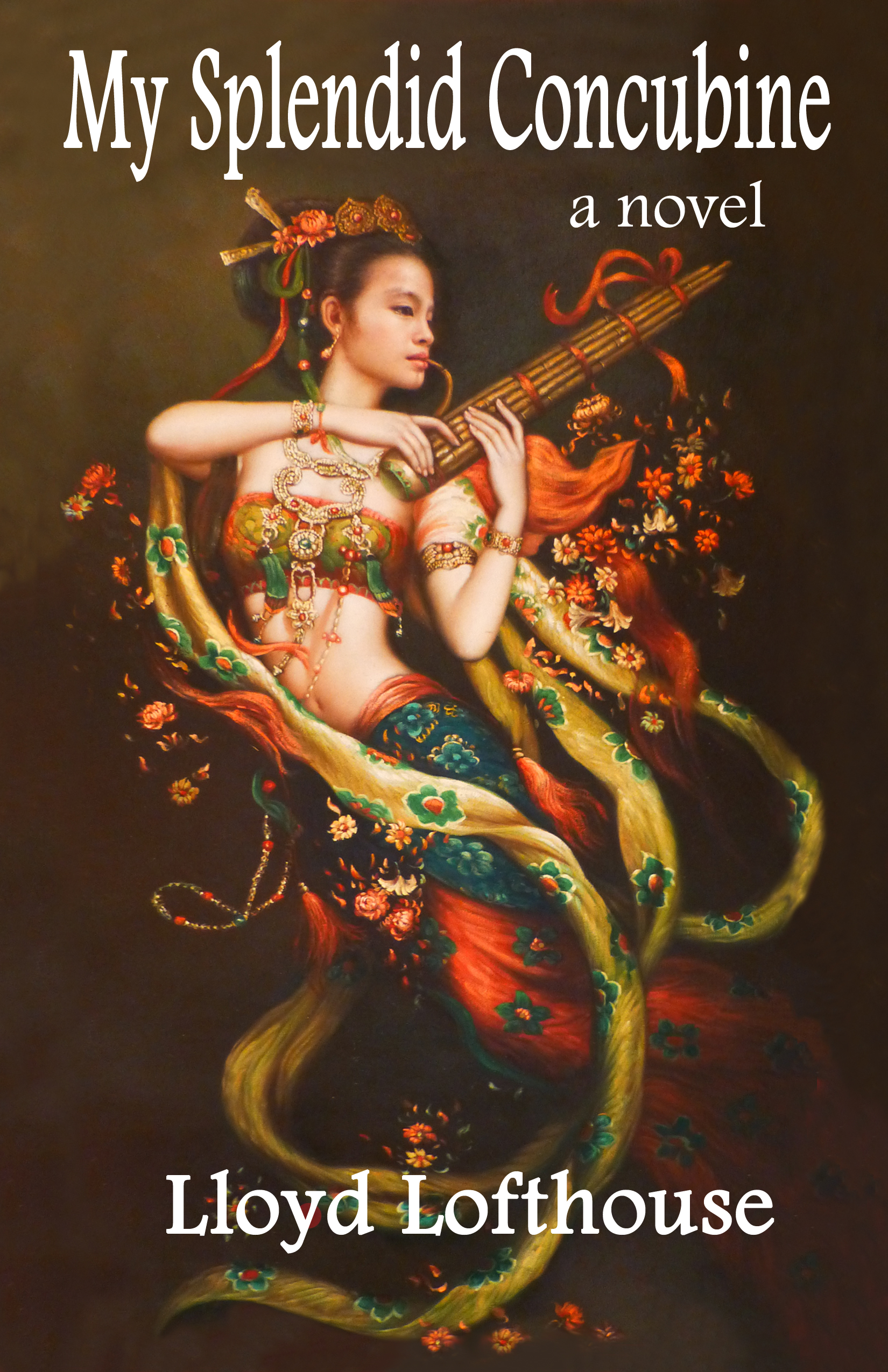
Lloyd Lofthouse is the award-winning author of My Splendid Concubine [3rd edition]. When you love a Chinese woman, you marry her family and culture too. This is the lusty love story Sir Robert Hart did not want the world to discover.

IMAGE with Blurbs and Awards to use on Twitter

Where to Buy

Subscribe to “iLook China”!
Sign up for an E-mail Subscription at the top of this page, or click on the “Following” tab in the WordPress toolbar at the top of the screen.

About iLook China

China’s Holistic Historical Timeline


I hope China is NOT Learning from the U.S. Playbook

October 13, 2015

I laughed when I finished reading China Takes a Page from U.S. Playbook on The Heritage Foundation Blog.

It seems that China has launched a PR campaign similar to Voice of America, and The Heritage Foundation was bothered by the size of China’s effort.

The Voice of America, according to The Heritage Foundation, broadcasts in 32 languages from short-wave radio stations on 200 frequencies, while China Radio International now broadcasts in 45 languages using 284 frequencies.

The Heritage Foundation said the problem is China’s authoritarianism with a capitalist economic overlay, which reminded me of imperial governments such as the British Empire during the 19th and early 20th century.

What if America were an authoritarian state too? The facts make a strong case that the U.S. is a global authoritarian power.

I’ve always believed that if you want to learn what a person or nation is really like, pay attention to what they do and not what they say.

THE FACTS

  • The United States has the most people in prison – about 751 for every 100,000 people, while China has 119 per 100,000 with more than four times the population of the U.S.
  • Of 218 nations, China was 115 on the list and the U.S. was number one. Source: List of countries by incarceration rate
  • The US operates and/or controls between 700 and 800 military bases worldwide in about 63 countries, while China has no military bases outside of China. Source: Global Research
  • China has about 1,900 combat aircraft and 760 naval ships compared to the U.S. that has about 18,000 combat aircraft and more than 1,500 naval ships.
  • China has about 240 nuclear warheads, while the U.S. that has more than 5,000. Source: Global Fire Power

The PRC was founded in 1949 and the United States in 1776. How many wars has each nation fought since achieving independence?

China’s Wars
(I did not list China’s problems with Tibetan and Islamic separatists or the Falun Gong)

  • Korean War (1950-53) China entered the war in support of North Korea
  • Sino-Indian War (1962) The cause of this war was a dispute over the sovereignty of a border region. In 1959, India sent troops and border patrols into the disputed areas. This created both skirmishes and deteriorating relations between India and China. After the war started, when Chinese troops reached the border that China claimed, the PLA stopped advancing, and China declared a unilateral cease-fire.  India still has border disputes with China, Pakistan and Nepal that have not been resolved. Source: International Boundary Consultants
  • A border-war with Vietnam (1979), which I covered in another post.

America’s Wars
(This list represents only wars. I left out the military operations that were not considered wars because there were too many to list)

  • Second Cherokee War (1776-1777)
  • Chickamauga Wars (1776-1794)
  • Northwest Indian Wars (1785-1795)
    Note: The complete list of wars against Native Americans was too long to list.
  • Shay’s Rebellion (1786-1787)
    Note: Most of Shays’ compatriots were poor farmers angered by crushing debt and taxes. Failure to repay such debts often resulted in imprisonment in debtor’s prisons or the claiming of property by the government.
  • A Quasi-War with France (1798-1800)
  • First Barbary War (1801-1805) Tripoli declared war on the United States
  • The War of 1812 (lasted two years – the U.S. Declared War on Great Britain)
  • Second Barbary War, which is also known as the Algerian War (1815)
  • First Seminole War (1816-1818) The U.S. started it.
  • Mexican American War (1846-1848) Mexico attacked after the U.S. annexed Texas in 1845.
  • Utah War (1857-1858)
  • American Civil War (1861-1865)
  • An American led revolution in the Kingdom of Hawaii (1888-1889)
  • The Spanish-American War (1898) The U.S. declared war on Spain
  • The Second Samoan Civil War (1898-1899)
  • Philippine-American War (1899-1913)
  • World War I (1917-1918) the United States Declared War on Germany
  • World War II (1941-1945) Japan attacked the United States
  • The Korean War (1953-1953) The U.S. responded to a North Korean invasion of South Korea, which was also ruled by a dictator.
  • The Vietnam War (1959-1975) The United States declared war to protect the freedom of South Vietnam, which was ruled by a dictator
  • Persian Gulf War – Operation Desert Storm (1991) Started by the U.S.
  • War in Afghanistan & the war on terror (2001 – ) The U.S. invaded in response to 9/11
  • Invasion of Iraq (2003 – ) The U.S. invaded due to suspicions of WMD that were never found.
    – Timeline of United States Military Operations

What happens if China does copy the U.S. in all things global?
Do you really want that to happen?

__________________________________

Lloyd Lofthouse is a former U.S. Marine and Vietnam Veteran, with a BA in journalism and an MFA in writing, who taught in the public schools for thirty years (1975 – 2005).

99 Cent Graphic for Promomtion OCT 2015

Where to Buy

Subscribe to “iLook China”!
Sign up for an E-mail Subscription at the top of this page, or click on the “Following” tab in the WordPress toolbar at the top of the screen.

About iLook China

China’s Holistic Historical Timeline


A few China versus U.S. questions I have been thinking about for some time

February 17, 2015

In this post there will be a few questions I’m going to answer, but leave others for you—if you want to leave a comment.

First, the dictionary definition for Communism: a theory or system of social organization based on the holding of all property in common, actual ownership being ascribed to the community as a whole or to the state.

What about the definition of socialism—after all, capitalists hate both communism and socialism? Socialism means a political and economic theory of social organization that advocates that the means of production, distribution, and exchange should be owned or regulated by the community as a whole.

How many of the 1.3+ billion people in China belong to the Chinese Communist Party (CCP)? There are 86.7 million members in the CCP and most if not all of the millionaires and billionaires in China are invited to join the CCP after they get rich and are screened, and many of the members who are not millionaires or billionaires have secure jobs, responsibility, power and earn money legally or illegally, but taking money illegally might be dangerous. The CCP aggressively prosecutes white collar crooks if they catch them and sends some to prison and executes a few—white collar crime is not a safe  profession in China. In fact, CBS reported that “82,533 Communist Party members had been investigated. Some lost their jobs; others kicked out of the Communist Party … And no one, no matter how high-ranking, appears safe.”

With 6.7% of the population belonging to the CCP that means 93.3% are not Communists—they just live in a country where actual ownership of everything belongs to the collective and/or the state. You don’t buy property in China. In urban China, you lease it and you can sell the lease to someone else, but in most of rural China the land is owned jointly by the people and the state. There is no rent, no mortgage and no property tax. You also can’t sell the house you live or the land you farm. Rural Chinese might not earn much money, but they also don’t get evicted by the bank for missing mortgage payments.

There are essentially two kinds of land ownership in China, state ownership and collective ownership. Rural land, or housing land and the household contract farmland, is collectively owned. Farmers are part of the collective community and have property rights to their land, but with restrictions. – China.org.cn

In addition, in the last 30 years, China is responsible for 90% of global poverty reduction. Since the start of the far-reaching economic reforms in the late 1970s, growth has fueled a remarkable increase in per capita income and a decline in the poverty rate from 85% in 1981 to 6.1% below the poverty line in 2014.

At no stage over the past 30 years has the CCP relinquished control of the “commanding heights” or “levers” of the Chinese economy: agricultural pricing, heavy industry, power and energy, transport, communications, foreign trade, and finance (state banks). – Marxism-Leninism Today

China now boasts 350 million middle-class citizens (more than the entire U.S. population). In addition, China has 2 million millionaires and ranks second only to the U.S. in terms of billionaires. Some 100 million Chinese traveled outside their country this year, and spent an astounding $7,500 per person, per trip, the highest in the world. – The Middle Class: China’s Game-Changing Demographics

For the United States, keep in mind that capitalism does not equal democracy. Capitalism is an economic and political system in which a country’s trade and industry are controlled by private owners for profit, rather than by the state. But a democracy is a system of government by the whole population or all the eligible members of a state, typically through elected representatives—but these days it sure doesn’t feel like it is working that way.

It is possible for a democracy and socialism to exist in the same country.Those countries are called social democracies. In fact, three of the happiest countries in the world are social democracies: Denmark, Finland and the Netherlands. The 10 most socialist countries in the world are: China, Denmark, Finland, Netherlands, Canada, Sweden, Norway, Ireland, New Zealand and Belgium.

There are more than 316.1 million Americans, and how many are successful capitalists? CNN reports that there are 9.63 million millionaires (3% of the population), and 492 billionaires (0.00015% of the population).

Is it possible that in the U.S. the 3.00015% or the 0.00015% want to rule over the remaining 96.99% like the 6.7% does in China for the 93.3%—something to think about? Are some of these U.S. millionaires and billionaires envious of the CCP’s power?

The U.S. has a poverty rate of almost 15%, and poverty has been increasing in recent years. There is also a 2nd poverty rate in the US, and it’s called Extreme Poverty. In fact, in 1900, before the Progressive era launched by President Teddy Roosevelt to make life better for most Americans, 40% of Americans lived in poverty and less than 7% graduated from high school.

Using a World Bank definition, “extreme poverty” is surviving on less than $2 per day, per person, each month. The National Poverty Center finds that 1.65 million American households (not people but families) live in “extreme poverty,” and these households include 3.55 million children.

America has protection for freedom of speech, but China doesn’t. However, the U.S.—even with freedom of speech—has the largest prison population on the planet (2.2+ million), more than China (1.7+ million) that has the second largest prison population, but more than four times the population of the United States.

To compare it another way—the United States has 707 prisoners per 100,000 versus China with 124 per 100,000 behind bars—think about it.

What about cracking down on white collar crime in the United States like China is doing? The New York Times reports, “In Financial Crises, No Prosecutions of Top Figures.” And The New York Times asks, “It is a question asked repeatedly across America: why, in the aftermath of a financial mess that generated hundreds of billions in losses, have no high-profile participants in the disaster been prosecuted?”

For all the problems the U.S. has, I don’t plan to move to China, because the air is cleaner where I live in the United States—but if the Koch brothers and Standard Oil have their way that could change. I also prefer shopping at Costco, Trader Joes, Whole Foods and farmers’ markets for organic fruits and vegetables—although a few U.S. corporations are lobbying to ruin that too.

_______________

Lloyd Lofthouse is the award-winning author of My Splendid Concubine [3rd edition]. When you love a Chinese woman, you marry her family and culture too. This is the lusty love story Sir Robert Hart did not want the world to discover.

Finalist in Fiction & Literature – Historical Fiction
The National “Best Books 2010” Awards

E-book_cover_MSC_July_24_2013

Honorable Mentions in General Fiction
2012 San Francisco Book Festival
2012 New York Book Festival
2012 London Book Festival
2009 Los Angeles Book Festival
2009 Hollywood Book Festival

Subscribe to “iLook China”!

Sign up for an E-mail Subscription at the top of this page, or click on the “Following” tab in the WordPress toolbar at the top of the screen.

About iLook China

China’s Holistic Historical Timeline