China gains face through 2009 PISA

April 1, 2013

The Program for International Student Assessment (PISA) is an international assessment that measures 15-year-old students’ reading, mathematics, and science literacy. PISA also includes measures of general or cross-curricular competencies, such as problem solving. PISA emphasizes functional skills that students have acquired as they near the end of compulsory schooling. Source: National Center for Education Statistics

When I first visited China in 1999, my wife warned me that the Chinese men I might witness peeing or defecating in public parks (there weren’t many public toilets then—China started building public toilets to get ready for the 2008 Olympics) in Shanghai were peasants from rural China.

In fact, where my wife grew up in Shanghai (in the picturesque French sector), there was one toilet in a three-story house where several families lived and the stove was next to the toilet.

Since then, I learned that China is one country with many cultures and languages. Even rural and urban China is different as the US is to rural Mexico.

However, after the 1980s, hundreds of millions of rural Chinese migrated to the cities to find jobs that paid better than being a peasant still stuck in the Middle Ages.

Unfortunately, these people sometimes called Stick People brought their (uncivilized by Western standards) rural habits with them.

In 1999, I witnessed rural Chinese near Xian living in huts made of straw with dirt floors, no plumbing and no toilets.

This is what the CCP inherited when it came to power in 1949. The Party did not create this situation. After Mao died, the Communist Party had to rebuild an educational system that had been devastated by a Civil War, World War II and then the Cultural Revolution and before then there was little or no educational system in rural China.

Most of the schools in China up until 1950s were in the cities and focused on educating the elite.

It wasn’t until the 1980s, that the CCP started to rebuild and revise China’s public education system. Over time, the education system spread from urban to rural China where it is still being developed.

Imagine what the effort must have been for the CCP to educate a population that was about 80 percent illiterate in 1976 to 2009 when randomly selected 15-year old Chinese students in Shanghai earned the highest scores in the world on the PISA (Program for International Student Assessment) test beating 65 other nations including the United States.

Shanghai’s fifteen-year-old students scored 556 in Reading (PISA average 493), 600 in Math (PISA avr. 496) and 575 in Science (PISA avr. 501).

Second place went to South Korea with 539 in Reading; Singapore with 562 Math, and Finland with 554 in Science. Source: Our Times.com

The results of the 2012 PISA will be released December 3, 2013. Will the United States improve its scores? Will China be number one again?

_______________

Lloyd Lofthouse is the award-winning author of My Splendid Concubine [3rd edition]. When you love a Chinese woman, you marry her family and culture too. This is the love story Sir Robert Hart did not want the world to discover.

Subscribe to “iLook China”!
Sign up for an E-mail Subscription at the top of this page, or click on the “Following” tab in the WordPress toolbar at the top of the screen.

About iLook China


Meet China’s Legless Iron-Willed Man, Chen Zhou

March 27, 2013

Chen Zhou’s says, God of Heaven took my legs, but he gave me a beautiful wife and a pair of healthy children granting me a platform where I can make my life meaningful. Everyone gets knocked down in life. The winners get up no matter how many times they get knocked down. I’ll keep fighting as long as I breathe.

Born in 1983, Chen Zhou, age 30, lost his legs in a train accident when he was age 13. He then started singing for money on the streets.

To survive, he also shined shoes, sold newspapers and repaired electronic appliances.

Today, Chen Zhou is more than a traveling musician. He is a mountain climber, an inspirational speaker and an advocate for the handicapped.

In fact, he has climbed China’s Five Great Mountains including Mount Tai eleven times (more than 5,000 feet above sea level—the base starts at 490 feet—an elevation gain of more than 4,500 feet). Mount Tai has been a place of worship for at least 3,000 years and has served as one of China’s most important ceremonial centers—emperors often traveled to the summit of Mount Tai to pay homage to heaven.

Chen Zhou mountain handstand

On Top of Mountain

The stone stairway to the summit has 7,200 steps. To give you an idea of how high that is, the stairway in a two story house usually has 14 steps. If Mount Tai were a house, it would be about 514 stories high. For a comparison, the tallest building in the world, the Burj Khalifa in the United Arab Emirates, only has 163 floors.

To walk up those steps with his arms, Chen Zhou uses a pair of home-made wooden boxes that each weighs seven pounds (watch videos to see how he does it).

Yu Lei is Chen Zhou’s wife, originally from Henan Province. They first met when she heard him singing in the streets for donations in the town of Jiu-jiang in Jiangxi Province.

She was deeply touched by his story, introduced herself and they became friends.

Marriage Photo
Wedding

Chen’s positive attitude toward life and powerful will impressed Yu so much that she fell in love with him, and they married. She felt that she had found her hero.

Chen Zhou promised to have a traditional wedding ceremony on the top of Mount Tai. It took him 19 hours to complete the hike to the summit. In the ceremony both Chen Zhou and Yu Lei wore bright red Chinese traditional costumes to celebrate their marriage and happiness.

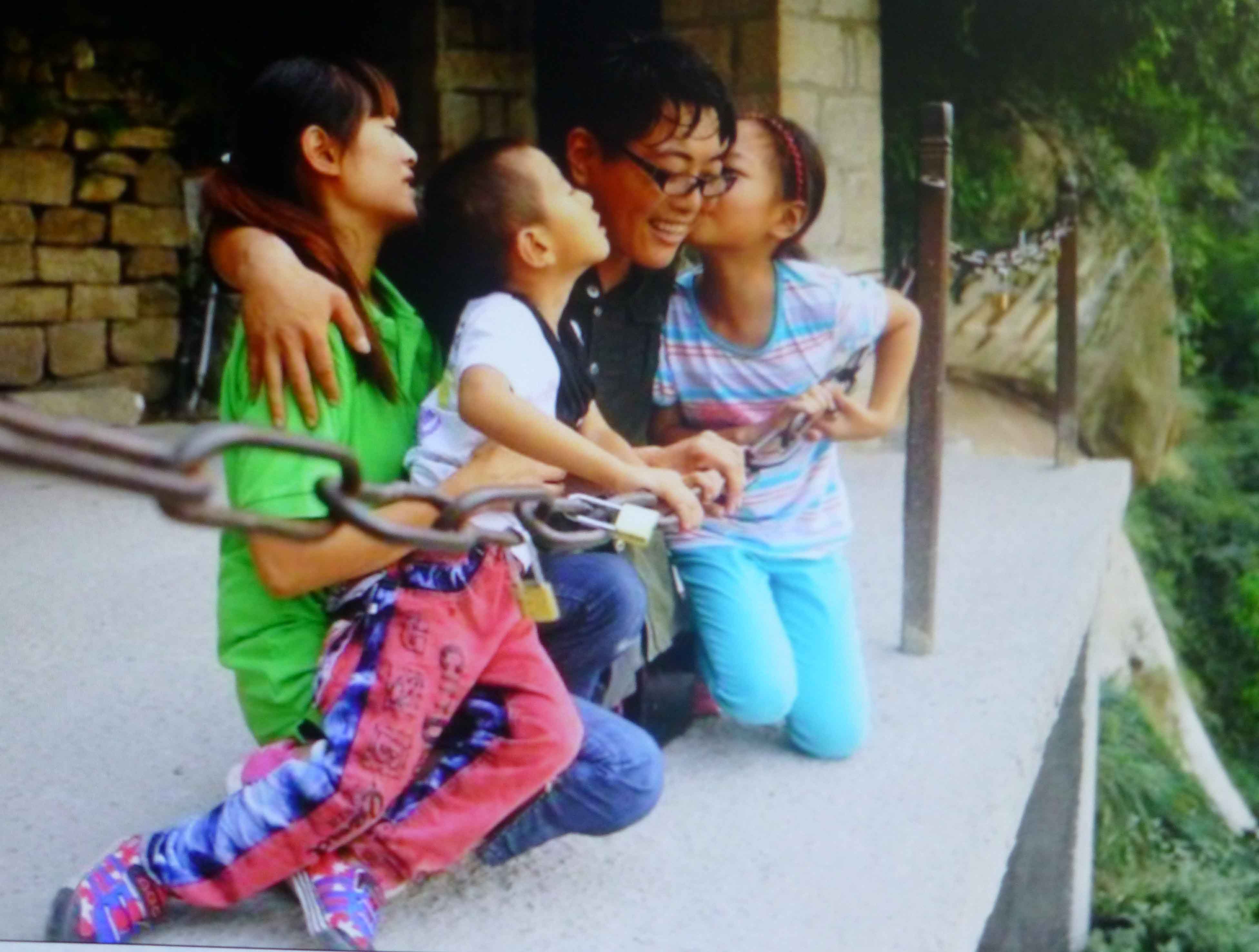
The couple has a daughter and a son.

Chen Zhou with family

Chen Zhou with family #2

The CCP, China’s government, promotes Chen Zhou as a hero in the media. He has traveled to more than 700 towns and cities in China and has held over three-thousand street concerts

Chen Zhou’s future goals are to climb mountains in Tibet.

Discover China’s armless pianist

_______________

Lloyd Lofthouse is the award-winning author of My Splendid Concubine [3rd edition]. When you love a Chinese woman, you marry her family and culture too. This is the love story Sir Robert Hart did not want the world to discover.

Subscribe to “iLook China”!
Sign up for an E-mail Subscription at the top of this page, or click on the “Following” tab in the WordPress toolbar at the top of the screen.

About iLook China


Peking Opera

March 26, 2013

Peking Opera is a combination of several styles of Chinese opera.

The metamorphosis started during the Qing Dynasty (1644-1911), about two hundred years ago.

Peking Opera focuses on historical events, legends about emperors, ministers, generals, geniuses and great beauties.

Performances are a combination of singing, dialogue, pantomime and acrobatic fighting and dancing.

Today, Peking Opera is considered the highest expression of Chinese culture.

The origins of Peking Opera did not begin in Peking (Beijing).  The opera had its start in the Chinese provinces of Anhui and Hubei.

Experts say the opera was born in 1790 and was originally staged for the royal family and then the public.

There are thousands of these operas that cover the history and literature of China. Peking operas can be divided into two categories.

“Civil” operas focus on singing while “Martial” operas feature acrobatics and stunts.  Some are a combination of both.

If Peking Opera interests you, see Chinese Yu Opera with Mao Wei-tao

_______________

Lloyd Lofthouse is the award-winning author of My Splendid Concubine [3rd edition]. When you love a Chinese woman, you marry her family and culture too. This is the love story Sir Robert Hart did not want the world to discover.

Subscribe to “iLook China”!
Sign up for an E-mail Subscription at the top of this page, or click on the “Following” tab in the WordPress toolbar at the top of the screen.

About iLook China


Family Roots run Deep in Israel and China

March 25, 2013

In 1967, I was stationed at Camp Pendleton, California. Between June 5 – 10, six months after I returned from Vietnam, Israel fought the Six-Day War defeating several Islamic nations that had twice the troops Israel had, more combat aircraft and many more tanks.

It was Egypt, Syria, Jordan, Iraq, Saudi Arabia, Morocco, Algeria, Libya, Kuwait, Tunisia, Sudan and the PLO against Israel.

Israel’s had a total of 264,000 troops with only 100,000 deployed. The Islamic nations had a total of 547,000 troops with 240,000 deployed. Israel had 800 tanks to 2,504, and 300 combat aircraft to 957.

After Israel’s victory, I remember saying, “We should let Israel fight the Vietnam War for us.  At least Israel’s leaders know how to fight.”

The Jews and the Chinese have four things in common—loyalty to family, a high respect for education, a willingness to work long hours for low pay, and a canny acumen for business. Because of these similarities, the Chinese have even been called the Jews of Asia.

The Jews have a long history with China. In China: A New Promised Land, by R. E. Prindle, an interview with David Grossman, Israel’s leading novelist talks about the Jews moving to China.

When a father goes to work in China, he works for his family—not himself. After the children grow up, they must care for their parents—not the other way around like in America.  In America, many parents tell their children to do whatever they want and be anything they want. Most children follow that advice even if it means getting a degree to become an artist or skipping college to chase dreams of acting, singing or sports fame while attending parties or visiting theme parks like Disneyland because mom and dad said, “We want you to be happy—to have fun.”

It’s different for many Jews and Chinese. Working hard and earning an education are important to both cultures.  A close friend of mine and his wife, both Jewish, took out a loan on their home so their son could become a doctor and their daughter a lawyer. They bought a condominium near the university their children attended as a place to live. Both the mother and father were teachers, who did not earn much, which shows that Jewish parents, like the Chinese, are willing to sacrifice for their children in ways many American parents would find unacceptable in the age of credit cards and instant gratification.

This willingness to sacrifice for the family and nation may have been the reason the Jews won the Six-Day War against overwhelming odds. Although the Chinese have the same values and are willing to make the same sacrifices for family, they did not know how to fight like the Jews—something the surviving Jews must have learned due to Nazi atrocities.


Will the changing China also change family values?

After Mao won China, he caused much suffering with the Great Leap Forward and the Cultural Revolution where the goal may have been to root out the weaknesses that caused China to become a victim to Western Imperialism in the 19th century and then Japan during World War II.

I wonder if the Chinese learned the lessons Mao taught them through suffering similar to what the Jews experienced from Hitler.  I wonder if China will fight like Israel if threatened again. Before Mao, China was a country of poets and artists who painted watercolors on rice paper.  Even Mao and his generals wrote poems. I do not believe the Chinese are a military threat to anyone who does not threaten them.

Like Israel, China may only respond if they feel they are going to be attacked, and if Mao left them ready to defend themselves against aggressors, then the horrors that caused so much suffering and death during the 27 years he ruled China might have been worth the sacrifice for the survival of this family focused culture.

Most America families were like that once before the industrial revolution and the self-esteem movement made the individual more important than the family. Back then, 95% of the population lived on small family farms near towns and hamlets instead of bulging cities dominated by corporate cultures and sexy advertisements. Today, most family roots in the United States do not run deep—not like the Chinese and Jews.

See The First of all Virtues

_______________

Lloyd Lofthouse is the award-winning author of My Splendid Concubine [3rd edition]. When you love a Chinese woman, you marry her family and culture too. This is the love story Sir Robert Hart did not want the world to discover.

Subscribe to “iLook China”!
Sign up for an E-mail Subscription at the top of this page, or click on the “Following” tab in the WordPress toolbar at the top of the screen.

About iLook China


Lin Yutang’s “My Country and My People”

March 19, 2013

If you haven’t spent time in China, your opinions about that country are probably wrong. I’ve traveled there often, and I’m married to a woman who was born and lived in China during Mao’s Cultural Revolution.

That’s why I found it interesting to read “The Non-Existence Of A Chinese World View” at Two Fish’s Blog, where Lin YuTang was quoted.

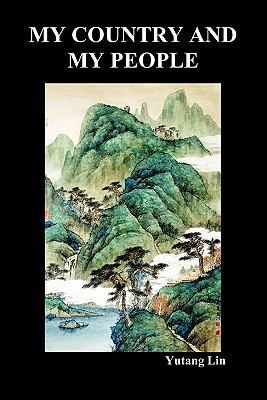
My-Country-and-My-People-Lin-Yutang-9781849026642

While writing “My Splendid Concubine and the sequel, “Our Hart”, about Robert Hart in China, I read “My Country and My People“. Hart is mentioned on page eleven of the 1938 edition. Pearl S. Buck, who wrote the introduction to Lin’s book, felt that someone who knows the Chinese should write a book about the people and culture. She urged Lin YuTang to be that author. Even though YuTang’s book was published years before the Communist Revolution, this book is still relevant in all things Chinese.

YuTang’s style is a mixture of history, philosophy, psychology, sociology with wit and wisdom.

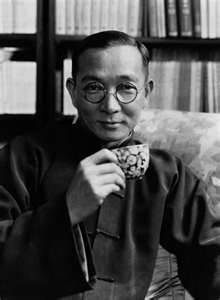
Lin Yu Tang

I smiled when he pointed out contradictions about the Chinese way of thinking and helped me discover what motivates many Chinese to act the way they do—even the Chinese in a government often blamed for what they do because they are Communists when in fact, they act that way because they are Chinese.

To learn more of China, discover Tom Carter’s “China: Portrait of a People”

_______________

Lloyd Lofthouse is the award-winning author of My Splendid Concubine [3rd edition]. When you love a Chinese woman, you marry her family and culture too. This is the love story Sir Robert Hart did not want the world to discover.

Subscribe to “iLook China”!
Sign up for an E-mail Subscription at the top of this page, or click on the “Following” tab in the WordPress toolbar at the top of the screen.

About iLook China