Debating China with Timothy V.

May 14, 2010

“Again, as I stated in an earlier comment, the Chinese students at our local university paint a completely different picture of China than you do. So considering the fact that they were born and raised there and you weren’t, I’m taking their word over yours.” Source: Timothy V.

Timothy had more to say and so did I. This post is a shorter, edited and revised version. I didn’t edit Timothy’s quote—only my words appearing below. If you want to read the entire response, go to Left of the Right and scroll down until you find Timothy V’s latest with my response following his.

________________________

Often, when I read complaints about shoddy Chinese products in the American media, the language makes China guilty as if the government of China gave orders for that to happen. That’s not the way things work.

For example, the president of the United States and the Congress are not responsible for tainted American meats or fruits and vegetables that make people sick. Click on this link to the CDC to discover how bad it is. In the United States, food borne diseases have been estimated to cause 6 million to 81 million illnesses and up to 9,000 deaths each year.

Or what about the murder and mayhem on our roads and freeways? More people die every year in car crashes in the United States than died fighting in Vietnam for more than a decade.

Or how about unnecessary deaths in American hospitals due to greed and carelessness.  The annual number of deaths in American hospitals should shock anyone.

In fact, like America, crimes in China are often traced to one greedy person or a group of individuals and when caught they often get a death penalty or kill him or herself.

The individual in China found responsible for the tainted infant formula killed himself before the trial.

As for the few Chinese students you know at your local university—sure they grew up in “today’s” China and I didn’t, but I believe the Chinese I know, who all grew up in China, are better sources than the few you know.  Besides being married to a Chinese woman who was born in China and didn’t leave until she was in her twenties, I’ve had the opportunity to get to know and talk to Chinese people of all ages in China and America. I’ve met Chinese from many occupations in both countries. I’ve even talked to a Tibetan refugee. In addition, I talked to a retired Communist official who fought in the revolution that Mao won.
Chiang Kai-shek

There was also the eighty-year old I met in his closet-sized room in Shanghai. With my wife interpreting, we talked for hours. Prior to 1949, he had been a Kuomintang police chief in a small town. He stayed behind when Chiang Kai-shek fled to Taiwan with China’s treasury leaving the mainland broke. This former police chief was arrested in 1949 by Mao’s troops and spent half his life at hard labor in a prison camp close to Tibet. He knew about the gold from the treasury, because he was the one responsible to make sure it was loaded on the train.

He said about the prison camp, “Ten-thousand went in and five-hundred came out.” Today’s Communist government gives him a small pension—enough for rent and food. He was happy to be free again and didn’t hold grudges.

Discover more about this debate at Freedom’s Evolution

____________________________

Lloyd Lofthouse is the author of the award winning novels My Splendid Concubine and Our Hart. He also Blogs at The Soulful Veteran and Crazy Normal.

Sign up for an RSS Feed for iLook China


Silence to Beauty

May 12, 2010

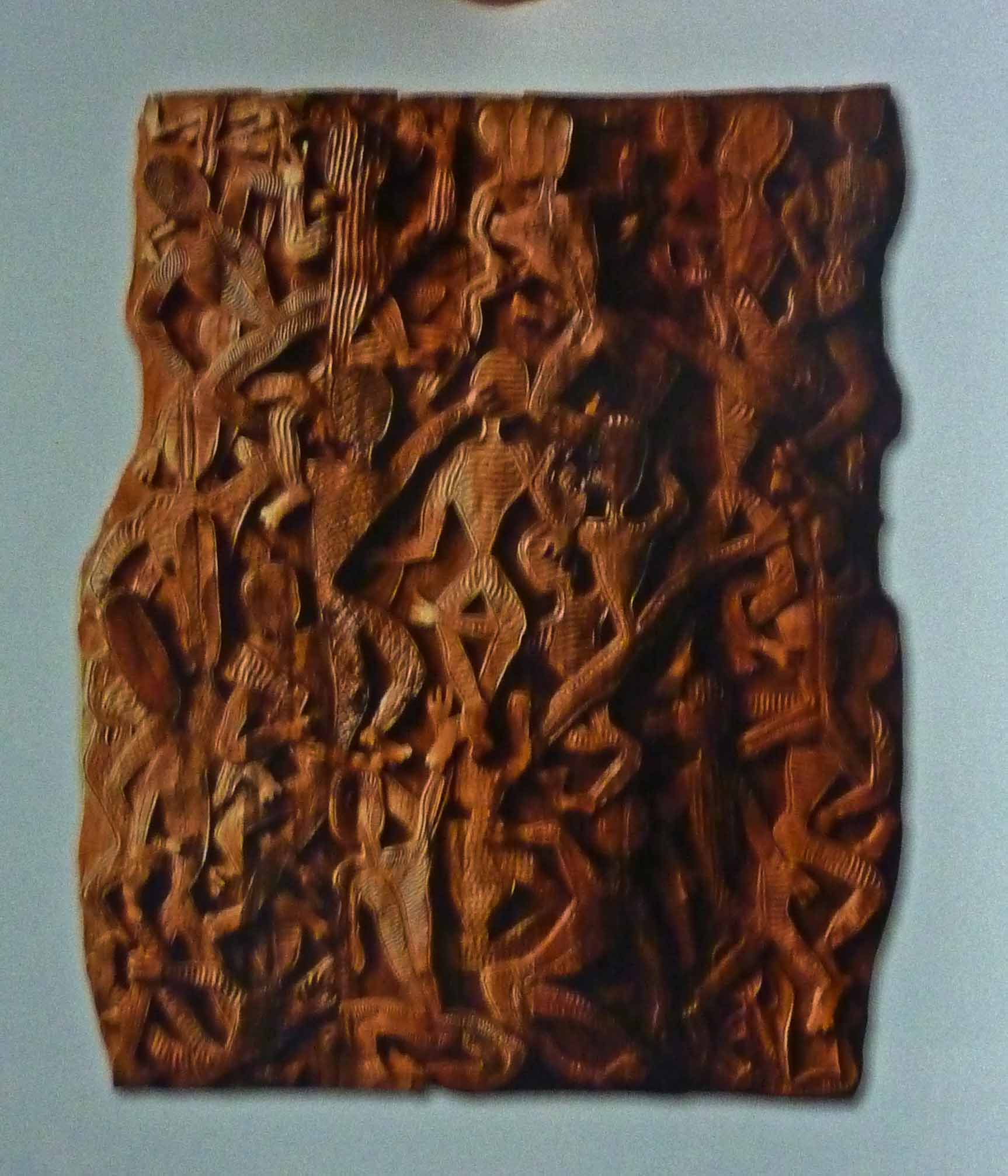
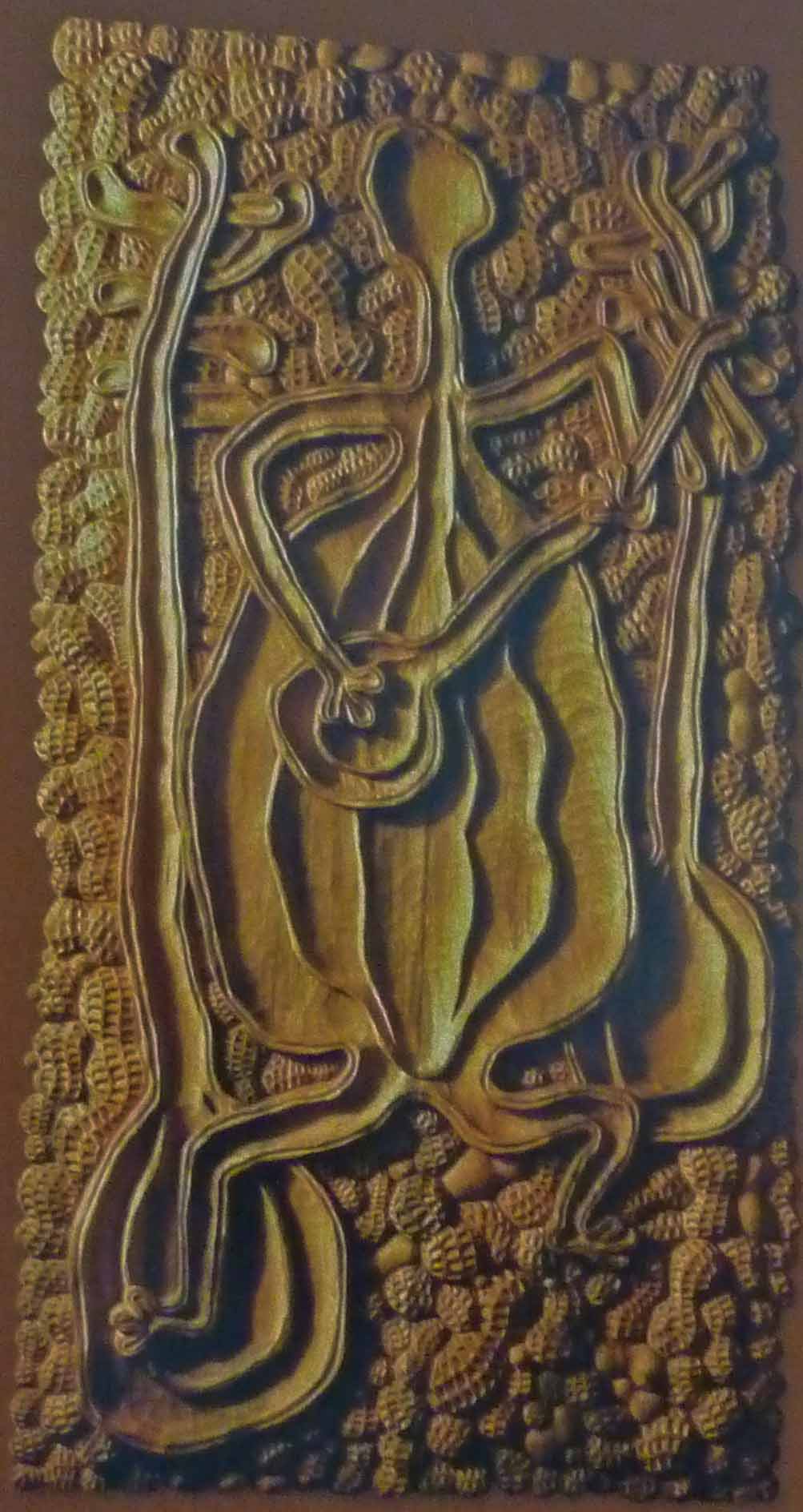
The art displayed in this post comes from artists, who are graduates of the Shandong Provincial Rehabilitation and Career School, an institute in China that trains young Chinese with disabilities. These artists are deaf.

In 1949, Mao Zedong launched the People’s Republic of China and ruled with an iron fist for almost three decades.

During Mao’s time, there was almost no free artistic expression in China unless the art served the propaganda needs of the state.

Zhang Guoli, Sons

After Deng Xiaoping opened China to a global market economy, the post Mao generation was introduced to Western art and theory.

Huang Jinpo, Earth

It wasn’t until the late 1980s and early 1990s that art from China started to emerge.

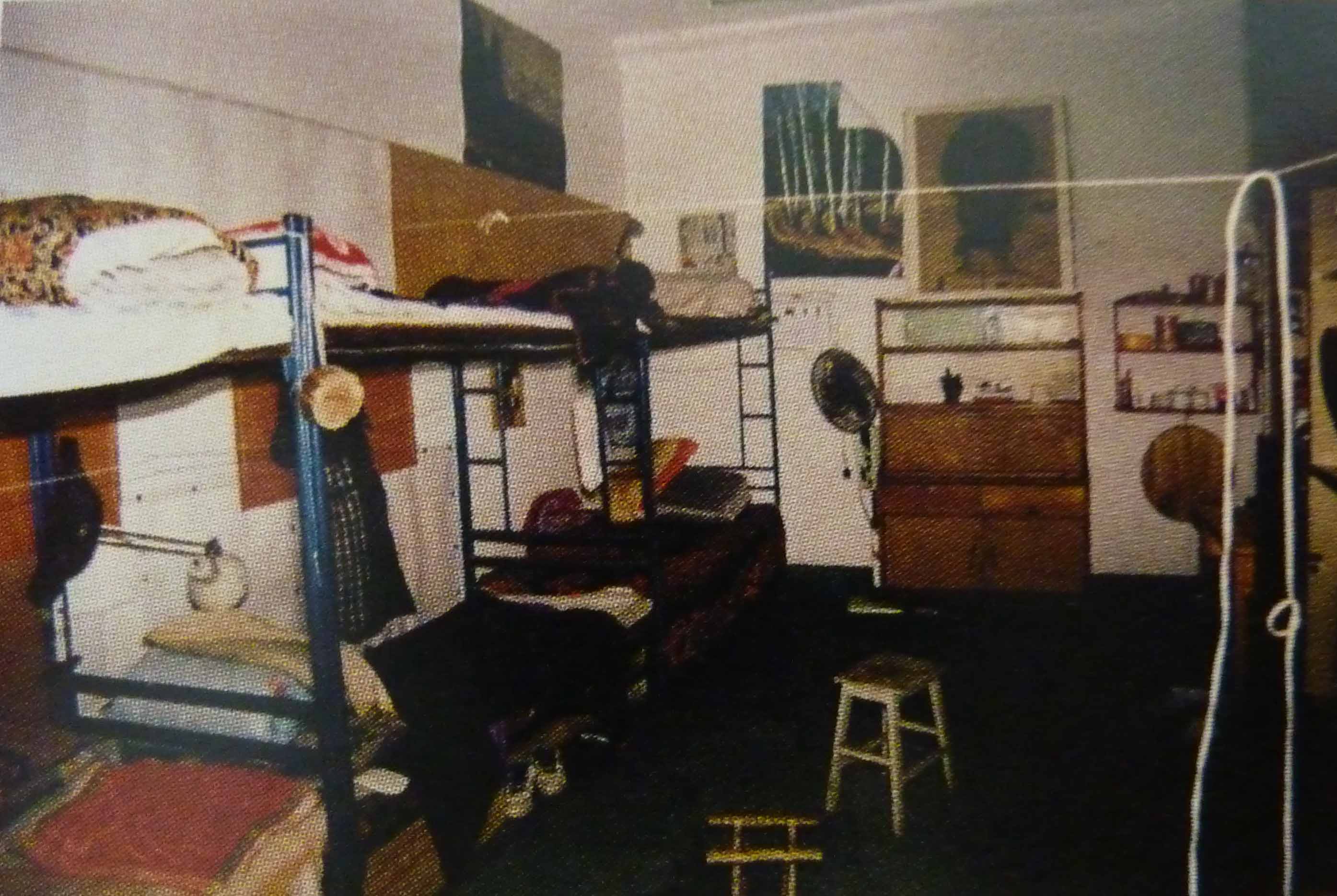
This is the dormitory where the artists live.

The photos in this post are presented with permission from “Embracing the Uncarved Wood, Sculptural Reliefs from Shandong, China“, which was made possible by a generous grant from the E. Rhodes and Leona B. Carpenter Foundation and with assistance from the Office of the Provost of Franklin & Marshall College. ISBN: 978-0-910626-04-0

Discover Chinese Yu Opera with Mao Wei-tao

______________

Lloyd Lofthouse is the award-winning author of The Concubine Saga. When you love a Chinese woman, you marry her family and culture too. This is the love story Sir Robert Hart did not want the world to discover.

To subscribe to “iLook China”, look for the “Subscribe” button at the top of the screen in the menu bar, click on it then follow directions.


America Electrified — China’s Road Map (Part 2 of 2)

May 9, 2010

In 1935, FDR issued an executive order to create the Rural Electrification Administration to bring electricity to millions of rural Americans.

The sad fact is that if President Obama were to propose doing something similar today, the issue would become devisive.  Politics might stop the process. The Tea Bag people would scream socialism, big government. They would march in the streets calling it “Obamapower” instead of the REA.

Franklin Delano Roosevelt - 32 President of the United States

It took six years after the REA was launched in 1941 to help 800 rural electric cooperatives to string 350,000 miles of power lines.

Click on the America’s electrical grid and learn more about what it took to build the most extensive electric transmission system in the world.  The electrification of America took more than half a century and is still evolving.

The biggest difference between China today and America in the 1950s is the population.  America electrified a nation with a population of about 160 million people.  China has 1.3 billion—a daunting task. Since China has connected about five hundred million in less time than it took the United States to connect far less, if anyone can do it, the Chinese can.

Discover China Going Green or return to Part 1 of America Electrified

______________

Lloyd Lofthouse is the award-winning author of the concubine saga, My Splendid Concubine & Our Hart. When you love a Chinese woman, you marry her family and culture too.

If you want to subscribe to iLook China, there is a “Subscribe” button at the top of the screen in the menu bar.


America Electrified — China’s Road Map (Part 1 of 2)

May 9, 2010

In 1952, China was producing 0.005 kilowatts of electricity. Now they need trillions of kilowatts. After Mao’s death and Deng Xiaoping opened China to the world, China seriously started building electrical power plants.

If you study the timeline for the growth of America’s electrical grid, you will discover that Thomas Edison designed and built the first direct current (DC) power plant in 1882. Then the first alternating current (AC) power plant opened in 1885 and transmitted power 200 miles from the plant.

By 1927, forty-five years later, the first power grid was established in Pennsylvania.  It wasn’t until 1933 that Congress passed legislation establishing the Tennessee Valley Authority, which now produces 125 billion kilowatt hours of electricity a year.

Similar to China today, in the 1930s there was a huge gap between people in America’s towns and people on farms. About 10 percent of U.S. farm families had central station electricity in the mid-30s. Like China, almost all urban people had power. Source: Living History Farm

Go to Part 2 of America Electrified or discover Deng Xiaoping’s 20/20 Vision

______________

Lloyd Lofthouse is the award-winning author of the concubine saga, My Splendid Concubine & Our Hart. When you love a Chinese woman, you marry her family and culture too.

If you want to subscribe to iLook China, there is a “Subscribe” button at the top of the screen in the menu bar.


Not One Less (1999)

May 8, 2010

In the movie Not One Less, a thirteen-year-old girl is asked to be the substitute teacher in a small Chinese village.  The teacher tells her that when he returns, if he finds all the students there, he will pay her ten yuan—less than two American dollars.

Although money is involved, it isn’t much. When one student, Zhang Huike, stops coming to school, Wei Minzhim, the thirteen-year-old substitute, follows him to the city.

There are several themes in this movie. The most powerful to me were the value of an education and not losing face. If Wei loses Zhang, she will fail the responsibility the teacher gave her. To succeed, she must keep all the students and teach them.

Confucius taught the Chinese that an education was the great equalizer and the key to leaving poverty behind. Most Chinese believe this with a passion.

Zhang Yimou was the director. He says, “Chinese culture is still rooted in the countryside. If you don’t know the peasant, you don’t know China.” Because of this, there is a strong message in this movie about the urban–rural divide, which is being addressed as China sews the nation together with high-speed rail and electricity.

This a powerful movie about children, education, and poverty that shows the challenges China faces in lifting the lifestyles of almost eight hundred million Chinese, who don’t live in the cities. The challenge is to do this without losing the values that made China what it is.

_______________

Lloyd Lofthouse is the award-winning author of My Splendid Concubine [3rd edition]. When you love a Chinese woman, you marry her family and culture too. This is the love story Sir Robert Hart did not want the world to discover.

His latest novel, Running with the Enemy, was awarded an honorable mention in general fiction at the 2013 San Francisco Book Festival.

Subscribe to “iLook China”!
Sign up for an E-mail Subscription at the top of this page, or click on the “Following” tab in the WordPress toolbar at the top of the screen.

About iLook China