Chiang Kai-shek

July 23, 2010

Chiang Kai-shek (also known as Jiang Jieshi) was born on October 31, 1887. His family was from the upper class and was wine merchants. At 18, he attended a military college in Japan. Chiang had four wives during his life. His first wife died in the Second Sino-Japanese War. His second wife contracted gonorrhea from Chiang (a known womanizer) soon after they married. His most famous wife lived to 106 and died in 2003. Before one marriage, he converted to Christianity as a condition to marry.

After training in Japan, he went to Russia to study the Soviet government and decided he did not care for the Communists. Returning to China, Sun Yat-sin appointed Chiang to command a military academy

Under Sun Yat-sen the Communists and the Nationalists worked together to rule China, and Soviet advisers provided the help needed to increase their power since most of China was ruled by warlords.

However, when Sun died in 1925, Chiang led the Kuomintang army north to defeat the warlords and destroy the Communists.

Meanwhile, in Shanghai, the Communist Party had organized labor unions to improve working conditions in the low paying sweat-shop factories. During Communist organized labor strikes, these factories were shut down.

When Chiang Kai-shek army reached Shanghai, he joined forces with gangsters then went on a killing spree known as the White Terror. Tens of thousands of workers, who belonged to the labor unions organized by the Communists, were hunted down and killed along with their Communist leaders. One of the few to escape was Mao Zedong.

For the next few years, Chiang would rule China unchallenged until 1931, when Japan invaded. During the early months of the war, Chiang ignored Japan and continued hunting for the Communist survivors, who had fled into the countryside.

In 1949, when Mao won the civil war, Chiang Kai-shek took the survivors of his nationalist army to Taiwan where, protected by the US military, he declared brutal martial law and ruled as a dictator until he died on April 5, 1975 at the age of eighty-seven.

______________________________

Lloyd Lofthouse is the award-winning author of My Splendid Concubine [3rd edition]. When you love a Chinese woman, you marry her family and culture too. This is the lusty love story Sir Robert Hart did not want the world to discover.

#1 - Joanna Daneman review posted June 19 2014

Where to Buy

Subscribe to “iLook China”!
Sign up for an E-mail Subscription at the top of this page, or click on the “Following” tab in the WordPress toolbar at the top of the screen.

About iLook China

China’s Holistic Historical Timeline


The Rape of Nanking

July 22, 2010

Warning, the video linked to this post may be disturbing. 

Although China and Nanking suffered from internal war and strife, China never invaded another nation in its four-thousand year history. China had always been self-sufficient and never needed anything from other countries. To wage war on its neighbors was not part of the Chinese character. 

Nanking was the capital of China from the third to the 6th century. In the 14th century, the first Ming Emperor made Nanking the capital again. To protect the capital, the largest city wall in the world was built. It was fifty -feet high, forty-feet wide and more than twenty-five miles long.

On July 1937, Japan attacked China. Chiang Kai-shek made himself the commander of China’s army and navy.  The battle for Shanghai came first. Tens of thousands of innocent Chinese were killed while 300 thousand Chinese troops died. After losing Shanghai, the Chinese army retreated to Nanking.

The Japanese soldiers were ordered to burn all, steal all, and kill all as they advanced through the countryside toward Nanking. It is estimated that 300 thousand innocent Chinese were murdered. 

For over one-hundred days, Japanese bombers bombed Nanking, while Chinese troops fought fiercely defending the city. Eventually, Chang Kai-shek fled with most of his generals and government officials, but ordered one general to stay behind with the army and fight.

As Nanking fell to the Japanese, mostly women, children and the elderly were killed by the tens of thousands. 

Part 2 continues the Rape of Nanking and it is so shocking and disturbing, you must go to YouTube and sign in showing that you are at least 18. If you do not wish to watch Part 2, the next post will continue to report about the Rape of Nanking, and it will not be as disturbing.

Go to Part 2, The Rape of Nanking

Also see The Roots of Madness

______________

Lloyd Lofthouse is the award-winning author of the concubine saga, My Splendid Concubine & Our Hart. When you love a Chinese woman, you marry her family and culture too.

If you want to subscribe to iLook China, there is a “Subscribe” button at the top of the screen in the menu bar.


Marxist Maoism Died in 76

June 29, 2010

Walter Russell Mead writes about changes taking place in China, and his long piece was quoted at Beliefnet.com. Read the quote or go to “Walter Russell Mead” for the “longer” piece.

What bothered me was the ignorance of the comments below the shorter Beliefnet piece. “We know what happened when the Velvet Revolution tactics that worked in Eastern Europe were tried in Tiananmen Square—the protesters were crushed to death under tank tracks.… We and they are almost in a prisoner’s dilemma here—doing the morally right thing is hugely dangerous but alone can deliver those 1.2 billion from a form of slavery”.

Have you heard of the 2/28 Massacre in Taiwan? Almost 30 thousand protesters were slaughtered by Chiang Kai-shek’s troops, while only few hundred were killed in Tiananmen Square.

Not counting sexual slavery, which is a global problem and illegal in China, there are no slaves in China. Those factory workers are free to go home to the rural village any time they want. Also, there is an expanding middle class with lifestyles equal to Europe and America.

Most people in the West have no concept of the effort it has taken to lift China from where it was in the 1950s, when Chiang Kai-shek, protected by US military might, fled with most of his troops and all of China’s wealth.

Prior to the Western nations and Japan invading China in the 19th century, China had the world’s largest economy and it wasn’t built on manufacturing or exports. China’s leaders are aware that China cannot rely on this type of economy for long and must return to an economy that supports itself from within. China is not a Maoist Communist country. It’s a blended capitalist, socialist system and is evolving with a Chinese twist.

And by definition, China is not a dictatorship.

_________________________

Lloyd Lofthouse,
Award winning author of Hart’s concubine saga, My Splendid Concubine & Our Hart. When you love a Chinese woman, you marry her family and culture too. 

Sign up for an RSS Feed for iLook China 


Mao’s Motives

June 24, 2010

Why did Mao cause so much suffering with his failed Great Leap Forward and The Cultural Revolution? Yes, the power Mao held was a corrupting factor in the decisions he made, but  fear of repeating history was also a factor.

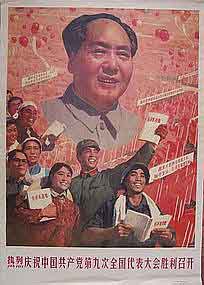
Mao's Little Red Book of Quotations

How many millions of Chinese were addicted to Western opium forced on China by Great Britain and France during two Opium Wars?

Historians say that 20 to 30 million were killed due to the Taiping Rebellion. If Christian missionaries had not been forced on China because of the Opium Wars, would that rebellion have taken place?

Another 115,000 Chinese were killed during the Boxer Rebellion, which was a popular peasant uprising against Christian missionaries, foreign meddling and exploitation.

After 1911 when the Qing Dynasty collapsed, chaos and anarchy ruled China, while foreigners—Americans included— lived in luxury in the treaty ports protected by modern foreign military forces. A Century of Madness chronicles this time.

Mao survived Chiang Kai-shek‘s crack down on the labor movement led by the Communist Party. During World War II, Mao’s army not only fought Chiang Kai-shek’s troops but also the Japanese, who killed between 10 to 20 million Chinese in their attempt to conquer China. The peasants trusted Mao’s troops but did not trust Chiang Kai-shek’s army. Why?

Mao believed that socialism would create a better life for the Chinese. His failures were attempts to make China strong enough to defend the country against foreign meddling and invasions. He failed, but Deng Xiaoping didn’t. What happened in Tiananmen Square in 1989—where a few hundred demonstrators were killed—was nothing compared to what China suffered starting with the First Opium War.

______________

Lloyd Lofthouse is the award-winning author of the concubine saga, My Splendid Concubine & Our Hart. When you love a Chinese woman, you marry her family and culture too.

To subscribe to “iLook China”, look for the “Subscribe” button at the top of the screen in the menu bar, click on it then follow directions.


China’s Great Leap Forward (1958 to 1961) – Part 1 of 6

June 21, 2010

Before reading this series about Mao’s Great Leap Forward, I recommend you first read China, The Roots of Madness to understand what led to Mao’s era as the leader of Communist China (1949 – 1976). This link will take you to that post.  When you finish, return to China’s Great Leap Forward.

_____________________________

Mao’s era begins in October 1949 with victory celebrations in Beijing, as the country with the largest population in the world sees a Communist government come to power.

(when the advertisement appears, advance the video scroll bar to 2:00 minutes to avoid it)


Mao says, “The People’s Republic of China is founded today. China will be free of inequality, poverty and foreign domination.”  In 1950, most Chinese live as they have for centuries. The video shows what this life was like.  Before Mao, most lived in poverty and were in debt to landowners.

Hu Benxu, a peasant farmer in Sichuan says that in the past, there was justice for the rich but nothing for the poor.

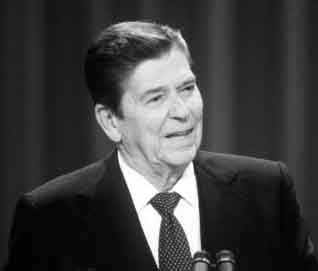
President Ronald Reagan

Chiang Kai-shek believed that improvements would spread through the country (sort of like President Reagan’s trickledown theory, which didn’t work) as foreign investments poured into China. But the opposite happened. As the country industrialized, the gap between the rich and the poor grew wider. The rich held on to money and wanted more. Protests about working condition in the factories were met with death from Chiang Kai-shek’s troops.

Meanwhile, Mao promised land reforms, and his troops treated the peasants with respect. When Mao won China, he said, “We Chinese should work hard. The country is poor. Our people are uneducated.  We must make China a modern industrialized state.”

However, there would be many mistakes and much suffering during the next 27 years. After two thousand years of an Imperial system of government, China was embarking on a journey of reinventing a country and a culture without any foreign influence.

Go to Part 2, China’s Great Leap Forward

______________

Lloyd Lofthouse is the award-winning author of the concubine saga, My Splendid Concubine & Our Hart. When you love a Chinese woman, you marry her family and culture too.

If you want to subscribe to iLook China, there is a “Subscribe” button at the top of the screen in the menu bar.