The Festival of the Hungry Ghost

June 5, 2010

Although this festival is not celebrated in mainland China as it once was, the Festival of the Hungry Ghost was a time when ghosts that cannot rest were appeased so they would not turn from wondering ghosts to malevolent demons.  By remembering dead family members and paying tribute to them, it is believed that they will not intrude on daily life or cause misfortunes or bad luck.
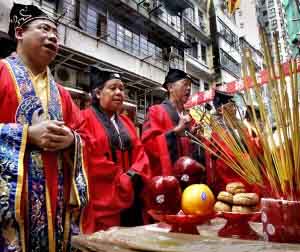
One legend says that Mu Lian told his mother he wanted to be a Buddhist monk and left home.  Years later, he returned to discover that she had died. He knew that his mother had done bad things in his life and was probably in hell.  Since his mother had no one to feed her, she had to be hungry so he offered food to her hungry ghost but the food didn’t reach her.

To solve the problem, Mu Lian was told by his Buddhist master to become a vegetarian and perform spiritual deeds. After following this advice, on the 15th day of the seventh lunar month, he saved his mother from hell and she was no longer a hungry ghost.

See Honoring the Dead

_____________________

Lloyd Lofthouse is the author of the award winning novels My Splendid Concubine and Our Hart. He also Blogs at The Soulful Veteran and Crazy Normal.

Sign up for an RSS Feed for iLook China


God, Ancient Astronauts and China’s Yellow Emperor

May 29, 2010

“And Moses brought forth the people out of the camp to meet with God; and they stood at the nether part of the mount. And Mount Sinai was altogether on a smoke, because the Lord descended upon it in fire: and the smoke thereof ascended as the smoke of a furnace, and the whole mount quaked greatly.”  Exodus 19:17, 18

No one knows for certain where the Yellow Emperor came from.… He was known as the Yellow Emperor in honor for his contributions to agriculture and the Chinese calendar. In addition to farming, his wife, Lei Zu, is credited for developing the idea of growing silkworms and creating silk.  The Yellow Emperor is also noted as the creator of Chinese medicine, and the origins of Taoism and Confucianism trace their roots back to this mythical Emperor, who may have lived 4000 years ago.

Then one day, a yellow dragon descended from the sky to take the Yellow Emperor back to heaven…. Myth says, he ruled for a hundred years before leaving.  Source: The Yellow Emperor

Is the Old Testament’s description in Exodus a space ship descending to Mount Sinai, and is the Yellow Emperor returning to heaven a myth or reality? In addition, consider that the Biblical Adam and the Yellow Emperor were both on the earth about 4,000 years ago.

Discover ShangDi – China’s God of Creation

_______________

Lloyd Lofthouse is the award-winning author of My Splendid Concubine [3rd edition]. When you love a Chinese woman, you marry her family and culture too. This is the love story Sir Robert Hart did not want the world to discover.

His third book is Crazy is Normal, a classroom exposé, a memoir. “Lofthouse presents us with grungy classrooms, kids who don’t want to be in school, and the consequences of growing up in a hardscrabble world. While some parents support his efforts, many sabotage them—and isolated administrators make the work of Lofthouse and his peers even more difficult.” – Bruce Reeves.

lloydlofthouse_crazyisnormal_web2_5

Subscribe to “iLook China”!
Sign up for an E-mail Subscription at the top of this page, or click on the “Following” tab in the WordPress toolbar at the top of the screen.

About iLook China

China’s Holistic Historical Timeline


China and North Korea

May 27, 2010

Due to the latest tension between North and South Korea over the sinking of a South Korean navy ship by North Korea, China has been asked to step in and help. However, China’s response has been for the “relevant parties” to “calmly and properly handle the issue and avoid escalation of tension.” Source: Politics News

If China is reluctant to be sucked into the latest North Korean conflict, what could be causing this response? One reason might be that China has a history with Korea going back to the Tang Dynasty in 688 AD, when there was an alliance with Silla, a Korean state.

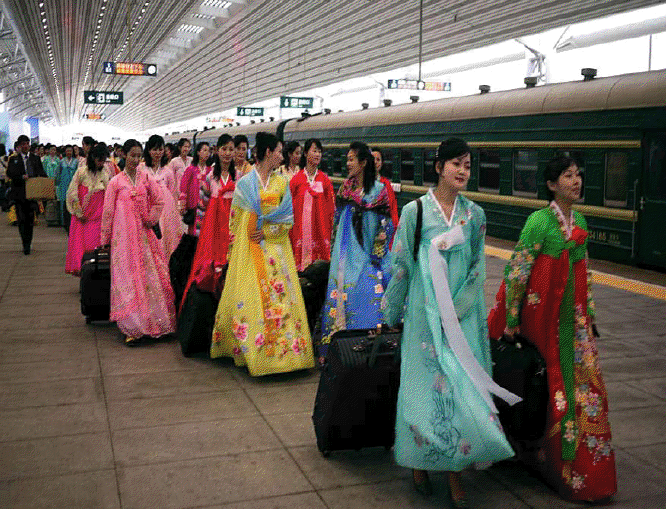
North Korean National Musical Troupe currently visiting China performing “Dream of Red Mansion” (adapted from Chinese classic novel).

Then it could be because Chinese culture, written language and political institutions have had an influence in Korea since the 4th century and in the 14th century, Korea came under the influence  of Confucian thought influenced by Buddhism and Daoism (Taoism).

China’s reluctance to put public pressure on Pyongyang to step off the warhorse might be because the Chinese feel it would be like pressuring a family member. A 1,700-year old relationship might have more weight than the one China has with America that isn’t even forty yet. However, measuring that weight may also depend on the trillion or more China has invested in America.

Punish North Korea or Not?

_______________

Lloyd Lofthouse is the award-winning author of My Splendid Concubine [3rd edition]. When you love a Chinese woman, you marry her family and culture too. This is the love story Sir Robert Hart did not want the world to discover.

His third book is Crazy is Normal, a classroom exposé, a memoir. “Lofthouse presents us with grungy classrooms, kids who don’t want to be in school, and the consequences of growing up in a hardscrabble world. While some parents support his efforts, many sabotage them—and isolated administrators make the work of Lofthouse and his peers even more difficult.” – Bruce Reeves.

lloydlofthouse_crazyisnormal_web2_5

Subscribe to “iLook China”!
Sign up for an E-mail Subscription at the top of this page, or click on the “Following” tab in the WordPress toolbar at the top of the screen.

About iLook China

China’s Holistic Historical Timeline


Buddhism in China

May 24, 2010

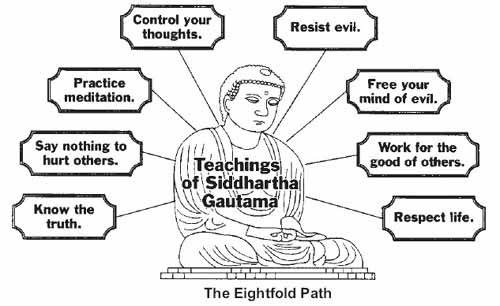
During the Han Dynasty in the first century B.C., trade with Central Asia introduced Buddhism to China.  Over the centuries, interest in Buddhism grew.  However, due to Confucianism and Taoism, the Chinese adapted Buddhist scripture to fit the Chinese culture creating the Mahayana sect, which spread to Korea and Japan.

Like most major religions, there are subdivisions within Buddhism but most may be classified into three. This is why Southeast Asian Buddhists differ from the Chinese.  The Theravada  form of Buddhism is found in Southeast Asia in countries like Burma, Thailand, Cambodia and Laos.

Tibetan Buddhism incorporates other beliefs, and there are four principal schools or types of Tibetan Buddhism. The Dalai Lama is the spiritual leader of one of the four, the Yellow Hat sect.

Buddhism in China reached its high point during the Tang Dynasty, 618 to 907. However, in 845 AD, the Tang emperor suppressed Buddhism and destroyed thousands of monasteries, temples and shrines.

Soon after Mao and the Communists won China, Buddhism flourished for a time but was repressed during the Cultural Revolution along with all other religions. Many monasteries and Buddhist texts were destroyed. After Mao, many of the major monasteries were rebuilt. Today, Buddhists represent the largest religious group in China between 100 to 200 million. Source: PEW Forum

Discover The First of all Virtues

_______________

Lloyd Lofthouse is the award-winning author of My Splendid Concubine [3rd edition]. When you love a Chinese woman, you marry her family and culture too. This is the love story Sir Robert Hart did not want the world to discover.

His third book is Crazy is Normal, a classroom exposé, a memoir. “Lofthouse presents us with grungy classrooms, kids who don’t want to be in school, and the consequences of growing up in a hardscrabble world. While some parents support his efforts, many sabotage them—and isolated administrators make the work of Lofthouse and his peers even more difficult.” – Bruce Reeves.

lloydlofthouse_crazyisnormal_web2_5

Subscribe to “iLook China”!
Sign up for an E-mail Subscription at the top of this page, or click on the “Following” tab in the WordPress toolbar at the top of the screen.

About iLook China

China’s Holistic Historical Timeline


Cultural Differences, the Ignorant American and Star Trek

May 21, 2010

I’ve watched Star Trek since the 1960s and have seen most of the spin offs.  In the Star Trek Universe there are many cultures and races—far too many for even Christians or Islam to convert since that seems to be a driving force behind both of these major religions even if it means using war and violence to make it happen.

One way to look at this is to consider cultures and countries like China, Japan, both Koreas, Vietnam, Thailand, Singapore and others as if they are light-years away from Western culture.

If the US sent a spaceship to a far off world around another star and discovered a culture that was alien to our way of life, but these aliens had powerful, modern weapons and a strong military to defend themselves there would be no way to force them to change as the West did to so many cultures during the 19th century and a good portion of the 20th.

But what if this culture around that foreign star had products and materials  we wanted or needed for our civilization to survive. To do business with them, we would have to accept that culture the way it was and not attempt to change them or judge them as if that planet were an American Territory to be terrorized and converted.

None of the Asian cultures on our earth developed from Christianity, Judaism or Islamic roots. Even our staunchest allies in Asia, Singapore and Thailand, are Asian cultures with governments that do not fit the America model.

What does loss of Face mean to most Chinese?

______________

Lloyd Lofthouse is the award-winning author of The Concubine Saga. When you love a Chinese woman, you marry her family and culture too. This is the love story Sir Robert Hart did not want the world to discover.

Subscribe to “iLook China”!
Sign up for an E-mail Subscription at the top of this page, or click on the “Following” tab in the WordPress toolbar at the top of the screen.

About iLook China