If China government isn’t a Monarchy or a Dictatorship, what is it? Part 3 of 4

December 12, 2014

Before we move on, let’s take a brief look at the Athenian democracy that was developed around the 5th century B.C. in the Greek city-state of Athens. Even though there is evidence that democratic forms of government existed before the 5th century, ancient Athens is generally believed to be the first democracy.

What did that democracy look like? Athens had a system of direct democracy, in which participating citizens voted directly on legislation and executive bills. But participation was not open to all residents: to vote, one had to be an adult, male citizen, and the number varied between 30,000 and 50,000 out of a total population of around 250,000 to 300,000—about 150,000 were slaves.

In comparison, the membership of the Chinese Communist Party (CCP) is now 86.7 million—men make-up 77 percent of CP’s membership, while woman make up 23 percent—making the CCP the world’s largest political party representing more than 6 percent of China’s population, and slavery is illegal just like it is in the U.S.

In Part 2, I explained why China was not a monarchy or a dictatorship. In this post and in Part 4, I will show why China is becoming more like the republic Dr. Sun Yat-sen may have imagined by combining Western thought with Chinese traditions.

After Mao died, The Communist Party worked for several years to draft the 1982 Constitution, which included term limits of two five-year terms for elected government officials.

If you have read the Chinese Constitution carefully, it is obvious that the U.S. Constitution was used as a model. However, these two documents are not the same.

If the Party leadership is not happy with China’s president, he can be removed after one five-year term. There is even an article of impeachment in China’s Constitution.

China’s first president was Li Xiannian (1983 to 1988). He served one, five-year term, and then he stepped down.

From 1988 to 1993, Yang Shangkun would be China’s president for one five-year term. Deng Xiaoping (born 1904 – died 1997) was the Chairman of the Communist Party from 1983 to 1993, which was ten years—what China’s 1982 Constitution calls for, but Deng never served as the country’s president.

Due to how the Tiananmen Square incident in 1989 was handled, President Yang had to step down at the end of his first, five-year term. The only other way to remove him would have been through impeachment.

In 1993, Jiang Zemin became President and Chairman of the Communist Party. Then in 2003, Hu Jintao became President and Chairman of the Party. His term ended in 2012 when Xi Jinping became president of China.

Continued in Part 4 on December 13, 2014 or return to Part 2

View as Single Page

_______________

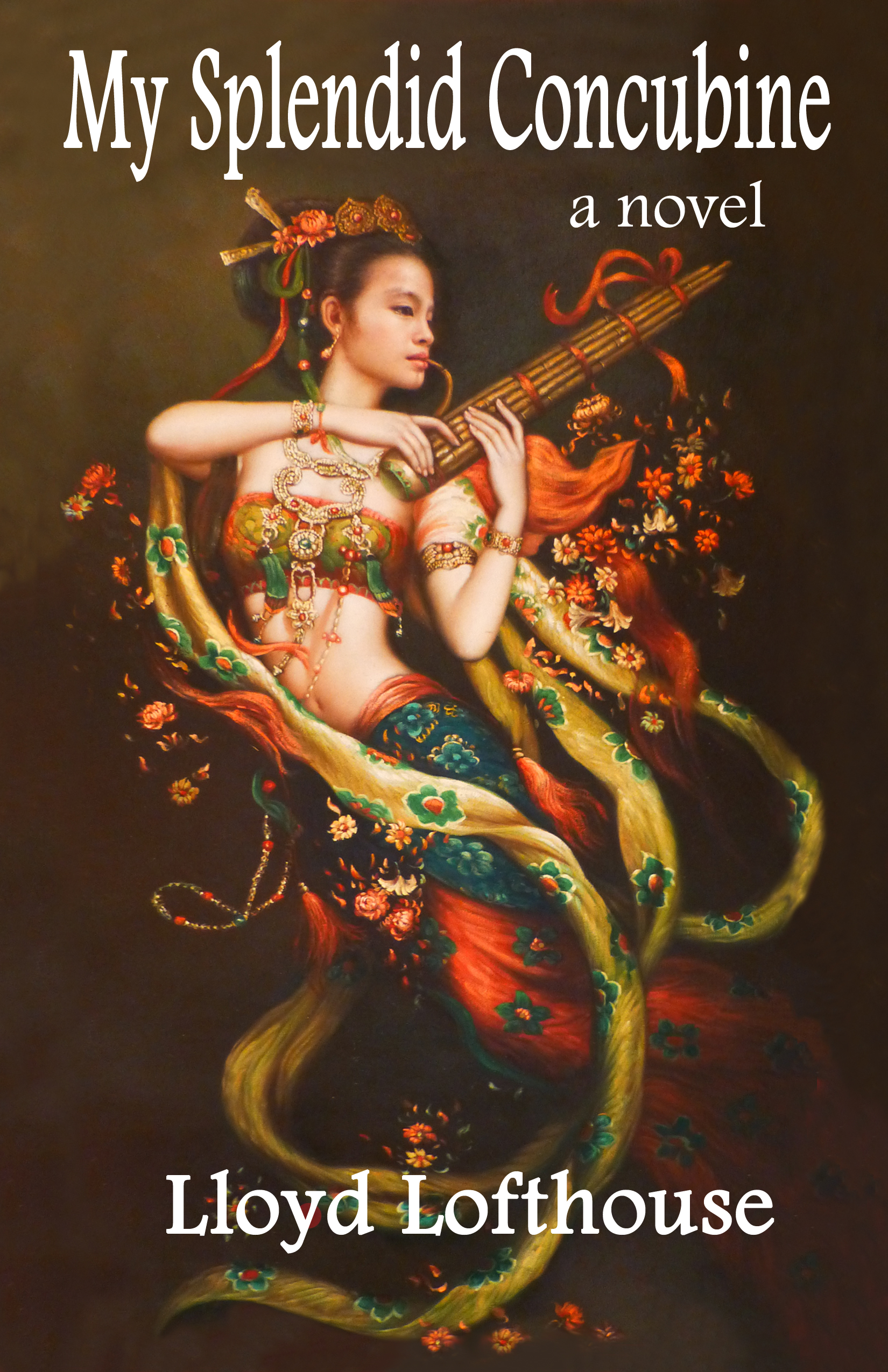
Lloyd Lofthouse is the award-winning author of My Splendid Concubine [3rd edition]. When you love a Chinese woman, you marry her family and culture too. This is the love story Sir Robert Hart did not want the world to discover.

Kindle_LR_e-book_cover_MSC_July_25_2013

Subscribe to “iLook China”!
Sign up for an E-mail Subscription at the top of this page, or click on the “Following” tab in the WordPress toolbar at the top of the screen.

About iLook China

China’s Holistic Historical Timeline


Comparing Economic Growth: China versus India

May 13, 2014

Chris Devonshire-Ellis wrote a convincing piece at China Briefing back in October 2010 that India‘s economic growth would speed past China in the near future.  It seems that many in the West are convinced that democracies are superior to countries ruled by authoritarian governments.

Chris said, “It (India’s) growth rate could overtake China’s by 2013… Some economists think India will grow faster than any other large country over the next 25 years.”

However, several years later, we discover that Chris was wrong. In February 2014, the BBC reported, “India’s economy growth slower than expected.” During the four years starting with 2010 through 2013, China’s GDP grew from $4.99 Trillion to $8.23 Trillion compared to India’s growth from $1.365 Trillion in 2010 to $1.8417 Trillion by the end of 2013.

The foundation of this prediction was based on India being a democracy “where entrepreneurs are all furiously doing their own thing” while China is a culture of secrecy and censorship. Chris mentions a few of China’s other flaws too, which China is working to overcome.

What Chris doesn’t mention is the fact that economic development in India follows socialist policies including state-ownership of many sectors—something China learned long ago doesn’t work, and then there’s the difference in poverty and illiteracy between India and China.

India and China both became independent about the same time—China in 1949 and India in 1947 and due to Chairman Mao’s policies, China suffered horribly from 1949 to 1976 and progress was slow. Than Mao died and China changed dramatically.

India, on the other hand, has had more than 60 years to solve its problems and hasn’t made much progress primarily because it is a democracy often mired in political partisanship and corruption. India is actually rated more corrupt than China but we don’t hear much about that.

Let’s see what each has accomplished in reducing illiteracy and poverty.

The World Bank says, “That China’s record of poverty reduction and growth is enviable. Between 1981 and 2004 the fraction of the population consuming less than a dollar-a-day fell from 65% to 10% and more than half a billion people were lifted out of poverty.”

For India, the World Bank reports: “poverty remains a major challenge. According to the revised official poverty line, 37.2% of the population (about 410 million people remains poor, making India home to one-third of the World’s poor people.” UNICEF shows the poverty in India to be 42%.

World Bank studies also established the direct and functional relationship between literacy and productivity on the one hand and literacy and the overall quality of human life on the other.

India’s literacy rate was about 12% when the British left in 1947. Today, literacy is 68%.

When Mao died in 1976 after a decade of suffering through twenty-seven years of mostly wrong-headed reforms ending with the Cultural Revolution, less than 20% of the people were literate, but today literacy is more than 93% with a goal to reach 99% soon.

As for India succeeding, MeriNews.com says, “At a time when we (India) are poised on the threshold of becoming a superpower, the rampant malnutrition and prevalence of anemic children and women to the extent of 48 per cent of the population is a definitive indicator that we have failed as a democracy in ensuring the fundamental requirements of our citizens.”

It appears that China—with censorship, secrecy and its one party government with a capitalist, market, consumer driven economy—has done a much better job of taking care of its people. India, on the other hand, has six national political parties and 54 political parties at the state level. Considering that America has two national political parties that can’t agree on much of anything, it’s a wonder that India gets anything accomplished.

_______________

Lloyd Lofthouse is the award-winning author of My Splendid Concubine [3rd edition]. When you love a Chinese woman, you marry her family and culture too. This is the love story Sir Robert Hart did not want the world to discover.

His latest novel is the multiple-award winning Running with the Enemy.

Subscribe to “iLook China”!
Sign up for an E-mail Subscription at the top of this page, or click on the “Following” tab in the WordPress toolbar at the top of the screen.

About iLook China

China’s Holistic Historical Timeline


Is Maoism still alive?

March 19, 2014

Caution—do not confuse Maoists with the Communist Party that currently rules China. Maoism, known as Mao Zedong thought, is a variant of Marxism derived from the teachings of the late Chinese leader Mao Zedong (1893 – 1976). 

Maoism was widely applied as the political and military guiding ideology in the Communist Party between 1949 and 1976, which led to the horrors of the Cultural Revolution.

But according to France 24, a new generation of Maoists in China thinks the CCP has “betrayed their leader’s roots by succumbing to capitalism and world trade.” And these “Maoists are very active on Chinese social networks.”

The Maoists in China want to roll back time to Mao’s Cultural Revolution where pure socialism rules with no capitalism.

After the death of Mao Zedong in 1976, the Communist Party under Deng Xiaoping repudiated revolutionary Maoism and embarked on the path toward a socialist-capitalist economic model that has led to prosperity for several hundred million people in China but more Chinese are not benefiting equally from economic growth in China—at least not as fast as they’d like, which explains why Maoism has not vanished.


China’s last Maoist village

Outside China, Maoism’s Revolutionary Internationalist Movement (RIM) was founded in 1984 and included the Communist Party of Peru (also known as the “Shining Path”).

In addition, there have been Maoist movements in Afghanistan, Bangladesh, Ecuador, India, Nepal, Palestine, Peru, the Philippines, Spain, Somalia, Turkey and even the United States (where poverty is increasing). However, the international Maoist movement doesn’t have a unified, global leadership.

Recently, the Chinese “Maoist” Communist Party thought they had a leader in Bo Xilai. Then in 2012, Bo was connected to a cover up linked to his wife’s involvement in the murder of a British citizen. Bo was tried and sentenced to life imprisonment for bribery, abuse of power and corruption. Bo’s wife, Gu Kailai, was convicted of murder and was given a suspended death sentence. She may spend the rest of her life in prison or get out on a medical parole after serving nine years.

In 2009, the Maoist Communist Party of Nepal formed a coalition government, which collapsed a few months later as different rebel factions fought with each other. The Maoist’s goal was to turn Nepal into a Marxist Republic. (Nepal Assessment 2010)

In India, there is an ongoing Naxalite-Maoist rebellion in Andhra Pradesh but by the end of 2013, the movement was weak and not the threat it had been years earlier. The Maoist influence in India was caused by the lack of progress to end starvation among rural Indians—thousands die daily—who have had no improvement in their lifestyles for decades. (Naxalite-Maoist insurgency)

In the US, the Black Panthers (1967) was a militant Maoist organization.

In Paris in 1968, the National Liberation Front, another Maoist group, was the cause of street combat.

Maoism is caused by too much poverty and suffering when the poor working class rises up in rebellion against the wealthy in an attempt to distribute the wealth more evenly, but historically this has led to brutal dictatorships and then more suffering and death.

Pure socialism hasn’t worked because historically, it’s inefficient, against the competitive nature of humans and leads to shortages and a waste of workers time.

_______________

Lloyd Lofthouse is the award-winning author of My Splendid Concubine [3rd edition]. When you love a Chinese woman, you marry her family and culture too. This is the love story Sir Robert Hart did not want the world to discover.

His latest novel is the multiple-award winning Running with the Enemy.

Subscribe to “iLook China”!
Sign up for an E-mail Subscription at the top of this page, or click on the “Following” tab in the WordPress toolbar at the top of the screen.

About iLook China

China’s Holistic Historical Timeline


Ai WeiWei is probably NEVER SORRY for anything he says or does: Part 1 of 2

February 4, 2014

My wife bought a DVD of Ai Weiwei NEVER SORRY, a documentary film by Allison Klayman that was well done but obviously produced with the intent to portray Ai Weiwei as a hero and Communist China as evil.

Ai Weiwei is an internationally acclaimed Chinese artist-activist who was selected as the designer of the Beijing Olympic Bird’s Nest, and he is also an outspoken critic of China’s Communist government.

The film won a Special Jury Prize at the 2012 Sundance Film Festival; Best Storytelling in a Documentary at the 2012 Nantucket Film Festival; the NBR Award from the 2012 National Board of Review, USA; Festival Director’s Choice Award from the 2012 Telluride Mountainfilm Festival, and the Students’ Choice Award from The 2012 Hague Movies that Matter Festival.

But—before judging if Weiwei is a hero or the film deserves the awards—I suggest you read this post (and maybe some of the linked sources) then decide if this film deserves the praise.


Weiwei’s advocacy for democracy and more transparency in China has attracted much attention in the Western media but how popular is his movement? For instance, he only has 233,510 followers [that’s 0.000176% of the population of China] on his Mandarin Twitter page where he is very active with more than 100,000 Tweets posted. There is also a Free Ai WeiWei Blog on Twitter with about 500 followers. Then there is an English Twitter page with 28,767 followers.

Ai Weiwei lived in the United States [1981 – 1993] to study art but dropped out of school and made a living drawing street portraits and working odd jobs. The film also reveals he had a boy with a young mistress/concubine while still married to artist Lu Qing. If he had one affair and isn’t sorry about that, why not more affairs with other women?

Weiwei’s father was a high ranking Communist Party member before becoming a victim of the teenage Red Guard during Mao’s Cultural Revolution—there are clips in the documentary that show this—and the film mentions that his father attempted suicide a number of times because of the persecution [that was happening to millions of Chinese]. It’s obvious that this experience had an impact on who Weiwei is today and why he publicly criticizes the CCP.

I couldn’t help but question where all the money comes from that supports his lavish lifestyle. For instance, there was one exhibition in London where his art was a field of ceramic hand-painted sunflower seeds—100 million according to Weiwei. Celebrity NetWorth/BBC, reported that those seeds sold for $US 782,000—that’s 4.733 million Chinese Yuan Renminbi.

HyperAllergic.com reported: “Production for creating so many seeds was an intensive and meticulous process taking two years and 1,600 factory workers to complete; it seems that when artists use factory workers it is conceptually engaging, but when Apple does it it is infuriating, neither of which seem to hinder sales.”

In the film, one of Weiwei’s criticisms of the Chinese Communist Party (CCP) focuses on one incident where he alleged he was beaten by a police officer in Chengdu while investigating the collapse of public schools in Sichuan province after the 8.0 earthquake in 2008.

I don’t question that Weiwei was attacked by one cop in Chengdu, but is that incident an indictment of the CCP? For instance, Copblock.org reports that in the United States from April 2009 to June 2010 there were 5,986 reports of misconduct by police officers recorded and 382 fatalities linked to misconduct leading to about $347.5 million in settlements and judgments. If the CCP is guilty of abuse from one cop, then so is the United States Congress and the President of the United States for misconduct of police in America.

And police brutality is not exclusive to the United States or China. If we check the 10 Most Brutal Police Forces on Earth, we discover that the United States was ranked #10 and China #9. Mexico earned the number one spot.

Continued on February 5, 2014 in Ai WeiWei is probably NEVER SORRY for anything he says or does: Part 2

_______________

Lloyd Lofthouse is the award-winning author of My Splendid Concubine [3rd edition]. When you love a Chinese woman, you marry her family and culture too. This is the love story Sir Robert Hart did not want the world to discover.

His latest novel is the multiple-award winning Running with the Enemy.

Subscribe to “iLook China”!
Sign up for an E-mail Subscription at the top of this page, or click on the “Following” tab in the WordPress toolbar at the top of the screen.

About iLook China

China’s Holistic Historical Timeline


The History that Drove Mao’s Decisions as China’s Leader: Part 2 of 2

November 27, 2013

Imagine how Americans would have felt if China had deployed several of its army divisions in the United States to protect the Chinese living in America after the racist and discriminatory Chinese Exclusion Act was signed into law by U.S. President Chester A. Arthur on May 6, 1886—this law would not be repealed until 1943.

Then there was Mao surviving Chiang Kai-shek‘s crack down on the labor movement led by the Communist Party. During World War II, Mao’s army not only fought Chiang Kai-shek’s troops but also the Japanese, who killed between 10 to 20 million Chinese in their attempt to conquer China.

The peasants trusted Mao’s troops but did not trust Chiang Kai-shek’s army. Do you know why?

Then there was the West’s wars in Korea (1950 – 1953: with an estimated 2.5 million killed/wounded) and Vietnam (1955 – 1975: with an estimated 3.8 million killed/wounded) in addition to America’s necklace of military basses surrounding China to this day. Source: Foreign Policy.com

Mao believed that socialism would create a better life for the Chinese. His failures were attempts to make China strong enough to defend his country against the foreign meddling and invasions that had plagued China since the 1850s.

Regardless of all the horrible facts the Western media keeps reminding the world about, there are a few facts that are not well known in the West about Mao and China—when Mao became the leader of mainland China in 1949, the average lifespan in China was age 35. When Mao died in 1976, the average lifespan had increased by twenty years to age 55—today the average life expectancy is almost age 75. In addition, the population of China was 400 million in 1949. Twenty-seven years later at the time of Mao’s death, China’s population had increased to 700 million.

These two facts alone call into question many of the alleged and inflated claims of deaths and suffering caused by the mistakes of the Great Leap Forward famine and the national insanity of the Cultural Revolution that are often trumpeted by China’s critics—some are quite rabid and idealistic and are more than willing to inflate and exaggerate the facts that are known.

Mao was not perfect by any means but even the Chinese—after his death—credited his leadership as 70% good and only 30% bad. You may not agree with this assessment, but did you live in China during and before the Mao era? Have you any idea how horrible life was for most Chinese before 1949?

Return to or Start with The History that Drove Mao’s Decisions as China’s Leader: Part 1

_______________

Lloyd Lofthouse is the award-winning author of My Splendid Concubine [3rd edition]. When you love a Chinese woman, you marry her family and culture too. This is the love story Sir Robert Hart did not want the world to discover.

His latest novel is the multiple-award winning Running with the Enemy.

Subscribe to “iLook China”!
Sign up for an E-mail Subscription at the top of this page, or click on the “Following” tab in the WordPress toolbar at the top of the screen.

About iLook China

China’s Holistic Historical Timeline