Buddhism in China

May 24, 2010

During the Han Dynasty in the first century B.C., trade with Central Asia introduced Buddhism to China.  Over the centuries, interest in Buddhism grew.  However, due to Confucianism and Taoism, the Chinese adapted Buddhist scripture to fit the Chinese culture creating the Mahayana sect, which spread to Korea and Japan.

Like most major religions, there are subdivisions within Buddhism but most may be classified into three. This is why Southeast Asian Buddhists differ from the Chinese.  The Theravada  form of Buddhism is found in Southeast Asia in countries like Burma, Thailand, Cambodia and Laos.
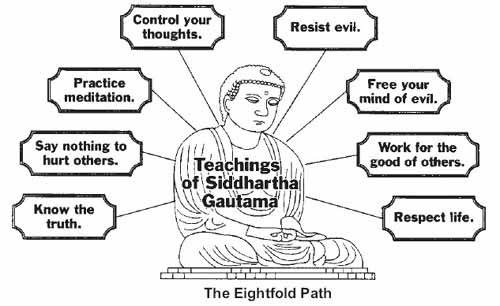
Tibetan Buddhism incorporates other beliefs, and there are four principal schools or types of Tibetan Buddhism. The Dalai Lama is the spiritual leader of one of the four, the Yellow Hat sect.

Buddhism in China reached its high point during the Tang Dynasty, 618 to 907. However, in 845 AD, the Tang emperor suppressed Buddhism and destroyed thousands of monasteries, temples and shrines.

Soon after Mao and the Communists won China, Buddhism flourished for a time but was repressed during the Cultural Revolution along with all other religions. Many monasteries and Buddhist texts were destroyed. After Mao, many of the major monasteries were rebuilt. Today, Buddhists represent the largest religious group in China between 100 to 200 million. Source: PEW Forum

Discover The First of all Virtues

_______________

Lloyd Lofthouse is the award-winning author of My Splendid Concubine [3rd edition]. When you love a Chinese woman, you marry her family and culture too. This is the love story Sir Robert Hart did not want the world to discover.

His third book is Crazy is Normal, a classroom exposé, a memoir. “Lofthouse presents us with grungy classrooms, kids who don’t want to be in school, and the consequences of growing up in a hardscrabble world. While some parents support his efforts, many sabotage them—and isolated administrators make the work of Lofthouse and his peers even more difficult.” – Bruce Reeves.

lloydlofthouse_crazyisnormal_web2_5

Subscribe to “iLook China”!
Sign up for an E-mail Subscription at the top of this page, or click on the “Following” tab in the WordPress toolbar at the top of the screen.

About iLook China

China’s Holistic Historical Timeline


Cultural Differences, the Ignorant American and Western Imperialism

May 21, 2010

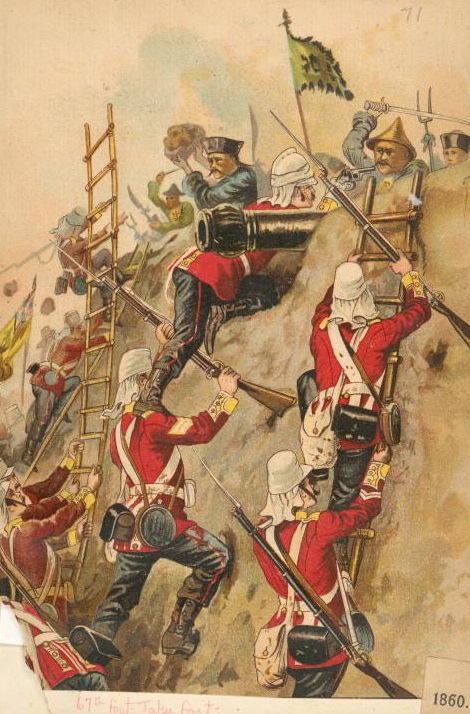
Before Western Imperialism attempted to change Asia during the 19th century, China was a regional super power for more than two-thousand years. Over time, the Chinese believed they were too civilized and powerful to be threatened by anyone on the planet.  Then the British, French, Portuguese, Germans, Americans, Russians and Japanese arrived and waged war in China for a century starting with the First Opium War.

Opium Wars

China learned a lesson from all of these wars. It only took a century to recover and start over.

The leaders of China are called Communists, but the men and women who rule China were born Chinese and the decisions they make are based on being Chinese—not being Communists. The Chinese culture is a collective culture and when an “individual” crosses the line and breaks the rules doing or saying something that is unacceptable to the collective culture, they are erased (given a death sentence) or reeducated (if possible). That’s how the Chinese collective culture on the mainland does things.

In time, interaction with other cultures may change that.  In fact, China already has changed to some degree. Friendly, harmonious interaction is the key—not hate and accusations like those from Americans like Timothy V.

See Respecting Cultural Differences are Out-of-Focus

____________________________

Lloyd Lofthouse is the author of the award winning novels My Splendid Concubine and Our Hart. He also Blogs at The Soulful Veteran and Crazy Normal.

Sign up for an RSS Feed for iLook China


Cultural Differences, the Ignorant American and Star Trek

May 21, 2010

I’ve watched Star Trek since the 1960s and have seen most of the spin offs.  In the Star Trek Universe there are many cultures and races—far too many for even Christians or Islam to convert since that seems to be a driving force behind both of these major religions even if it means using war and violence to make it happen.

One way to look at this is to consider cultures and countries like China, Japan, both Koreas, Vietnam, Thailand, Singapore and others as if they are light-years away from Western culture.

If the US sent a spaceship to a far off world around another star and discovered a culture that was alien to our way of life, but these aliens had powerful, modern weapons and a strong military to defend themselves there would be no way to force them to change as the West did to so many cultures during the 19th century and a good portion of the 20th.

But what if this culture around that foreign star had products and materials  we wanted or needed for our civilization to survive. To do business with them, we would have to accept that culture the way it was and not attempt to change them or judge them as if that planet were an American Territory to be terrorized and converted.

None of the Asian cultures on our earth developed from Christianity, Judaism or Islamic roots. Even our staunchest allies in Asia, Singapore and Thailand, are Asian cultures with governments that do not fit the America model.

What does loss of Face mean to most Chinese?

______________

Lloyd Lofthouse is the award-winning author of The Concubine Saga. When you love a Chinese woman, you marry her family and culture too. This is the love story Sir Robert Hart did not want the world to discover.

Subscribe to “iLook China”!
Sign up for an E-mail Subscription at the top of this page, or click on the “Following” tab in the WordPress toolbar at the top of the screen.

About iLook China


Honoring the Dead

May 13, 2010

Ancestor worship may well be the oldest, unorganized religion in China. Take Tomb Sweeping Day for example. The practice that honors family ancestors started during the Zhou Dynasty and has been around for more than 2,500 years.

The first emperor Qin Shi Huangdi had not unified China yet. China was divided into several nation states governed by hereditary rulers and worshiping ancestors was important in maintaining a link with the past.

Today, many Chinese homes and businesses have a shrine set up to honor the ancestors. This shrine may have the name of the ancestor carved into wood or rock or there is a photo. Food is often left on the table for the ancestors. 

Honoring the Ancestors

Ancestor respect is also an important part of Confucianism and there is still an ancestor hall for Confucius in Chufu that is maintained by a direct descendant. Next time you are in a Chinese or Southeast Asian restaurant, look around and see if you can spot a shrine to the ancestors.

Confucianism and ancestor worship is not exclusive to China. After all, China was a super power in Asia for more than two thousand years and had a large influence over other cultures in the region.

Learn more about Confucius from this five-part series about the sage’s life.

______________

Lloyd Lofthouse is the award-winning author of the concubine saga, My Splendid Concubine & Our Hart. When you love a Chinese woman, you marry her family and culture too. 

If you want to subscribe to iLook China, there is a “Subscribe” button at the top of the screen in the menu bar.


Lin Yutang Explains Christianity in China

April 27, 2010

“For most Chinese the end of life lies not in life after death, for the idea that we live in order to die, as taught by Christianity, is incomprehensible, nor in Nirvana, for that is too metaphysical, not in the satisfaction of accomplishment, for that is too vainglorious, nor yet in progress for progress’ sake, for that is meaningless. The true end, the Chinese have decided in a singularly clear manner, lies in the enjoyment of a simple life, especially the family life, and in harmonious social relationships.

“The Chinese are a nation of individualists. They are family-minded, not social-minded… It is curious that the word ‘society’ does not exist as an idea in Chinese thought. In the Confucian social and political philosophy we see a direct transition from family, ‘chia’, to the state, ‘kuo’, as successive stages of human organization …

Lin Yutang

“The Chinese, therefore, make rather poor Christian converts, and if they are to be converted they should all become Quakers, for that is the only sort of Christianity that the Chinese can understand. Christianity as a way of life can impress the Chinese, but Christian creeds and dogmas will be crushed, not by a superior Confucian logic but by ordinary Confucian common sense. Buddhism itself, when absorbed by the educated Chinese, became nothing but a system of mental hygiene, which is the essence of Sung philosophy.” Source: My Country and My People, Lin Yutang. Halcyon House, New York. 1938. Pgs 94; 101; 103; 172, and 108)

Learn about Superior versus Civilized

______________

Lloyd Lofthouse is the award-winning author of the concubine saga, My Splendid Concubine & Our Hart. When you love a Chinese woman, you marry her family and culture too. 

If you want to subscribe to iLook China, there is a “Subscribe” button at the top of the screen in the menu bar.