More than Money

March 16, 2010

The S’ung dynasty cautiously issued true-paper money in 1023, in small amounts in a limited area good for a specific time period. The notes would be redeemed after three years, to be replaced by new notes for a 3% service charge. source
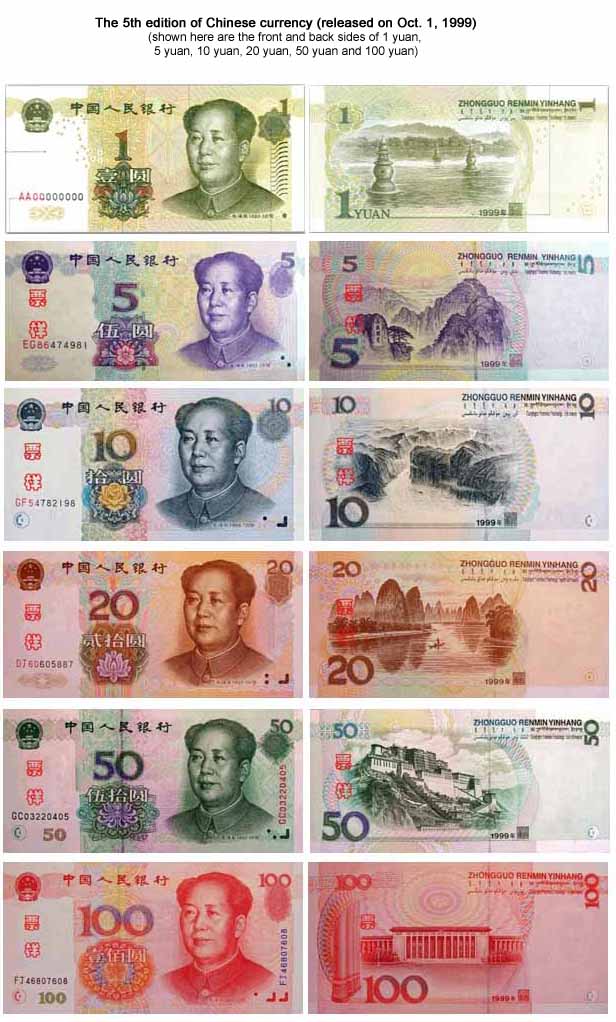
Chinese money – Yuan

With the United States wanting (source) China to devalue their currency, China finds itself between a rock (1.3 billion Chinese) and a hard place (America). If China caves in and does as America wants, products manufactured in China would cost more. If that happened, demand for Chinese products from other countries would decline and Chinese people would lose jobs.

Labor unrest in China is already increasing. source People want jobs and higher pay so they can join the growing middle class and buy more things like Americans do. To get ready, China’s police  are undergoing special training to deal with expected social unrest over factory closings that have left millions of migrant workers out of jobs.

What’s happening in China today is similar to what happened in America during the 1860s and ’80s. source

It’s the same old story—the rich want to keep the money while workers want to earn more.

Discover Deng Xiaoping’s 20-20 Vision

_______________

Lloyd Lofthouse is the award-winning author of My Splendid Concubine [3rd edition]. When you love a Chinese woman, you marry her family and culture too. This is the love story Sir Robert Hart did not want the world to discover.

His third book is Crazy is Normal, a classroom exposé, a memoir. “Lofthouse presents us with grungy classrooms, kids who don’t want to be in school, and the consequences of growing up in a hardscrabble world. While some parents support his efforts, many sabotage them—and isolated administrators make the work of Lofthouse and his peers even more difficult.” – Bruce Reeves.

lloydlofthouse_crazyisnormal_web2_5

Subscribe to “iLook China”!
Sign up for an E-mail Subscription at the top of this page, or click on the “Following” tab in the WordPress toolbar at the top of the screen.

About iLook China

China’s Holistic Historical Timeline


The Qianlong Emperor and Google

March 16, 2010

On Friday, March 12, the BBC reported that the Chinese Minister of Industry and Information Technology Li Yizhong adopted a tough stance during a legislation session. “I hope that Google will abide and respect the Chinese government’s laws and regulations,” he said.  “But, if you betray Chinese laws and regulations … it means that you are unfriendly, irresponsible, and you will have to pay the consequences.”

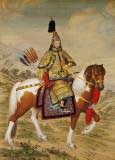
Qianlong Emperor

Google doesn’t get it.  If they read what the Qianlong Emperor (1736-1796) wrote in his famous letter to King George the III in 1793—when China was strong enough to resist external influence—they might understand.

China is a family oriented culture, and the individual is not as important. Public freedom of expression does not fit the Confucian, Taoist foundation that begins in the family where you do not publicly criticize your elders or your leaders and expect to get away with it.

Starting with the first Opium War in 1840 until Mao won China in 1949, China was weak and was bullied by Imperial powers. Now that China is strong, they are saying “NO” as the Qianlong Emperor did.

Discover The Influence of Confucius

______________

Lloyd Lofthouse is the award-winning author of the concubine saga, My Splendid Concubine & Our Hart. When you love a Chinese woman, you marry her family and culture too.

If you want to subscribe to iLook China, there is a “Subscribe” button at the top of the screen in the menu bar. 


The Last Word

March 13, 2010

During the Copenhagen Climate Summit, China was criticized for not signing a pledge to reduce carbon emissions.  I don’t think China’s was ready to sign and had to go home to study the situation to see what they could do before they made a commitment.  All (take a look) of China’s politburo members, the top government body in China, are scientist or engineers.

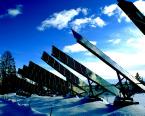
On March 10, China told the United States to make stronger commitments on climate change and provide environmental expertise and financing to developing nations. That was a few days after China announced it was planning to reduce its carbon footprint by 40-45% (from 2005 levels) and generate 15% of its electricity from renewable technologies by 2020.

Solar Cells

Obama, on the other hand, only pledged reducing green house gas emissions “in the range of 17%” by 2020. 

This is what I think happened after China’s representatives left Copenhagen.  Those scientists and engineers that make up China’s ruling body gathered facts, discovered what China could achieve, then formulated long-range goals. Most scientists and engineers think that way.

President Obama is a lawyer. Most of the elected representatives in America’s two houses of congress are lawyers.

See what China has been doing by reading “Health Care, Urban Real Estate and Renewable Energy Update” http://wp.me/pN4pY-er and “China Going Green” http://wp.me/pN4pY-3f


A Difference in Defensive Thinking

March 13, 2010

Teddy Roosevelt said, “Speak softly and carry a big stick.”

I’m not sure that America speaks all that softly and that stick has been around the world more than once and has been expensive.  I did a bit of virtual sleuthing and the military budgets approved by the Congress between 1946 to 2009 have cost the American tax-payer about 23 trillion dollars. These figures do not include the wars since World War II.

Korea cost more than five hundred billion (2008 dollars).
The Vietnam War cost more than a trillion.
To date, the cost of war in Iraq since 2003 has cost 747.3 billion and Afghanistan 299 billion since 2001.

China intervened in the Korean War and sent hundreds-of-thousands of troops. To understand why the Chinese got involved, hear Mao’s words during the Vietnam War. “Vietnam is the gums to our teeth. What happens when the gums are gone?” Between 1965 and 1970, over 320,000 Chinese soldiers served in North Vietnam.

China's Military

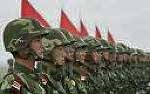
“Rather than worrying about this development, we should understand that Beijing’s maintenance of a large, modern military is driven by history.” Source: Huffington Post  “On 4 March 2010, Beijing announced China’s declared defense budget will only increase by 7.5% this year — the slowest rate in 20 years.”

To learn more, read “When the Generals Laughed” http://wp.me/pN4pY-dG


Lessons from History

March 12, 2010

Most of the top men in China’s modern government are engineers. They think logically. They plan. For this reason, China has a powerful military to protect the country, and China is leading the world in green energy.

Prospect Hill

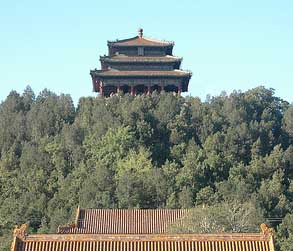
The last Ming Emperor, Ch’ung-Chen, hung himself from a tree on Prospect Hill when the Manchu claimed China.  Ch’ung-Chen failed. Instead of appointing ministers to different posts to help rule the empire, he tried to do all the work of government himself. The last Dynasty, the QING (MANCHU) 1644-1911, were not popular with the Han majority and there were brutal rebellions where millions died. The emperor before Ch’ung-chen, the T’ien-Ch’i emperor, spent most of his days doing carpentry instead of doing his job.

It appears that China’s current leaders learned from the mistakes of these Emperors. China’s president cannot serve for more than two, five-year terms, and retirement is mandatory at sixty-seven. In addition, the Chinese Communist Party has more than seventy million voting members who debate and discuss issues behind closed doors. Decisions are not made lightly.

Then there is the Communist Youth League with seventy million more members.

See “No Political Machine” http://wp.me/pN4pY-dh