Brain Washing on Stage is Not Dirty Dancing

April 24, 2010

Gao Fangpi brought a fellow member of the Falun Gong to our house a few days before a New Year’s show. While we were sitting around the kitchen table sipping tea, the two women pitched the benefits of their group in soft voices. It was obvious that they had been trained like an Amway salesman is, but not as flashy.  

My wife and I were invited to attend the Falun Gong show in San Francisco at the Orpheum Theater. The tickets were eighty dollars each. Putting on that show in that theater must have been costly and I suspect eighty dollar tickets would not raise enough to cover the expenses.  

 My wife asked Gao Fangpi where the money came from to pay for the show, since it was on tour to several cities in Western countries in North America and Europe. Gao Fangpi admitted that the CIA subsidized the show.

See Wearing China’s Shoes http://wp.me/pN4pY-1p


The White Lotus Mutation

April 24, 2010

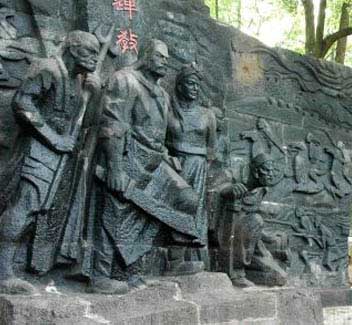
Persecution of the White Lotus Society started during the Yuan Dynasty (Mongols 1271 – 1368). Due to this, the White Lotus Society changed from one of peace and tranquility and organized protests against the Mongol rulers, the first non-Han to rule China.

Since Yuan Imperial authorities distrusted the White Lotus Society, the Dynasty banned them, and the White Lotus went underground.  The White Lotus also started to predict that a messianic (Christ like) figure would come and save them from persecution.

White Lotus Rebellion

A White Lotus led revolution started in 1352 around Guangzhou. A Buddhist monk, Zhu Yuanzhang, joined the rebellion. Soon, he became the leader by forbidding his soldiers to pillage, in observance of White Lotus religious beliefs.

By 1355, the rebellion had spread through much of China. In 1356, Zhu Yuanzhang captured Nanjing and made it his capital. Then Confucian scholars issued pronouncements supporting Zhu’s claim of the Mandate of Heaven, the first step toward establishing a new dynasty.

Zhu Yuanzhang liberated China from the Mongols and became the founding Emperor of the Ming Dynasty (1368 – 1643).  

At this point, you may see the danger of allowing a religious cult like the White Lotus to have any power.

Sign up for an RSS Feed for  iLook China


The First Emperor: The Man Who Made China – Part 9/9

April 23, 2010

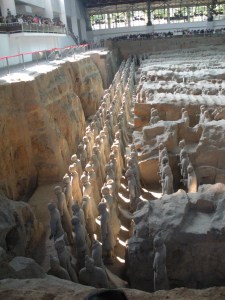
In the seventh month of 2010 BC, the first emperor’s search for immortality has ended. At the age of fifty, Qin Shi Huangdi is dead.

While China’s first emperor is being buried according to his wishes, a power struggle rages outside the tomb. By tradition, the oldest son should have become the emperor but several ministers want a younger son on the throne. The others are assassinated and there is a slaughter.

The emperor is also not going alone into the afterlife. While his chosen successors are being assassinated, hundreds of his favorite concubines will stay with their master and die with him. The tomb’s designers and builders will be sealed in the tomb too. Everyone who knows the way dies.

Qin Shi Huangdi left a legacy–a unified nation with a single written language and a system of administration that is still used today.

You may return to Part 8, or start with The Man Who Made China, Part 1

View as Single Page

_________________________

Lloyd Lofthouse is the award-winning author of the concubine saga, My Splendid Concubine & Our Hart. When you love a Chinese woman, you marry her family and culture too. 

To subscribe to “iLook China”, look for the “Subscribe” button at the top of the screen in the menu bar, click on it then follow directions.


A Story about Corruption

April 23, 2010

National Library Week was April 11 – 17.  Friday, I attended the Golden Leaves event at Cal Poly Pomona’s University Library. Afterwards, I joined a conversation about China, and one American Caucasian mentioned the corruption in China and how flawed their legal system was. He was adamant that China had to change and become more democratic like Taiwan was. He also said there were a lot of angry people in China who wanted change.

However, there are two sides to every coin, and there are times when I’m slow to respond.  I have to think about the issue first. Now, I’m ready.

“While the true extent and cost of white-collar crime (in the United States) are unknown, it is estimated to cost the United States more than $300 billion annually, according to the FBI.”

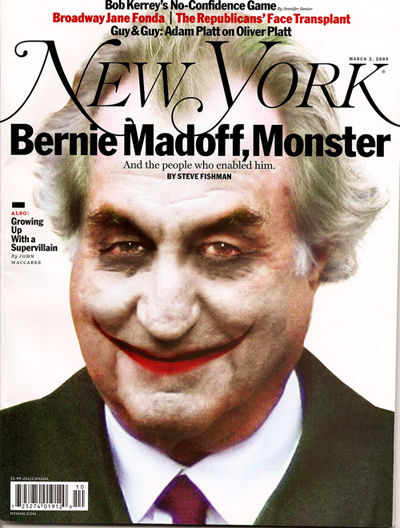
“According to experts, the actual amount investors gave to (Bernard) Madoff over the years is probably closer to $20 billion. But even that outlandish sum will never be found; it was chipped away year after year after year. That, after all, is the definition of a Ponzi scheme: Most of the cash put up by new investors went to pay the old ones.” Source: CNN.com
“Enron was the largest company ever to go bankrupt in U.S. history.… Enron gave over $5 million to campaigns since 1998. Out of the 248 elected officials investigating Enron’s collapse, 212 received campaign contributions from Enron or its accounting firm, Arthur Andersen.

“Enron donated money to George W. Bush’s campaign and Kenneth Lay was a close friend. This week, a congressional watchdog agency announced that it will sue Vice President Cheney to get records of meetings he had with Enron officials. The agency is investigating whether the company was able to influence the energy policies of the United States government.” Source: pbs.org

“WASHINGTON—The Securities and Exchange Commission suspected Texas financier R. Allen Stanford of running a Ponzi scheme as early as 1997 but took more than a decade to pursue him seriously, according to a report further tarring the agency that missed Bernard Madoff’s huge fraud.… Mr. Stanford was indicted last June and accused of orchestrating a Ponzi scheme that swindled investors out of $7 billion.

“The report by the SEC’s inspector general says SEC examiners concluded four times between 1997 and 2004 that Mr. Stanford’s businesses were fraudulent, but each time decided not to go further. It singles out the former head of the SEC’s enforcement office in Fort Worth, Texas, accusing him of repeatedly quashing Stanford probes and then trying to represent Mr. Stanford as a lawyer in private practice.” Source: Wall Street Journal

“The US sub-prime mortgage crisis has led to plunging property prices, a slowdown in the US economy, and billions in losses by banks. It stems from a fundamental change in the way mortgages are funded.”

“On Thursday, Sept. 18, 2008, the astonished leadership of the U.S. Congress was told in a private session by the chairman of the Federal Reserve that the American economy was in grave danger of a complete meltdown within a matter of days. “There was literally a pause in that room where the oxygen left,” says Sen. Christopher Dodd (D-Conn.)

“FRONTLINE then chronicles the disaster that followed. Within 24 hours, the stock market crashed, and credit markets around the world froze. “We’re no longer talking about mortgages,” says economist Gertler. “We’re talking about car loans, loans to small businesses, commercial paper borrowing by large banks. This is like a disease spreading.”
Sources:  BBC and PBS-Frontline

 What about China?

“For one thing, the Chinese trust their government more. According to a recent World Values Survey, 96.7 percent of Chinese expressed confidence in their government, compared to only 37.3 percent of Americans.

“Likewise, 83.5 percent of Chinese thought their country is run for all the people, rather than for a few big interest groups, whereas only 36.7 percent of Americans thought the same of their country. With this relatively higher trust, China’s government and enterprises are better able to enact and implement strict policies that promote saving and growth.” Source: The Economist’s View

I wonder if the corruption in China will ever threaten the world’s economies? I’ll let China speak for itself, Economists defend China’s high savings rate.

See Peter Hessler, an expatriate, on China http://wp.me/pN4pY-kI


The First Emperor: The Man Who Made China – Part 4/9

April 20, 2010

With this challenge to the throne removed, Shi Huangdi has learned a lesson. He becomes ruthless and rids himself of his mother and his prime minister.

There is a dramatic scene where the prime minister asks for forgiveness for letting the queen mother do what she has done.  The prime minister is exiled and not allowed to see the queen mother again. Within a year, the disgraced prime minister kills himself.

A scholar, who believes in harsh laws, becomes Huangdi’s closest advisor.

By 227 BC, the Qin state has conquered the states of Han, Wei and Zhao.

The state of Yen knows it is next and sends professional assassins disguised as peace emissaries to kill Shi Huangdi.  The emissaries arrive in Xian with gifts.  The assassin strikes.

Since no weapons are allowed in the throne room, there are no armed guards to protect the king. Only the king has a weapon and only the king can call the troops to save him.

Go to Part 5 of The Man Who Made China or return to Part 3

View as Single Page

_________________________

Lloyd Lofthouse is the award-winning author of the concubine saga, My Splendid Concubine & Our Hart. When you love a Chinese woman, you marry her family and culture too. 

To subscribe to “iLook China”, look for the “Subscribe” button at the top of the screen in the menu bar, click on it then follow directions.