The Long March – Part 1 (4/6)

July 26, 2010

Mao argued that the most important rule for a military commander was to preserve and strengthen his forces. He had never been to Russia but had read the Chinese military and literary classics.

Since most of the other leaders had been to Moscow to be indoctrinated in Communist ideology, they considered Mao’s thinking dangerous.  However, he came out of the conference co-commander of an army that had lost two-thirds of its troops. Meanwhile, The Japanese were expanding their territory in northeast China, but Chiang Kai-shek was still determined to destroy the Communists.

Mao changed plans and decided to move west toward the fourth Communist army.  He decided to take a route so rugged that no one had ever tried it before.  He also broke the army into smaller units and scattered them over the countryside so they would be harder to spot from the air. For a time, this fooled the Nationalists.

While moving across the rugged terrain, it was difficult to stay in touch with all the scattered units so Mao used teenagers as couriers. He also had spies keeping track of the Nationalist army’s movements.  

Mao’s first significant battle was for control of an important mountain pass and his troops defeated two Nationalist divisions. It was Mao’s first victory as a commander, which helped him gain the trust of the troops.

Return to The Long March, Part 1/3 or go on to The Long March – Part 1/5

________________________

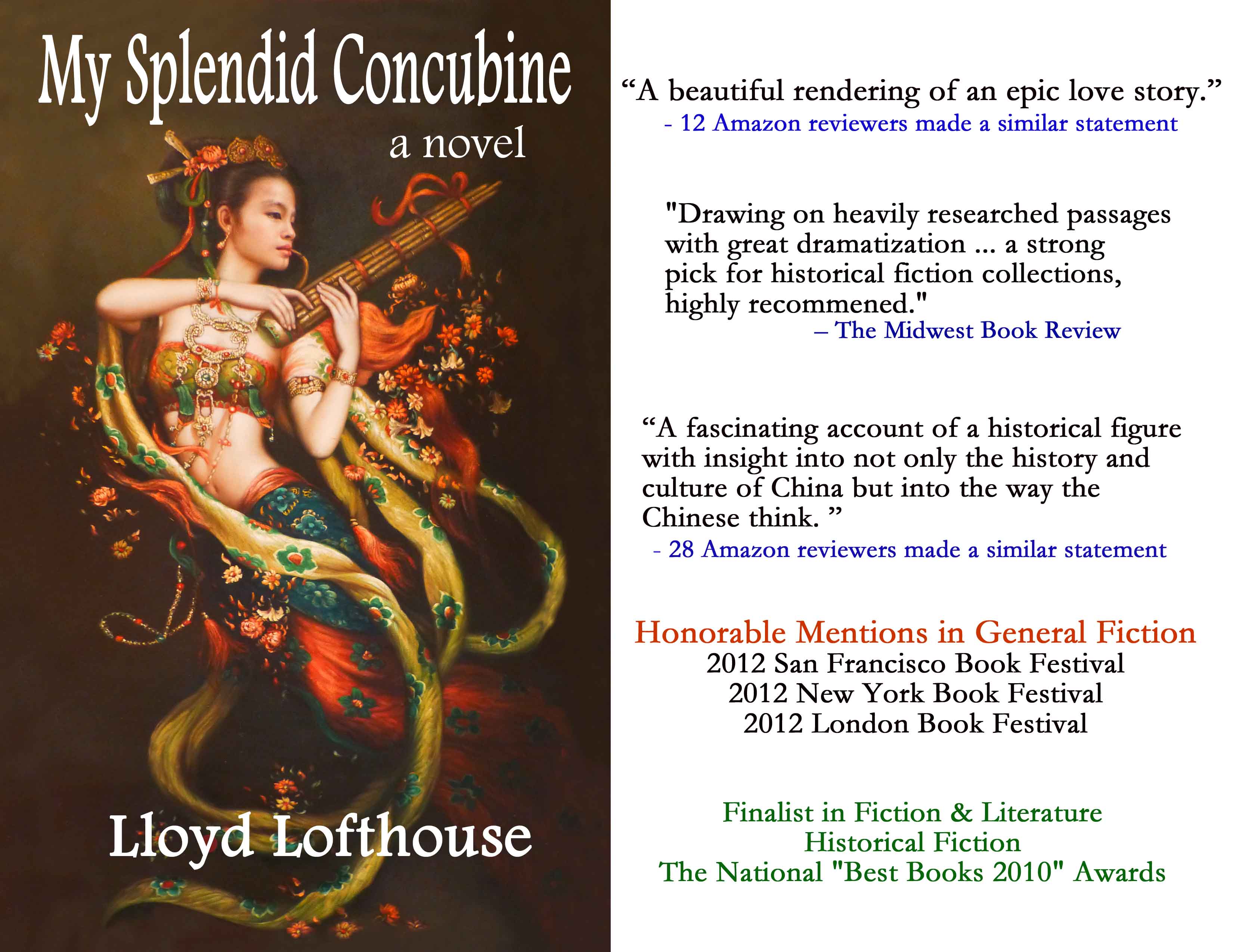
Lloyd Lofthouse is the award-winning author of the concubine saga, My Splendid Concubine & Our Hart. When you love a Chinese woman, you marry her family and culture too. 

Sign up for an RSS Feed for iLook China


Serious Spy Games

July 25, 2010

Am I wrong?  I read George Jahn’s Associated Press piece about spies on Yahoo.com, and got the idea that the author/editor was complaining. “Emerging giants such as China pose different threats as they use the most sophisticated cyber technology to snoop on established world powers.”

Does the CIA snoop? What kind of threats does China pose? In fact, what kind of threat does the US pose to China? Using the word SNOOP paints a picture of some pervert hiding in the bushes at night watching you undress through your window. I also question the use of the term “established world powers”.

Study history and you discover that power shifts all the time.  China was an established world power for more than two thousand years until the West got the upper hand during the 19th century. America didn’t become an established world power until after World War II and keeping that status has come at a steep price.

At one time, China was the established world power and nations like France, Germany, Russia, Japan, Great Britain and the United States were the emerging powers that posed threats to China and the price China paid for that assault was terrible. Now that China is on the way back, the nations that challenged China less than two centuries ago are complaining.

Interesting. I thought all was fair in love and war for both sides.

See The First Emperor: The Man Who Made China

______________________

Lloyd Lofthouse is the award-winning author of the concubine saga, My Splendid Concubine & Our Hart. When you love a Chinese woman, you marry her family and culture too. 

Sign up for an RSS Feed for iLook China


Tiananmen Square Revisited

July 23, 2010

When I was writing and posting Part 8 for China’s Capitalist Revolution, there was a scene in that segment of the documentary of a student dressed in pajamas sitting in a chair.  This so-called student leader for the Tiananmen Square incident was rude, arrogant and demanding.

There was no sign of the piety I see everyday—that I have lived with and witnessed since I married into a Chinese family. My wife and her family lived in China during Mao’s time. They suffered through the same changes everyone else did but their respect for piety never changed.

I read the “What is the truth about Tiananmen Square?” post again.

Why did President H. W. Bush change ambassadors in the middle of the incident with a man who had once been an operative for the CIA working in Asia inserting agents into China? James Lilly wouldn’t have to meet with the students himself. He knew who the double agents in China were. He had to know.

“The protesters were not demanding Western style politics or an end to Communist Party rule as many in the West believe.  They wanted the government to listen to their opinions about   reforms and corruption.  The banners the protesters carried said, “We Support the Great Glorious Communist Party of China.” Source: China’s Capitalist Revolution, Part 7

It was the Western media and the rude, arrogant students, who turned the event into a democracy movement but only after Lilly was in the country or on his way. Did President Bush seize an opportunity?

In fact, it wasn’t until after that student treated his elders with disrespect, that Deng Xiaoping sent the troops in—a reaction to be expected in a country with a collective culture like China’s where practicing piety is the same as breathing.

What choice did he have?  After all, the students had demanded the negotiations be broadcast live on TV to the nation. Embarrassed in front of the country he ruled, Deng had no choice. It was a great loss of face for him and the government.  Loss of face is probably the leading cause of suicide in Asian countries like Japan and the two Koreas.

That student acted as if he was untouchable–that he had insurance. Maybe he did. He had taken a huge risk to gain face, and it turned into a tragedy.

Moreover, why has America’s media made such a big deal out of the Tiananmen Square incident where hundreds died and almost nothing about the slaughter conducted by (an American ally) Chiang Kai-shek’s troops in Taiwan where almost thirty thousand were murdered? See 2/28 Massacre in Taiwan

_________________________

Lloyd Lofthouse is the award-winning author of the concubine saga, My Splendid Concubine & Our Hart. When you love a Chinese woman, you marry her family and culture too. 

Sign up for an RSS Feed for iLook China


Chiang Kai-shek

July 23, 2010

Chiang Kai-shek (also known as Jiang Jieshi) was born on October 31, 1887. His family was from the upper class and was wine merchants. At 18, he attended a military college in Japan. Chiang had four wives during his life. His first wife died in the Second Sino-Japanese War. His second wife contracted gonorrhea from Chiang (a known womanizer) soon after they married. His most famous wife lived to 106 and died in 2003. Before one marriage, he converted to Christianity as a condition to marry.

After training in Japan, he went to Russia to study the Soviet government and decided he did not care for the Communists. Returning to China, Sun Yat-sin appointed Chiang to command a military academy

Under Sun Yat-sen the Communists and the Nationalists worked together to rule China, and Soviet advisers provided the help needed to increase their power since most of China was ruled by warlords.

However, when Sun died in 1925, Chiang led the Kuomintang army north to defeat the warlords and destroy the Communists.

Meanwhile, in Shanghai, the Communist Party had organized labor unions to improve working conditions in the low paying sweat-shop factories. During Communist organized labor strikes, these factories were shut down.

When Chiang Kai-shek army reached Shanghai, he joined forces with gangsters then went on a killing spree known as the White Terror. Tens of thousands of workers, who belonged to the labor unions organized by the Communists, were hunted down and killed along with their Communist leaders. One of the few to escape was Mao Zedong.

For the next few years, Chiang would rule China unchallenged until 1931, when Japan invaded. During the early months of the war, Chiang ignored Japan and continued hunting for the Communist survivors, who had fled into the countryside.

In 1949, when Mao won the civil war, Chiang Kai-shek took the survivors of his nationalist army to Taiwan where, protected by the US military, he declared brutal martial law and ruled as a dictator until he died on April 5, 1975 at the age of eighty-seven.

______________________________

Lloyd Lofthouse is the award-winning author of My Splendid Concubine [3rd edition]. When you love a Chinese woman, you marry her family and culture too. This is the lusty love story Sir Robert Hart did not want the world to discover.

#1 - Joanna Daneman review posted June 19 2014

Where to Buy

Subscribe to “iLook China”!
Sign up for an E-mail Subscription at the top of this page, or click on the “Following” tab in the WordPress toolbar at the top of the screen.

About iLook China

China’s Holistic Historical Timeline


Dr. Sun Yat-Sen – China’s Democratic Revolutionary

July 23, 2010

“An individual should not have too much freedom. A nation should have absolute freedom.”
– Dr. Sun Yat-Sen (1866 – 1925)

He is referred to as the father of modern China.  If there were no Sun Yat-Sen and his revolution, there would be no modern China as it is becoming today.

While attending a Christian school in Hawaii, he converted to Christianity, which may have shaped his revolutionary future. It was obvious that his writing was influenced by American thought. With the support he received from the Hawaiian Chinese community, he networked with Chinese people all over the world.

He went on to publish revolutionary ideas seeking to overthrow the Manchu Dynasty and create a democratic China. In 1904, he wrote that he wanted to model China’s government after America but by combining Western thought with Chinese tradition.

Yet, he was considered an idealistic dreamer – that his ideas were impractical.

He said, “The whole world is one family.” (1910)

______________________________

Lloyd Lofthouse is the award-winning author of My Splendid Concubine [3rd edition]. When you love a Chinese woman, you marry her family and culture too. This is the lusty love story Sir Robert Hart did not want the world to discover.

2015 Promotion Image for My Splendid Concubine

Subscribe to “iLook China”!
Sign up for an E-mail Subscription at the top of this page, or click on the “Following” tab in the WordPress toolbar at the top of the screen.

About iLook China

China’s Holistic Historical Timeline