Mother’s “Face” – Part 2/4

February 18, 2010

Do not stereotype. The meaning of face may vary between the Chinese.  It depends on the balance between Confucianism and Daoism along with factors like Buddhism or belief in the Christian, Islamic or Jewish God.

Face is why most Chinese mothers ride their children hard to earn good grades in school while telling everyone they know that their kid is stupid and lazy and has no chance to succeed. Chinese mothers may often tell their children the same thing. However, if the child is accepted to a prestigious university, that Chinese mother has now earned bragging rights and gained much face for the great job she did as a mother.

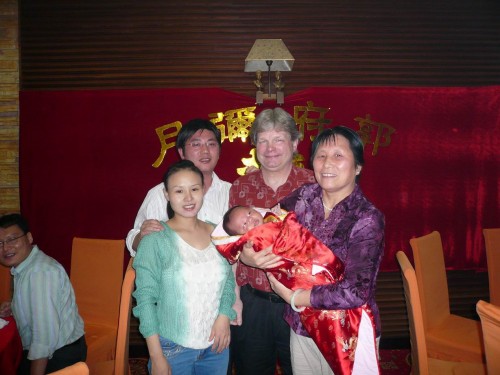
mothers with children

To get a better idea, I recommend reading Amy Tan‘s “Joy Luck Club” or watching the movie.

We had a house full of my wife’s Chinese friends over for dinner. After eating, the children gathered in our downstairs TV room to watch a movie.  They picked “The Joy Luck Club”, and during one scene, when the Chinese mother was acting very Chinese, all the children looked at each other, nodded a ‘yes’ and laughed ironically. Since my wife is Chinese, I knew why they reacted that way. They all had Chinese mothers.

Continued at Men’s “Face” – Part 3 or learn about International Women’s Day

______________

Lloyd Lofthouse is the award-winning author of the concubine saga, My Splendid Concubine & Our Hart. When you love a Chinese woman, you marry her family and culture too. 

To subscribe to iLook China, look for the “Subscribe” button at the top of the screen in the menu bar, click
on it then follow directions.


Chinese “Face” – Part 1/4

February 17, 2010

No, this is not about looks or Botox or face lifting creams or hairstyles, or the desire to have a rounder, paler moon face—the standard of beauty to the Chinese.

What I am writing about is the meaning of “face”.

Dr. Martha Lee wrote, “Nobody ever said what you do with those who have ‘disgraced’ the family name by getting divorced.”

In China, if you do something that is considered a disgrace, like getting divorced, that may be considered a loss of face for everyone in the family.

When our daughter was a pre-teen, we went on weekend hikes in the hills behind our home. The end of the hike was a large park across the street from the La Puente Mall. On one fateful day, when she was nine or ten, she was the first to discover a dead man. She came running back with a shocked look on her face.

It turned out that the dead man was an architect from Taiwan and his company had gone broke.  His loss of face for failing had driven him to take an extension cord from his mother’s house, find a suitable tree in an isolated portion of that park, and hang himself.  He was dead when we reached him.

Continued at Mothers “Face” – Part 2 or learn of Human Rights – East versus West

______________

Lloyd Lofthouse is the award-winning author of the concubine saga, My Splendid Concubine & Our Hart. When you love a Chinese woman, you marry her family and culture too. 

To subscribe to iLook China, look for the “Subscribe” button at the top of the screen in the menu bar, click
on it then follow directions.


Guest Post—They All Look Alike

February 12, 2010

By Bob Grant — publisher/editor for Speak Without Interruption
Originally published at Speak Without Interruption on February 8, 2010

One of our US government officials reportedly made a comment with the word “retarded” in it.  There was also an attempt to make a joke using “Special Olympics” on a TV show in the past.  Why do people say the things they do?  Why have I said some of things I have said?  When I have made comments at the expense of others, I thought either it was funny or it made me feel important in some perverse way.  As I have gotten older, experience has taught me to think before I speak—at least a little more than I did in my younger years.  What someone says as a casual statement—or an attempt to make a joke—can offend others on a multitude of levels.

 There are a little over 1.3 billion people in China from the figures I have seen.  I have had people say to me, “With that many people, how do you tell them apart?  They all look alike.” 

 After having an association with specific Chinese people since 1998, I take great offense when someone says something like this to my face or within earshot.  To me, they do not all look alike.  They may all have similar physical features but I see each person I have met in my business dealings as a singular and unique individual just as I would feel about anyone I met throughout the world.  As you meet people—speak with them—get to know them, I think everyone has personal features, mannerisms, personalities that make them different from other people in the world.

 In terms of my feelings for China, and its people, it is only based on those who I have met personally.  As I view it, there are values that I have found all Chinese possess—the reverence of  family and respect for their elders.  I wish these values were more evident in the US. 

 With 1.3 billion people milling around China, how can they have these values when there are so many of them?  I once worked with a product that was to replace the toxic cleaner Nitric Acid.  In most instances, the shipping tanks in the ocean liners have to be cleaned out after they are emptied. 

 They send “Chinese People” into these tanks to spray them out.  One contact actually said, “There are so many Chinese that when one dies from being exposed to the Nitric Acid there are a million more to take their place.”  It was all I could do to keep my hands from going around his neck or punching his lights out — being older at the time, I felt he was not worth the hassle.

 I believe the respect for family—and elders—in China is not something just confined to my small group of acquaintances there.  I think this is something that is countrywide, and I feel this is a virtue beyond description.  During one of my visits, my friend and primary associate invited me to a party to honor his new young son. 
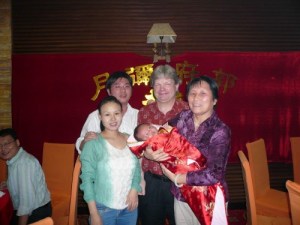
 We held this event in a large, private room within a very nice restaurant.  There were many people there, and as I have written regarding other situations, I was again the only non-Chinese in the room.  I felt completely at ease and extremely honored he would invite me to such an important “family event”.  The photo above shows me with my associate, his wife, his mother, and his new young son. I did, and still do, feel like part of their family.  To me they remain friends, family and associates, and they “certainly” do not all look alike to me!

See The First of All Virtues

If you want to read previous posts by Bob Grant, please see Love Affair

Education Chinese Style – Part 7

February 12, 2010

One of the Five Great Relationships that Confucius taught was the one between father and son. Nothing has changed. In addition, because of the relationship between husband and wife, the wife is expected to support the husband. It is the husband and wife’s responsibility to see that a son or daughter grows up to be like the gentleman that Confucius described. To do anything less would be a ‘loss of face’, because the child’s failure or success is a walking advertisement to everyone that the parents did not do their job.

Jade Budda Temple, Shanghai, China

Because of Confucius, most people in China have mutual obligations and responsibilities to each other. If you watched the opening Olympic ceremony in Beijing on TV, you may remember the little boy that risked his life after the big earthquake in Sichuan province. He said it was his duty. According to Confucius, he was right. Buddhism also plays an important part in everyday life in China.

These expectations go back more than two thousand years—well before Constantine made Christianity the moral and ethical foundation for the Roman Empire and Western civilization. Does that mean that everyone in China follows what Confucius taught? Do all Christians, Muslims or Jews follow what their God, spiritual teachers and prophets taught? The answer is no, but the foundations of these cultures are still built on those teachings.

See Part 1

Lloyd Lofthouse is the author of the award winning novels My Splendid Concubine and Our Hart.


Education Chinese Style – Part 6

February 11, 2010

Guess who taught me to read—my mother. When I was seven, education experts said I would never read. My mother didn’t blame them. She blamed herself and went to work to fix the problem. She told me she came home from that meeting and cried. Then she got out the coat hanger.

No matter how much I complained, I learned to read at home. Today, many American parents don’t spend enough time with their children.

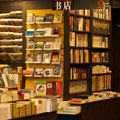
Inside a Shanghai Bookstore

In America, many kids don’t like to read. To get the students I taught to read for half-an-hour a day was like pulling teeth with oily fingers. Instead, they watch television or spend hours on the Internet or hang out with friends after school.

The largest bookstore in Shanghai, China, is several stories tall with elevators and escalators. You have to wait in line to reach another floor. The bookstores I visit in Shanghai when I’m there are always crowded. On the other hand, in the United States bookstores are going out of business as if a book plague struck. In China, new ones are opening all the time.

  See Part 1

Lloyd Lofthouse is the author of the award winning novels My Splendid Concubine and Our Hart.